- PDB-4ekc: Structure of human regulator of G protein signaling 2 (RGS2) in c... -
+
Open data
ID or keywords:
Loading...
-
Basic information
Entry
Database: PDB / ID: 4ekc
Title
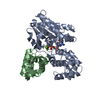
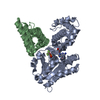
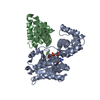
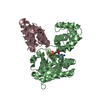
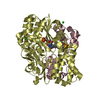
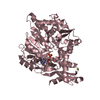
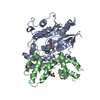
Structure of human regulator of G protein signaling 2 (RGS2) in complex with murine Galpha-q(R183C)
Components
Guanine nucleotide-binding protein G(q) subunit alpha
Regulator of G-protein signaling 2
Keywords
SIGNALING PROTEIN/INHIBITOR / GTP-binding protein fold / Regulator / G protein signaling / RGS / homology domain / GTPase activation / SIGNALING PROTEIN-INHIBITOR complex
Function / homology
Function and homology information
regulation of adenylate cyclase-inhibiting adrenergic receptor signaling pathway / negative regulation of glycine import across plasma membrane / regulation of melanocyte differentiation / Fatty Acids bound to GPR40 (FFAR1) regulate insulin secretion / PLC beta mediated events / Acetylcholine regulates insulin secretion / forebrain neuron development / adenylate cyclase-activating G protein-coupled cAMP receptor signaling pathway / Cooperation of PDCL (PhLP1) and TRiC/CCT in G-protein beta folding / Thromboxane signalling through TP receptor ...regulation of adenylate cyclase-inhibiting adrenergic receptor signaling pathway / negative regulation of glycine import across plasma membrane / regulation of melanocyte differentiation / Fatty Acids bound to GPR40 (FFAR1) regulate insulin secretion / PLC beta mediated events / Acetylcholine regulates insulin secretion / forebrain neuron development / adenylate cyclase-activating G protein-coupled cAMP receptor signaling pathway / Cooperation of PDCL (PhLP1) and TRiC/CCT in G-protein beta folding / Thromboxane signalling through TP receptor / Thrombin signalling through proteinase activated receptors (PARs) / developmental pigmentation / guanyl nucleotide binding / Turbulent (oscillatory, disturbed) flow shear stress activates signaling by PIEZO1 and integrins in endothelial cells / positive regulation of gonadotropin secretion / G-protein activation / phospholipase C-activating G protein-coupled acetylcholine receptor signaling pathway / G alpha (q) signalling events / phospholipase C-activating tachykinin receptor signaling pathway / cranial skeletal system development / phospholipase C-activating dopamine receptor signaling pathway / phospholipase C-activating G protein-coupled glutamate receptor signaling pathway / endothelin receptor signaling pathway / negative regulation of cell growth involved in cardiac muscle cell development / ADP signalling through P2Y purinoceptor 1 / High laminar flow shear stress activates signaling by PIEZO1 and PECAM1:CDH5:KDR in endothelial cells / negative regulation of cardiac muscle hypertrophy / maternal behavior / regulation of platelet activation / phospholipase C-activating serotonin receptor signaling pathway / sensory perception of itch / post-embryonic development / embryonic digit morphogenesis / negative regulation of JNK cascade / relaxation of cardiac muscle / regulation of canonical Wnt signaling pathway / negative regulation of G protein-coupled receptor signaling pathway / neuron remodeling / positive regulation of phospholipase C-activating G protein-coupled receptor signaling pathway / negative regulation of potassium ion transport / alkylglycerophosphoethanolamine phosphodiesterase activity / glutamate receptor signaling pathway / relaxation of vascular associated smooth muscle / maternal process involved in female pregnancy / action potential / skeletal system development / postsynaptic cytosol / G-protein alpha-subunit binding / hormone-mediated signaling pathway / enzyme regulator activity / beta-tubulin binding / cellular response to acidic pH / response to amphetamine / positive regulation of cardiac muscle contraction / adenylate cyclase inhibitor activity / GTPase activator activity / regulation of G protein-coupled receptor signaling pathway / mast cell degranulation / positive regulation of neuron projection development / regulation of blood pressure / neuropeptide signaling pathway / response to prostaglandin E / caveola / G protein-coupled receptor binding / heart development / G-protein beta/gamma-subunit complex binding / phospholipase C-activating G protein-coupled receptor signaling pathway / heterotrimeric G-protein complex / presynapse / nuclear membrane / adenylate cyclase-activating G protein-coupled receptor signaling pathway / cell body / G protein activity / spermatogenesis / calmodulin binding / G alpha (q) signalling events / Hydrolases; Acting on acid anhydrides; Acting on GTP to facilitate cellular and subcellular movement / response to ethanol / cytoplasmic side of plasma membrane / protein stabilization / negative regulation of translation / G protein-coupled receptor signaling pathway / GTPase activity / negative regulation of apoptotic process / nucleolus / dendrite / protein-containing complex binding / Golgi apparatus / mitochondrion / membrane / nucleus / plasma membrane / cytosol / cytoplasm Similarity search - Function
Regulator of G-protein signalling 2 / RGS, subdomain 1/3 / G-protein alpha subunit, group Q / Regulator of G protein signaling domain / RGS domain / RGS domain profile. / Regulator of G protein signalling domain / RGS, subdomain 2 / RGS domain superfamily / G protein alpha subunit, helical insertion ...Regulator of G-protein signalling 2 / RGS, subdomain 1/3 / G-protein alpha subunit, group Q / Regulator of G protein signaling domain / RGS domain / RGS domain profile. / Regulator of G protein signalling domain / RGS, subdomain 2 / RGS domain superfamily / G protein alpha subunit, helical insertion / G protein alpha subunit / Guanine nucleotide binding protein (G-protein), alpha subunit / G-protein alpha subunit / G-alpha domain profile. / P-loop containing nucleoside triphosphate hydrolase Similarity search - Domain/homology
TETRAFLUOROALUMINATE ION / GUANOSINE-5'-DIPHOSPHATE / Guanine nucleotide-binding protein G(q) subunit alpha / Regulator of G protein signaling 2 Similarity search - Component
Mass: 18.015 Da / Num. of mol.: 6 / Source method: isolated from a natural source / Formula: H2O
-
Details
Has protein modification
N
-
Experimental details
-
Experiment
Experiment
Method: X-RAY DIFFRACTION / Number of used crystals: 1
-
Sample preparation
Crystal
Density Matthews: 3.11 Å3/Da / Density % sol: 60.39 %
Crystal grow
Temperature: 277 K / Method: vapor diffusion, hanging drop / pH: 5.5 Details: 17% PEG 3350, 200 mM NaCl, and 100 mM MES pH 5.5, VAPOR DIFFUSION, HANGING DROP, temperature 277K
Resolution: 7.4→19.98 Å / Cor.coef. Fo:Fc: 0.958 / Cor.coef. Fo:Fc free: 0.907 / SU B: 397.868 / SU ML: 3.017 / Cross valid method: THROUGHOUT / ESU R Free: 3.543 / Stereochemistry target values: MAXIMUM LIKELIHOOD / Details: HYDROGENS HAVE BEEN ADDED IN THE RIDING POSITIONS
Rfactor
Num. reflection
% reflection
Selection details
Rfree
0.22037
76
4.3 %
RANDOM
Rwork
0.15796
-
-
-
all
0.16084
1690
-
-
obs
0.16084
1690
93.29 %
-
Solvent computation
Ion probe radii: 0.8 Å / Shrinkage radii: 0.8 Å / VDW probe radii: 1.2 Å / Solvent model: MASK
Displacement parameters
Biso mean: 121.291 Å2
Baniso -1
Baniso -2
Baniso -3
1-
0 Å2
0 Å2
0 Å2
2-
-
0 Å2
0 Å2
3-
-
-
0 Å2
Refinement step
Cycle: LAST / Resolution: 7.4→19.98 Å
Protein
Nucleic acid
Ligand
Solvent
Total
Num. atoms
7318
0
68
6
7392
Refine LS restraints
Refine-ID
Type
Dev ideal
Dev ideal target
Number
X-RAY DIFFRACTION
r_bond_refined_d
0.007
0.02
7544
X-RAY DIFFRACTION
r_bond_other_d
0.002
0.02
5202
X-RAY DIFFRACTION
r_angle_refined_deg
0.998
1.968
10198
X-RAY DIFFRACTION
r_angle_other_deg
0.932
3
12636
X-RAY DIFFRACTION
r_dihedral_angle_1_deg
5.292
5
886
X-RAY DIFFRACTION
r_dihedral_angle_2_deg
36.534
24.323
384
X-RAY DIFFRACTION
r_dihedral_angle_3_deg
15.446
15
1360
X-RAY DIFFRACTION
r_dihedral_angle_4_deg
10.635
15
48
X-RAY DIFFRACTION
r_chiral_restr
0.048
0.2
1102
X-RAY DIFFRACTION
r_gen_planes_refined
0.004
0.02
8272
X-RAY DIFFRACTION
r_gen_planes_other
0.001
0.02
1600
X-RAY DIFFRACTION
r_nbd_refined
X-RAY DIFFRACTION
r_nbd_other
X-RAY DIFFRACTION
r_nbtor_refined
X-RAY DIFFRACTION
r_nbtor_other
X-RAY DIFFRACTION
r_xyhbond_nbd_refined
X-RAY DIFFRACTION
r_xyhbond_nbd_other
X-RAY DIFFRACTION
r_metal_ion_refined
X-RAY DIFFRACTION
r_metal_ion_other
X-RAY DIFFRACTION
r_symmetry_vdw_refined
X-RAY DIFFRACTION
r_symmetry_vdw_other
X-RAY DIFFRACTION
r_symmetry_hbond_refined
X-RAY DIFFRACTION
r_symmetry_hbond_other
X-RAY DIFFRACTION
r_symmetry_metal_ion_refined
X-RAY DIFFRACTION
r_symmetry_metal_ion_other
X-RAY DIFFRACTION
r_mcbond_it
X-RAY DIFFRACTION
r_mcbond_other
X-RAY DIFFRACTION
r_mcangle_it
X-RAY DIFFRACTION
r_scbond_it
X-RAY DIFFRACTION
r_scangle_it
X-RAY DIFFRACTION
r_rigid_bond_restr
X-RAY DIFFRACTION
r_sphericity_free
X-RAY DIFFRACTION
r_sphericity_bonded
LS refinement shell
Resolution: 7.4→7.567 Å / Total num. of bins used: 20
Rfactor
Num. reflection
% reflection
Rwork
0.271
89
-
Rfree
-
0
-
obs
-
-
88.12 %
+
About Yorodumi
-
News
-
Feb 9, 2022. New format data for meta-information of EMDB entries
New format data for meta-information of EMDB entries
Version 3 of the EMDB header file is now the official format.
The previous official version 1.9 will be removed from the archive.
In the structure databanks used in Yorodumi, some data are registered as the other names, "COVID-19 virus" and "2019-nCoV". Here are the details of the virus and the list of structure data.
Jan 31, 2019. EMDB accession codes are about to change! (news from PDBe EMDB page)
EMDB accession codes are about to change! (news from PDBe EMDB page)
The allocation of 4 digits for EMDB accession codes will soon come to an end. Whilst these codes will remain in use, new EMDB accession codes will include an additional digit and will expand incrementally as the available range of codes is exhausted. The current 4-digit format prefixed with “EMD-” (i.e. EMD-XXXX) will advance to a 5-digit format (i.e. EMD-XXXXX), and so on. It is currently estimated that the 4-digit codes will be depleted around Spring 2019, at which point the 5-digit format will come into force.
The EM Navigator/Yorodumi systems omit the EMD- prefix.
Related info.:Q: What is EMD? / ID/Accession-code notation in Yorodumi/EM Navigator
Yorodumi is a browser for structure data from EMDB, PDB, SASBDB, etc.
This page is also the successor to EM Navigator detail page, and also detail information page/front-end page for Omokage search.
The word "yorodu" (or yorozu) is an old Japanese word meaning "ten thousand". "mi" (miru) is to see.
Related info.:EMDB / PDB / SASBDB / Comparison of 3 databanks / Yorodumi Search / Aug 31, 2016. New EM Navigator & Yorodumi / Yorodumi Papers / Jmol/JSmol / Function and homology information / Changes in new EM Navigator and Yorodumi
 Movie
Movie Controller

 Yorodumi
 Open data
 Basic information
 Components
 Keywords
 Function and homology information
 Mus musculus (house mouse)
 Homo sapiens (human)
 X-RAY DIFFRACTION /
  Authors
 Citation
 Structure visualization
 Downloads & links
 Other downloads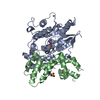
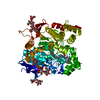
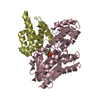
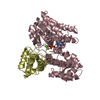
 PDBj
PDBj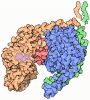

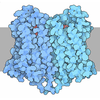
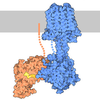
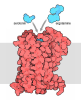
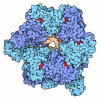
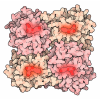
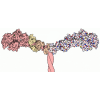
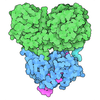
 Assembly
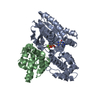
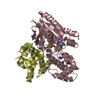
 Trichoplusia ni (cabbage looper) / References: UniProt: P21279, EC: 3.6.5.1
 Escherichia coli (E. coli) / References: UniProt: P41220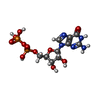


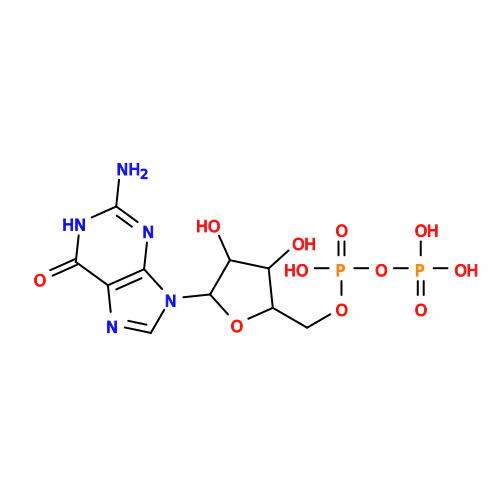 Type: RNA linking / Mass: 443.201 Da / Num. of mol.: 2 / Source method: obtained synthetically / Formula: C10H15N5O11P2 / Comment: GDP, energy-carrying molecule*YM
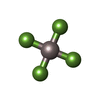
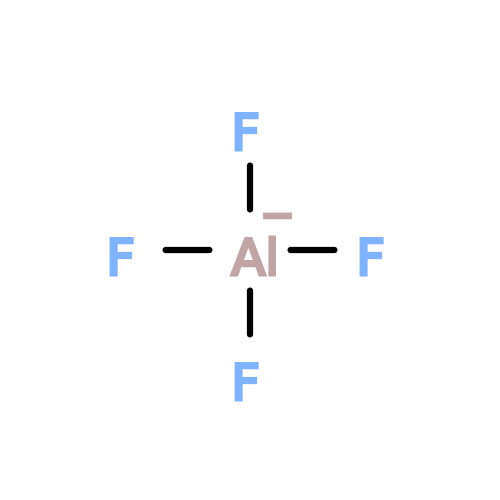 Mass: 102.975 Da / Num. of mol.: 2 / Source method: obtained synthetically / Formula: AlF4
 Mass: 24.305 Da / Num. of mol.: 2 / Source method: obtained synthetically / Formula: Mg
 Sample preparation
 / Beamline: 21-ID-G / Wavelength: 0.9786 Å
 Processing