 ムービー
ムービー コントローラー


+ データを開く

- 基本情報
基本情報
| 登録情報 |  | ||||||||||||
|---|---|---|---|---|---|---|---|---|---|---|---|---|---|
| タイトル | Structure of mouse C3a bound mouse C3aR in complex with Go | ||||||||||||
 マップデータ マップデータ | |||||||||||||
 試料 試料 |
| ||||||||||||
 キーワード キーワード | GPCR / G protein / SIGNALING PROTEIN / beta-arrestin | ||||||||||||
| 機能・相同性 |  機能・相同性情報 機能・相同性情報Alternative complement activation / Activation of C3 and C5 / complement component C3a receptor activity / Regulation of Insulin-like Growth Factor (IGF) transport and uptake by Insulin-like Growth Factor Binding Proteins (IGFBPs) / Post-translational protein phosphorylation / Peptide ligand-binding receptors / Regulation of Complement cascade / C5L2 anaphylatoxin chemotactic receptor binding / oviduct epithelium development / regulation of triglyceride biosynthetic process ...Alternative complement activation / Activation of C3 and C5 / complement component C3a receptor activity / Regulation of Insulin-like Growth Factor (IGF) transport and uptake by Insulin-like Growth Factor Binding Proteins (IGFBPs) / Post-translational protein phosphorylation / Peptide ligand-binding receptors / Regulation of Complement cascade / C5L2 anaphylatoxin chemotactic receptor binding / oviduct epithelium development / regulation of triglyceride biosynthetic process / positive regulation of activation of membrane attack complex / Muscarinic acetylcholine receptors / G protein-coupled acetylcholine receptor activity / vertebrate eye-specific patterning / positive regulation of apoptotic cell clearance / complement-mediated synapse pruning / G alpha (i) signalling events / positive regulation of phagocytosis, engulfment / positive regulation of lipid storage / positive regulation of G protein-coupled receptor signaling pathway / positive regulation of developmental growth / positive regulation of type IIa hypersensitivity / adenylate cyclase-inhibiting G protein-coupled acetylcholine receptor signaling pathway / mu-type opioid receptor binding / complement receptor mediated signaling pathway / corticotropin-releasing hormone receptor 1 binding / complement-dependent cytotoxicity / positive regulation of D-glucose transmembrane transport / complement activation / complement activation, alternative pathway / vesicle docking involved in exocytosis / positive regulation of neutrophil chemotaxis / Immunoregulatory interactions between a Lymphoid and a non-Lymphoid cell / endopeptidase inhibitor activity / G protein-coupled dopamine receptor signaling pathway / neuron remodeling / regulation of locomotion / positive regulation of macrophage chemotaxis / regulation of heart contraction / parallel fiber to Purkinje cell synapse / amyloid-beta clearance / positive regulation of vascular endothelial growth factor production / complement activation, classical pathway / G protein-coupled receptor signaling pathway, coupled to cyclic nucleotide second messenger / postsynaptic modulation of chemical synaptic transmission / Neutrophil degranulation / adenylate cyclase regulator activity / G protein-coupled serotonin receptor binding / adenylate cyclase-inhibiting serotonin receptor signaling pathway / positive regulation of phagocytosis / muscle contraction / response to bacterium / locomotory behavior / calcium-mediated signaling / fatty acid metabolic process / negative regulation of insulin secretion / G protein-coupled receptor activity / positive regulation of receptor-mediated endocytosis / GABA-ergic synapse / adenylate cyclase-modulating G protein-coupled receptor signaling pathway / G-protein beta/gamma-subunit complex binding / Olfactory Signaling Pathway / Activation of the phototransduction cascade / positive regulation of protein phosphorylation / G beta:gamma signalling through PLC beta / Presynaptic function of Kainate receptors / Thromboxane signalling through TP receptor / G protein-coupled acetylcholine receptor signaling pathway / positive regulation of angiogenesis / chemotaxis / Activation of G protein gated Potassium channels / Inhibition of voltage gated Ca2+ channels via Gbeta/gamma subunits / G-protein activation / Prostacyclin signalling through prostacyclin receptor / G beta:gamma signalling through CDC42 / Glucagon signaling in metabolic regulation / G beta:gamma signalling through BTK / Synthesis, secretion, and inactivation of Glucagon-like Peptide-1 (GLP-1) / ADP signalling through P2Y purinoceptor 12 / photoreceptor disc membrane / Sensory perception of sweet, bitter, and umami (glutamate) taste / Glucagon-type ligand receptors / Adrenaline,noradrenaline inhibits insulin secretion / Vasopressin regulates renal water homeostasis via Aquaporins / Glucagon-like Peptide-1 (GLP1) regulates insulin secretion / G alpha (z) signalling events / cellular response to catecholamine stimulus / ADORA2B mediated anti-inflammatory cytokines production / ADP signalling through P2Y purinoceptor 1 / G beta:gamma signalling through PI3Kgamma / Cooperation of PDCL (PhLP1) and TRiC/CCT in G-protein beta folding / adenylate cyclase-activating dopamine receptor signaling pathway / GPER1 signaling / Inactivation, recovery and regulation of the phototransduction cascade / cellular response to prostaglandin E stimulus / G-protein beta-subunit binding / heterotrimeric G-protein complex / G alpha (12/13) signalling events / sensory perception of taste / extracellular vesicle 類似検索 - 分子機能 | ||||||||||||
| 生物種 |   Mus musculus (ハツカネズミ) / Mus musculus (ハツカネズミ) /  Homo sapiens (ヒト) Homo sapiens (ヒト) | ||||||||||||
| 手法 | 単粒子再構成法 / クライオ電子顕微鏡法 / 解像度: 3.54 Å | ||||||||||||
 データ登録者 データ登録者 | Banerjee R / Yadav R / Yadav MK / Ganguly M / Mishra S / Dalal A / Gati C / Shukla AK | ||||||||||||
| 資金援助 |  インド, インド,  英国, 3件 英国, 3件
| ||||||||||||
 引用 引用 | ジャーナル: bioRxiv / 年: 2025 タイトル: Molecular fingerprints of a convergent mechanism orchestrating diverse ligand recognition and species-specific pharmacology at the complement anaphylatoxin receptors. 著者: Sudha Mishra / Manish K Yadav / Annu Dalal / Manisankar Ganguly / Ravi Yadav / Kazuhiro Sawada / Divyanshu Tiwari / Nabarun Roy / Nilanjana Banerjee / Jenny N Fung / Jianina Marallag / Cedric ...著者: Sudha Mishra / Manish K Yadav / Annu Dalal / Manisankar Ganguly / Ravi Yadav / Kazuhiro Sawada / Divyanshu Tiwari / Nabarun Roy / Nilanjana Banerjee / Jenny N Fung / Jianina Marallag / Cedric S Cui / Xaria X Li / John D Lee / Calvin Aaron Dsouza / Shirsha Saha / Parishmita Sarma / Ganita Rawat / Houming Zhu / Htet A Khant / Richard J Clark / Fumiya K Sano / Ramanuj Banerjee / Trent M Woodruff / Osamu Nureki / Cornelius Gati / Arun K Shukla /    要旨: Complement anaphylatoxin receptors (C3aR and C5aR1) are prototypical G protein-coupled receptors (GPCRs) playing crucial physiological roles in innate immunity by combating pathogenic infections and ...Complement anaphylatoxin receptors (C3aR and C5aR1) are prototypical G protein-coupled receptors (GPCRs) playing crucial physiological roles in innate immunity by combating pathogenic infections and orchestrating inflammatory responses. They continue to be important therapeutic targets for multiple disorders including autoimmune diseases, acute and chronic inflammation, and allergy-related conditions. Recent structural coverage has provided important insights into their activation and signaling, however, confounding observations in the literature related to ligand efficacy and functional responses, especially in different model systems, present a major challenge for drug discovery efforts. Here, we systematically and comprehensively profile a broad set of natural and synthetic ligands at C3aR and C5aR1 and discover a previously unanticipated level of functional specialization in terms of species-specific pharmacology and receptor activation. Taking a lead from this, we determine seventeen cryo-EM structures of different ligand-receptor-G-protein complexes and uncover distinct orientation of agonists between the human and mouse receptors despite an overlapping positioning in the orthosteric binding pocket. Combined with extensive mutagenesis and functional assays, these structural snapshots allow us to decode and validate a convergent molecular mechanism involving a "Five-Point-Switch" in these receptors that orchestrates the recognition and efficacy of diverse agonists. We also identify species-specific differences at the level of phosphorylation patterns encoded in the carboxyl-terminus of these receptors and directly visualize their impact on βarr binding and activation using cryo-EM structures. Interestingly, we observe that βarrs engage with the mouse C5aR1 using a variation of previously discovered P-X-P-P phosphorylation motif via a "Sliding-Mechanism" and also exhibit distinct oligomeric state for the human vs. mouse receptors. Taken together, this study elucidates functional specialization at the complement anaphylatoxin receptors and underlying molecular mechanisms, offering a previously lacking framework with direct and immediate implications for the development of novel therapeutics. | ||||||||||||
| 履歴 |
|
- 構造の表示
構造の表示
| 添付画像 |
|---|

- ダウンロードとリンク
-EMDBアーカイブ
| マップデータ | emd_62665.map.gz | 55 MB | EMDBマップデータ形式 | |
|---|---|---|---|---|
| ヘッダ (付随情報) | emd-62665-v30.xmlemd-62665.xml | 27.6 KB 27.6 KB | 表示 表示 | EMDBヘッダ |
| FSC (解像度算出) | emd_62665_fsc.xml | 8.4 KB | 表示 | FSCデータファイル |
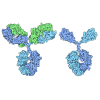
| 画像 |  emd_62665.png emd_62665.png | 90.7 KB | ||
| Filedesc metadata | emd-62665.cif.gz | 7.6 KB | ||
| その他 | emd_62665_half_map_1.map.gzemd_62665_half_map_2.map.gz | 59.4 MB 59.4 MB | ||
| アーカイブディレクトリ |  http://ftp.pdbj.org/pub/emdb/structures/EMD-62665ftp://ftp.pdbj.org/pub/emdb/structures/EMD-62665 http://ftp.pdbj.org/pub/emdb/structures/EMD-62665ftp://ftp.pdbj.org/pub/emdb/structures/EMD-62665 | HTTPS FTP |
-検証レポート
| 文書・要旨 | emd_62665_validation.pdf.gz | 812.2 KB | 表示 | EMDB検証レポート |
|---|---|---|---|---|
| 文書・詳細版 | emd_62665_full_validation.pdf.gz | 811.7 KB | 表示 | |
| XML形式データ | emd_62665_validation.xml.gz | 16.1 KB | 表示 | |
| CIF形式データ | emd_62665_validation.cif.gz | 20.5 KB | 表示 | |
| アーカイブディレクトリ | https://ftp.pdbj.org/pub/emdb/validation_reports/EMD-62665ftp://ftp.pdbj.org/pub/emdb/validation_reports/EMD-62665 | HTTPS FTP |
-関連構造データ
| 関連構造データ |  9kzkMC  9kugC  9kutC  9kv6C  9kv8C  9kvpC  9kwgC  9kwxC  9kx6C  9kxsC  9ky2C  9kyuC  9kz2C  9kz8C  9l0hC  9umjC  9umrC  9umxC M: このマップから作成された原子モデル C: 同じ文献を引用 ( |
|---|---|
| 類似構造データ |


-リンク
| EMDBのページ | EMDB (EBI/PDBe) / EMDataResource |
|---|---|
| 「今月の分子」の関連する項目 |


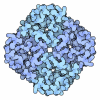
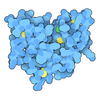

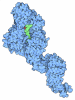


-マップ
| ファイル | ダウンロード / ファイル: emd_62665.map.gz / 形式: CCP4 / 大きさ: 64 MB / タイプ: IMAGE STORED AS FLOATING POINT NUMBER (4 BYTES) | ||||||||||||||||||||||||||||||||||||
|---|---|---|---|---|---|---|---|---|---|---|---|---|---|---|---|---|---|---|---|---|---|---|---|---|---|---|---|---|---|---|---|---|---|---|---|---|---|
| 投影像・断面図 | 画像のコントロール
画像は Spider により作成 | ||||||||||||||||||||||||||||||||||||
| ボクセルのサイズ | X=Y=Z: 1.2938 Å | ||||||||||||||||||||||||||||||||||||
| 密度 |
| ||||||||||||||||||||||||||||||||||||
| 対称性 | 空間群: 1 | ||||||||||||||||||||||||||||||||||||
| 詳細 | EMDB XML:
|
 Z (Sec.)
 Y (Row.)
 X (Col.)


-添付データ
-ハーフマップ: #2
| ファイル | emd_62665_half_map_1.map | ||||||||||||
|---|---|---|---|---|---|---|---|---|---|---|---|---|---|
| 投影像・断面図 |
| ||||||||||||
| 密度ヒストグラム |


-ハーフマップ: #1
| ファイル | emd_62665_half_map_2.map | ||||||||||||
|---|---|---|---|---|---|---|---|---|---|---|---|---|---|
| 投影像・断面図 |
| ||||||||||||
| 密度ヒストグラム |


- 試料の構成要素
+全体 : mouse C3a bound mouse C3aR in complex with Go
+超分子 #1: mouse C3a bound mouse C3aR in complex with Go
+超分子 #2: mouse C3a anaphylatoxin
+超分子 #3: Guanine nucleotide-binding protein G(o) subunit alpha
+超分子 #4: Guanine nucleotide-binding protein G(I)/G(S)/G(O) subunit gamma-2
+超分子 #5: Guanine nucleotide-binding protein G(I)/G(S)/G(T) subunit beta-1
+超分子 #6: Antibody fragment - ScFv16
+超分子 #7: mouse C3a anaphylatoxin chemotactic receptor
+分子 #1: Guanine nucleotide-binding protein G(o) subunit alpha

 Escherichia coli (大腸菌)
+分子 #2: Guanine nucleotide-binding protein G(I)/G(S)/G(T) subunit beta-1

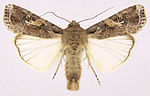 Spodoptera frugiperda (ツマジロクサヨトウ)
+分子 #3: C3a anaphylatoxin
+分子 #4: Muscarinic acetylcholine receptor M4,C3a anaphylatoxin chemotacti...
+分子 #5: Guanine nucleotide-binding protein G(I)/G(S)/G(O) subunit gamma-2
+分子 #6: Antibody fragment - ScFv16
-実験情報
-構造解析
| 手法 | クライオ電子顕微鏡法 |
|---|---|
 解析 解析 | 単粒子再構成法 |
| 試料の集合状態 | particle |
-試料調製
| 緩衝液 | pH: 7.4 |
|---|---|
| 凍結 | 凍結剤: ETHANE |
- 電子顕微鏡法
| 顕微鏡 | TFS GLACIOS |
|---|---|
| 撮影 | フィルム・検出器のモデル: GATAN K3 (6k x 4k) / 検出モード: COUNTING / 平均電子線量: 50.0 e/Å2 |
| 電子線 | 加速電圧: 200 kV / 電子線源:  FIELD EMISSION GUN FIELD EMISSION GUN |
| 電子光学系 | 照射モード: FLOOD BEAM / 撮影モード: BRIGHT FIELD / 最大 デフォーカス(公称値): 3.0 µm / 最小 デフォーカス(公称値): 0.8 µm |

