 Movie
Movie Controller


+ Open data

- Basic information
| Entry | Database: PDB / ID: 9kxs | ||||||||||||||||||||||||
|---|---|---|---|---|---|---|---|---|---|---|---|---|---|---|---|---|---|---|---|---|---|---|---|---|---|
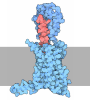
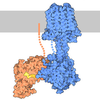
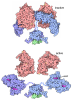
| Title | Structure of EP67 bound mouse C5aR1 in complex with Go | ||||||||||||||||||||||||
 Components Components |
| ||||||||||||||||||||||||
 Keywords Keywords | SIGNALING PROTEIN / GPCR / G protein / SIGNALING PROTEIN-IMMUNE SYSTEM complex | ||||||||||||||||||||||||
| Function / homology |  Function and homology information Function and homology informationcomplement component C5a binding / cell proliferation in hindbrain / response to peptidoglycan / presynapse organization / complement component C5a signaling pathway / Regulation of Complement cascade / Peptide ligand-binding receptors / complement component C5a receptor activity / Muscarinic acetylcholine receptors / G protein-coupled acetylcholine receptor activity ...complement component C5a binding / cell proliferation in hindbrain / response to peptidoglycan / presynapse organization / complement component C5a signaling pathway / Regulation of Complement cascade / Peptide ligand-binding receptors / complement component C5a receptor activity / Muscarinic acetylcholine receptors / G protein-coupled acetylcholine receptor activity / G alpha (i) signalling events / regulation of locomotion / adenylate cyclase-inhibiting G protein-coupled acetylcholine receptor signaling pathway / mu-type opioid receptor binding / corticotropin-releasing hormone receptor 1 binding / complement receptor mediated signaling pathway / negative regulation of neurotransmitter secretion / G protein-coupled dopamine receptor signaling pathway / positive regulation of neutrophil chemotaxis / positive regulation of macrophage chemotaxis / amyloid-beta clearance / parallel fiber to Purkinje cell synapse / negative regulation of insulin secretion / positive regulation of vascular endothelial growth factor production / G protein-coupled receptor signaling pathway, coupled to cyclic nucleotide second messenger / postsynaptic modulation of chemical synaptic transmission / neutrophil chemotaxis / Neutrophil degranulation / positive regulation of epithelial cell proliferation / astrocyte activation / muscle contraction / adenylate cyclase-inhibiting dopamine receptor signaling pathway / adenylate cyclase-inhibiting serotonin receptor signaling pathway / G protein-coupled serotonin receptor binding / microglial cell activation / GABA-ergic synapse / mRNA transcription by RNA polymerase II / cognition / G protein-coupled receptor activity / positive regulation of angiogenesis / apical part of cell / G-protein beta/gamma-subunit complex binding / adenylate cyclase-inhibiting G protein-coupled receptor signaling pathway / adenylate cyclase-modulating G protein-coupled receptor signaling pathway / Olfactory Signaling Pathway / phospholipase C-activating G protein-coupled receptor signaling pathway / Activation of the phototransduction cascade / G protein-coupled acetylcholine receptor signaling pathway / G beta:gamma signalling through PLC beta / Presynaptic function of Kainate receptors / Thromboxane signalling through TP receptor / Activation of G protein gated Potassium channels / Inhibition of voltage gated Ca2+ channels via Gbeta/gamma subunits / G-protein activation / Glucagon signaling in metabolic regulation / G beta:gamma signalling through CDC42 / Prostacyclin signalling through prostacyclin receptor / Synthesis, secretion, and inactivation of Glucagon-like Peptide-1 (GLP-1) / photoreceptor disc membrane / G beta:gamma signalling through BTK / ADP signalling through P2Y purinoceptor 12 / Sensory perception of sweet, bitter, and umami (glutamate) taste / Glucagon-type ligand receptors / Adrenaline,noradrenaline inhibits insulin secretion / Vasopressin regulates renal water homeostasis via Aquaporins / G alpha (z) signalling events / Glucagon-like Peptide-1 (GLP1) regulates insulin secretion / ADP signalling through P2Y purinoceptor 1 / cellular response to catecholamine stimulus / G beta:gamma signalling through PI3Kgamma / ADORA2B mediated anti-inflammatory cytokines production / adenylate cyclase-activating dopamine receptor signaling pathway / negative regulation of neuron apoptotic process / cellular response to prostaglandin E stimulus / Cooperation of PDCL (PhLP1) and TRiC/CCT in G-protein beta folding / GPER1 signaling / heterotrimeric G-protein complex / G alpha (12/13) signalling events / Inactivation, recovery and regulation of the phototransduction cascade / G-protein beta-subunit binding / extracellular vesicle / positive regulation of cytosolic calcium ion concentration / Thrombin signalling through proteinase activated receptors (PARs) / signaling receptor complex adaptor activity / chemical synaptic transmission / GTPase binding / cell body / G protein activity / cytoplasmic vesicle / presynaptic membrane / Ca2+ pathway / High laminar flow shear stress activates signaling by PIEZO1 and PECAM1:CDH5:KDR in endothelial cells / G alpha (i) signalling events / basolateral plasma membrane / G alpha (s) signalling events / G alpha (q) signalling events / Hydrolases; Acting on acid anhydrides; Acting on GTP to facilitate cellular and subcellular movement / cytoplasmic side of plasma membrane / Ras protein signal transduction / positive regulation of ERK1 and ERK2 cascade Similarity search - Function | ||||||||||||||||||||||||
| Biological species |  Homo sapiens (human) Homo sapiens (human)  Mus musculus (house mouse) Mus musculus (house mouse) | ||||||||||||||||||||||||
| Method | ELECTRON MICROSCOPY / single particle reconstruction / cryo EM / Resolution: 3.31 Å | ||||||||||||||||||||||||
 Authors Authors | Banerjee, R. / Yadav, R. / Yadav, M.K. / Ganguly, M. / Mishra, S. / Dalal, A. / Gati, C. / Shukla, A.K. | ||||||||||||||||||||||||
| Funding support |  India, India,  United Kingdom, 3items United Kingdom, 3items
| ||||||||||||||||||||||||
 Citation Citation | Journal: Proc Natl Acad Sci U S A / Year: 2026 Title: Structural basis of complement anaphylatoxin receptor activation by an immunostimulant lead candidate. Authors: Annu Dalal / Manish K Yadav / Manisankar Ganguly / Sudha Mishra / Ravi Yadav / Shachie Sinha / Nabarun Roy / Divyanshu Tiwari / Debdatta Mukherjee / Ashna Reyaz / Calvin A Dsouza / Ameesha ...Authors: Annu Dalal / Manish K Yadav / Manisankar Ganguly / Sudha Mishra / Ravi Yadav / Shachie Sinha / Nabarun Roy / Divyanshu Tiwari / Debdatta Mukherjee / Ashna Reyaz / Calvin A Dsouza / Ameesha Nigam / Nilanjana Banerjee / Xaria X Li / Richard J Clark / Trent M Woodruff / Ramanuj Banerjee / Cornelius Gati / Arun K Shukla /   Abstract: Activation of the complement cascade is a primary innate immune response mechanism to combat pathogenic infections. Complement anaphylatoxins (i.e., C3a and C5a) exert a robust inflammatory response ...Activation of the complement cascade is a primary innate immune response mechanism to combat pathogenic infections. Complement anaphylatoxins (i.e., C3a and C5a) exert a robust inflammatory response via prototypical GPCRs (i.e., C3aR and C5aR1). Several peptides derived from anaphylatoxins have shown promise as immunostimulants from therapeutic standpoint by eliciting immune response without excessive inflammation. EP67, a C5a-derived decapeptide, is the most advanced candidate with preclinical indications in antiviral and antibacterial context. Still, the molecular mechanism and the precise receptor target of EP67 remain unclear. Here, we perform a comprehensive pharmacological profiling of EP67 on the human and mouse C3aR and C5aR1 and find that it preferentially activates human C3aR in transducer-coupling assays. Subsequently, we determined four cryo-EM structures of C3aR and C5aR1 in complex with EP67, which elucidate the molecular details of its interaction with, and activation of, these receptors. Interestingly, we observe that EP67 adopts a hook-like structure and binds in the orthosteric pocket of the receptors, analogous to that of the carboxyl terminus of C3a and C5a. We employ site-directed mutagenesis studies to validate the key interactions of EP67 with these receptors and corroborate the structural observations including the engagement of a critical activation switch. Finally, we observe that EP67 induces distinct conformations of the TM7-Helix8 interface for C3aR and C5aR1, which provides a plausible explanation for its ability to preferentially activate C3aR. In summary, our study elucidates molecular insights into the interaction of EP67 with the complement anaphylatoxin receptors, and it should facilitate further optimization for therapeutic applications. | ||||||||||||||||||||||||
| History |
|
- Structure visualization
| Structure viewer | Molecule: MolmilJmol/JSmol |
|---|
- Downloads & links
-Download
| PDBx/mmCIF format | 9kxs.cif.gz | 209.6 KB | Display | PDBx/mmCIF format |
|---|---|---|---|---|
| PDB format | pdb9kxs.ent.gz | 158.6 KB | Display | PDB format |
| PDBx/mmJSON format | 9kxs.json.gz | Tree view | PDBx/mmJSON format | |
| Others |  Other downloads Other downloads |
-Validation report
| Arichive directory | https://data.pdbj.org/pub/pdb/validation_reports/kx/9kxsftp://data.pdbj.org/pub/pdb/validation_reports/kx/9kxs | HTTPS FTP |
|---|
-Related structure data
| Related structure data |  62626MC  9kugC  9kz2C  9kz8C M: map data used to model this data C: citing same article ( |
|---|---|
| Similar structure data |


-Links
 PDBj
PDBj

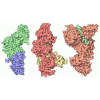
- Assembly
| Deposited unit | 
|
|---|---|
| 1 |
|
-Components
-Guanine nucleotide-binding protein ... , 3 types, 3 molecules BCG
| #2: Protein | Mass: 27024.762 Da / Num. of mol.: 1 / Mutation: G42D,E43N,A227D,G230D,I332A,V335I Source method: isolated from a genetically manipulated source Source: (gene. exp.) Homo sapiens (human) / Gene: GNAO1 / Production host:   Escherichia coli (E. coli) Escherichia coli (E. coli)References: UniProt: P09471, Hydrolases; Acting on acid anhydrides; Acting on GTP to facilitate cellular and subcellular movement |
|---|---|
| #3: Protein | Mass: 38534.062 Da / Num. of mol.: 1 Source method: isolated from a genetically manipulated source Source: (gene. exp.) Homo sapiens (human) / Gene: GNB1 / Production host:   Spodoptera frugiperda (fall armyworm) / References: UniProt: P62873 Spodoptera frugiperda (fall armyworm) / References: UniProt: P62873 |
| #4: Protein | Mass: 7861.143 Da / Num. of mol.: 1 Source method: isolated from a genetically manipulated source Source: (gene. exp.) Homo sapiens (human) / Gene: GNG2 / Production host: Spodoptera frugiperda (fall armyworm) / References: UniProt: P59768 |
-Protein / Antibody / Protein/peptide , 3 types, 3 molecules AHD
| #1: Protein | Mass: 44958.422 Da / Num. of mol.: 1 Source method: isolated from a genetically manipulated source Source: (gene. exp.) Homo sapiens (human), (gene. exp.) Mus musculus (house mouse)Gene: CHRM4, C5ar1, C5ar, C5r1 / Production host: Spodoptera frugiperda (fall armyworm) / References: UniProt: P08173, UniProt: P30993 |
|---|---|
| #5: Antibody | Mass: 27340.482 Da / Num. of mol.: 1 Source method: isolated from a genetically manipulated source Source: (gene. exp.) Mus musculus (house mouse) / Production host: Escherichia coli (E. coli) |
| #6: Protein/peptide | Mass: 1243.474 Da / Num. of mol.: 1 / Source method: obtained synthetically / Source: (synth.) Homo sapiens (human) |
-Details
| Has ligand of interest | Y |
|---|---|
| Has protein modification | Y |
-Experimental details
-Experiment
| Experiment | Method: ELECTRON MICROSCOPY |
|---|---|
| EM experiment | Aggregation state: PARTICLE / 3D reconstruction method: single particle reconstruction |
- Sample preparation
| Component |
| ||||||||||||||||||||||||||||||||||||||||||||||||||||||||
|---|---|---|---|---|---|---|---|---|---|---|---|---|---|---|---|---|---|---|---|---|---|---|---|---|---|---|---|---|---|---|---|---|---|---|---|---|---|---|---|---|---|---|---|---|---|---|---|---|---|---|---|---|---|---|---|---|---|
| Source (natural) |
| ||||||||||||||||||||||||||||||||||||||||||||||||||||||||
| Source (recombinant) |
| ||||||||||||||||||||||||||||||||||||||||||||||||||||||||
| Buffer solution | pH: 7.4 | ||||||||||||||||||||||||||||||||||||||||||||||||||||||||
| Specimen | Embedding applied: NO / Shadowing applied: NO / Staining applied: NO / Vitrification applied: YES | ||||||||||||||||||||||||||||||||||||||||||||||||||||||||
| Vitrification | Cryogen name: ETHANE |
- Electron microscopy imaging
| Experimental equipment |  Model: Titan Krios / Image courtesy: FEI Company |
|---|---|
| Microscopy | Model: TFS KRIOS |
| Electron gun | Electron source:  FIELD EMISSION GUN / Accelerating voltage: 300 kV / Illumination mode: FLOOD BEAM FIELD EMISSION GUN / Accelerating voltage: 300 kV / Illumination mode: FLOOD BEAM |
| Electron lens | Mode: BRIGHT FIELD / Nominal defocus max: 1800 nm / Nominal defocus min: 800 nm |
| Image recording | Electron dose: 48.49 e/Å2 / Detector mode: COUNTING / Film or detector model: GATAN K3 (6k x 4k) |
| Image scans | Movie frames/image: 40 |
- Processing
| EM software |
| ||||||||||||||||||||||||||||||||||||||||
|---|---|---|---|---|---|---|---|---|---|---|---|---|---|---|---|---|---|---|---|---|---|---|---|---|---|---|---|---|---|---|---|---|---|---|---|---|---|---|---|---|---|
| CTF correction | Type: NONE | ||||||||||||||||||||||||||||||||||||||||
| Symmetry | Point symmetry: C1 (asymmetric) | ||||||||||||||||||||||||||||||||||||||||
| 3D reconstruction | Resolution: 3.31 Å / Resolution method: FSC 0.143 CUT-OFF / Num. of particles: 409104 / Symmetry type: POINT | ||||||||||||||||||||||||||||||||||||||||
| Atomic model building | Protocol: FLEXIBLE FIT / Space: REAL |
