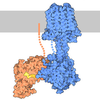
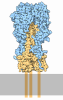
Journal: Proc Natl Acad Sci U S A / Year: 2026 Title: Structural basis of complement anaphylatoxin receptor activation by an immunostimulant lead candidate. Authors: Annu Dalal / Manish K Yadav / Manisankar Ganguly / Sudha Mishra / Ravi Yadav / Shachie Sinha / Nabarun Roy / Divyanshu Tiwari / Debdatta Mukherjee / Ashna Reyaz / Calvin A Dsouza / Ameesha ...Authors: Annu Dalal / Manish K Yadav / Manisankar Ganguly / Sudha Mishra / Ravi Yadav / Shachie Sinha / Nabarun Roy / Divyanshu Tiwari / Debdatta Mukherjee / Ashna Reyaz / Calvin A Dsouza / Ameesha Nigam / Nilanjana Banerjee / Xaria X Li / Richard J Clark / Trent M Woodruff / Ramanuj Banerjee / Cornelius Gati / Arun K Shukla / Abstract: Activation of the complement cascade is a primary innate immune response mechanism to combat pathogenic infections. Complement anaphylatoxins (i.e., C3a and C5a) exert a robust inflammatory response ...Activation of the complement cascade is a primary innate immune response mechanism to combat pathogenic infections. Complement anaphylatoxins (i.e., C3a and C5a) exert a robust inflammatory response via prototypical GPCRs (i.e., C3aR and C5aR1). Several peptides derived from anaphylatoxins have shown promise as immunostimulants from therapeutic standpoint by eliciting immune response without excessive inflammation. EP67, a C5a-derived decapeptide, is the most advanced candidate with preclinical indications in antiviral and antibacterial context. Still, the molecular mechanism and the precise receptor target of EP67 remain unclear. Here, we perform a comprehensive pharmacological profiling of EP67 on the human and mouse C3aR and C5aR1 and find that it preferentially activates human C3aR in transducer-coupling assays. Subsequently, we determined four cryo-EM structures of C3aR and C5aR1 in complex with EP67, which elucidate the molecular details of its interaction with, and activation of, these receptors. Interestingly, we observe that EP67 adopts a hook-like structure and binds in the orthosteric pocket of the receptors, analogous to that of the carboxyl terminus of C3a and C5a. We employ site-directed mutagenesis studies to validate the key interactions of EP67 with these receptors and corroborate the structural observations including the engagement of a critical activation switch. Finally, we observe that EP67 induces distinct conformations of the TM7-Helix8 interface for C3aR and C5aR1, which provides a plausible explanation for its ability to preferentially activate C3aR. In summary, our study elucidates molecular insights into the interaction of EP67 with the complement anaphylatoxin receptors, and it should facilitate further optimization for therapeutic applications.
Macromolecule #2: Guanine nucleotide-binding protein G(o) subunit alpha
Macromolecule
Name: Guanine nucleotide-binding protein G(o) subunit alpha / type: protein_or_peptide / ID: 2 / Number of copies: 1 / Enantiomer: LEVO EC number: Hydrolases; Acting on acid anhydrides; Acting on GTP to facilitate cellular and subcellular movement
In the structure databanks used in Yorodumi, some data are registered as the other names, "COVID-19 virus" and "2019-nCoV". Here are the details of the virus and the list of structure data.
Jan 31, 2019. EMDB accession codes are about to change! (news from PDBe EMDB page)
EMDB accession codes are about to change! (news from PDBe EMDB page)
The allocation of 4 digits for EMDB accession codes will soon come to an end. Whilst these codes will remain in use, new EMDB accession codes will include an additional digit and will expand incrementally as the available range of codes is exhausted. The current 4-digit format prefixed with “EMD-” (i.e. EMD-XXXX) will advance to a 5-digit format (i.e. EMD-XXXXX), and so on. It is currently estimated that the 4-digit codes will be depleted around Spring 2019, at which point the 5-digit format will come into force.
The EM Navigator/Yorodumi systems omit the EMD- prefix.
Related info.:Q: What is EMD? / ID/Accession-code notation in Yorodumi/EM Navigator
Yorodumi is a browser for structure data from EMDB, PDB, SASBDB, etc.
This page is also the successor to EM Navigator detail page, and also detail information page/front-end page for Omokage search.
The word "yorodu" (or yorozu) is an old Japanese word meaning "ten thousand". "mi" (miru) is to see.
Related info.:EMDB / PDB / SASBDB / Comparison of 3 databanks / Yorodumi Search / Aug 31, 2016. New EM Navigator & Yorodumi / Yorodumi Papers / Jmol/JSmol / Function and homology information / Changes in new EM Navigator and Yorodumi
 Movie
Movie Controller


 Open data
 Basic information
 Map data
 Sample
 Keywords
 Function and homology information
 Homo sapiens (human) /
 Mus musculus (house mouse)
 Authors
 India,
  United Kingdom, 3 items
  Citation

 Structure visualization
 Downloads & links
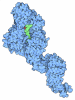
 emd_62654.png
 https://data.pdbj.org/pub/emdb/structures/EMD-62654


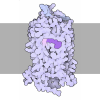
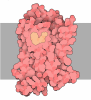
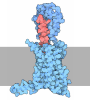
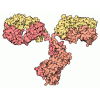

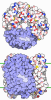
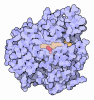
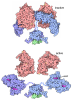
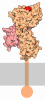
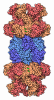
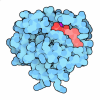

 Z (Sec.)
 Y (Row.)
 X (Col.)


 Sample components
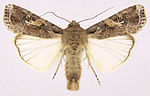 Spodoptera frugiperda (fall armyworm)
 Escherichia coli (E. coli)
 Processing
 Electron microscopy
 FIELD EMISSION GUN

