 Movie
Movie Controller

[English] 日本語
 Yorodumi
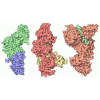
- EMDB-62586: Structure of mouse TLQP21 bound to mouse C3aR in complex with Go -
+ Open data

- Basic information
| Entry |  | ||||||||||||
|---|---|---|---|---|---|---|---|---|---|---|---|---|---|
| Title | Structure of mouse TLQP21 bound to mouse C3aR in complex with Go | ||||||||||||
 Map data Map data | |||||||||||||
 Sample Sample |
| ||||||||||||
 Keywords Keywords | G protein coupled receptor / G protein / Membrane protein / Immunite system / SIGNALING PROTEIN | ||||||||||||
| Function / homology |  Function and homology information Function and homology informationtolerance induction to nonself antigen / complement component C3a binding / carbohydrate homeostasis / complement component C3a receptor activity / Regulation of Insulin-like Growth Factor (IGF) transport and uptake by Insulin-like Growth Factor Binding Proteins (IGFBPs) / Post-translational protein phosphorylation / Regulation of Complement cascade / Peptide ligand-binding receptors / synaptic signaling via neuropeptide / complement component C5a receptor activity ...tolerance induction to nonself antigen / complement component C3a binding / carbohydrate homeostasis / complement component C3a receptor activity / Regulation of Insulin-like Growth Factor (IGF) transport and uptake by Insulin-like Growth Factor Binding Proteins (IGFBPs) / Post-translational protein phosphorylation / Regulation of Complement cascade / Peptide ligand-binding receptors / synaptic signaling via neuropeptide / complement component C5a receptor activity / Muscarinic acetylcholine receptors / G protein-coupled acetylcholine receptor activity / G alpha (i) signalling events / positive regulation of glomerular mesangial cell proliferation / regulation of locomotion / neuropeptide hormone activity / adenylate cyclase-inhibiting G protein-coupled acetylcholine receptor signaling pathway / mu-type opioid receptor binding / corticotropin-releasing hormone receptor 1 binding / insulin secretion / complement receptor mediated signaling pathway / negative regulation of neurotransmitter secretion / G protein-coupled dopamine receptor signaling pathway / positive regulation of neutrophil chemotaxis / response to dietary excess / positive regulation of DNA biosynthetic process / positive regulation of macrophage chemotaxis / parallel fiber to Purkinje cell synapse / regulation of neuronal synaptic plasticity / negative regulation of insulin secretion / positive regulation of vascular endothelial growth factor production / response to cAMP / G protein-coupled receptor signaling pathway, coupled to cyclic nucleotide second messenger / postsynaptic modulation of chemical synaptic transmission / transport vesicle / response to cold / Neutrophil degranulation / ovarian follicle development / muscle contraction / positive regulation of smooth muscle cell proliferation / adenylate cyclase-inhibiting dopamine receptor signaling pathway / adenylate cyclase-inhibiting serotonin receptor signaling pathway / G protein-coupled serotonin receptor binding / response to insulin / growth factor activity / calcium-mediated signaling / generation of precursor metabolites and energy / hormone activity / regulation of synaptic plasticity / GABA-ergic synapse / regulation of blood pressure / chemotaxis / modulation of chemical synaptic transmission / G protein-coupled receptor activity / positive regulation of angiogenesis / G-protein beta/gamma-subunit complex binding / adenylate cyclase-inhibiting G protein-coupled receptor signaling pathway / adenylate cyclase-modulating G protein-coupled receptor signaling pathway / Olfactory Signaling Pathway / phospholipase C-activating G protein-coupled receptor signaling pathway / Activation of the phototransduction cascade / G protein-coupled acetylcholine receptor signaling pathway / G beta:gamma signalling through PLC beta / Presynaptic function of Kainate receptors / Thromboxane signalling through TP receptor / Activation of G protein gated Potassium channels / Inhibition of voltage gated Ca2+ channels via Gbeta/gamma subunits / G-protein activation / Glucagon signaling in metabolic regulation / G beta:gamma signalling through CDC42 / Prostacyclin signalling through prostacyclin receptor / Synthesis, secretion, and inactivation of Glucagon-like Peptide-1 (GLP-1) / photoreceptor disc membrane / G beta:gamma signalling through BTK / ADP signalling through P2Y purinoceptor 12 / Sensory perception of sweet, bitter, and umami (glutamate) taste / glucose homeostasis / Glucagon-type ligand receptors / Adrenaline,noradrenaline inhibits insulin secretion / Vasopressin regulates renal water homeostasis via Aquaporins / G alpha (z) signalling events / Glucagon-like Peptide-1 (GLP1) regulates insulin secretion / ADP signalling through P2Y purinoceptor 1 / cellular response to catecholamine stimulus / G beta:gamma signalling through PI3Kgamma / ADORA2B mediated anti-inflammatory cytokines production / adenylate cyclase-activating dopamine receptor signaling pathway / cellular response to prostaglandin E stimulus / Cooperation of PDCL (PhLP1) and TRiC/CCT in G-protein beta folding / GPER1 signaling / heterotrimeric G-protein complex / G alpha (12/13) signalling events / Inactivation, recovery and regulation of the phototransduction cascade / G-protein beta-subunit binding / extracellular vesicle / positive regulation of cytosolic calcium ion concentration / Thrombin signalling through proteinase activated receptors (PARs) / signaling receptor complex adaptor activity / GTPase binding / cell body Similarity search - Function | ||||||||||||
| Biological species |  Homo sapiens (human) / Homo sapiens (human) /   Mus musculus (house mouse) Mus musculus (house mouse) | ||||||||||||
| Method | single particle reconstruction / cryo EM / Resolution: 2.88 Å | ||||||||||||
 Authors Authors | Banerjee R / Yadav R / Yadav MK / Ganguly M / Mishra S / Dalal A / Gati C / Shukla AK | ||||||||||||
| Funding support |  United Kingdom, United Kingdom,  India, 3 items India, 3 items
| ||||||||||||
 Citation Citation | Journal: bioRxiv / Year: 2025 Title: Molecular fingerprints of a convergent mechanism orchestrating diverse ligand recognition and species-specific pharmacology at the complement anaphylatoxin receptors. Authors: Sudha Mishra / Manish K Yadav / Annu Dalal / Manisankar Ganguly / Ravi Yadav / Kazuhiro Sawada / Divyanshu Tiwari / Nabarun Roy / Nilanjana Banerjee / Jenny N Fung / Jianina Marallag / ...Authors: Sudha Mishra / Manish K Yadav / Annu Dalal / Manisankar Ganguly / Ravi Yadav / Kazuhiro Sawada / Divyanshu Tiwari / Nabarun Roy / Nilanjana Banerjee / Jenny N Fung / Jianina Marallag / Cedric S Cui / Xaria X Li / John D Lee / Calvin Aaron Dsouza / Shirsha Saha / Parishmita Sarma / Ganita Rawat / Houming Zhu / Htet A Khant / Richard J Clark / Fumiya K Sano / Ramanuj Banerjee / Trent M Woodruff / Osamu Nureki / Cornelius Gati / Arun K Shukla /    Abstract: Complement anaphylatoxin receptors (C3aR and C5aR1) are prototypical G protein-coupled receptors (GPCRs) playing crucial physiological roles in innate immunity by combating pathogenic infections and ...Complement anaphylatoxin receptors (C3aR and C5aR1) are prototypical G protein-coupled receptors (GPCRs) playing crucial physiological roles in innate immunity by combating pathogenic infections and orchestrating inflammatory responses. They continue to be important therapeutic targets for multiple disorders including autoimmune diseases, acute and chronic inflammation, and allergy-related conditions. Recent structural coverage has provided important insights into their activation and signaling, however, confounding observations in the literature related to ligand efficacy and functional responses, especially in different model systems, present a major challenge for drug discovery efforts. Here, we systematically and comprehensively profile a broad set of natural and synthetic ligands at C3aR and C5aR1 and discover a previously unanticipated level of functional specialization in terms of species-specific pharmacology and receptor activation. Taking a lead from this, we determine seventeen cryo-EM structures of different ligand-receptor-G-protein complexes and uncover distinct orientation of agonists between the human and mouse receptors despite an overlapping positioning in the orthosteric binding pocket. Combined with extensive mutagenesis and functional assays, these structural snapshots allow us to decode and validate a convergent molecular mechanism involving a "Five-Point-Switch" in these receptors that orchestrates the recognition and efficacy of diverse agonists. We also identify species-specific differences at the level of phosphorylation patterns encoded in the carboxyl-terminus of these receptors and directly visualize their impact on βarr binding and activation using cryo-EM structures. Interestingly, we observe that βarrs engage with the mouse C5aR1 using a variation of previously discovered P-X-P-P phosphorylation motif via a "Sliding-Mechanism" and also exhibit distinct oligomeric state for the human vs. mouse receptors. Taken together, this study elucidates functional specialization at the complement anaphylatoxin receptors and underlying molecular mechanisms, offering a previously lacking framework with direct and immediate implications for the development of novel therapeutics. | ||||||||||||
| History |
|
- Structure visualization
| Supplemental images |
|---|

- Downloads & links
-EMDB archive
| Map data | emd_62586.map.gz | 56.1 MB | EMDB map data format | |
|---|---|---|---|---|
| Header (meta data) | emd-62586-v30.xmlemd-62586.xml | 23.9 KB 23.9 KB | Display Display | EMDB header |
| FSC (resolution estimation) | emd_62586_fsc.xml | 8.4 KB | Display | FSC data file |
| Images |  emd_62586.png emd_62586.png | 91 KB | ||
| Filedesc metadata | emd-62586.cif.gz | 7.3 KB | ||
| Others | emd_62586_half_map_1.map.gzemd_62586_half_map_2.map.gz | 59.4 MB 59.4 MB | ||
| Archive directory |  https://data.pdbj.org/pub/emdb/structures/EMD-62586ftp://data.pdbj.org/pub/emdb/structures/EMD-62586 https://data.pdbj.org/pub/emdb/structures/EMD-62586ftp://data.pdbj.org/pub/emdb/structures/EMD-62586 | HTTPS FTP |
-Related structure data
| Related structure data |  9kv6MC  9kutC  9kv8C  9kvpC  9kwgC  9kwxC  9kx6C  9ky2C  9kyuC  9kzkC  9l0hC  9umjC  9umrC  9umxC M: atomic model generated by this map C: citing same article ( |
|---|---|
| Similar structure data |


-Links
| EMDB pages | EMDB (EBI/PDBe) / EMDataResource |
|---|---|
| Related items in Molecule of the Month |
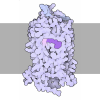
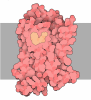
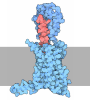

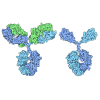
-Map
| File | Download / File: emd_62586.map.gz / Format: CCP4 / Size: 64 MB / Type: IMAGE STORED AS FLOATING POINT NUMBER (4 BYTES) | ||||||||||||||||||||||||||||||||||||
|---|---|---|---|---|---|---|---|---|---|---|---|---|---|---|---|---|---|---|---|---|---|---|---|---|---|---|---|---|---|---|---|---|---|---|---|---|---|
| Projections & slices | Image control
Images are generated by Spider. | ||||||||||||||||||||||||||||||||||||
| Voxel size | X=Y=Z: 1.294 Å | ||||||||||||||||||||||||||||||||||||
| Density |
| ||||||||||||||||||||||||||||||||||||
| Symmetry | Space group: 1 | ||||||||||||||||||||||||||||||||||||
| Details | EMDB XML:
|
 Z (Sec.)
 Y (Row.)
 X (Col.)


-Supplemental data
-Half map: #2
| File | emd_62586_half_map_1.map | ||||||||||||
|---|---|---|---|---|---|---|---|---|---|---|---|---|---|
| Projections & Slices |
| ||||||||||||
| Density Histograms |


-Half map: #1
| File | emd_62586_half_map_2.map | ||||||||||||
|---|---|---|---|---|---|---|---|---|---|---|---|---|---|
| Projections & Slices |
| ||||||||||||
| Density Histograms |


- Sample components
-Entire : Structure of mouse TLQP21 bound to mouse C3aR in complex with Go
| Entire | Name: Structure of mouse TLQP21 bound to mouse C3aR in complex with Go |
|---|---|
| Components |
|
-Supramolecule #1: Structure of mouse TLQP21 bound to mouse C3aR in complex with Go
| Supramolecule | Name: Structure of mouse TLQP21 bound to mouse C3aR in complex with Go type: complex / ID: 1 / Parent: 0 / Macromolecule list: all |
|---|---|
| Source (natural) | Organism: Homo sapiens (human) |
-Macromolecule #1: VGF-derived peptide TLQP-21
| Macromolecule | Name: VGF-derived peptide TLQP-21 / type: protein_or_peptide / ID: 1 / Number of copies: 1 / Enantiomer: LEVO |
|---|---|
| Source (natural) | Organism: Mus musculus (house mouse) |
| Molecular weight | Theoretical: 2.439801 KDa |
| Sequence | String: TLQPPASSRR RHFHHALPPA R UniProtKB: Neurosecretory protein VGF |
-Macromolecule #2: Muscarinic acetylcholine receptor M4,C3a anaphylatoxin chemotacti...
| Macromolecule | Name: Muscarinic acetylcholine receptor M4,C3a anaphylatoxin chemotactic receptor type: protein_or_peptide / ID: 2 / Number of copies: 1 / Enantiomer: LEVO |
|---|---|
| Source (natural) | Organism: Mus musculus (house mouse) |
| Molecular weight | Theoretical: 59.526031 KDa |
| Recombinant expression | Organism:   Spodoptera frugiperda (fall armyworm) Spodoptera frugiperda (fall armyworm) |
| Sequence | String: MGKTIIALSY IFCLVFADYK DDDDAANFTP VNGSSGNQSV RLVTSSSLEV LFQGPGSESF DADTNSTDLH SRPLFQPQDI ASMVILGLT CLLGLLGNGL VLWVAGVKMK TTVNTVWFLH LTLADFLCCL SLPFSLAHLI LQGHWPYGLF LCKLIPSIII L NMFASVFL ...String: MGKTIIALSY IFCLVFADYK DDDDAANFTP VNGSSGNQSV RLVTSSSLEV LFQGPGSESF DADTNSTDLH SRPLFQPQDI ASMVILGLT CLLGLLGNGL VLWVAGVKMK TTVNTVWFLH LTLADFLCCL SLPFSLAHLI LQGHWPYGLF LCKLIPSIII L NMFASVFL LTAISLDRCL IVHKPIWCQN HRNVRTAFAI CGCVWVVAFV MCVPVFVYRD LFIMDNRSIC RYNFDSSRSY DY WDYVYKL SLPESNSTDN STAQLTGHMN DRSAPSSVQA RDYFWTVTTA LQSQPFLTSP EDSFSLDSAN QQPHYGGKPP NVL TAAVPS GFPVEDRKSN TLNADAFLSA HTELFPTASS GHLYPYDFQG DYVDQFTYDN HVPTPLMAIT ITRLVVGFLV PFFI MVICY SLIVFRMRKT NFTKSRNKTF RVAVAVVTVF FICWTPYHLV GVLLLITDPE SSLGEAVMSW DHMSIALASA NSCFN PFLY ALLGKDFRKK ARQSIKGILE AAFSEELTHS TNCTQDKASS KRNNMSTDV UniProtKB: Muscarinic acetylcholine receptor M4, C3a anaphylatoxin chemotactic receptor |
-Macromolecule #3: Guanine nucleotide-binding protein G(o) subunit alpha
| Macromolecule | Name: Guanine nucleotide-binding protein G(o) subunit alpha / type: protein_or_peptide / ID: 3 / Number of copies: 1 / Enantiomer: LEVO EC number: Hydrolases; Acting on acid anhydrides; Acting on GTP to facilitate cellular and subcellular movement |
|---|---|
| Source (natural) | Organism: Homo sapiens (human) |
| Molecular weight | Theoretical: 28.193939 KDa |
| Recombinant expression | Organism:   Escherichia coli (E. coli) Escherichia coli (E. coli) |
| Sequence | String: MGHHHHHHEN LYFQGTLSAE ERAALERSKA IEKNLKEDGI SAAKDVKLLL LGADNSGKST IVKQMKIIHG GSGGSGGTTG IVETHFTFK NLHFRLFDVG GQRSERKKWI HCFEDVTAII FCVDLSDYDQ VLHEDETTNR MHESLMLFDS ICNNKFFIDT S IILFLNKK ...String: MGHHHHHHEN LYFQGTLSAE ERAALERSKA IEKNLKEDGI SAAKDVKLLL LGADNSGKST IVKQMKIIHG GSGGSGGTTG IVETHFTFK NLHFRLFDVG GQRSERKKWI HCFEDVTAII FCVDLSDYDQ VLHEDETTNR MHESLMLFDS ICNNKFFIDT S IILFLNKK DLFGEKIKKS PLTICFPEYT GPNTYEDAAA YIQAQFESKN RSPNKEIYCH MTCATDTNNA QVIFDAVTDI II ANNLRGC GLY UniProtKB: Guanine nucleotide-binding protein G(o) subunit alpha, Guanine nucleotide-binding protein G(o) subunit alpha |
-Macromolecule #4: Guanine nucleotide-binding protein G(I)/G(S)/G(T) subunit beta-1
| Macromolecule | Name: Guanine nucleotide-binding protein G(I)/G(S)/G(T) subunit beta-1 type: protein_or_peptide / ID: 4 / Number of copies: 1 / Enantiomer: LEVO |
|---|---|
| Source (natural) | Organism: Homo sapiens (human) |
| Molecular weight | Theoretical: 38.534062 KDa |
| Recombinant expression | Organism: Spodoptera frugiperda (fall armyworm) |
| Sequence | String: MHHHHHHGSS GSELDQLRQE AEQLKNQIRD ARKACADATL SQITNNIDPV GRIQMRTRRT LRGHLAKIYA MHWGTDSRLL VSASQDGKL IIWDSYTTNK VHAIPLRSSW VMTCAYAPSG NYVACGGLDN ICSIYNLKTR EGNVRVSREL AGHTGYLSCC R FLDDNQIV ...String: MHHHHHHGSS GSELDQLRQE AEQLKNQIRD ARKACADATL SQITNNIDPV GRIQMRTRRT LRGHLAKIYA MHWGTDSRLL VSASQDGKL IIWDSYTTNK VHAIPLRSSW VMTCAYAPSG NYVACGGLDN ICSIYNLKTR EGNVRVSREL AGHTGYLSCC R FLDDNQIV TSSGDTTCAL WDIETGQQTT TFTGHTGDVM SLSLAPDTRL FVSGACDASA KLWDVREGMC RQTFTGHESD IN AICFFPN GNAFATGSDD ATCRLFDLRA DQELMTYSHD NIICGITSVS FSKSGRLLLA GYDDFNCNVW DALKADRAGV LAG HDNRVS CLGVTDDGMA VATGSWDSFL KIWN UniProtKB: Guanine nucleotide-binding protein G(I)/G(S)/G(T) subunit beta-1 |
-Macromolecule #5: Guanine nucleotide-binding protein G(I)/G(S)/G(O) subunit gamma-2
| Macromolecule | Name: Guanine nucleotide-binding protein G(I)/G(S)/G(O) subunit gamma-2 type: protein_or_peptide / ID: 5 / Number of copies: 1 / Enantiomer: LEVO |
|---|---|
| Source (natural) | Organism: Homo sapiens (human) |
| Molecular weight | Theoretical: 7.861143 KDa |
| Recombinant expression | Organism: Spodoptera frugiperda (fall armyworm) |
| Sequence | String: MASNNTASIA QARKLVEQLK MEANIDRIKV SKAAADLMAY CEAHAKEDPL LTPVPASENP FREKKFFCAI L UniProtKB: Guanine nucleotide-binding protein G(I)/G(S)/G(O) subunit gamma-2 |
-Macromolecule #6: Antibody fragment - ScFv16
| Macromolecule | Name: Antibody fragment - ScFv16 / type: protein_or_peptide / ID: 6 / Number of copies: 1 / Enantiomer: LEVO |
|---|---|
| Source (natural) | Organism: Mus musculus (house mouse) |
| Molecular weight | Theoretical: 26.466486 KDa |
| Recombinant expression | Organism: Escherichia coli (E. coli) |
| Sequence | String: DVQLVESGGG LVQPGGSRKL SCSASGFAFS SFGMHWVRQA PEKGLEWVAY ISSGSGTIYY ADTVKGRFTI SRDDPKNTLF LQMTSLRSE DTAMYYCVRS IYYYGSSPFD FWGQGTTLTV SSGGGGSGGG GSGGGGSDIV MTQATSSVPV TPGESVSISC R SSKSLLHS ...String: DVQLVESGGG LVQPGGSRKL SCSASGFAFS SFGMHWVRQA PEKGLEWVAY ISSGSGTIYY ADTVKGRFTI SRDDPKNTLF LQMTSLRSE DTAMYYCVRS IYYYGSSPFD FWGQGTTLTV SSGGGGSGGG GSGGGGSDIV MTQATSSVPV TPGESVSISC R SSKSLLHS NGNTYLYWFL QRPGQSPQLL IYRMSNLASG VPDRFSGSGS GTAFTLTISR LEAEDVGVYY CMQHLEYPLT FG AGTKLEL K |
-Experimental details
-Structure determination
| Method | cryo EM |
|---|---|
 Processing Processing | single particle reconstruction |
| Aggregation state | particle |
-Sample preparation
| Buffer | pH: 7.4 |
|---|---|
| Vitrification | Cryogen name: ETHANE |
- Electron microscopy
| Microscope | TFS KRIOS |
|---|---|
| Image recording | Film or detector model: GATAN K3 (6k x 4k) / Average electron dose: 46.0 e/Å2 |
| Electron beam | Acceleration voltage: 300 kV / Electron source:  FIELD EMISSION GUN FIELD EMISSION GUN |
| Electron optics | Illumination mode: FLOOD BEAM / Imaging mode: BRIGHT FIELD / Nominal defocus max: 3.0 µm / Nominal defocus min: 0.8 µm |
| Sample stage | Specimen holder model: FEI TITAN KRIOS AUTOGRID HOLDER / Cooling holder cryogen: NITROGEN |
| Experimental equipment |  Model: Titan Krios / Image courtesy: FEI Company |
+Image processing

-Atomic model buiding 1
| Initial model | Chain - Source name: SwissModel / Chain - Initial model type: in silico model |
|---|---|
| Refinement | Space: REAL / Protocol: FLEXIBLE FIT |
| Output model | PDB-9kv6: |
