 Movie
Movie Controller


+ Open data

- Basic information
| Entry |  | ||||||||||||
|---|---|---|---|---|---|---|---|---|---|---|---|---|---|
| Title | Structure of beta-arrestin2 in complex with mouse C5aR1pp | ||||||||||||
 Map data Map data | |||||||||||||
 Sample Sample |
| ||||||||||||
 Keywords Keywords | GPCR / G protein / SIGNALING PROTEIN / beta-arrestin | ||||||||||||
| Function / homology |  Function and homology information Function and homology informationcomplement component C5a binding / cell proliferation in hindbrain / response to peptidoglycan / presynapse organization / complement component C5a signaling pathway / Regulation of Complement cascade / Peptide ligand-binding receptors / complement component C5a receptor activity / angiotensin receptor binding / protein localization to non-motile cilium ...complement component C5a binding / cell proliferation in hindbrain / response to peptidoglycan / presynapse organization / complement component C5a signaling pathway / Regulation of Complement cascade / Peptide ligand-binding receptors / complement component C5a receptor activity / angiotensin receptor binding / protein localization to non-motile cilium / G alpha (i) signalling events / desensitization of G protein-coupled receptor signaling pathway / complement receptor mediated signaling pathway / G protein-coupled receptor internalization / inositol hexakisphosphate binding / positive regulation of neutrophil chemotaxis / positive regulation of macrophage chemotaxis / positive regulation of smoothened signaling pathway / amyloid-beta clearance / phosphatidylinositol-3,4,5-trisphosphate binding / positive regulation of receptor internalization / positive regulation of vascular endothelial growth factor production / endocytic vesicle / D1 dopamine receptor binding / neutrophil chemotaxis / sensory perception of pain / Neutrophil degranulation / clathrin-coated pit / positive regulation of epithelial cell proliferation / astrocyte activation / phosphatidylinositol binding / receptor internalization / microglial cell activation / mRNA transcription by RNA polymerase II / G protein-coupled receptor binding / cognition / modulation of chemical synaptic transmission / G protein-coupled receptor activity / positive regulation of angiogenesis / apical part of cell / adenylate cyclase-inhibiting G protein-coupled receptor signaling pathway / phospholipase C-activating G protein-coupled receptor signaling pathway / negative regulation of neuron apoptotic process / positive regulation of cytosolic calcium ion concentration / cytoplasmic vesicle / basolateral plasma membrane / positive regulation of ERK1 and ERK2 cascade / defense response to Gram-positive bacterium / inflammatory response / G protein-coupled receptor signaling pathway / signal transduction / cell surface / nucleus / plasma membrane / cytoplasm Similarity search - Function | ||||||||||||
| Biological species |   Bos taurus (domestic cattle) / Bos taurus (domestic cattle) /  Mus musculus (house mouse) Mus musculus (house mouse) | ||||||||||||
| Method | single particle reconstruction / cryo EM / Resolution: 2.78 Å | ||||||||||||
 Authors Authors | Banerjee R / Yadav R / Yadav MK / Ganguly M / Mishra S / Dalal A / Gati C / Shukla AK | ||||||||||||
| Funding support |  India, India,  United Kingdom, 3 items United Kingdom, 3 items
| ||||||||||||
 Citation Citation | Journal: bioRxiv / Year: 2025 Title: Molecular fingerprints of a convergent mechanism orchestrating diverse ligand recognition and species-specific pharmacology at the complement anaphylatoxin receptors. Authors: Sudha Mishra / Manish K Yadav / Annu Dalal / Manisankar Ganguly / Ravi Yadav / Kazuhiro Sawada / Divyanshu Tiwari / Nabarun Roy / Nilanjana Banerjee / Jenny N Fung / Jianina Marallag / ...Authors: Sudha Mishra / Manish K Yadav / Annu Dalal / Manisankar Ganguly / Ravi Yadav / Kazuhiro Sawada / Divyanshu Tiwari / Nabarun Roy / Nilanjana Banerjee / Jenny N Fung / Jianina Marallag / Cedric S Cui / Xaria X Li / John D Lee / Calvin Aaron Dsouza / Shirsha Saha / Parishmita Sarma / Ganita Rawat / Houming Zhu / Htet A Khant / Richard J Clark / Fumiya K Sano / Ramanuj Banerjee / Trent M Woodruff / Osamu Nureki / Cornelius Gati / Arun K Shukla /    Abstract: Complement anaphylatoxin receptors (C3aR and C5aR1) are prototypical G protein-coupled receptors (GPCRs) playing crucial physiological roles in innate immunity by combating pathogenic infections and ...Complement anaphylatoxin receptors (C3aR and C5aR1) are prototypical G protein-coupled receptors (GPCRs) playing crucial physiological roles in innate immunity by combating pathogenic infections and orchestrating inflammatory responses. They continue to be important therapeutic targets for multiple disorders including autoimmune diseases, acute and chronic inflammation, and allergy-related conditions. Recent structural coverage has provided important insights into their activation and signaling, however, confounding observations in the literature related to ligand efficacy and functional responses, especially in different model systems, present a major challenge for drug discovery efforts. Here, we systematically and comprehensively profile a broad set of natural and synthetic ligands at C3aR and C5aR1 and discover a previously unanticipated level of functional specialization in terms of species-specific pharmacology and receptor activation. Taking a lead from this, we determine seventeen cryo-EM structures of different ligand-receptor-G-protein complexes and uncover distinct orientation of agonists between the human and mouse receptors despite an overlapping positioning in the orthosteric binding pocket. Combined with extensive mutagenesis and functional assays, these structural snapshots allow us to decode and validate a convergent molecular mechanism involving a "Five-Point-Switch" in these receptors that orchestrates the recognition and efficacy of diverse agonists. We also identify species-specific differences at the level of phosphorylation patterns encoded in the carboxyl-terminus of these receptors and directly visualize their impact on βarr binding and activation using cryo-EM structures. Interestingly, we observe that βarrs engage with the mouse C5aR1 using a variation of previously discovered P-X-P-P phosphorylation motif via a "Sliding-Mechanism" and also exhibit distinct oligomeric state for the human vs. mouse receptors. Taken together, this study elucidates functional specialization at the complement anaphylatoxin receptors and underlying molecular mechanisms, offering a previously lacking framework with direct and immediate implications for the development of novel therapeutics. | ||||||||||||
| History |
|
- Structure visualization
| Supplemental images |
|---|

- Downloads & links
-EMDB archive
| Map data | emd_62636.map.gz | 184.2 MB | EMDB map data format | |
|---|---|---|---|---|
| Header (meta data) | emd-62636-v30.xmlemd-62636.xml | 22.2 KB 22.2 KB | Display Display | EMDB header |
| FSC (resolution estimation) | emd_62636_fsc.xml | 12.6 KB | Display | FSC data file |
| Images |  emd_62636.png emd_62636.png | 85 KB | ||
| Filedesc metadata | emd-62636.cif.gz | 6.8 KB | ||
| Others | emd_62636_half_map_1.map.gzemd_62636_half_map_2.map.gz | 200.1 MB 200.1 MB | ||
| Archive directory |  https://data.pdbj.org/pub/emdb/structures/EMD-62636ftp://data.pdbj.org/pub/emdb/structures/EMD-62636 https://data.pdbj.org/pub/emdb/structures/EMD-62636ftp://data.pdbj.org/pub/emdb/structures/EMD-62636 | HTTPS FTP |
-Related structure data
| Related structure data |  9ky2MC  9kutC  9kv6C  9kv8C  9kvpC  9kwgC  9kwxC  9kx6C  9kyuC  9kzkC  9l0hC  9umjC  9umrC  9umxC M: atomic model generated by this map C: citing same article ( |
|---|---|
| Similar structure data |


-Links
| EMDB pages | EMDB (EBI/PDBe) / EMDataResource |
|---|---|
| Related items in Molecule of the Month |
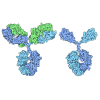
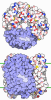
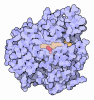
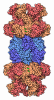
-Map
| File | Download / File: emd_62636.map.gz / Format: CCP4 / Size: 216 MB / Type: IMAGE STORED AS FLOATING POINT NUMBER (4 BYTES) | ||||||||||||||||||||||||||||||||||||
|---|---|---|---|---|---|---|---|---|---|---|---|---|---|---|---|---|---|---|---|---|---|---|---|---|---|---|---|---|---|---|---|---|---|---|---|---|---|
| Projections & slices | Image control
Images are generated by Spider. | ||||||||||||||||||||||||||||||||||||
| Voxel size | X=Y=Z: 1.0109 Å | ||||||||||||||||||||||||||||||||||||
| Density |
| ||||||||||||||||||||||||||||||||||||
| Symmetry | Space group: 1 | ||||||||||||||||||||||||||||||||||||
| Details | EMDB XML:
|
 Z (Sec.)
 Y (Row.)
 X (Col.)


-Supplemental data
-Half map: #2
| File | emd_62636_half_map_1.map | ||||||||||||
|---|---|---|---|---|---|---|---|---|---|---|---|---|---|
| Projections & Slices |
| ||||||||||||
| Density Histograms |


-Half map: #1
| File | emd_62636_half_map_2.map | ||||||||||||
|---|---|---|---|---|---|---|---|---|---|---|---|---|---|
| Projections & Slices |
| ||||||||||||
| Density Histograms |


- Sample components
-Entire : beta-arrestin2 in complex with mouse C5aR1pp
| Entire | Name: beta-arrestin2 in complex with mouse C5aR1pp |
|---|---|
| Components |
|
-Supramolecule #1: beta-arrestin2 in complex with mouse C5aR1pp
| Supramolecule | Name: beta-arrestin2 in complex with mouse C5aR1pp / type: complex / ID: 1 / Parent: 0 / Macromolecule list: all |
|---|
-Supramolecule #2: Beta-arrestin-2
| Supramolecule | Name: Beta-arrestin-2 / type: complex / ID: 2 / Parent: 1 / Macromolecule list: #1 |
|---|---|
| Source (natural) | Organism: Bos taurus (domestic cattle) |
-Supramolecule #3: Fab30 Heavy Chain and Light chain
| Supramolecule | Name: Fab30 Heavy Chain and Light chain / type: complex / ID: 3 / Parent: 1 / Macromolecule list: #2-#3 |
|---|---|
| Source (natural) | Organism: Mus musculus (house mouse) |
-Supramolecule #4: mouse C5aR1 phosphopeptide
| Supramolecule | Name: mouse C5aR1 phosphopeptide / type: complex / ID: 4 / Parent: 1 / Macromolecule list: #4 |
|---|
-Macromolecule #1: Beta-arrestin-2
| Macromolecule | Name: Beta-arrestin-2 / type: protein_or_peptide / ID: 1 / Number of copies: 2 / Enantiomer: LEVO |
|---|---|
| Source (natural) | Organism: Bos taurus (domestic cattle) |
| Molecular weight | Theoretical: 47.217676 KDa |
| Recombinant expression | Organism:   Escherichia coli (E. coli) Escherichia coli (E. coli) |
| Sequence | String: MGEKPGTRVF KKSSPNGKLT VYLGKRDFVD HLDKVDPVDG VVLVDPDYLK DRKVFVTLTV AFRYGREDCD VLGLSFRKDL FIANYQAFP PTPNPPRPPT RLQERLLRKL GQHAHPFFFT IPQNLPSSVT LQPGPEDTGK ALGVDFEIRA FVAKSLEEKS H KRNSVRLV ...String: MGEKPGTRVF KKSSPNGKLT VYLGKRDFVD HLDKVDPVDG VVLVDPDYLK DRKVFVTLTV AFRYGREDCD VLGLSFRKDL FIANYQAFP PTPNPPRPPT RLQERLLRKL GQHAHPFFFT IPQNLPSSVT LQPGPEDTGK ALGVDFEIRA FVAKSLEEKS H KRNSVRLV IRKVQFAPEK PGPQPSAETT RHFLMSDRSL HLEASLDKEL YYHGEPLNVN VHVTNNSTKT VKKIKVSVRQ YA DIVLFST AQYKVPVAQV EQDDQVSPSS TFSKVYTITP FLANNREKRG LALDGKLKHE DTNLASSTIV KEGANKEVLG ILV SYRVKV KLVVSRGGDV SVELPFVLMH PKPHDHIALP RPQSAATHPP TLLPSAVPET DAPVDTNLIE FETNYATDDD IVFE DFARL RLKGLKDEDY DDQFC UniProtKB: Beta-arrestin-2 |
-Macromolecule #2: Fab30 Heavy Chain
| Macromolecule | Name: Fab30 Heavy Chain / type: protein_or_peptide / ID: 2 / Number of copies: 2 / Enantiomer: LEVO |
|---|---|
| Source (natural) | Organism: Mus musculus (house mouse) |
| Molecular weight | Theoretical: 25.512354 KDa |
| Recombinant expression | Organism: Escherichia coli (E. coli) |
| Sequence | String: EISEVQLVES GGGLVQPGGS LRLSCAASGF NVYSSSIHWV RQAPGKGLEW VASISSYYGY TYYADSVKGR FTISADTSKN TAYLQMNSL RAEDTAVYYC ARSRQFWYSG LDYWGQGTLV TVSSASTKGP SVFPLAPSSK STSGGTAALG CLVKDYFPEP V TVSWNSGA ...String: EISEVQLVES GGGLVQPGGS LRLSCAASGF NVYSSSIHWV RQAPGKGLEW VASISSYYGY TYYADSVKGR FTISADTSKN TAYLQMNSL RAEDTAVYYC ARSRQFWYSG LDYWGQGTLV TVSSASTKGP SVFPLAPSSK STSGGTAALG CLVKDYFPEP V TVSWNSGA LTSGVHTFPA VLQSSGLYSL SSVVTVPSSS LGTQTYICNV NHKPSNTKVD KKVEPKSCDK THHHHHHHH |
-Macromolecule #3: Fab30 Light Chain
| Macromolecule | Name: Fab30 Light Chain / type: protein_or_peptide / ID: 3 / Number of copies: 2 / Enantiomer: LEVO |
|---|---|
| Source (natural) | Organism: Mus musculus (house mouse) |
| Molecular weight | Theoretical: 23.435064 KDa |
| Recombinant expression | Organism: Escherichia coli (E. coli) |
| Sequence | String: SDIQMTQSPS SLSASVGDRV TITCRASQSV SSAVAWYQQK PGKAPKLLIY SASSLYSGVP SRFSGSRSGT DFTLTISSLQ PEDFATYYC QQYKYVPVTF GQGTKVEIKR TVAAPSVFIF PPSDSQLKSG TASVVCLLNN FYPREAKVQW KVDNALQSGN S QESVTEQD ...String: SDIQMTQSPS SLSASVGDRV TITCRASQSV SSAVAWYQQK PGKAPKLLIY SASSLYSGVP SRFSGSRSGT DFTLTISSLQ PEDFATYYC QQYKYVPVTF GQGTKVEIKR TVAAPSVFIF PPSDSQLKSG TASVVCLLNN FYPREAKVQW KVDNALQSGN S QESVTEQD SKDSTYSLSS TLTLSKADYE KHKVYACEVT HQGLSSPVTK SFNRGEC |
-Macromolecule #4: C5a anaphylatoxin chemotactic receptor 1
| Macromolecule | Name: C5a anaphylatoxin chemotactic receptor 1 / type: protein_or_peptide / ID: 4 / Number of copies: 2 / Enantiomer: LEVO |
|---|---|
| Source (natural) | Organism: Mus musculus (house mouse) |
| Molecular weight | Theoretical: 2.892318 KDa |
| Sequence | String: GGGDSK(TPO)F(TPO)P (SEP)(TPO)(TPO)D(TPO)(SEP)TRKS QAV UniProtKB: C5a anaphylatoxin chemotactic receptor 1 |
-Experimental details
-Structure determination
| Method | cryo EM |
|---|---|
 Processing Processing | single particle reconstruction |
| Aggregation state | particle |
-Sample preparation
| Buffer | pH: 7.4 |
|---|---|
| Vitrification | Cryogen name: ETHANE |
- Electron microscopy
| Microscope | TFS KRIOS |
|---|---|
| Image recording | Film or detector model: GATAN K3 (6k x 4k) / Detector mode: COUNTING / Average electron dose: 53.7 e/Å2 |
| Electron beam | Acceleration voltage: 300 kV / Electron source:  FIELD EMISSION GUN FIELD EMISSION GUN |
| Electron optics | Illumination mode: FLOOD BEAM / Imaging mode: BRIGHT FIELD / Nominal defocus max: 3.0 µm / Nominal defocus min: 0.8 µm |
| Experimental equipment |  Model: Titan Krios / Image courtesy: FEI Company |
+Image processing

-Atomic model buiding 1
| Refinement | Space: REAL / Protocol: FLEXIBLE FIT |
|---|---|
| Output model | PDB-9ky2: |
