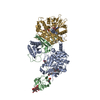
Movie
Movie Controller

[English] 日本語
 Yorodumi
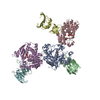
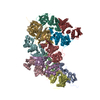
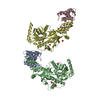
- PDB-7jhg: Cryo-EM structure of ATP-bound fully inactive AMPK in complex wit... -
+ Open data

- Basic information
| Entry | Database: PDB / ID: 7jhg | |||||||||
|---|---|---|---|---|---|---|---|---|---|---|
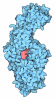
| Title | Cryo-EM structure of ATP-bound fully inactive AMPK in complex with Dorsomorphin (Compound C) and Fab-nanobody | |||||||||
 Components Components |
| |||||||||
 Keywords Keywords | TRANSFERASE/IMMUNE SYSTEM / AMPK / ATP / fully inactive / KD-displaced / TRANSFERASE-IMMUNE SYSTEM complex | |||||||||
| Function / homology |  Function and homology information Function and homology informationnegative regulation of glucosylceramide biosynthetic process / positive regulation of mitochondrial transcription / [hydroxymethylglutaryl-CoA reductase (NADPH)] kinase / [hydroxymethylglutaryl-CoA reductase (NADPH)] kinase activity / regulation of stress granule assembly / AMPK inhibits chREBP transcriptional activation activity / histone H2BS36 kinase activity / cold acclimation / lipid droplet disassembly / AMP-activated protein kinase activity ...negative regulation of glucosylceramide biosynthetic process / positive regulation of mitochondrial transcription / [hydroxymethylglutaryl-CoA reductase (NADPH)] kinase / [hydroxymethylglutaryl-CoA reductase (NADPH)] kinase activity / regulation of stress granule assembly / AMPK inhibits chREBP transcriptional activation activity / histone H2BS36 kinase activity / cold acclimation / lipid droplet disassembly / AMP-activated protein kinase activity / Lipophagy / CAMKK-AMPK signaling cascade / protein localization to lipid droplet / negative regulation of hepatocyte apoptotic process / regulation of vesicle-mediated transport / cAMP-dependent protein kinase regulator activity / Carnitine shuttle / Energy dependent regulation of mTOR by LKB1-AMPK / positive regulation of T cell mediated immune response to tumor cell / tau-protein kinase / nucleotide-activated protein kinase complex / protein kinase regulator activity / regulation of vascular permeability / motor behavior / negative regulation of TOR signaling / Activation of PPARGC1A (PGC-1alpha) by phosphorylation / neuron cellular homeostasis / protein localization to membrane / regulation of glycolytic process / cAMP-dependent protein kinase activity / cellular response to ethanol / positive regulation of protein localization to mitochondrion / response to caffeine / cellular response to stress / tau-protein kinase activity / AMP binding / lipid biosynthetic process / Macroautophagy / energy homeostasis / response to UV / negative regulation of ferroptosis / fatty acid homeostasis / carbohydrate transmembrane transporter activity / maltose binding / negative regulation of lipid catabolic process / maltose transport / maltodextrin transmembrane transport / cellular response to glucose starvation / cellular response to nutrient levels / positive regulation of gluconeogenesis / ATP-binding cassette (ABC) transporter complex, substrate-binding subunit-containing / positive regulation of adipose tissue development / negative regulation of insulin receptor signaling pathway / Activation of AMPK downstream of NMDARs / response to gamma radiation / positive regulation of protein localization / cellular response to calcium ion / positive regulation of autophagy / positive regulation of glycolytic process / negative regulation of TORC1 signaling / protein localization to plasma membrane / response to activity / cellular response to starvation / cellular response to xenobiotic stimulus / TP53 Regulates Metabolic Genes / cellular response to glucose stimulus / Translocation of SLC2A4 (GLUT4) to the plasma membrane / regulation of microtubule cytoskeleton organization / positive regulation of cholesterol biosynthetic process / ADP binding / response to estrogen / AMPK-induced ERAD and lysosome mediated degradation of PD-L1(CD274) / tau protein binding / regulation of circadian rhythm / positive regulation of T cell activation / cellular response to hydrogen peroxide / glucose homeostasis / late endosome / positive regulation of cold-induced thermogenesis / outer membrane-bounded periplasmic space / ciliary basal body / cellular response to oxidative stress / spermatogenesis / Regulation of TP53 Activity through Phosphorylation / response to hypoxia / regulation of cell cycle / cellular response to hypoxia / protein kinase activity / protein phosphorylation / non-specific serine/threonine protein kinase / nuclear speck / apical plasma membrane / endoplasmic reticulum lumen / negative regulation of gene expression / protein serine kinase activity / axon / protein serine/threonine kinase activity / neuronal cell body / chromatin binding / positive regulation of cell population proliferation Similarity search - Function | |||||||||
| Biological species |  Homo sapiens (human) Homo sapiens (human)  Escherichia coli K-12 (bacteria) Escherichia coli K-12 (bacteria)synthetic construct (others) | |||||||||
| Method | ELECTRON MICROSCOPY / single particle reconstruction / cryo EM / Resolution: 3.47 Å | |||||||||
 Authors Authors | Yan, Y. / Murkherjee, S. / Zhou, X.E. / Xu, T.H. / Xu, H.E. / Kossiakoff, A.A. / Melcher, K. | |||||||||
| Funding support |  United States, 2items United States, 2items
| |||||||||
 Citation Citation | Journal: Science / Year: 2021 Title: Structure of an AMPK complex in an inactive, ATP-bound state. Authors: Yan Yan / Somnath Mukherjee / Kaleeckal G Harikumar / Timothy S Strutzenberg / X Edward Zhou / Kelly Suino-Powell / Ting-Hai Xu / Ryan D Sheldon / Jared Lamp / Joseph S Brunzelle / Katarzyna ...Authors: Yan Yan / Somnath Mukherjee / Kaleeckal G Harikumar / Timothy S Strutzenberg / X Edward Zhou / Kelly Suino-Powell / Ting-Hai Xu / Ryan D Sheldon / Jared Lamp / Joseph S Brunzelle / Katarzyna Radziwon / Abigail Ellis / Scott J Novick / Irving E Vega / Russell G Jones / Laurence J Miller / H Eric Xu / Patrick R Griffin / Anthony A Kossiakoff / Karsten Melcher /  Abstract: Adenosine monophosphate (AMP)-activated protein kinase (AMPK) regulates metabolism in response to the cellular energy states. Under energy stress, AMP stabilizes the active AMPK conformation, in ...Adenosine monophosphate (AMP)-activated protein kinase (AMPK) regulates metabolism in response to the cellular energy states. Under energy stress, AMP stabilizes the active AMPK conformation, in which the kinase activation loop (AL) is protected from protein phosphatases, thus keeping the AL in its active, phosphorylated state. At low AMP:ATP (adenosine triphosphate) ratios, ATP inhibits AMPK by increasing AL dynamics and accessibility. We developed conformation-specific antibodies to trap ATP-bound AMPK in a fully inactive, dynamic state and determined its structure at 3.5-angstrom resolution using cryo-electron microscopy. A 180° rotation and 100-angstrom displacement of the kinase domain fully exposes the AL. On the basis of the structure and supporting biophysical data, we propose a multistep mechanism explaining how adenine nucleotides and pharmacological agonists modulate AMPK activity by altering AL phosphorylation and accessibility. | |||||||||
| History |
|
- Structure visualization
| Movie |
Movie viewer |
|---|---|
| Structure viewer | Molecule: MolmilJmol/JSmol |
- Downloads & links
-Download
| PDBx/mmCIF format | 7jhg.cif.gz | 322.2 KB | Display | PDBx/mmCIF format |
|---|---|---|---|---|
| PDB format | pdb7jhg.ent.gz | 249 KB | Display | PDB format |
| PDBx/mmJSON format | 7jhg.json.gz | Tree view | PDBx/mmJSON format | |
| Others |  Other downloads Other downloads |
-Validation report
| Arichive directory | https://data.pdbj.org/pub/pdb/validation_reports/jh/7jhgftp://data.pdbj.org/pub/pdb/validation_reports/jh/7jhg | HTTPS FTP |
|---|
-Related structure data
| Related structure data | 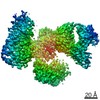 22336MC  7jhhC  7jijC  7m74C C: citing same article ( M: map data used to model this data |
|---|---|
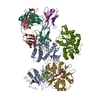
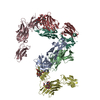
| Similar structure data |



-Links
 PDBj
PDBj
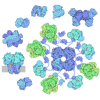
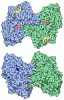
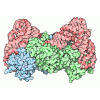
- Assembly
| Deposited unit | 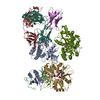
|
|---|---|
| 1 |
|
-Components
-Protein , 2 types, 2 molecules AM
| #1: Protein | Mass: 56004.395 Da / Num. of mol.: 1 / Fragment: UNP residues 22-480,535-559 Source method: isolated from a genetically manipulated source Source: (gene. exp.) Homo sapiens (human) / Gene: PRKAA1, AMPK1 / Production host: Escherichia coli K-12 (bacteria)References: UniProt: Q13131, non-specific serine/threonine protein kinase, EC: 2.7.11.27, [hydroxymethylglutaryl-CoA reductase (NADPH)] kinase, tau-protein kinase |
|---|---|
| #4: Protein | Mass: 40827.125 Da / Num. of mol.: 1 Source method: isolated from a genetically manipulated source Source: (gene. exp.) Escherichia coli K-12 (bacteria) / Gene: malE / Production host: Escherichia coli K-12 (bacteria) / References: UniProt: C3SHQ8 |
-5'-AMP-activated protein kinase subunit ... , 2 types, 2 molecules BG
| #2: Protein | Mass: 22384.650 Da / Num. of mol.: 1 Source method: isolated from a genetically manipulated source Source: (gene. exp.) Homo sapiens (human) / Gene: PRKAB2 / Production host: Escherichia coli K-12 (bacteria) / References: UniProt: O43741 |
|---|---|
| #3: Protein | Mass: 34833.359 Da / Num. of mol.: 1 Source method: isolated from a genetically manipulated source Source: (gene. exp.) Homo sapiens (human) / Gene: PRKAG1 / Production host: Escherichia coli K-12 (bacteria) / References: UniProt: P54619 |
-Antibody , 3 types, 3 molecules LHN
| #5: Antibody | Mass: 23212.715 Da / Num. of mol.: 1 Source method: isolated from a genetically manipulated source Source: (gene. exp.) synthetic construct (others) / Production host: Escherichia coli K-12 (bacteria) |
|---|---|
| #6: Antibody | Mass: 25483.488 Da / Num. of mol.: 1 Source method: isolated from a genetically manipulated source Source: (gene. exp.) synthetic construct (others) / Production host: Escherichia coli K-12 (bacteria) |
| #7: Antibody | Mass: 17414.383 Da / Num. of mol.: 1 Source method: isolated from a genetically manipulated source Source: (gene. exp.) synthetic construct (others) / Production host: Escherichia coli K-12 (bacteria) |
-Sugars , 1 types, 1 molecules
| #8: Polysaccharide | alpha-D-glucopyranose-(1-4)-alpha-D-glucopyranose 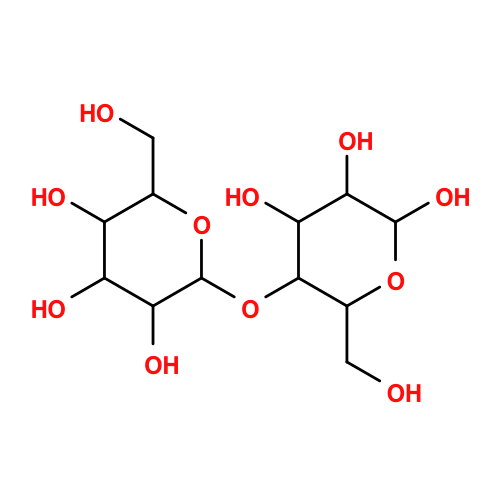 Source method: isolated from a genetically manipulated source Details: oligosaccharide / References: alpha-maltose |
|---|
-Non-polymers , 4 types, 4 molecules 
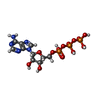
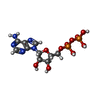
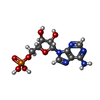
| #9: Chemical | ChemComp-TAK / 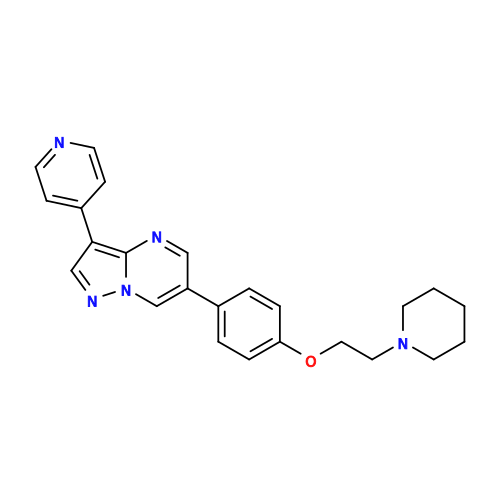 Mass: 399.488 Da / Num. of mol.: 1 / Source method: obtained synthetically / Formula: C24H25N5O / Feature type: SUBJECT OF INVESTIGATION Mass: 399.488 Da / Num. of mol.: 1 / Source method: obtained synthetically / Formula: C24H25N5O / Feature type: SUBJECT OF INVESTIGATION |
|---|---|
| #10: Chemical | ChemComp-ATP / 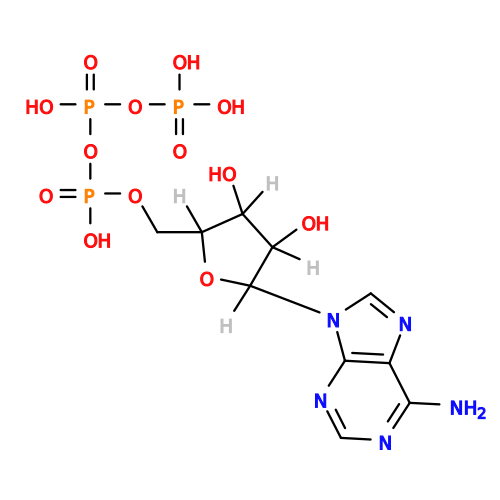 Mass: 507.181 Da / Num. of mol.: 1 / Source method: obtained synthetically / Formula: C10H16N5O13P3 / Comment: ATP, energy-carrying molecule*YM Mass: 507.181 Da / Num. of mol.: 1 / Source method: obtained synthetically / Formula: C10H16N5O13P3 / Comment: ATP, energy-carrying molecule*YM |
| #11: Chemical | ChemComp-ADP / 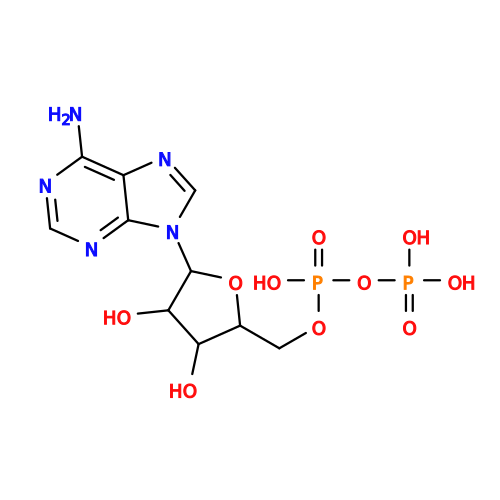 Mass: 427.201 Da / Num. of mol.: 1 / Source method: obtained synthetically / Formula: C10H15N5O10P2 / Comment: ADP, energy-carrying molecule*YM Mass: 427.201 Da / Num. of mol.: 1 / Source method: obtained synthetically / Formula: C10H15N5O10P2 / Comment: ADP, energy-carrying molecule*YM |
| #12: Chemical | ChemComp-AMP / 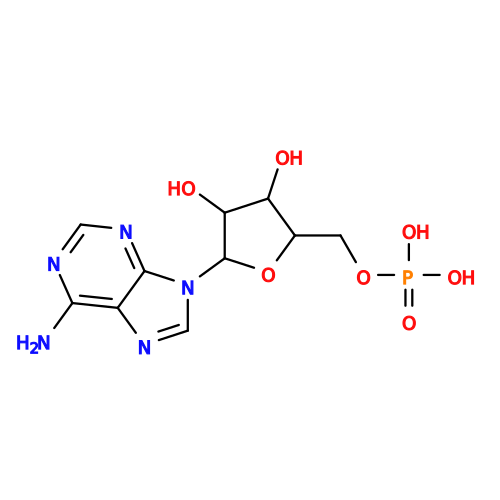 Mass: 347.221 Da / Num. of mol.: 1 / Source method: obtained synthetically / Formula: C10H14N5O7P / Comment: AMP*YM Mass: 347.221 Da / Num. of mol.: 1 / Source method: obtained synthetically / Formula: C10H14N5O7P / Comment: AMP*YM |
-Details
| Has ligand of interest | Y |
|---|---|
| Has protein modification | Y |
-Experimental details
-Experiment
| Experiment | Method: ELECTRON MICROSCOPY |
|---|---|
| EM experiment | Aggregation state: PARTICLE / 3D reconstruction method: single particle reconstruction |
- Sample preparation
| Component |
| ||||||||||||||||||||||||
|---|---|---|---|---|---|---|---|---|---|---|---|---|---|---|---|---|---|---|---|---|---|---|---|---|---|
| Molecular weight | Value: 0.22 MDa / Experimental value: NO | ||||||||||||||||||||||||
| Source (natural) |
| ||||||||||||||||||||||||
| Source (recombinant) |
| ||||||||||||||||||||||||
| Buffer solution | pH: 8 | ||||||||||||||||||||||||
| Specimen | Embedding applied: NO / Shadowing applied: NO / Staining applied: NO / Vitrification applied: YES | ||||||||||||||||||||||||
| Specimen support | Grid material: GOLD / Grid mesh size: 300 divisions/in. / Grid type: Quantifoil R1.2/1.3 | ||||||||||||||||||||||||
| Vitrification | Instrument: FEI VITROBOT MARK IV / Cryogen name: ETHANE / Humidity: 100 % / Chamber temperature: 281 K |
- Electron microscopy imaging
| Experimental equipment |  Model: Titan Krios / Image courtesy: FEI Company |
|---|---|
| Microscopy | Model: FEI TITAN KRIOS |
| Electron gun | Electron source:  FIELD EMISSION GUN / Accelerating voltage: 300 kV / Illumination mode: FLOOD BEAM FIELD EMISSION GUN / Accelerating voltage: 300 kV / Illumination mode: FLOOD BEAM |
| Electron lens | Mode: BRIGHT FIELD / Cs: 2.7 mm |
| Specimen holder | Cryogen: NITROGEN |
| Image recording | Average exposure time: 0.2 sec. / Electron dose: 83 e/Å2 / Detector mode: SUPER-RESOLUTION / Film or detector model: GATAN K2 SUMMIT (4k x 4k) / Num. of real images: 6157 |
- Processing
| Software | Name: PHENIX / Version: 1.13_2998: / Classification: refinement | ||||||||||||||||||||||||||||
|---|---|---|---|---|---|---|---|---|---|---|---|---|---|---|---|---|---|---|---|---|---|---|---|---|---|---|---|---|---|
| EM software |
| ||||||||||||||||||||||||||||
| CTF correction | Type: PHASE FLIPPING AND AMPLITUDE CORRECTION | ||||||||||||||||||||||||||||
| Particle selection | Num. of particles selected: 943787 | ||||||||||||||||||||||||||||
| 3D reconstruction | Resolution: 3.47 Å / Resolution method: FSC 0.143 CUT-OFF / Num. of particles: 286895 / Symmetry type: POINT | ||||||||||||||||||||||||||||
| Atomic model building |
|