






 9AX5
9AX5
Cryo-EM structure of Phospholipase C epsilon PH-C terminus in complex with RhoA-GTP
Summary for 9AX5
| Entry DOI | 10.2210/pdb9ax5/pdb |
| EMDB information | 43927 |
| Descriptor | 1-phosphatidylinositol 4,5-bisphosphate phosphodiesterase epsilon-1, Transforming protein RhoA, CALCIUM ION, ... (5 entities in total) |
| Functional Keywords | gpcr signaling, complex, phospholipase, pip2 hydrolysis, g protein, membrane protein |
| Biological source | Rattus norvegicus (Norway rat) More |
| Total number of polymer chains | 2 |
| Total formula weight | 190339.56 |
| Authors | Ohri, V.,Lyon, A.M. (deposition date: 2024-03-05, release date: 2025-03-12, Last modification date: 2025-10-15) |
| Primary citation | Ohri, V.,Samassekou, K.,Muralidharan, K.,Garland-Kuntz, E.E.,Fisher, I.J.,Hogan, W.C.,Davis, B.M.,Lyon, A.M. RhoA allosterically activates phospholipase C epsilon via its EF hands. Commun Biol, 8:1368-1368, 2025 Cited by PubMed Abstract: Phospholipase Cε (PLCε) cleaves phosphatidylinositol lipids to increase intracellular Ca and activate protein kinase C (PKC) in response to stimulation of cell surface receptors. PLCε is activated via direct binding of small GTPases at the cytoplasmic leaflets of cellular membranes. In the cardiovascular system, the RhoA GTPase regulates PLCε to initiate a pathway that protects against ischemia/reperfusion injuries, but the underlying molecular mechanism is not known. We present here the cryo-electron microscopy (cryo-EM) reconstruction of RhoA bound to PLCε, showing that the G protein binds a unique insertion within the PLCε EF hands. Deletion of or mutations to this PLCε insertion decrease RhoA-dependent activation without impacting its regulation by other G proteins. Together, our data support a model wherein RhoA binding to PLCε allosterically activates the lipase and increases its interactions with the membrane, resulting in maximum activity and cardiomyocyte survival. PubMed: 41006770DOI: 10.1038/s42003-025-08742-0 PDB entries with the same primary citation |
| Experimental method | ELECTRON MICROSCOPY (3.3 Å) |
Structure validation
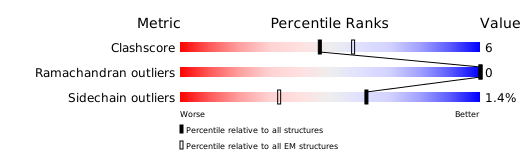
Download full validation report


