 Movie
Movie Controller

[English] 日本語
 Yorodumi
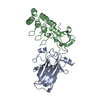
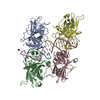
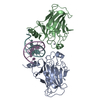
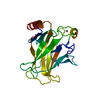
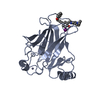
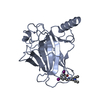
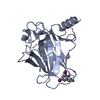
- PDB-4agn: Structure of the p53 core domain mutant Y220C bound to the stabil... -
+ Open data

- Basic information
| Entry | Database: PDB / ID: 4agn | ||||||
|---|---|---|---|---|---|---|---|
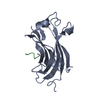
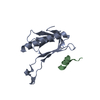
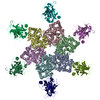
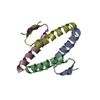
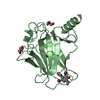
| Title | Structure of the p53 core domain mutant Y220C bound to the stabilizing small molecule PhiKan5116 | ||||||
 Components Components | CELLULAR TUMOR ANTIGEN P53 | ||||||
 Keywords Keywords | CELL CYCLE / TRANSCRIPTION / APOPTOSIS / CANCER MUTATION / SURFACE CREVICE / SMALL-MOLECULE DRUG / PROTEIN STABILIZATION / HALOGEN BONDING / ACETYLENE LINKER / ZINC BINDING | ||||||
| Function / homology |  Function and homology information Function and homology informationnegative regulation of helicase activity / signal transduction by p53 class mediator / Loss of function of TP53 in cancer due to loss of tetramerization ability / Regulation of TP53 Expression / regulation of cell cycle G2/M phase transition / negative regulation of G1 to G0 transition / Transcriptional activation of cell cycle inhibitor p21 / negative regulation of pentose-phosphate shunt / Activation of NOXA and translocation to mitochondria / ATP-dependent DNA/DNA annealing activity ...negative regulation of helicase activity / signal transduction by p53 class mediator / Loss of function of TP53 in cancer due to loss of tetramerization ability / Regulation of TP53 Expression / regulation of cell cycle G2/M phase transition / negative regulation of G1 to G0 transition / Transcriptional activation of cell cycle inhibitor p21 / negative regulation of pentose-phosphate shunt / Activation of NOXA and translocation to mitochondria / ATP-dependent DNA/DNA annealing activity / oligodendrocyte apoptotic process / positive regulation of thymocyte apoptotic process / oxidative stress-induced premature senescence / bone marrow development / circadian behavior / cellular response to actinomycin D / positive regulation of programmed necrotic cell death / RUNX3 regulates CDKN1A transcription / TP53 Regulates Transcription of Death Receptors and Ligands / Activation of PUMA and translocation to mitochondria / TP53 regulates transcription of additional cell cycle genes whose exact role in the p53 pathway remain uncertain / mRNA transcription / Urea cycle / Regulation of TP53 Activity through Association with Co-factors / ER overload response / hematopoietic stem cell differentiation / Formation of Senescence-Associated Heterochromatin Foci (SAHF) / TP53 Regulates Transcription of Caspase Activators and Caspases / intrinsic apoptotic signaling pathway by p53 class mediator / entrainment of circadian clock by photoperiod / Zygotic genome activation (ZGA) / TP53 Regulates Transcription of Genes Involved in Cytochrome C Release / PI5P Regulates TP53 Acetylation / positive regulation of release of cytochrome c from mitochondria / hematopoietic progenitor cell differentiation / Association of TriC/CCT with target proteins during biosynthesis / negative regulation of telomere maintenance via telomerase / SUMOylation of transcription factors / TP53 regulates transcription of several additional cell death genes whose specific roles in p53-dependent apoptosis remain uncertain / intrinsic apoptotic signaling pathway in response to DNA damage by p53 class mediator / Transcriptional Regulation by VENTX / replicative senescence / TFIID-class transcription factor complex binding / intrinsic apoptotic signaling pathway in response to endoplasmic reticulum stress / viral process / positive regulation of intrinsic apoptotic signaling pathway / Pyroptosis / determination of adult lifespan / positive regulation of RNA polymerase II transcription preinitiation complex assembly / general transcription initiation factor binding / negative regulation of fibroblast proliferation / positive regulation of execution phase of apoptosis / type II interferon-mediated signaling pathway / TP53 Regulates Transcription of Genes Involved in G1 Cell Cycle Arrest / cellular response to glucose starvation / core promoter sequence-specific DNA binding / cis-regulatory region sequence-specific DNA binding / Regulation of TP53 Activity through Acetylation / intrinsic apoptotic signaling pathway / mitotic G1 DNA damage checkpoint signaling / response to gamma radiation / 14-3-3 protein binding / MDM2/MDM4 family protein binding / TP53 Regulates Transcription of Genes Involved in G2 Cell Cycle Arrest / protein phosphatase 2A binding / molecular function activator activity / transcription initiation-coupled chromatin remodeling / Regulation of PTEN gene transcription / tumor necrosis factor-mediated signaling pathway / cellular response to ionizing radiation / cellular response to xenobiotic stimulus / DNA damage response, signal transduction by p53 class mediator / TP53 Regulates Metabolic Genes / autophagy / TP53 Regulates Transcription of DNA Repair Genes / Regulation of NF-kappa B signaling / mRNA 3'-UTR binding / protein tetramerization / promoter-specific chromatin binding / Stabilization of p53 / molecular condensate scaffold activity / negative regulation of cell growth / cellular response to gamma radiation / nucleotide-excision repair / G2/M Checkpoints / receptor tyrosine kinase binding / Autodegradation of the E3 ubiquitin ligase COP1 / PML body / positive regulation of miRNA transcription / Oncogene Induced Senescence / DNA-binding transcription repressor activity, RNA polymerase II-specific / PKR-mediated signaling / Regulation of TP53 Activity through Methylation / G2/M DNA damage checkpoint / cellular senescence / DNA Damage/Telomere Stress Induced Senescence / Pre-NOTCH Transcription and Translation / positive regulation of reactive oxygen species metabolic process / intracellular protein localization / histone deacetylase binding Similarity search - Function | ||||||
| Biological species |  HOMO SAPIENS (human) HOMO SAPIENS (human) | ||||||
| Method |  X-RAY DIFFRACTION / SYNCHROTRON / MOLECULAR REPLACEMENT / Resolution: 1.6 Å X-RAY DIFFRACTION / SYNCHROTRON / MOLECULAR REPLACEMENT / Resolution: 1.6 Å | ||||||
 Authors Authors | Joerger, A.C. / Wilcken, R. / Boeckler, F.M. / Fersht, A.R. | ||||||
 Citation Citation | Journal: J.Am.Chem.Soc. / Year: 2012 Title: Halogen-Enriched Fragment Libraries as Leads for Drug Rescue of Mutant P53. Authors: Wilcken, R. / Liu, X. / Zimmermann, M.O. / Rutherford, T.J. / Fersht, A.R. / Joerger, A.C. / Boeckler, F.M. #1: Journal: Proc.Natl.Acad.Sci.USA / Year: 2006Title: Structural Basis for Understanding Oncogenic P53 Mutations and Designing Rescue Drugs. Authors: Joerger, A.C. / Ang, H.C. / Fersht, A.R. | ||||||
| History |
|
- Structure visualization
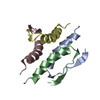
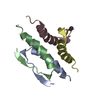
| Structure viewer | Molecule: MolmilJmol/JSmol |
|---|
- Downloads & links
-Download
| PDBx/mmCIF format | 4agn.cif.gz | 110.6 KB | Display | PDBx/mmCIF format |
|---|---|---|---|---|
| PDB format | pdb4agn.ent.gz | 84.5 KB | Display | PDB format |
| PDBx/mmJSON format | 4agn.json.gz | Tree view | PDBx/mmJSON format | |
| Others |  Other downloads Other downloads |
-Validation report
| Arichive directory | https://data.pdbj.org/pub/pdb/validation_reports/ag/4agnftp://data.pdbj.org/pub/pdb/validation_reports/ag/4agn | HTTPS FTP |
|---|
-Related structure data
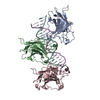
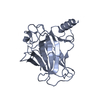
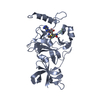
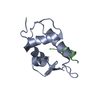
| Related structure data |  4aglC 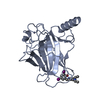 4agmC  4agoC 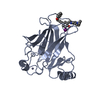 4agpC  4agqC  2j1xS S: Starting model for refinement C: citing same article ( |
|---|---|
| Similar structure data |









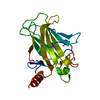
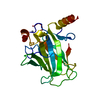
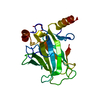
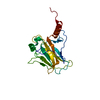











-Links
 PDBj
PDBj
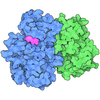
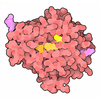
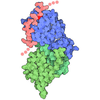
- Assembly
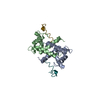
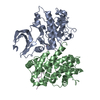
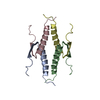
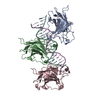
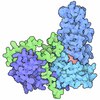
| Deposited unit | 
| ||||||||
|---|---|---|---|---|---|---|---|---|---|
| 1 | 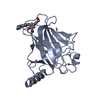
| ||||||||
| 2 | 
| ||||||||
| Unit cell |
|
-Components
| #1: Protein | Mass: 24530.811 Da / Num. of mol.: 2 / Fragment: DNA-BINDING DOMAIN, RESIDUES 94-312 / Mutation: YES Source method: isolated from a genetically manipulated source Source: (gene. exp.) HOMO SAPIENS (human) / Production host:   ESCHERICHIA COLI (E. coli) / References: UniProt: P04637 ESCHERICHIA COLI (E. coli) / References: UniProt: P04637#2: Chemical |   Mass: 65.409 Da / Num. of mol.: 2 / Source method: obtained synthetically / Formula: Zn Mass: 65.409 Da / Num. of mol.: 2 / Source method: obtained synthetically / Formula: Zn#3: Chemical | 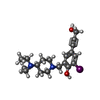 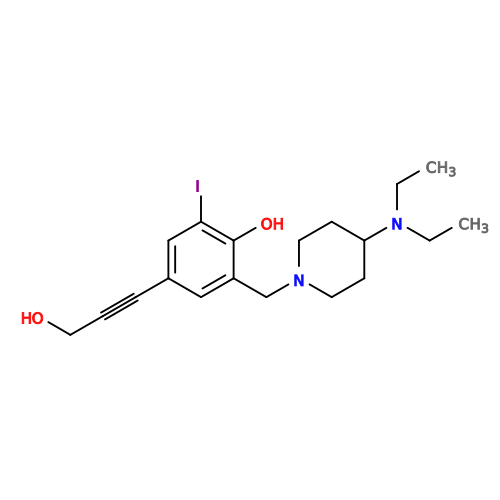 Mass: 442.334 Da / Num. of mol.: 2 / Source method: obtained synthetically / Formula: C19H27IN2O2 Mass: 442.334 Da / Num. of mol.: 2 / Source method: obtained synthetically / Formula: C19H27IN2O2#4: Water | ChemComp-HOH / |  Mass: 18.015 Da / Num. of mol.: 609 / Source method: isolated from a natural source / Formula: H2O Mass: 18.015 Da / Num. of mol.: 609 / Source method: isolated from a natural source / Formula: H2OCompound details | ENGINEERED RESIDUE IN CHAIN A, MET 133 TO LEU ENGINEERED RESIDUE IN CHAIN A, VAL 203 TO ALA ...ENGINEERED | |
|---|
-Experimental details
-Experiment
| Experiment | Method: X-RAY DIFFRACTION / Number of used crystals: 1 |
|---|
- Sample preparation
| Crystal | Density Matthews: 2.5 Å3/Da / Density % sol: 51 % / Description: NONE |
|---|---|
| Crystal grow | Temperature: 294 K / Method: vapor diffusion, sitting drop Details: SITTING-DROP VAPOR DIFFUSION AT 21 DEGREE C. PROTEIN SOLUTION: 6 MG/ML PROTEIN IN 25 MM SODIUM PHOSPHATE, PH 7.2, 150 MM KCL, 5 MM DTT. RESERVOIR BUFFER: 100 MM HEPES, PH 7.2, 19% (W/V) ...Details: SITTING-DROP VAPOR DIFFUSION AT 21 DEGREE C. PROTEIN SOLUTION: 6 MG/ML PROTEIN IN 25 MM SODIUM PHOSPHATE, PH 7.2, 150 MM KCL, 5 MM DTT. RESERVOIR BUFFER: 100 MM HEPES, PH 7.2, 19% (W/V) POLYETHYLENE GLYCOL 4000, 5 MM DTT. SOAKING BUFFER: 30 MM COMPOUND IN 100 MM HEPES, PH 7.2, 10 MM SODIUM PHOSPHATE, PH 7.2, 19% (W/V) POLYETHYLENE GLYCOL 4000, 20 % (V/V) GLYCEROL, 150 MM KCL. |
-Data collection
| Diffraction | Mean temperature: 100 K |
|---|---|
| Diffraction source | Source: SYNCHROTRON / Site: Diamond  / Beamline: I02 / Wavelength: 0.9791 / Beamline: I02 / Wavelength: 0.9791 |
| Detector | Type: ADSC CCD / Detector: CCD |
| Radiation | Protocol: SINGLE WAVELENGTH / Monochromatic (M) / Laue (L): M / Scattering type: x-ray |
| Radiation wavelength | Wavelength: 0.9791 Å / Relative weight: 1 |
| Reflection | Resolution: 1.6→35.4 Å / Num. obs: 64327 / % possible obs: 99 % / Observed criterion σ(I): 2 / Redundancy: 5.4 % / Biso Wilson estimate: 11.89 Å2 / Rmerge(I) obs: 0.08 / Net I/σ(I): 12.9 |
| Reflection shell | Resolution: 1.6→1.69 Å / Redundancy: 5.3 % / Rmerge(I) obs: 0.31 / Mean I/σ(I) obs: 4.4 / % possible all: 97 |
- Processing
| Software |
| ||||||||||||||||||||||||||||||||||||||||||||||||||||||||||||||||||||||||||||||||||||||||||||||||||||||||||||||||||||||||||||||||||||||||||||||||||||||||||||||||||||||||
|---|---|---|---|---|---|---|---|---|---|---|---|---|---|---|---|---|---|---|---|---|---|---|---|---|---|---|---|---|---|---|---|---|---|---|---|---|---|---|---|---|---|---|---|---|---|---|---|---|---|---|---|---|---|---|---|---|---|---|---|---|---|---|---|---|---|---|---|---|---|---|---|---|---|---|---|---|---|---|---|---|---|---|---|---|---|---|---|---|---|---|---|---|---|---|---|---|---|---|---|---|---|---|---|---|---|---|---|---|---|---|---|---|---|---|---|---|---|---|---|---|---|---|---|---|---|---|---|---|---|---|---|---|---|---|---|---|---|---|---|---|---|---|---|---|---|---|---|---|---|---|---|---|---|---|---|---|---|---|---|---|---|---|---|---|---|---|---|---|---|
| Refinement | Method to determine structure: MOLECULAR REPLACEMENT Starting model: PDB ENTRY 2J1X Resolution: 1.6→24.607 Å / SU ML: 0.18 / σ(F): 0.43 / Phase error: 17.92 / Stereochemistry target values: ML
| ||||||||||||||||||||||||||||||||||||||||||||||||||||||||||||||||||||||||||||||||||||||||||||||||||||||||||||||||||||||||||||||||||||||||||||||||||||||||||||||||||||||||
| Solvent computation | Shrinkage radii: 0.9 Å / VDW probe radii: 1.11 Å / Solvent model: FLAT BULK SOLVENT MODEL / Bsol: 40.379 Å2 / ksol: 0.375 e/Å3 | ||||||||||||||||||||||||||||||||||||||||||||||||||||||||||||||||||||||||||||||||||||||||||||||||||||||||||||||||||||||||||||||||||||||||||||||||||||||||||||||||||||||||
| Displacement parameters | Biso mean: 16.8 Å2
| ||||||||||||||||||||||||||||||||||||||||||||||||||||||||||||||||||||||||||||||||||||||||||||||||||||||||||||||||||||||||||||||||||||||||||||||||||||||||||||||||||||||||
| Refinement step | Cycle: LAST / Resolution: 1.6→24.607 Å
| ||||||||||||||||||||||||||||||||||||||||||||||||||||||||||||||||||||||||||||||||||||||||||||||||||||||||||||||||||||||||||||||||||||||||||||||||||||||||||||||||||||||||
| Refine LS restraints |
| ||||||||||||||||||||||||||||||||||||||||||||||||||||||||||||||||||||||||||||||||||||||||||||||||||||||||||||||||||||||||||||||||||||||||||||||||||||||||||||||||||||||||
| LS refinement shell |
|
