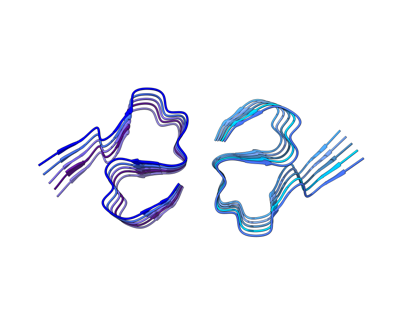
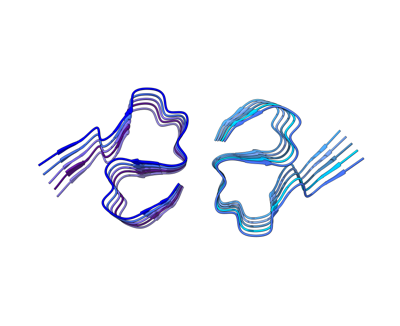
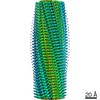
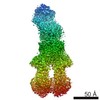
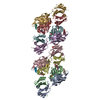
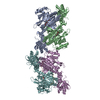
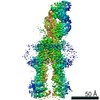
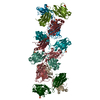
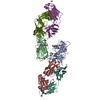
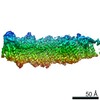
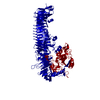
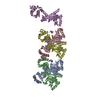
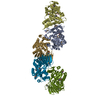
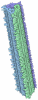
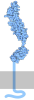
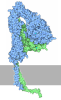
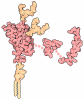
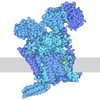
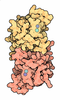
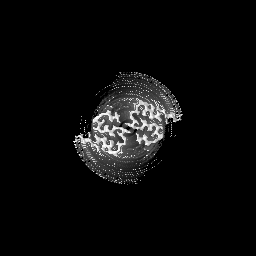
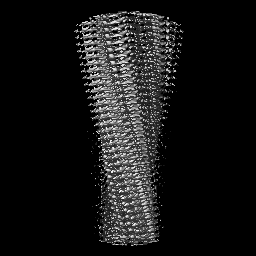
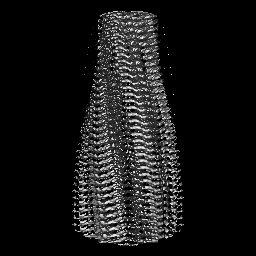
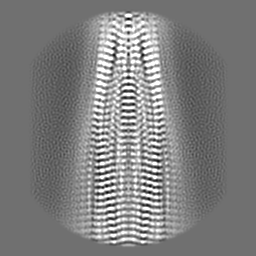
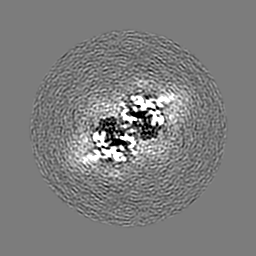
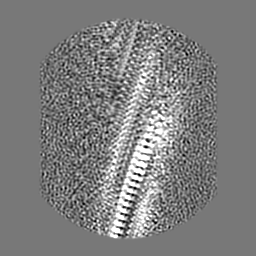
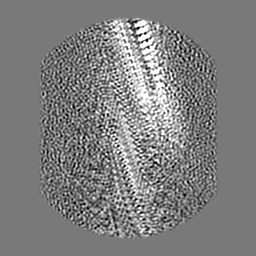
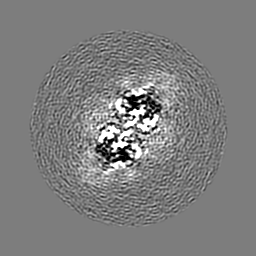
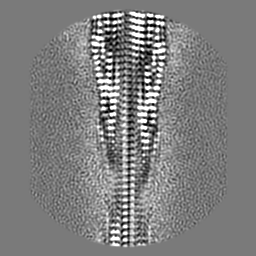
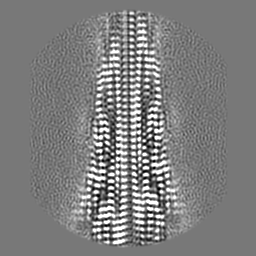
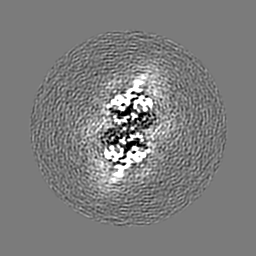
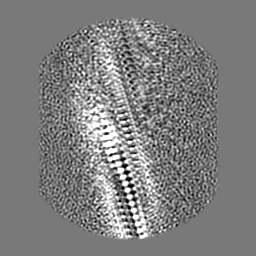
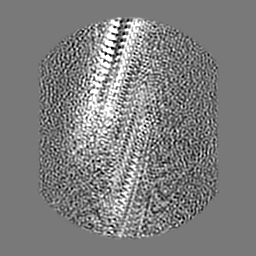
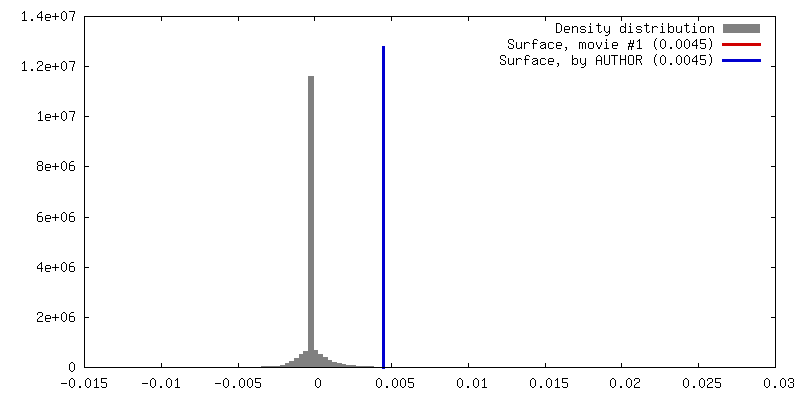
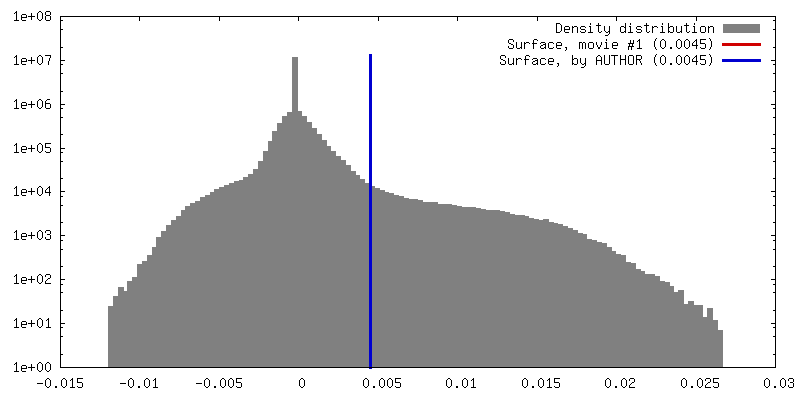
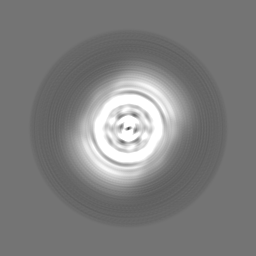
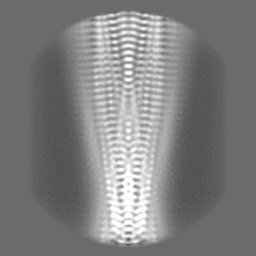
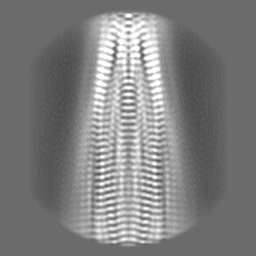
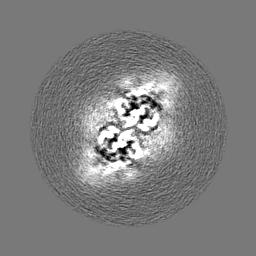
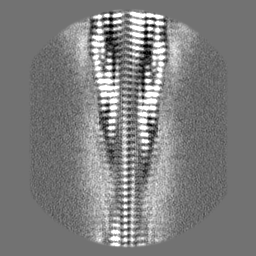
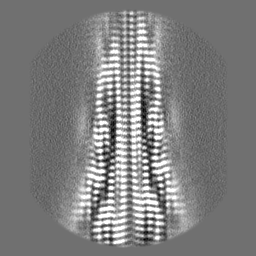
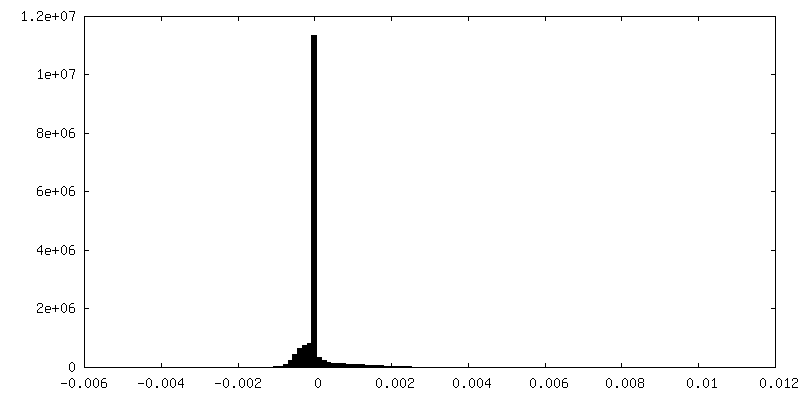
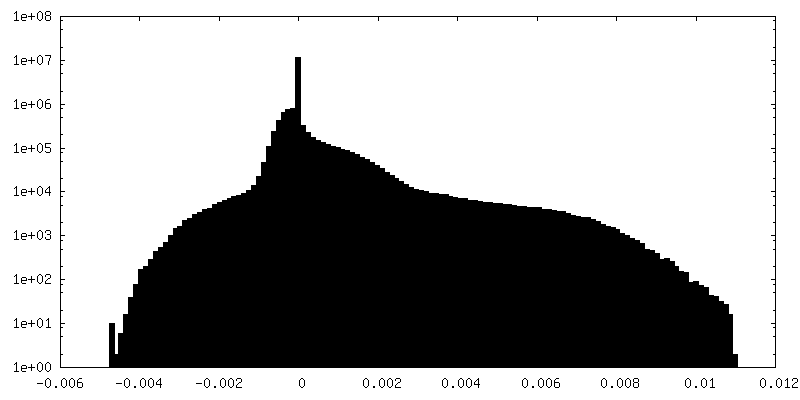
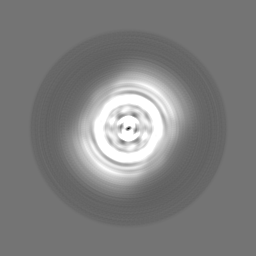
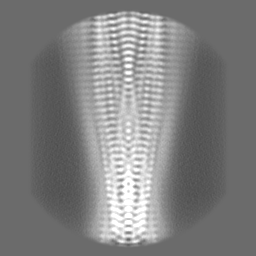
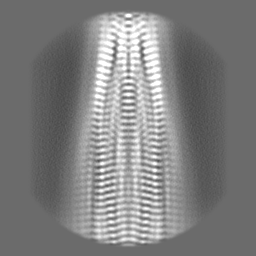
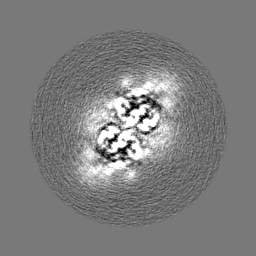
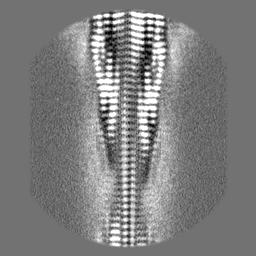
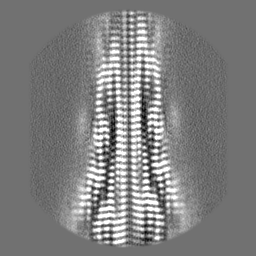
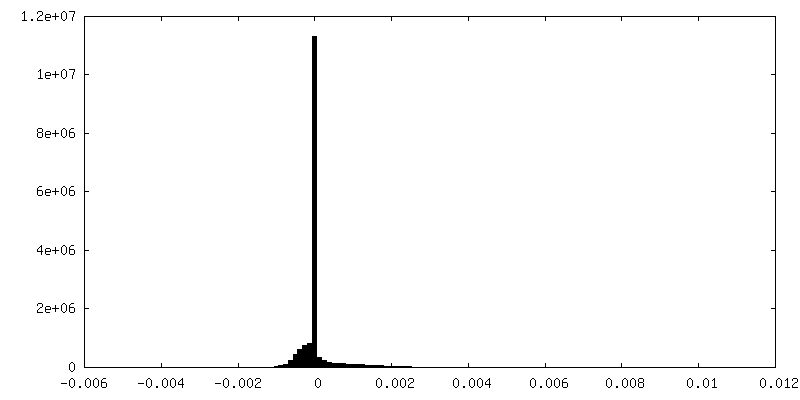
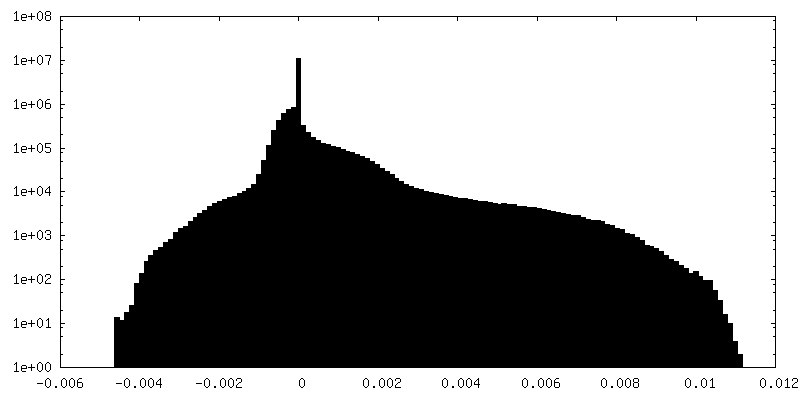
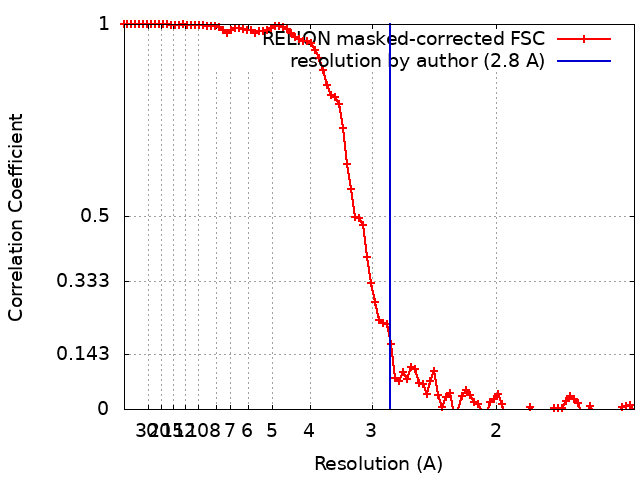
登録情報 データベース : EMDB / ID : EMD-13809 構造の表示 ダウンロードとリンクタイトル Type II beta-amyloid 42 Filaments from Human Brain マップデータ 詳細 試料組織 : beta-amyloid 42 filaments extracted from the human brain with Alzheimer's diseaseタンパク質・ペプチド : Amyloid-beta precursor proteinリガンド : UNKNOWN ATOM OR ION 詳細 キーワード amyloid filaments / Abeta42 / human brain / cryo-EM / PROTEIN FIBRIL機能・相同性 機能・相同性情報分子機能 ドメイン・相同性 構成要素
amyloid-beta complex / growth cone lamellipodium / cellular response to norepinephrine stimulus / collateral sprouting in absence of injury / growth cone filopodium / microglia development / Formyl peptide receptors bind formyl peptides and many other ligands / axo-dendritic transport / regulation of Wnt signaling pathway / axon midline choice point recognition ... amyloid-beta complex / growth cone lamellipodium / cellular response to norepinephrine stimulus / collateral sprouting in absence of injury / growth cone filopodium / microglia development / Formyl peptide receptors bind formyl peptides and many other ligands / axo-dendritic transport / regulation of Wnt signaling pathway / axon midline choice point recognition / regulation of synapse structure or activity / hippocampal neuron apoptotic process / astrocyte activation involved in immune response / NMDA selective glutamate receptor signaling pathway / regulation of spontaneous synaptic transmission / mating behavior / growth factor receptor binding / peptidase activator activity / Insertion of tail-anchored proteins into the endoplasmic reticulum membrane / PTB domain binding / positive regulation of amyloid fibril formation / Golgi-associated vesicle / astrocyte projection / Lysosome Vesicle Biogenesis / neuron remodeling / Deregulated CDK5 triggers multiple neurodegenerative pathways in Alzheimer's disease models / nuclear envelope lumen / dendrite development / TRAF6 mediated NF-kB activation / positive regulation of protein metabolic process / signaling receptor activator activity / negative regulation of long-term synaptic potentiation / Advanced glycosylation endproduct receptor signaling / transition metal ion binding / The NLRP3 inflammasome / regulation of multicellular organism growth / main axon / modulation of excitatory postsynaptic potential / intracellular copper ion homeostasis / ECM proteoglycans / response to insulin-like growth factor stimulus / regulation of presynapse assembly / positive regulation of T cell migration / neuronal dense core vesicle / Purinergic signaling in leishmaniasis infection / cellular response to manganese ion / positive regulation of chemokine production / Notch signaling pathway / swimming behavior / extracellular matrix organization / neuron projection maintenance / clathrin-coated pit / astrocyte activation / axonogenesis / positive regulation of mitotic cell cycle / Mitochondrial protein degradation / positive regulation of calcium-mediated signaling / ionotropic glutamate receptor signaling pathway / platelet alpha granule lumen / regulation of neuron apoptotic process / response to interleukin-1 / cellular response to cAMP / cellular response to copper ion / positive regulation of glycolytic process / endosome lumen / positive regulation of long-term synaptic potentiation / trans-Golgi network membrane / central nervous system development / dendritic shaft / positive regulation of interleukin-1 beta production / protein serine/threonine kinase binding / learning / adult locomotory behavior / Post-translational protein phosphorylation / serine-type endopeptidase inhibitor activity / locomotory behavior / microglial cell activation / cellular response to nerve growth factor stimulus / TAK1-dependent IKK and NF-kappa-B activation / positive regulation of non-canonical NF-kappaB signal transduction / visual learning / regulation of long-term neuronal synaptic plasticity / synapse organization / positive regulation of interleukin-6 production / recycling endosome / response to lead ion / Golgi lumen / positive regulation of JNK cascade / cognition / Regulation of Insulin-like Growth Factor (IGF) transport and uptake by Insulin-like Growth Factor Binding Proteins (IGFBPs) / cellular response to amyloid-beta / endocytosis / positive regulation of tumor necrosis factor production / neuron projection development / positive regulation of inflammatory response / calcium ion transport / Platelet degranulation / regulation of translation / heparin binding / regulation of gene expression 類似検索 - 分子機能 Amyloidogenic glycoprotein, copper-binding / Amyloidogenic glycoprotein, copper-binding domain conserved site / Amyloidogenic glycoprotein, copper-binding domain superfamily / Copper-binding of amyloid precursor, CuBD / Amyloid precursor protein (APP) copper-binding (CuBD) domain signature. / Amyloidogenic glycoprotein, heparin-binding / Amyloid A4 N-terminal heparin-binding / Amyloidogenic glycoprotein, amyloid-beta peptide superfamily / Beta-amyloid peptide (beta-APP) / Amyloidogenic glycoprotein, amyloid-beta peptide ... Amyloidogenic glycoprotein, copper-binding / Amyloidogenic glycoprotein, copper-binding domain conserved site / Amyloidogenic glycoprotein, copper-binding domain superfamily / Copper-binding of amyloid precursor, CuBD / Amyloid precursor protein (APP) copper-binding (CuBD) domain signature. / Amyloidogenic glycoprotein, heparin-binding / Amyloid A4 N-terminal heparin-binding / Amyloidogenic glycoprotein, amyloid-beta peptide superfamily / Beta-amyloid peptide (beta-APP) / Amyloidogenic glycoprotein, amyloid-beta peptide / Beta-amyloid precursor protein C-terminal / Amyloidogenic glycoprotein, intracellular domain, conserved site / Beta-amyloid precursor protein C-terminus / Amyloid precursor protein (APP) intracellular domain signature. / Amyloidogenic glycoprotein, extracellular / Amyloidogenic glycoprotein, E2 domain / E2 domain superfamily / Amyloidogenic glycoprotein, heparin-binding domain superfamily / E2 domain of amyloid precursor protein / Amyloid precursor protein (APP) E1 domain profile. / Amyloid precursor protein (APP) E2 domain profile. / amyloid A4 / Amyloidogenic glycoprotein / Proteinase inhibitor I2, Kunitz, conserved site / Pancreatic trypsin inhibitor (Kunitz) family signature. / BPTI/Kunitz family of serine protease inhibitors. / Pancreatic trypsin inhibitor Kunitz domain / Kunitz/Bovine pancreatic trypsin inhibitor domain / Pancreatic trypsin inhibitor (Kunitz) family profile. / Pancreatic trypsin inhibitor Kunitz domain superfamily / PH-like domain superfamily 類似検索 - ドメイン・相同性生物種 Homo sapiens (ヒト)手法 らせん対称体再構成法 / クライオ電子顕微鏡法 / 解像度 : 2.8 Å 詳細 データ登録者Yang Y / Arseni D 資金援助 米国, 6件 詳細 詳細を隠すOrganization Grant number 国 Medical Research Council (MRC, United Kingdom) MC_UP_1201/25 米国 Medical Research Council (MRC, United Kingdom) MC_UP_A025_1013 米国 Medical Research Council (MRC, United Kingdom) MC_U105184291 米国 National Institutes of Health/National Institute on Aging (NIH/NIA) P30-AG010133 米国 National Institutes of Health/National Institute of Neurological Disorders and Stroke (NIH/NINDS) U01-NS110437 米国 National Institutes of Health/National Institute on Aging (NIH/NIA) RF1-AG071177 米国
引用ジャーナル : Science / 年 : 2022タイトル : Cryo-EM structures of amyloid-β 42 filaments from human brains.著者: Yang Yang / Diana Arseni / Wenjuan Zhang / Melissa Huang / Sofia Lövestam / Manuel Schweighauser / Abhay Kotecha / Alexey G Murzin / Sew Y Peak-Chew / Jennifer Macdonald / Isabelle Lavenir / ... 著者 : Yang Yang / Diana Arseni / Wenjuan Zhang / Melissa Huang / Sofia Lövestam / Manuel Schweighauser / Abhay Kotecha / Alexey G Murzin / Sew Y Peak-Chew / Jennifer Macdonald / Isabelle Lavenir / Holly J Garringer / Ellen Gelpi / Kathy L Newell / Gabor G Kovacs / Ruben Vidal / Bernardino Ghetti / Benjamin Ryskeldi-Falcon / Sjors H W Scheres / Michel Goedert / 要旨 : Filament assembly of amyloid-β peptides ending at residue 42 (Aβ42) is a central event in Alzheimer’s disease. Here, we report the cryo–electron microscopy (cryo-EM) structures of Aβ42 ... Filament assembly of amyloid-β peptides ending at residue 42 (Aβ42) is a central event in Alzheimer’s disease. Here, we report the cryo–electron microscopy (cryo-EM) structures of Aβ42 filaments from human brains. Two structurally related S-shaped protofilament folds give rise to two types of filaments. Type I filaments were found mostly in the brains of individuals with sporadic Alzheimer’s disease, and type II filaments were found in individuals with familial Alzheimer’s disease and other conditions. The structures of Aβ42 filaments from the brain differ from those of filaments assembled in vitro. By contrast, in knock-in mice, Aβ42 deposits were made of type II filaments. Knowledge of Aβ42 filament structures from human brains may lead to the development of inhibitors of assembly and improved imaging agents. 履歴 登録 2021年11月1日 - ヘッダ(付随情報) 公開 2021年11月24日 - マップ公開 2021年11月24日 - 更新 2025年7月2日 - 現状 2025年7月2日 処理サイト : PDBe / 状態 : 公開
すべて表示 表示を減らす