






 9EI0
9EI0
Human Kv1.3 mutant - G427H with A0194009G09 nanobodies
Summary for 9EI0
| Entry DOI | 10.2210/pdb9ei0/pdb |
| EMDB information | 48072 |
| Descriptor | Potassium voltage-gated channel subfamily A member 3,Green fluorescent protein, A0194009G09 nanobody, POTASSIUM ION (3 entities in total) |
| Functional Keywords | voltage-gated potassium channel, immune system |
| Biological source | Homo sapiens (human) More |
| Total number of polymer chains | 8 |
| Total formula weight | 435952.56 |
| Authors | Selvakumar, P.,Swartz, K.J. (deposition date: 2024-11-25, release date: 2025-12-03, Last modification date: 2026-09-16) |
| Primary citation | Selvakumar, P.,Swartz, K.J.,Fernandez-Marino, A.I. Nanobody regulation of C-type inactivation in Kv1.3 channels. Nat Commun, 17:-, 2026 Cited by PubMed Abstract: Nanobodies are powerful tools for modulating ion channels for mechanistic investigations and developing new therapeutics. The Kv1.3 channel is highly expressed in T-lymphocytes where it promotes sustained T-cell activation, its expression is elevated in autoimmune disorders and inhibitory nanobodies are immunosuppressive. The A019400G09 nanobody (NB1.3) binds to the external surface of Kv1.3 and inhibits the channel by promoting slow C-type inactivation of the ion selectivity filter. Here we explore the mechanism by which NB1.3 promotes inactivation by determining a series of cryo-EM structures of Kv1.3 and mutating the interface between NB1.3 and the channel. Our results reveal that interaction of NB1.3 with both the S1-S4 voltage-sensing domain and the turret within the pore domain are required to promote inactivation. We also identify a network of interacting hydrophobic residues linking the turret to the ion selectivity filter that stabilizes the conducting state and mediate the actions of NB1.3. These findings provide a foundation for developing therapeutics targeting Kv1.3 channels and exploring how nanobodies can interact with other tetrameric cation channels to modulate their activity. PubMed: 42680746DOI: 10.1038/s41467-026-74630-8 PDB entries with the same primary citation |
| Experimental method | ELECTRON MICROSCOPY (2.91 Å) |
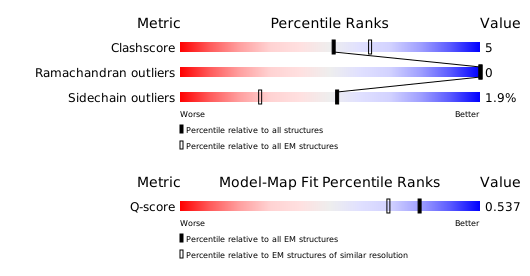
Structure validation
Download full validation report


