 ムービー
ムービー コントローラー


+ データを開く

- 基本情報
基本情報
| 登録情報 | データベース: PDB / ID: 9e8o | |||||||||||||||||||||||||||||||||
|---|---|---|---|---|---|---|---|---|---|---|---|---|---|---|---|---|---|---|---|---|---|---|---|---|---|---|---|---|---|---|---|---|---|---|
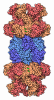
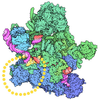
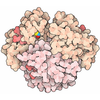
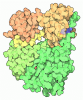
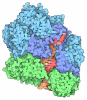
| タイトル | Nub1/Fat10-processing human 26S proteasome bound to Txnl1 with Rpt2 at top of spiral staircase and partially unfolded Eos | |||||||||||||||||||||||||||||||||
 要素 要素 |
| |||||||||||||||||||||||||||||||||
 キーワード キーワード | MOTOR PROTEIN / HYDROLASE/PROTEIN BINDING / 26S Proteasome / HYDROLASE-PROTEIN BINDING complex | |||||||||||||||||||||||||||||||||
| 機能・相同性 |  機能・相同性情報 機能・相同性情報protein modification by small protein conjugation / disulfide oxidoreductase activity / Impaired BRCA2 translocation to the nucleus / Impaired BRCA2 binding to SEM1 (DSS1) / thyrotropin-releasing hormone receptor binding / nuclear proteasome complex / host-mediated perturbation of viral transcription / positive regulation of inclusion body assembly / 加水分解酵素; プロテアーゼ; ペプチド結合加水分解酵素; オメガペプチターゼ / myeloid dendritic cell differentiation ...protein modification by small protein conjugation / disulfide oxidoreductase activity / Impaired BRCA2 translocation to the nucleus / Impaired BRCA2 binding to SEM1 (DSS1) / thyrotropin-releasing hormone receptor binding / nuclear proteasome complex / host-mediated perturbation of viral transcription / positive regulation of inclusion body assembly / 加水分解酵素; プロテアーゼ; ペプチド結合加水分解酵素; オメガペプチターゼ / myeloid dendritic cell differentiation / integrator complex / proteasome accessory complex / meiosis I / purine ribonucleoside triphosphate binding / proteasome regulatory particle / cytosolic proteasome complex / positive regulation of proteasomal protein catabolic process / proteasome-activating activity / proteasome regulatory particle, lid subcomplex / aggresome assembly / proteasome regulatory particle, base subcomplex / protein K63-linked deubiquitination / RND1 GTPase cycle / negative regulation of programmed cell death / metal-dependent deubiquitinase activity / RND2 GTPase cycle / RHOBTB1 GTPase cycle / Regulation of ornithine decarboxylase (ODC) / RND3 GTPase cycle / aggresome / Proteasome assembly / Cross-presentation of soluble exogenous antigens (endosomes) / proteasome core complex / Homologous DNA Pairing and Strand Exchange / Defective homologous recombination repair (HRR) due to BRCA1 loss of function / Defective HDR through Homologous Recombination Repair (HRR) due to PALB2 loss of BRCA1 binding function / Defective HDR through Homologous Recombination Repair (HRR) due to PALB2 loss of BRCA2/RAD51/RAD51C binding function / Resolution of D-loop Structures through Synthesis-Dependent Strand Annealing (SDSA) / Somitogenesis / Resolution of D-loop Structures through Holliday Junction Intermediates / K63-linked deubiquitinase activity / RHOV GTPase cycle / regulation of mitotic cell cycle phase transition / Impaired BRCA2 binding to RAD51 / proteasome binding / transcription factor binding / regulation of protein catabolic process / myofibril / response to tumor necrosis factor / proteasome storage granule / RHOU GTPase cycle / protein-disulfide reductase activity / Presynaptic phase of homologous DNA pairing and strand exchange / general transcription initiation factor binding / blastocyst development / polyubiquitin modification-dependent protein binding / positive regulation of RNA polymerase II transcription preinitiation complex assembly / protein deubiquitination / immune system process / NF-kappaB binding / proteasome endopeptidase complex / response to type II interferon / proteasome core complex, beta-subunit complex / endopeptidase activator activity / proteasome assembly / threonine-type endopeptidase activity / RHOBTB2 GTPase cycle / mRNA export from nucleus / proteasome core complex, alpha-subunit complex / SARS-CoV-1 targets host intracellular signalling and regulatory pathways / enzyme regulator activity / regulation of proteasomal protein catabolic process / ERAD pathway / inclusion body / proteasome complex / TBP-class protein binding / proteolysis involved in protein catabolic process / bioluminescence / sarcomere / Regulation of activated PAK-2p34 by proteasome mediated degradation / Autodegradation of Cdh1 by Cdh1:APC/C / APC/C:Cdc20 mediated degradation of Securin / generation of precursor metabolites and energy / N-glycan trimming in the ER and Calnexin/Calreticulin cycle / Asymmetric localization of PCP proteins / Ubiquitin-dependent degradation of Cyclin D / SCF-beta-TrCP mediated degradation of Emi1 / NIK-->noncanonical NF-kB signaling / stem cell differentiation / TNFR2 non-canonical NF-kB pathway / AUF1 (hnRNP D0) binds and destabilizes mRNA / Vpu mediated degradation of CD4 / Assembly of the pre-replicative complex / Ubiquitin-Mediated Degradation of Phosphorylated Cdc25A / Degradation of DVL / Dectin-1 mediated noncanonical NF-kB signaling / negative regulation of inflammatory response to antigenic stimulus / Cdc20:Phospho-APC/C mediated degradation of Cyclin A / lipopolysaccharide binding / P-body 類似検索 - 分子機能 | |||||||||||||||||||||||||||||||||
| 生物種 |  Homo sapiens (ヒト) Homo sapiens (ヒト) Lobophyllia hemprichii (オオハナガタサンゴ) Lobophyllia hemprichii (オオハナガタサンゴ) | |||||||||||||||||||||||||||||||||
| 手法 | 電子顕微鏡法 / 単粒子再構成法 / クライオ電子顕微鏡法 / 解像度: 3.1 Å | |||||||||||||||||||||||||||||||||
 データ登録者 データ登録者 | Arkinson, C. / Gee, C.L. / Martin, A. | |||||||||||||||||||||||||||||||||
| 資金援助 |  米国, 1件 米国, 1件
| |||||||||||||||||||||||||||||||||
 引用 引用 | ジャーナル: Nat Struct Mol Biol / 年: 2025 タイトル: Structural landscape of the degrading 26S proteasome reveals conformation-specific binding of TXNL1. 著者: Connor Arkinson / Christine L Gee / Zeyuan Zhang / Ken C Dong / Andreas Martin / 要旨: The 26S proteasome targets many cellular proteins for degradation during homeostasis and quality control. Proteasome-interacting cofactors modulate these functions and aid in substrate degradation. ...The 26S proteasome targets many cellular proteins for degradation during homeostasis and quality control. Proteasome-interacting cofactors modulate these functions and aid in substrate degradation. Here we solve high-resolution structures of the redox active cofactor TXNL1 bound to the human 26S proteasome at saturating and substoichiometric concentrations by time-resolved cryo-electron microscopy (cryo-EM). We identify distinct binding modes of TXNL1 that depend on the proteasome conformation and ATPase motor states. Together with biophysical and biochemical experiments, we show that the resting-state proteasome binds TXNL1 with low affinity and in variable positions on top of the Rpn11 deubiquitinase. In contrast, in the actively degrading proteasome, TXNL1 uses additional interactions for high-affinity binding, whereby its C-terminal tail covers the catalytic groove of Rpn11 and coordinates the active-site Zn. Furthermore, these cryo-EM structures of the degrading proteasome capture the ATPase hexamer in several spiral-staircase arrangements that indicate temporally asymmetric hydrolysis and conformational changes in bursts during mechanical substrate unfolding and translocation. Remarkably, we catch the proteasome in the act of unfolding the β-barrel mEos3.2 substrate while the ATPase hexamer is in a particular staircase register. Our findings advance current models for protein translocation through hexameric AAA+ motors and reveal how the proteasome uses its distinct conformational states to coordinate cofactor binding and substrate processing. #1: ジャーナル: bioRxiv / 年: 2024 タイトル: Structural landscape of AAA+ ATPase motor states in the substrate-degrading human 26S proteasome reveals conformation-specific binding of TXNL1. 著者: Connor Arkinson / Christine L Gee / Zeyuan Zhang / Ken C Dong / Andreas Martin / 要旨: The 26S proteasome targets many cellular proteins for degradation during general homeostasis, protein quality control, and the regulation of vital processes. A broad range of proteasome-interacting ...The 26S proteasome targets many cellular proteins for degradation during general homeostasis, protein quality control, and the regulation of vital processes. A broad range of proteasome-interacting cofactors thereby modulates these functions and aids in substrate degradation. Here, we solved several high-resolution structures of the redox active cofactor TXNL1 bound to the human 26S proteasome at saturating and sub-stoichiometric concentrations by time resolved cryo-EM. We identified distinct binding modes of TXNL1 that depend on the proteasome conformational and ATPase motor states. Together with biophysical and biochemical experiments, our structural studies reveal that the resting-state proteasome prior to substrate engagement with the ATPase motor binds TXNL1 with low affinity and in variable positions on top of the Rpn11 deubiquitinase. In contrast, the actively degrading proteasome shows additional interactions leading to high-affinity TXNL1 binding, whereby TXNL1's C-terminal tail covers the catalytic groove of the Rpn11 deubiquitinase and coordinates the active-site Zn. Furthermore, these cryo-EM structures of the degrading proteasome capture the ATPase hexamer in all registers of spiral-staircase arrangements and thus visualize the complete ATP-hydrolysis cycle of the AAA+ motor, indicating temporally asymmetric hydrolysis and conformational changes in bursts during mechanical substrate unfolding and translocation. Remarkably, we catch the proteasome in the act of unfolding the beta-barrel mEos3.2 substrate while the ATPase hexamer is in a particular spiral staircase register. Our findings challenge current models for protein translocation through hexameric AAA+ motors and reveal how the proteasome uses its distinct but broad range of conformational states to coordinate cofactor binding and substrate processing. | |||||||||||||||||||||||||||||||||
| 履歴 |
|
- 構造の表示
構造の表示
| 構造ビューア | 分子: MolmilJmol/JSmol |
|---|
- ダウンロードとリンク
-ダウンロード
| PDBx/mmCIF形式 | 9e8o.cif.gz | 2 MB | 表示 | PDBx/mmCIF形式 |
|---|---|---|---|---|
| PDB形式 | pdb9e8o.ent.gz | 表示 | PDB形式 | |
| PDBx/mmJSON形式 | 9e8o.json.gz | ツリー表示 | PDBx/mmJSON形式 | |
| その他 |  その他のダウンロード その他のダウンロード |
-検証レポート
| 文書・要旨 | 9e8o_validation.pdf.gz | 2.5 MB | 表示 | wwPDB検証レポート |
|---|---|---|---|---|
| 文書・詳細版 | 9e8o_full_validation.pdf.gz | 2.8 MB | 表示 | |
| XML形式データ | 9e8o_validation.xml.gz | 309.8 KB | 表示 | |
| CIF形式データ | 9e8o_validation.cif.gz | 466.9 KB | 表示 | |
| アーカイブディレクトリ | https://data.pdbj.org/pub/pdb/validation_reports/e8/9e8oftp://data.pdbj.org/pub/pdb/validation_reports/e8/9e8o | HTTPS FTP |
-関連構造データ
| 関連構造データ |  47726MC  9e8gC  9e8hC  9e8iC  9e8jC  9e8kC  9e8lC  9e8nC 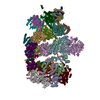 9e8qC  9pdiC  9pdlC  9pdnC  9pf1C M: このデータのモデリングに利用したマップデータ C: 同じ文献を引用 ( |
|---|---|
| 類似構造データ |


-リンク
 PDBj
PDBj

- 集合体
集合体
| 登録構造単位 | 
|
|---|---|
| 1 |
|
-要素
-26S proteasome regulatory subunit ... , 4種, 4分子 BDAF
| #1: タンパク質 | 分子量: 49260.504 Da / 分子数: 1 / 由来タイプ: 天然 / 由来: (天然) Homo sapiens (ヒト) / 参照: UniProt: P62191 |
|---|---|
| #3: タンパク質 | 分子量: 47426.141 Da / 分子数: 1 / 由来タイプ: 天然 / 由来: (天然) Homo sapiens (ヒト) / 参照: UniProt: P43686 |
| #29: タンパク質 | 分子量: 48700.805 Da / 分子数: 1 / 由来タイプ: 天然 / 由来: (天然) Homo sapiens (ヒト) / 参照: UniProt: P35998 |
| #30: タンパク質 | 分子量: 49266.457 Da / 分子数: 1 / 由来タイプ: 天然 / 由来: (天然) Homo sapiens (ヒト) / 参照: UniProt: P17980 |
-26S protease regulatory subunit ... , 2種, 2分子 CE
| #2: タンパク質 | 分子量: 45694.047 Da / 分子数: 1 / 由来タイプ: 天然 / 由来: (天然) Homo sapiens (ヒト) / 参照: UniProt: P62195 |
|---|---|
| #31: タンパク質 | 分子量: 44241.008 Da / 分子数: 1 / 由来タイプ: 天然 / 由来: (天然) Homo sapiens (ヒト) / 参照: UniProt: P62333 |
-26S proteasome non-ATPase regulatory subunit ... , 11種, 11分子 cXYZabdfWVU
| #4: タンパク質 | 分子量: 46940.898 Da / 分子数: 1 / 由来タイプ: 組換発現 / 由来: (組換発現) Homo sapiens (ヒト) / 遺伝子: PSMD14 / 発現宿主: Homo sapiens (ヒト) / 参照: UniProt: O00487 |
|---|---|
| #19: タンパク質 | 分子量: 47526.688 Da / 分子数: 1 / 由来タイプ: 天然 / 由来: (天然) Homo sapiens (ヒト) / 参照: UniProt: O00231 |
| #20: タンパク質 | 分子量: 45592.285 Da / 分子数: 1 / 由来タイプ: 天然 / 由来: (天然) Homo sapiens (ヒト) / 参照: UniProt: Q15008 |
| #21: タンパク質 | 分子量: 37086.441 Da / 分子数: 1 / 由来タイプ: 天然 / 由来: (天然) Homo sapiens (ヒト) / 参照: UniProt: P51665 |
| #22: タンパク質 | 分子量: 42995.359 Da / 分子数: 1 / 由来タイプ: 天然 / 由来: (天然) Homo sapiens (ヒト) / 参照: UniProt: Q9UNM6 |
| #23: タンパク質 | 分子量: 40781.590 Da / 分子数: 1 / 由来タイプ: 天然 / 由来: (天然) Homo sapiens (ヒト) / 参照: UniProt: P55036 |
| #24: タンパク質 | 分子量: 39667.871 Da / 分子数: 1 / 由来タイプ: 天然 / 由来: (天然) Homo sapiens (ヒト) / 参照: UniProt: P48556 |
| #25: タンパク質 | 分子量: 100313.625 Da / 分子数: 1 / 由来タイプ: 天然 / 由来: (天然) Homo sapiens (ヒト) / 参照: UniProt: Q13200 |
| #26: タンパク質 | 分子量: 52979.359 Da / 分子数: 1 / 由来タイプ: 天然 / 由来: (天然) Homo sapiens (ヒト) / 参照: UniProt: O00232 |
| #27: タンパク質 | 分子量: 61066.500 Da / 分子数: 1 / 由来タイプ: 天然 / 由来: (天然) Homo sapiens (ヒト) / 参照: UniProt: O43242 |
| #32: タンパク質 | 分子量: 105957.250 Da / 分子数: 1 / 由来タイプ: 天然 / 由来: (天然) Homo sapiens (ヒト) / 参照: UniProt: Q99460 |
-Proteasome subunit alpha type- ... , 7種, 7分子 GHIJKLM
| #5: タンパク質 | 分子量: 27432.459 Da / 分子数: 1 / 由来タイプ: 天然 / 由来: (天然) Homo sapiens (ヒト) / 参照: UniProt: P60900, proteasome endopeptidase complex |
|---|---|
| #6: タンパク質 | 分子量: 25927.535 Da / 分子数: 1 / 由来タイプ: 天然 / 由来: (天然) Homo sapiens (ヒト) / 参照: UniProt: P25787, proteasome endopeptidase complex |
| #7: タンパク質 | 分子量: 29525.842 Da / 分子数: 1 / 由来タイプ: 天然 / 由来: (天然) Homo sapiens (ヒト) / 参照: UniProt: P25789, proteasome endopeptidase complex |
| #8: タンパク質 | 分子量: 27929.891 Da / 分子数: 1 / 由来タイプ: 天然 / 由来: (天然) Homo sapiens (ヒト) / 参照: UniProt: O14818 |
| #9: タンパク質 | 分子量: 26435.977 Da / 分子数: 1 / 由来タイプ: 天然 / 由来: (天然) Homo sapiens (ヒト) / 参照: UniProt: P28066 |
| #10: タンパク質 | 分子量: 29595.627 Da / 分子数: 1 / 由来タイプ: 天然 / 由来: (天然) Homo sapiens (ヒト) / 参照: UniProt: P25786, proteasome endopeptidase complex |
| #11: タンパク質 | 分子量: 28469.252 Da / 分子数: 1 / 由来タイプ: 天然 / 由来: (天然) Homo sapiens (ヒト) / 参照: UniProt: P25788, proteasome endopeptidase complex |
-Proteasome subunit beta type- ... , 7種, 7分子 NOPQRST
| #12: タンパク質 | 分子量: 25377.652 Da / 分子数: 1 / 由来タイプ: 天然 / 由来: (天然) Homo sapiens (ヒト) / 参照: UniProt: P28072, proteasome endopeptidase complex |
|---|---|
| #13: タンパク質 | 分子量: 30000.418 Da / 分子数: 1 / 由来タイプ: 天然 / 由来: (天然) Homo sapiens (ヒト) / 参照: UniProt: Q99436, proteasome endopeptidase complex |
| #14: タンパク質 | 分子量: 22972.896 Da / 分子数: 1 / 由来タイプ: 天然 / 由来: (天然) Homo sapiens (ヒト) / 参照: UniProt: P49720, proteasome endopeptidase complex |
| #15: タンパク質 | 分子量: 22864.277 Da / 分子数: 1 / 由来タイプ: 天然 / 由来: (天然) Homo sapiens (ヒト) / 参照: UniProt: P49721, proteasome endopeptidase complex |
| #16: タンパク質 | 分子量: 28510.248 Da / 分子数: 1 / 由来タイプ: 天然 / 由来: (天然) Homo sapiens (ヒト) / 参照: UniProt: P28074, proteasome endopeptidase complex |
| #17: タンパク質 | 分子量: 26522.396 Da / 分子数: 1 / 由来タイプ: 天然 / 由来: (天然) Homo sapiens (ヒト) / 参照: UniProt: P20618, proteasome endopeptidase complex |
| #18: タンパク質 | 分子量: 29231.178 Da / 分子数: 1 / 由来タイプ: 天然 / 由来: (天然) Homo sapiens (ヒト) / 参照: UniProt: P28070, proteasome endopeptidase complex |
-タンパク質 , 3種, 3分子 egu
| #28: タンパク質 | 分子量: 8284.611 Da / 分子数: 1 / 由来タイプ: 天然 / 由来: (天然) Homo sapiens (ヒト) / 参照: UniProt: P60896 |
|---|---|
| #33: タンパク質 | 分子量: 44409.941 Da / 分子数: 1 / 由来タイプ: 組換発現 由来: (組換発現) Homo sapiens (ヒト), (組換発現) Lobophyllia hemprichii (オオハナガタサンゴ)遺伝子: UBD, FAT10 / 発現宿主:   Escherichia coli (大腸菌) / 参照: UniProt: O15205, UniProt: Q5S6Z9 Escherichia coli (大腸菌) / 参照: UniProt: O15205, UniProt: Q5S6Z9 |
| #34: タンパク質 | 分子量: 33607.590 Da / 分子数: 1 / 由来タイプ: 組換発現 / 由来: (組換発現) Homo sapiens (ヒト) / 遺伝子: TXNL1, TRP32, TXL, TXNL / 発現宿主: Escherichia coli (大腸菌) / 参照: UniProt: O43396 |
-非ポリマー , 4種, 10分子 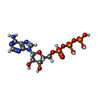


| #35: 化合物 | 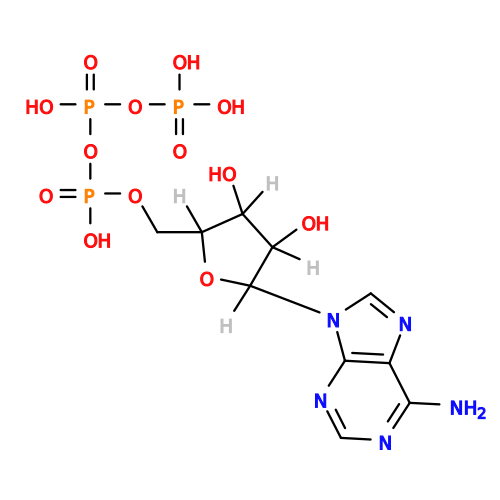 分子量: 507.181 Da / 分子数: 2 / 由来タイプ: 合成 / 式: C10H16N5O13P3 / タイプ: SUBJECT OF INVESTIGATION / コメント: ATP, エネルギー貯蔵分子*YM 分子量: 507.181 Da / 分子数: 2 / 由来タイプ: 合成 / 式: C10H16N5O13P3 / タイプ: SUBJECT OF INVESTIGATION / コメント: ATP, エネルギー貯蔵分子*YM#36: 化合物 |  分子量: 24.305 Da / 分子数: 3 / 由来タイプ: 合成 / 式: Mg / タイプ: SUBJECT OF INVESTIGATION 分子量: 24.305 Da / 分子数: 3 / 由来タイプ: 合成 / 式: Mg / タイプ: SUBJECT OF INVESTIGATION#37: 化合物 | ChemComp-ADP / 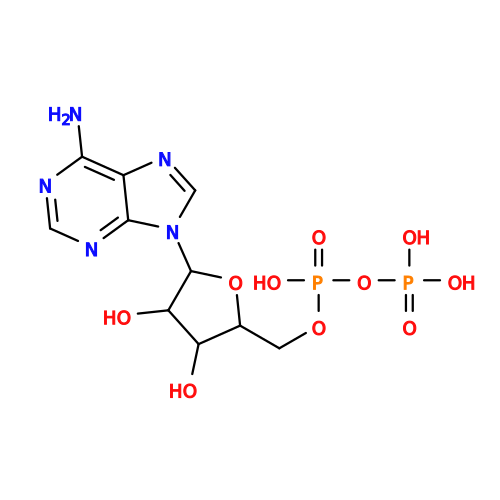 分子量: 427.201 Da / 分子数: 4 / 由来タイプ: 合成 / 式: C10H15N5O10P2 / タイプ: SUBJECT OF INVESTIGATION / コメント: ADP, エネルギー貯蔵分子*YM 分子量: 427.201 Da / 分子数: 4 / 由来タイプ: 合成 / 式: C10H15N5O10P2 / タイプ: SUBJECT OF INVESTIGATION / コメント: ADP, エネルギー貯蔵分子*YM#38: 化合物 | ChemComp-ZN / |  分子量: 65.409 Da / 分子数: 1 / 由来タイプ: 合成 / 式: Zn / タイプ: SUBJECT OF INVESTIGATION 分子量: 65.409 Da / 分子数: 1 / 由来タイプ: 合成 / 式: Zn / タイプ: SUBJECT OF INVESTIGATION |
|---|
-詳細
| 研究の焦点であるリガンドがあるか | Y |
|---|---|
| Has protein modification | Y |
-実験情報
-実験
| 実験 | 手法: 電子顕微鏡法 |
|---|---|
| EM実験 | 試料の集合状態: PARTICLE / 3次元再構成法: 単粒子再構成法 |
- 試料調製
試料調製
| 構成要素 | 名称: Human 26S proteasome complexed with Nub1 and Fat 10 RPT3 at the top タイプ: COMPLEX / Entity ID: #1-#29 / 由来: MULTIPLE SOURCES |
|---|---|
| 分子量 | 値: 2.6 MDa / 実験値: NO |
| 由来(天然) | 生物種: Homo sapiens (ヒト) / 株: HEK293 |
| 緩衝液 | pH: 7.4 詳細: 30 mM HEPES pH7.4, 25 mM NaCl, 25 mM KCl, 3% (v/v) glycerol, 5 mM MgCl2 2 mM ATP and 0.5 mM TCEP |
| 試料 | 包埋: NO / シャドウイング: NO / 染色: NO / 凍結: YES |
| 試料支持 | グリッドの材料: GOLD / グリッドのサイズ: 200 divisions/in. / グリッドのタイプ: UltrAuFoil R2/2 |
| 急速凍結 | 装置: FEI VITROBOT MARK IV / 凍結剤: ETHANE / 湿度: 100 % / 凍結前の試料温度: 298 K |
- 電子顕微鏡撮影
| 実験機器 |  モデル: Titan Krios / 画像提供: FEI Company |
|---|---|
| 顕微鏡 | モデル: TFS KRIOS |
| 電子銃 | 電子線源:  FIELD EMISSION GUN / 加速電圧: 300 kV / 照射モード: FLOOD BEAM FIELD EMISSION GUN / 加速電圧: 300 kV / 照射モード: FLOOD BEAM |
| 電子レンズ | モード: BRIGHT FIELD / 最大 デフォーカス(公称値): 1700 nm / 最小 デフォーカス(公称値): 500 nm / アライメント法: BASIC |
| 試料ホルダ | 凍結剤: NITROGEN 試料ホルダーモデル: FEI TITAN KRIOS AUTOGRID HOLDER |
| 撮影 | 電子線照射量: 50 e/Å2 / フィルム・検出器のモデル: GATAN K3 (6k x 4k) |
- 解析
解析
| EMソフトウェア |
| ||||||||||||||||||||||||
|---|---|---|---|---|---|---|---|---|---|---|---|---|---|---|---|---|---|---|---|---|---|---|---|---|---|
| CTF補正 | タイプ: PHASE FLIPPING AND AMPLITUDE CORRECTION | ||||||||||||||||||||||||
| 3次元再構成 | 解像度: 3.1 Å / 解像度の算出法: FSC 0.143 CUT-OFF / 粒子像の数: 73136 / 対称性のタイプ: POINT | ||||||||||||||||||||||||
| 拘束条件 |
|
