 Movie
Movie Controller

[English] 日本語
 Yorodumi
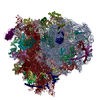
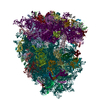
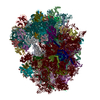
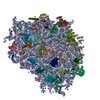
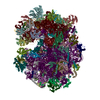
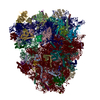
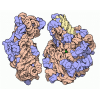
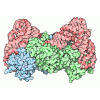
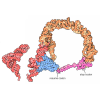
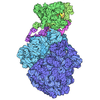
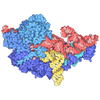
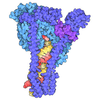
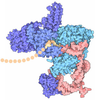
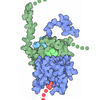
- PDB-6r5q: Structure of XBP1u-paused ribosome nascent chain complex (post-state) -
+ Open data

- Basic information
| Entry | Database: PDB / ID: 6r5q | ||||||
|---|---|---|---|---|---|---|---|
| Title | Structure of XBP1u-paused ribosome nascent chain complex (post-state) | ||||||
 Components Components |
| ||||||
 Keywords Keywords | RIBOSOME / translational pausing / XBP1 / UPR | ||||||
| Function / homology |  Function and homology information Function and homology informationpositive regulation of vascular wound healing / positive regulation of protein acetylation / ATF6-mediated unfolded protein response / sterol homeostasis / IRE1alpha activates chaperones / ATF6 (ATF6-alpha) activates chaperone genes / positive regulation of plasma cell differentiation / positive regulation of phospholipid biosynthetic process / negative regulation of myotube differentiation / positive regulation of ERAD pathway ...positive regulation of vascular wound healing / positive regulation of protein acetylation / ATF6-mediated unfolded protein response / sterol homeostasis / IRE1alpha activates chaperones / ATF6 (ATF6-alpha) activates chaperone genes / positive regulation of plasma cell differentiation / positive regulation of phospholipid biosynthetic process / negative regulation of myotube differentiation / positive regulation of ERAD pathway / intracellular triglyceride homeostasis / positive regulation of hepatocyte proliferation / cellular response to fructose stimulus / positive regulation of lactation / cellular response to fluid shear stress / cellular response to laminar fluid shear stress / XBP1(S) activates chaperone genes / endothelial cell proliferation / cellular response to nutrient / positive regulation of MHC class II biosynthetic process / positive regulation of vascular associated smooth muscle cell migration / negative regulation of endoplasmic reticulum unfolded protein response / positive regulation of cytokine production involved in inflammatory response / cellular response to peptide hormone stimulus / positive regulation of B cell differentiation / muscle organ development / positive regulation of T cell differentiation / positive regulation of immunoglobulin production / IRE1-mediated unfolded protein response / adipose tissue development / cellular response to interleukin-4 / negative regulation of SMAD protein signal transduction / cellular response to vascular endothelial growth factor stimulus / intrinsic apoptotic signaling pathway in response to endoplasmic reticulum stress / ubiquitin-like protein ligase binding / neuron development / positive regulation of endothelial cell apoptotic process / fatty acid homeostasis / positive regulation of fat cell differentiation / vascular endothelial growth factor receptor signaling pathway / positive regulation of TOR signaling / response to insulin-like growth factor stimulus / ubiquitin ligase inhibitor activity / negative regulation of endoplasmic reticulum stress-induced intrinsic apoptotic signaling pathway / 90S preribosome / positive regulation of signal transduction by p53 class mediator / cellular response to glucose starvation / positive regulation of vascular associated smooth muscle cell proliferation / cis-regulatory region sequence-specific DNA binding / phagocytic cup / gastrulation / endoplasmic reticulum unfolded protein response / ERAD pathway / cholesterol homeostasis / translation regulator activity / rough endoplasmic reticulum / ribosomal small subunit export from nucleus / MDM2/MDM4 family protein binding / liver development / positive regulation of autophagy / response to endoplasmic reticulum stress / positive regulation of apoptotic signaling pathway / nuclear estrogen receptor binding / DNA-(apurinic or apyrimidinic site) lyase / class I DNA-(apurinic or apyrimidinic site) endonuclease activity / cellular response to amino acid stimulus / regulation of autophagy / phosphatidylinositol 3-kinase/protein kinase B signal transduction / ribosomal large subunit biogenesis / maturation of LSU-rRNA from tricistronic rRNA transcript (SSU-rRNA, 5.8S rRNA, LSU-rRNA) / RNA polymerase II transcription regulatory region sequence-specific DNA binding / cytosolic ribosome / maturation of SSU-rRNA / maturation of SSU-rRNA from tricistronic rRNA transcript (SSU-rRNA, 5.8S rRNA, LSU-rRNA) / cellular response to glucose stimulus / negative regulation of transforming growth factor beta receptor signaling pathway / regulation of protein stability / regulation of cell growth / small-subunit processome / negative regulation of ERK1 and ERK2 cascade / protein destabilization / chromatin DNA binding / positive regulation of protein import into nucleus / positive regulation of interleukin-6 production / positive regulation of protein phosphorylation / spindle / histone deacetylase binding / autophagy / fatty acid biosynthetic process / positive regulation of angiogenesis / sequence-specific double-stranded DNA binding / rRNA processing / cellular response to insulin stimulus / regulation of translation / transcription by RNA polymerase II / rhythmic process / protein transport / cellular response to lipopolysaccharide / large ribosomal subunit / ribosomal small subunit assembly Similarity search - Function | ||||||
| Biological species |  Homo sapiens (human) Homo sapiens (human)  Saccharomyces cerevisiae (brewer's yeast) Saccharomyces cerevisiae (brewer's yeast)  Oryctolagus cuniculus (rabbit) Oryctolagus cuniculus (rabbit) | ||||||
| Method | ELECTRON MICROSCOPY / single particle reconstruction / cryo EM / Resolution: 3 Å | ||||||
 Authors Authors | Shanmuganathan, V. / Cheng, J. / Berninghausen, O. / Beckmann, R. | ||||||
| Funding support |  Germany, 1items Germany, 1items
| ||||||
 Citation Citation | Journal: Elife / Year: 2019 Title: Structural and mutational analysis of the ribosome-arresting human XBP1u. Authors: Vivekanandan Shanmuganathan / Nina Schiller / Anastasia Magoulopoulou / Jingdong Cheng / Katharina Braunger / Florian Cymer / Otto Berninghausen / Birgitta Beatrix / Kenji Kohno / Gunnar von ...Authors: Vivekanandan Shanmuganathan / Nina Schiller / Anastasia Magoulopoulou / Jingdong Cheng / Katharina Braunger / Florian Cymer / Otto Berninghausen / Birgitta Beatrix / Kenji Kohno / Gunnar von Heijne / Roland Beckmann /   Abstract: XBP1u, a central component of the unfolded protein response (UPR), is a mammalian protein containing a functionally critical translational arrest peptide (AP). Here, we present a 3 Å cryo-EM ...XBP1u, a central component of the unfolded protein response (UPR), is a mammalian protein containing a functionally critical translational arrest peptide (AP). Here, we present a 3 Å cryo-EM structure of the stalled human XBP1u AP. It forms a unique turn in the ribosomal exit tunnel proximal to the peptidyl transferase center where it causes a subtle distortion, thereby explaining the temporary translational arrest induced by XBP1u. During ribosomal pausing the hydrophobic region 2 (HR2) of XBP1u is recognized by SRP, but fails to efficiently gate the Sec61 translocon. An exhaustive mutagenesis scan of the XBP1u AP revealed that only 8 out of 20 mutagenized positions are optimal; in the remaining 12 positions, we identify 55 different mutations increase the level of translational arrest. Thus, the wildtype XBP1u AP induces only an intermediate level of translational arrest, allowing efficient targeting by SRP without activating the Sec61 channel. | ||||||
| History |
|
- Structure visualization
| Movie |
Movie viewer |
|---|---|
| Structure viewer | Molecule: MolmilJmol/JSmol |
- Downloads & links
-Download
| PDBx/mmCIF format | 6r5q.cif.gz | 4.7 MB | Display | PDBx/mmCIF format |
|---|---|---|---|---|
| PDB format | pdb6r5q.ent.gz | Display | PDB format | |
| PDBx/mmJSON format | 6r5q.json.gz | Tree view | PDBx/mmJSON format | |
| Others |  Other downloads Other downloads |
-Validation report
| Arichive directory | https://data.pdbj.org/pub/pdb/validation_reports/r5/6r5qftp://data.pdbj.org/pub/pdb/validation_reports/r5/6r5q | HTTPS FTP |
|---|
-Related structure data
| Related structure data | 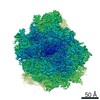 4729MC 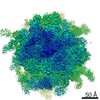 4735C 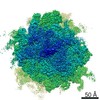 4737C 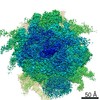 4745C 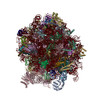 6r6gC 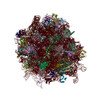 6r6pC 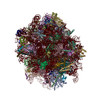 6r7qC M: map data used to model this data C: citing same article ( |
|---|---|
| Similar structure data |




-Links
 PDBj
PDBj
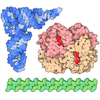
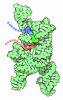
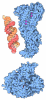
- Assembly
| Deposited unit | 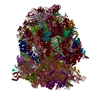
|
|---|---|
| 1 |
|
-Components
-RNA chain , 7 types, 7 molecules 32578K4
| #1: RNA chain | Mass: 24148.355 Da / Num. of mol.: 1 / Source method: isolated from a natural source / Source: (natural) Saccharomyces cerevisiae (brewer's yeast) |
|---|---|
| #3: RNA chain | Mass: 24414.496 Da / Num. of mol.: 1 / Source method: isolated from a natural source / Source: (natural) Saccharomyces cerevisiae (brewer's yeast) |
| #4: RNA chain | Mass: 1148115.375 Da / Num. of mol.: 1 / Source method: isolated from a natural source / Source: (natural) Oryctolagus cuniculus (rabbit) |
| #5: RNA chain | Mass: 38691.914 Da / Num. of mol.: 1 / Source method: isolated from a natural source / Source: (natural) Oryctolagus cuniculus (rabbit) |
| #6: RNA chain | Mass: 48545.672 Da / Num. of mol.: 1 / Source method: isolated from a natural source / Source: (natural) Oryctolagus cuniculus (rabbit) |
| #51: RNA chain | Mass: 548040.188 Da / Num. of mol.: 1 / Source method: isolated from a natural source / Source: (natural) Oryctolagus cuniculus (rabbit) |
| #82: RNA chain | Mass: 1877.157 Da / Num. of mol.: 1 / Source method: obtained synthetically / Source: (synth.) Homo sapiens (human) |
-Protein/peptide , 2 types, 2 molecules 1l
| #2: Protein/peptide | Mass: 2895.380 Da / Num. of mol.: 1 Source method: isolated from a genetically manipulated source Source: (gene. exp.) Homo sapiens (human) / Gene: XBP1, TREB5, XBP2 / Production host: Oryctolagus cuniculus (rabbit) / References: UniProt: P17861 |
|---|---|
| #43: Protein/peptide | Mass: 6324.579 Da / Num. of mol.: 1 / Source method: isolated from a natural source / Source: (natural) Oryctolagus cuniculus (rabbit) / References: UniProt: G1TTN1 |
+Protein , 43 types, 43 molecules ABCFGHOPQRSTUVXabcdefghkmorstq...
-60S ribosomal protein ... , 6 types, 6 molecules DELZin
| #10: Protein | Mass: 34077.391 Da / Num. of mol.: 1 / Source method: isolated from a natural source / Source: (natural) Oryctolagus cuniculus (rabbit) / References: UniProt: G1SYJ6 |
|---|---|
| #11: Protein | Mass: 28818.293 Da / Num. of mol.: 1 / Source method: isolated from a natural source / Source: (natural) Oryctolagus cuniculus (rabbit) / References: UniProt: G1SKF7 |
| #17: Protein | Mass: 24200.525 Da / Num. of mol.: 1 / Source method: isolated from a natural source / Source: (natural) Oryctolagus cuniculus (rabbit) / References: UniProt: G1TPV0 |
| #31: Protein | Mass: 15704.635 Da / Num. of mol.: 1 / Source method: isolated from a natural source / Source: (natural) Oryctolagus cuniculus (rabbit) / References: UniProt: G1TXF6 |
| #40: Protein | Mass: 11888.371 Da / Num. of mol.: 1 / Source method: isolated from a natural source / Source: (natural) Oryctolagus cuniculus (rabbit) / References: UniProt: G1TTQ5 |
| #45: Protein/peptide | Mass: 3473.451 Da / Num. of mol.: 1 / Source method: isolated from a natural source / Source: (natural) Oryctolagus cuniculus (rabbit) / References: UniProt: A0A087WNH4 |
-Ribosomal protein ... , 19 types, 19 molecules IJMNWYjpwyDDEEQQUUTTVVOOFF6
| #15: Protein | Mass: 23736.992 Da / Num. of mol.: 1 / Source method: isolated from a natural source / Source: (natural) Oryctolagus cuniculus (rabbit) / References: UniProt: B7NZQ2 |
|---|---|
| #16: Protein | Mass: 19399.498 Da / Num. of mol.: 1 / Source method: isolated from a natural source / Source: (natural) Oryctolagus cuniculus (rabbit) / References: UniProt: G1TUB8 |
| #18: Protein | Mass: 16217.355 Da / Num. of mol.: 1 / Source method: isolated from a natural source / Source: (natural) Oryctolagus cuniculus (rabbit) / References: UniProt: U3KNW6 |
| #19: Protein | Mass: 24076.088 Da / Num. of mol.: 1 / Source method: isolated from a natural source / Source: (natural) Oryctolagus cuniculus (rabbit) / References: UniProt: G1T0C1 |
| #28: Protein | Mass: 14131.536 Da / Num. of mol.: 1 / Source method: isolated from a natural source / Source: (natural) Oryctolagus cuniculus (rabbit) / References: UniProt: G1SE28 |
| #30: Protein | Mass: 15891.787 Da / Num. of mol.: 1 / Source method: isolated from a natural source / Source: (natural) Oryctolagus cuniculus (rabbit) / References: UniProt: G1SQH0 |
| #41: Protein | Mass: 10090.891 Da / Num. of mol.: 1 / Source method: isolated from a natural source / Source: (natural) Oryctolagus cuniculus (rabbit) / References: UniProt: U3KPD5 |
| #47: Protein | Mass: 10168.153 Da / Num. of mol.: 1 / Source method: isolated from a natural source / Source: (natural) Oryctolagus cuniculus (rabbit) / References: UniProt: G1SY53 |
| #55: Protein | Mass: 25215.586 Da / Num. of mol.: 1 / Source method: isolated from a natural source / Source: (natural) Oryctolagus cuniculus (rabbit) / References: UniProt: G1TNM3 |
| #57: Protein | Mass: 21525.941 Da / Num. of mol.: 1 / Source method: isolated from a natural source / Source: (natural) Oryctolagus cuniculus (rabbit) / References: UniProt: G1TFM5 |
| #61: Protein | Mass: 21649.633 Da / Num. of mol.: 1 / Source method: isolated from a natural source / Source: (natural) Oryctolagus cuniculus (rabbit) / References: UniProt: B7NZS8 |
| #63: Protein | Mass: 17586.766 Da / Num. of mol.: 1 / Source method: isolated from a natural source / Source: (natural) Oryctolagus cuniculus (rabbit) / References: UniProt: G1TRM4 |
| #65: Protein | Mass: 17057.113 Da / Num. of mol.: 1 / Source method: isolated from a natural source / Source: (natural) Oryctolagus cuniculus (rabbit) / References: UniProt: G1SP51 |
| #68: Protein | Mass: 16032.804 Da / Num. of mol.: 1 / Source method: isolated from a natural source / Source: (natural) Oryctolagus cuniculus (rabbit) / References: UniProt: G1SGX4 |
| #74: Protein | Mass: 14734.357 Da / Num. of mol.: 1 / Source method: isolated from a natural source / Source: (natural) Oryctolagus cuniculus (rabbit) / References: UniProt: G1TG89 |
| #75: Protein | Mass: 15626.392 Da / Num. of mol.: 1 / Source method: isolated from a natural source / Source: (natural) Oryctolagus cuniculus (rabbit) / References: UniProt: G1SZ47 |
| #77: Protein | Mass: 8526.119 Da / Num. of mol.: 1 / Source method: isolated from a natural source / Source: (natural) Oryctolagus cuniculus (rabbit) / References: UniProt: G1TDB3 |
| #80: Protein | Mass: 7007.069 Da / Num. of mol.: 1 / Source method: isolated from a natural source / Source: (natural) Oryctolagus cuniculus (rabbit) / References: UniProt: G1TIB4 |
| #84: Protein | Mass: 34669.113 Da / Num. of mol.: 1 / Source method: isolated from a natural source / Source: (natural) Oryctolagus cuniculus (rabbit) / References: UniProt: G1SJB4 |
-40S ribosomal protein ... , 8 types, 8 molecules uxzBBCCRRJJAA
| #53: Protein | Mass: 24759.145 Da / Num. of mol.: 1 / Source method: isolated from a natural source / Source: (natural) Oryctolagus cuniculus (rabbit) / References: UniProt: G1SS70 |
|---|---|
| #56: Protein | Mass: 29523.674 Da / Num. of mol.: 1 / Source method: isolated from a natural source / Source: (natural) Oryctolagus cuniculus (rabbit) / References: UniProt: G1TK17 |
| #58: Protein | Mass: 27471.535 Da / Num. of mol.: 1 / Source method: isolated from a natural source / Source: (natural) Oryctolagus cuniculus (rabbit) / References: UniProt: G1TM55 |
| #59: Protein | Mass: 21629.309 Da / Num. of mol.: 1 / Source method: isolated from a natural source / Source: (natural) Oryctolagus cuniculus (rabbit) / References: UniProt: G1SVB0 |
| #60: Protein | Mass: 24003.012 Da / Num. of mol.: 1 / Source method: isolated from a natural source / Source: (natural) Oryctolagus cuniculus (rabbit) / References: UniProt: G1TJW1 |
| #64: Protein | Mass: 13048.244 Da / Num. of mol.: 1 / Source method: isolated from a natural source / Source: (natural) Oryctolagus cuniculus (rabbit) / References: UniProt: G1SFR8 |
| #79: Protein | Mass: 9348.990 Da / Num. of mol.: 1 / Source method: isolated from a natural source / Source: (natural) Oryctolagus cuniculus (rabbit) / References: UniProt: G1TZ76 |
| #85: Protein | Mass: 6317.539 Da / Num. of mol.: 1 / Source method: isolated from a natural source / Source: (natural) Oryctolagus cuniculus (rabbit) / References: UniProt: G1T8A2 |
-Non-polymers , 2 types, 305 molecules 

| #86: Chemical | ChemComp-MG / 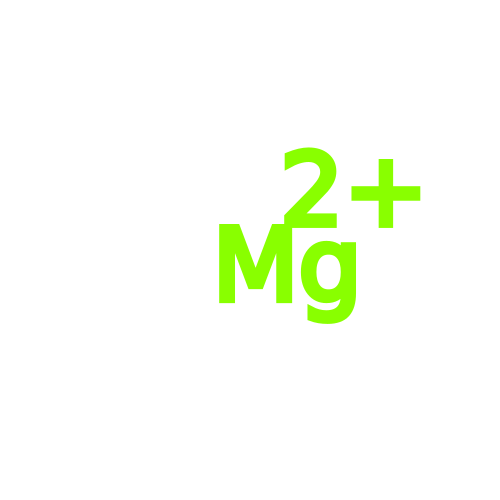 Mass: 24.305 Da / Num. of mol.: 299 / Source method: obtained synthetically / Formula: Mg Mass: 24.305 Da / Num. of mol.: 299 / Source method: obtained synthetically / Formula: Mg#87: Chemical | ChemComp-ZN / 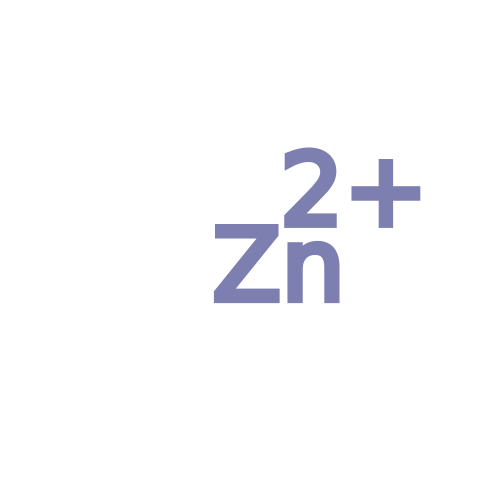 Mass: 65.409 Da / Num. of mol.: 6 / Source method: obtained synthetically / Formula: Zn Mass: 65.409 Da / Num. of mol.: 6 / Source method: obtained synthetically / Formula: Zn |
|---|
-Details
| Has protein modification | Y |
|---|
-Experimental details
-Experiment
| Experiment | Method: ELECTRON MICROSCOPY |
|---|---|
| EM experiment | Aggregation state: PARTICLE / 3D reconstruction method: single particle reconstruction |
- Sample preparation
| Component |
| ||||||||||||||||||||||||||||||||||||
|---|---|---|---|---|---|---|---|---|---|---|---|---|---|---|---|---|---|---|---|---|---|---|---|---|---|---|---|---|---|---|---|---|---|---|---|---|---|
| Source (natural) |
| ||||||||||||||||||||||||||||||||||||
| Source (recombinant) |
| ||||||||||||||||||||||||||||||||||||
| Buffer solution | pH: 7.5 | ||||||||||||||||||||||||||||||||||||
| Specimen | Embedding applied: NO / Shadowing applied: NO / Staining applied: NO / Vitrification applied: YES | ||||||||||||||||||||||||||||||||||||
| Vitrification | Cryogen name: ETHANE |
- Electron microscopy imaging
| Experimental equipment |  Model: Titan Krios / Image courtesy: FEI Company |
|---|---|
| Microscopy | Model: FEI TITAN KRIOS |
| Electron gun | Electron source:  FIELD EMISSION GUN / Accelerating voltage: 300 kV / Illumination mode: SPOT SCAN FIELD EMISSION GUN / Accelerating voltage: 300 kV / Illumination mode: SPOT SCAN |
| Electron lens | Mode: BRIGHT FIELD |
| Image recording | Electron dose: 28 e/Å2 / Film or detector model: FEI FALCON II (4k x 4k) |
- Processing
| EM software |
| |||||||||||||||
|---|---|---|---|---|---|---|---|---|---|---|---|---|---|---|---|---|
| CTF correction | Type: NONE | |||||||||||||||
| Symmetry | Point symmetry: C1 (asymmetric) | |||||||||||||||
| 3D reconstruction | Resolution: 3 Å / Resolution method: FSC 0.143 CUT-OFF / Num. of particles: 223773 / Symmetry type: POINT | |||||||||||||||
| Atomic model building | Protocol: RIGID BODY FIT |
