 Movie
Movie Controller

[English] 日本語
 Yorodumi
- PDB-7sz7: Cryo-EM structure of the extracellular module of the full-length ... -
+ Open data

- Basic information
| Entry | Database: PDB / ID: 7sz7 | |||||||||
|---|---|---|---|---|---|---|---|---|---|---|
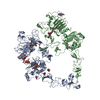
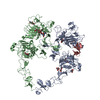
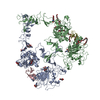
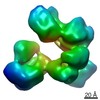
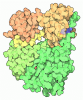
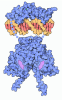
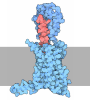
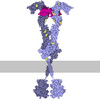
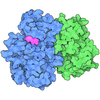
| Title | Cryo-EM structure of the extracellular module of the full-length EGFR bound to TGF-alpha. "tips-juxtaposed" conformation | |||||||||
 Components Components |
| |||||||||
 Keywords Keywords | SIGNALING PROTEIN / Transferase / receptor tyrosine kinases / epidermal growth factor receptor | |||||||||
| Function / homology |  Function and homology information Function and homology informationhepatocyte proliferation / Cargo concentration in the ER / COPII-mediated vesicle transport / multivesicular body, internal vesicle lumen / negative regulation of cardiocyte differentiation / Shc-EGFR complex / positive regulation of protein kinase C signaling / Inhibition of Signaling by Overexpressed EGFR / EGFR interacts with phospholipase C-gamma / epidermal growth factor receptor activity ...hepatocyte proliferation / Cargo concentration in the ER / COPII-mediated vesicle transport / multivesicular body, internal vesicle lumen / negative regulation of cardiocyte differentiation / Shc-EGFR complex / positive regulation of protein kinase C signaling / Inhibition of Signaling by Overexpressed EGFR / EGFR interacts with phospholipase C-gamma / epidermal growth factor receptor activity / epidermal growth factor binding / response to UV-A / epidermal growth factor receptor binding / regulation of peptidyl-tyrosine phosphorylation / PLCG1 events in ERBB2 signaling / ERBB2-EGFR signaling pathway / ERBB2 Activates PTK6 Signaling / PTK6 promotes HIF1A stabilization / Signaling by EGFR / intracellular vesicle / negative regulation of epidermal growth factor receptor signaling pathway / ERBB2 Regulates Cell Motility / Developmental Lineage of Mammary Gland Myoepithelial Cells / protein insertion into membrane / positive regulation of cell division / Respiratory syncytial virus (RSV) attachment and entry / Signaling by ERBB4 / PI3K events in ERBB2 signaling / positive regulation of phosphorylation / Developmental Lineage of Mammary Gland Luminal Epithelial Cells / positive regulation of peptidyl-serine phosphorylation / Estrogen-dependent nuclear events downstream of ESR-membrane signaling / MAP kinase kinase kinase activity / GAB1 signalosome / protein tyrosine kinase activator activity / ossification / positive regulation of G1/S transition of mitotic cell cycle / Signaling by ERBB2 / TFAP2 (AP-2) family regulates transcription of growth factors and their receptors / positive regulation of mitotic nuclear division / transmembrane receptor protein tyrosine kinase activity / positive regulation of epithelial cell proliferation / endoplasmic reticulum-Golgi intermediate compartment membrane / GRB2 events in EGFR signaling / SHC1 events in EGFR signaling / EGFR Transactivation by Gastrin / GRB2 events in ERBB2 signaling / positive regulation of fibroblast proliferation / cellular response to amino acid stimulus / SHC1 events in ERBB2 signaling / cellular response to epidermal growth factor stimulus / basal plasma membrane / positive regulation of DNA repair / positive regulation of DNA replication / phosphatidylinositol 3-kinase/protein kinase B signal transduction / Signal transduction by L1 / cellular response to estradiol stimulus / positive regulation of protein localization to plasma membrane / growth factor activity / negative regulation of protein catabolic process / clathrin-coated endocytic vesicle membrane / cell-cell adhesion / NOTCH3 Activation and Transmission of Signal to the Nucleus / ER to Golgi transport vesicle membrane / Signaling by ERBB2 TMD/JMD mutants / EGFR downregulation / Constitutive Signaling by EGFRvIII / receptor protein-tyrosine kinase / Signaling by ERBB2 ECD mutants / Signaling by ERBB2 KD Mutants / positive regulation of miRNA transcription / positive regulation of protein phosphorylation / cell junction / epidermal growth factor receptor signaling pathway / ruffle membrane / kinase binding / Downregulation of ERBB2 signaling / Constitutive Signaling by Aberrant PI3K in Cancer / HCMV Early Events / positive regulation of canonical Wnt signaling pathway / actin filament binding / neuron differentiation / transmembrane signaling receptor activity / PIP3 activates AKT signaling / positive regulation of cell growth / Cargo recognition for clathrin-mediated endocytosis / Constitutive Signaling by Ligand-Responsive EGFR Cancer Variants / Clathrin-mediated endocytosis / nuclear membrane / ATPase binding / PI5P, PP2A and IER3 Regulate PI3K/AKT Signaling / virus receptor activity / RAF/MAP kinase cascade / protein tyrosine kinase activity / double-stranded DNA binding / cytoplasmic vesicle / early endosome membrane / protein phosphatase binding / Estrogen-dependent gene expression / positive regulation of phosphatidylinositol 3-kinase/protein kinase B signal transduction Similarity search - Function | |||||||||
| Biological species |  Homo sapiens (human) Homo sapiens (human) | |||||||||
| Method | ELECTRON MICROSCOPY / single particle reconstruction / cryo EM / Resolution: 3.4 Å | |||||||||
 Authors Authors | Huang, Y. / Ognjenovic, J. / Karandur, D. / Miller, K. / Merk, A. / Subramaniam, S. / Kuriyan, J. | |||||||||
| Funding support |  Canada, Canada,  United States, 2items United States, 2items
| |||||||||
 Citation Citation | Journal: Elife / Year: 2021 Title: A molecular mechanism for the generation of ligand-dependent differential outputs by the epidermal growth factor receptor. Authors: Yongjian Huang / Jana Ognjenovic / Deepti Karandur / Kate Miller / Alan Merk / Sriram Subramaniam / John Kuriyan / Abstract: The epidermal growth factor receptor (EGFR) is a receptor tyrosine kinase that couples the binding of extracellular ligands, such as EGF and transforming growth factor-α (TGF-α), to the initiation ...The epidermal growth factor receptor (EGFR) is a receptor tyrosine kinase that couples the binding of extracellular ligands, such as EGF and transforming growth factor-α (TGF-α), to the initiation of intracellular signaling pathways. EGFR binds to EGF and TGF-α with similar affinity, but generates different signals from these ligands. To address the mechanistic basis of this phenomenon, we have carried out cryo-EM analyses of human EGFR bound to EGF and TGF-α. We show that the extracellular module adopts an ensemble of dimeric conformations when bound to either EGF or TGF-α. The two extreme states of this ensemble represent distinct ligand-bound quaternary structures in which the membrane-proximal tips of the extracellular module are either juxtaposed or separated. EGF and TGF-α differ in their ability to maintain the conformation with the membrane-proximal tips of the extracellular module separated, and this conformation is stabilized preferentially by an oncogenic EGFR mutation. Close proximity of the transmembrane helices at the junction with the extracellular module has been associated previously with increased EGFR activity. Our results show how EGFR can couple the binding of different ligands to differential modulation of this proximity, thereby suggesting a molecular mechanism for the generation of ligand-sensitive differential outputs in this receptor family. | |||||||||
| History |
|
- Structure visualization
| Movie |
Movie viewer |
|---|---|
| Structure viewer | Molecule: MolmilJmol/JSmol |
- Downloads & links
-Download
| PDBx/mmCIF format | 7sz7.cif.gz | 292.9 KB | Display | PDBx/mmCIF format |
|---|---|---|---|---|
| PDB format | pdb7sz7.ent.gz | 220.6 KB | Display | PDB format |
| PDBx/mmJSON format | 7sz7.json.gz | Tree view | PDBx/mmJSON format | |
| Others |  Other downloads Other downloads |
-Validation report
| Arichive directory | https://data.pdbj.org/pub/pdb/validation_reports/sz/7sz7ftp://data.pdbj.org/pub/pdb/validation_reports/sz/7sz7 | HTTPS FTP |
|---|
-Related structure data
| Related structure data |  25563MC  7sydC  7syeC  7sz0C  7sz1C  7sz5C C: citing same article ( M: map data used to model this data |
|---|---|
| Similar structure data |




-Links
 PDBj
PDBj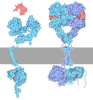
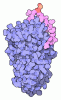
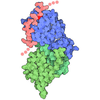


- Assembly
| Deposited unit | 
|
|---|---|
| 1 |
|
-Components
| #1: Protein | Mass: 134433.328 Da / Num. of mol.: 2 Source method: isolated from a genetically manipulated source Source: (gene. exp.) Homo sapiens (human) / Gene: EGFR, ERBB, ERBB1, HER1 / Production host: Homo sapiens (human)References: UniProt: P00533, receptor protein-tyrosine kinase #2: Protein/peptide | Mass: 5560.246 Da / Num. of mol.: 2 Source method: isolated from a genetically manipulated source Source: (gene. exp.) Homo sapiens (human) / Gene: TGFA / Production host:   Escherichia coli (E. coli) / References: UniProt: P01135 Escherichia coli (E. coli) / References: UniProt: P01135Has protein modification | Y | |
|---|
-Experimental details
-Experiment
| Experiment | Method: ELECTRON MICROSCOPY |
|---|---|
| EM experiment | Aggregation state: PARTICLE / 3D reconstruction method: single particle reconstruction |
- Sample preparation
| Component | Name: full-length human EGFR:TGF-alpha complex / Type: COMPLEX / Entity ID: all / Source: RECOMBINANT |
|---|---|
| Molecular weight | Experimental value: NO |
| Source (natural) | Organism: Homo sapiens (human) |
| Source (recombinant) | Organism: Homo sapiens (human) |
| Buffer solution | pH: 8 |
| Specimen | Conc.: 0.5 mg/ml / Embedding applied: NO / Shadowing applied: NO / Staining applied: NO / Vitrification applied: YES |
| Specimen support | Grid type: UltrAuFoil R1.2/1.3 |
| Vitrification | Cryogen name: ETHANE |
- Electron microscopy imaging
| Experimental equipment |  Model: Titan Krios / Image courtesy: FEI Company |
|---|---|
| Microscopy | Model: FEI TITAN KRIOS |
| Electron gun | Electron source:  FIELD EMISSION GUN / Accelerating voltage: 300 kV / Illumination mode: FLOOD BEAM FIELD EMISSION GUN / Accelerating voltage: 300 kV / Illumination mode: FLOOD BEAM |
| Electron lens | Mode: BRIGHT FIELD |
| Image recording | Electron dose: 50 e/Å2 / Film or detector model: GATAN K3 (6k x 4k) |
- Processing
| EM software |
| ||||||||||||||||||||
|---|---|---|---|---|---|---|---|---|---|---|---|---|---|---|---|---|---|---|---|---|---|
| CTF correction | Type: PHASE FLIPPING AND AMPLITUDE CORRECTION | ||||||||||||||||||||
| Symmetry | Point symmetry: C1 (asymmetric) | ||||||||||||||||||||
| 3D reconstruction | Resolution: 3.4 Å / Resolution method: FSC 0.143 CUT-OFF / Num. of particles: 126471 / Symmetry type: POINT |
