 Movie
Movie Controller


+ Open data

- Basic information
| Entry | Database: PDB / ID: 6z6n | ||||||
|---|---|---|---|---|---|---|---|
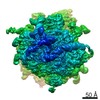
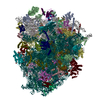
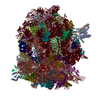
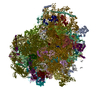
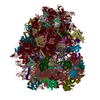
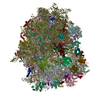
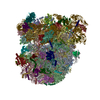
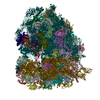
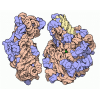
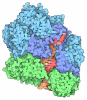
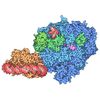
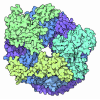
| Title | Cryo-EM structure of human EBP1-80S ribosomes (focus on EBP1) | ||||||
 Components Components |
| ||||||
 Keywords Keywords | RIBOSOME / hibernation | ||||||
| Function / homology |  Function and homology information Function and homology informationSynthesis of diphthamide-EEF2 / translation at postsynapse / ribosome hibernation / translation elongation factor binding / PML body organization / response to folic acid / SUMO binding / translation at presynapse / positive regulation of cytoplasmic translation / exit from mitosis ...Synthesis of diphthamide-EEF2 / translation at postsynapse / ribosome hibernation / translation elongation factor binding / PML body organization / response to folic acid / SUMO binding / translation at presynapse / positive regulation of cytoplasmic translation / exit from mitosis / optic nerve development / response to insecticide / regulation of translation involved in cellular response to UV / eukaryotic 80S initiation complex / ribosomal protein import into nucleus / regulation of G1 to G0 transition / negative regulation of endoplasmic reticulum unfolded protein response / negative regulation of formation of translation preinitiation complex / axial mesoderm development / retinal ganglion cell axon guidance / oxidized pyrimidine DNA binding / response to TNF agonist / positive regulation of base-excision repair / aggresome / positive regulation of intrinsic apoptotic signaling pathway in response to DNA damage by p53 class mediator / protein-DNA complex disassembly / positive regulation of respiratory burst involved in inflammatory response / positive regulation of gastrulation / 90S preribosome assembly / positive regulation of ubiquitin-protein transferase activity / protein tyrosine kinase inhibitor activity / positive regulation of intrinsic apoptotic signaling pathway in response to DNA damage / positive regulation of DNA-templated transcription initiation / IRE1-RACK1-PP2A complex / alpha-beta T cell differentiation / positive regulation of Golgi to plasma membrane protein transport / nucleolus organization / TNFR1-mediated ceramide production / positive regulation of DNA damage response, signal transduction by p53 class mediator / GAIT complex / negative regulation of RNA splicing / TORC2 complex binding / neural crest cell differentiation / supercoiled DNA binding / G1 to G0 transition / NF-kappaB complex / negative regulation of DNA repair / cytoplasmic translational initiation / oxidized purine DNA binding / middle ear morphogenesis / cysteine-type endopeptidase activator activity involved in apoptotic process / rRNA modification in the nucleus and cytosol / negative regulation of intrinsic apoptotic signaling pathway in response to hydrogen peroxide / negative regulation of bicellular tight junction assembly / ubiquitin-like protein conjugating enzyme binding / regulation of establishment of cell polarity / negative regulation of phagocytosis / erythrocyte homeostasis / cytoplasmic side of rough endoplasmic reticulum membrane / Uptake and function of diphtheria toxin / Formation of the ternary complex, and subsequently, the 43S complex / lncRNA binding / ion channel inhibitor activity / protein kinase A binding / laminin receptor activity / homeostatic process / pigmentation / Ribosomal scanning and start codon recognition / positive regulation of mitochondrial depolarization / macrophage chemotaxis / Translation initiation complex formation / lung morphogenesis / negative regulation of Wnt signaling pathway / positive regulation of natural killer cell proliferation / male meiosis I / fibroblast growth factor binding / Protein hydroxylation / monocyte chemotaxis / BH3 domain binding / negative regulation of translational frameshifting / regulation of adenylate cyclase-activating G protein-coupled receptor signaling pathway / TOR signaling / mTORC1-mediated signalling / SARS-CoV-1 modulates host translation machinery / iron-sulfur cluster binding / positive regulation of GTPase activity / translational elongation / skeletal muscle cell differentiation / regulation of cell division / cellular response to ethanol / Peptide chain elongation / Selenocysteine synthesis / Formation of a pool of free 40S subunits / negative regulation of protein binding / blastocyst development / Eukaryotic Translation Termination / positive regulation of intrinsic apoptotic signaling pathway by p53 class mediator / protein serine/threonine kinase inhibitor activity / SRP-dependent cotranslational protein targeting to membrane / Response of EIF2AK4 (GCN2) to amino acid deficiency Similarity search - Function | ||||||
| Biological species |  Homo sapiens (human) Homo sapiens (human) | ||||||
| Method | ELECTRON MICROSCOPY / single particle reconstruction / cryo EM / Resolution: 2.9 Å | ||||||
 Authors Authors | Wells, J.N. / Buschauer, R. / Mackens-Kiani, T. / Best, K. / Kratzat, H. / Berninghausen, O. / Becker, T. / Cheng, J. / Beckmann, R. | ||||||
 Citation Citation | Journal: PLoS Biol / Year: 2020 Title: Structure and function of yeast Lso2 and human CCDC124 bound to hibernating ribosomes. Authors: Jennifer N Wells / Robert Buschauer / Timur Mackens-Kiani / Katharina Best / Hanna Kratzat / Otto Berninghausen / Thomas Becker / Wendy Gilbert / Jingdong Cheng / Roland Beckmann /   Abstract: Cells adjust to nutrient deprivation by reversible translational shutdown. This is accompanied by maintaining inactive ribosomes in a hibernation state, in which they are bound by proteins with ...Cells adjust to nutrient deprivation by reversible translational shutdown. This is accompanied by maintaining inactive ribosomes in a hibernation state, in which they are bound by proteins with inhibitory and protective functions. In eukaryotes, such a function was attributed to suppressor of target of Myb protein 1 (Stm1; SERPINE1 mRNA-binding protein 1 [SERBP1] in mammals), and recently, late-annotated short open reading frame 2 (Lso2; coiled-coil domain containing short open reading frame 124 [CCDC124] in mammals) was found to be involved in translational recovery after starvation from stationary phase. Here, we present cryo-electron microscopy (cryo-EM) structures of translationally inactive yeast and human ribosomes. We found Lso2/CCDC124 accumulating on idle ribosomes in the nonrotated state, in contrast to Stm1/SERBP1-bound ribosomes, which display a rotated state. Lso2/CCDC124 bridges the decoding sites of the small with the GTPase activating center (GAC) of the large subunit. This position allows accommodation of the duplication of multilocus region 34 protein (Dom34)-dependent ribosome recycling system, which splits Lso2-containing, but not Stm1-containing, ribosomes. We propose a model in which Lso2 facilitates rapid translation reactivation by stabilizing the recycling-competent state of inactive ribosomes. | ||||||
| History |
|
- Structure visualization
| Movie |
Movie viewer |
|---|---|
| Structure viewer | Molecule: MolmilJmol/JSmol |
- Downloads & links
-Download
| PDBx/mmCIF format | 6z6n.cif.gz | 5.1 MB | Display | PDBx/mmCIF format |
|---|---|---|---|---|
| PDB format | pdb6z6n.ent.gz | Display | PDB format | |
| PDBx/mmJSON format | 6z6n.json.gz | Tree view | PDBx/mmJSON format | |
| Others |  Other downloads Other downloads |
-Validation report
| Arichive directory | https://data.pdbj.org/pub/pdb/validation_reports/z6/6z6nftp://data.pdbj.org/pub/pdb/validation_reports/z6/6z6n | HTTPS FTP |
|---|
-Related structure data
| Related structure data | 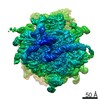 11100MC  6z6jC  6z6kC  6z6lC 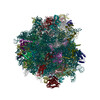 6z6mC M: map data used to model this data C: citing same article ( |
|---|---|
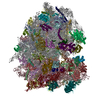
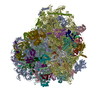
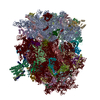
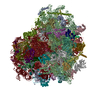
| Similar structure data |




-Links
 PDBj
PDBj
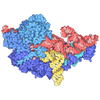
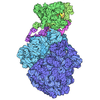

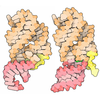
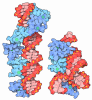
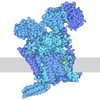
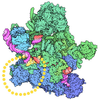
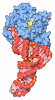
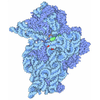
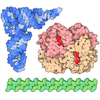
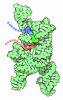
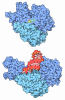
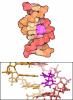
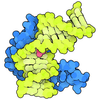
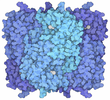
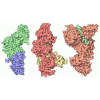
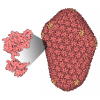
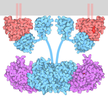
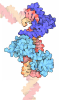
- Assembly
| Deposited unit | 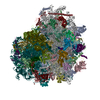
|
|---|---|
| 1 |
|
-Components
-RNA chain , 5 types, 5 molecules L5L7L8S2CC
| #1: RNA chain | Mass: 1640222.125 Da / Num. of mol.: 1 / Source method: isolated from a natural source / Source: (natural) Homo sapiens (human) / References: GenBank: 86475748 |
|---|---|
| #2: RNA chain | Mass: 38998.078 Da / Num. of mol.: 1 / Source method: isolated from a natural source / Source: (natural) Homo sapiens (human) / References: GenBank: 23898 |
| #3: RNA chain | Mass: 50449.812 Da / Num. of mol.: 1 / Source method: isolated from a natural source / Source: (natural) Homo sapiens (human) / References: GenBank: 555853 |
| #47: RNA chain | Mass: 602776.875 Da / Num. of mol.: 1 / Source method: isolated from a natural source / Source: (natural) Homo sapiens (human) / References: GenBank: 36162 |
| #83: RNA chain | Mass: 24004.262 Da / Num. of mol.: 1 / Source method: isolated from a natural source / Source: (natural) Homo sapiens (human) |
+60S ribosomal protein ... , 42 types, 42 molecules LALBLCLDLELFLGLHLILJLLLMLNLOLPLQLRLSLTLULVLWLXLYLZLaLbLcLdLe...
-Protein , 6 types, 6 molecules LmSgSfCACBCD
| #41: Protein | Mass: 14758.394 Da / Num. of mol.: 1 / Source method: isolated from a natural source / Source: (natural) Homo sapiens (human) / References: UniProt: P62987 |
|---|---|
| #68: Protein | Mass: 35115.652 Da / Num. of mol.: 1 / Source method: isolated from a natural source / Source: (natural) Homo sapiens (human) / References: UniProt: P63244 |
| #80: Protein | Mass: 18004.041 Da / Num. of mol.: 1 / Source method: isolated from a natural source / Source: (natural) Homo sapiens (human) / References: UniProt: P62979 |
| #81: Protein | Mass: 43851.879 Da / Num. of mol.: 1 / Source method: isolated from a natural source / Source: (natural) Homo sapiens (human) / References: UniProt: Q9UQ80 |
| #82: Protein | Mass: 95463.211 Da / Num. of mol.: 1 / Source method: isolated from a natural source / Source: (natural) Homo sapiens (human) / References: UniProt: P13639 |
| #84: Protein | Mass: 45051.504 Da / Num. of mol.: 1 / Source method: isolated from a natural source / Source: (natural) Homo sapiens (human) / References: UniProt: Q8NC51 |
+40S ribosomal protein ... , 31 types, 31 molecules SASBSDSESFSHSISKSLSPSQSRSSSTSUSVSXSaScSdSCSGSJSMSNSOSWSYSZSbSe
-Non-polymers , 2 types, 264 molecules 

| #85: Chemical | ChemComp-MG /  Mass: 24.305 Da / Num. of mol.: 256 / Source method: obtained synthetically / Formula: Mg Mass: 24.305 Da / Num. of mol.: 256 / Source method: obtained synthetically / Formula: Mg#86: Chemical | ChemComp-ZN / 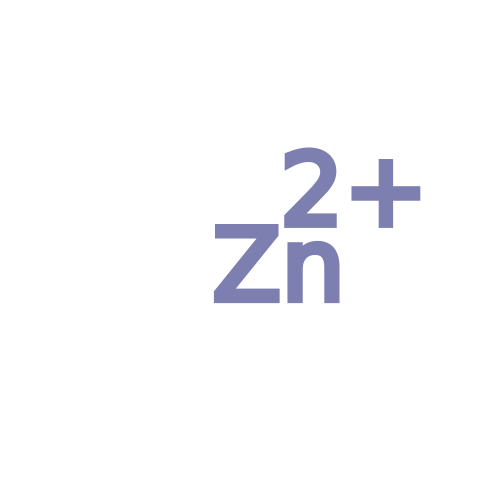 Mass: 65.409 Da / Num. of mol.: 8 / Source method: obtained synthetically / Formula: Zn Mass: 65.409 Da / Num. of mol.: 8 / Source method: obtained synthetically / Formula: Zn |
|---|
-Details
| Has ligand of interest | N |
|---|
-Experimental details
-Experiment
| Experiment | Method: ELECTRON MICROSCOPY |
|---|---|
| EM experiment | Aggregation state: PARTICLE / 3D reconstruction method: single particle reconstruction |
- Sample preparation
| Component | Name: EBP1-80S ribosome / Type: RIBOSOME / Entity ID: #1-#84 / Source: NATURAL |
|---|---|
| Source (natural) | Organism: Homo sapiens (human) |
| Buffer solution | pH: 7.4 |
| Specimen | Embedding applied: NO / Shadowing applied: NO / Staining applied: NO / Vitrification applied: YES |
| Vitrification | Cryogen name: ETHANE |
- Electron microscopy imaging
| Experimental equipment |  Model: Titan Krios / Image courtesy: FEI Company |
|---|---|
| Microscopy | Model: FEI TITAN KRIOS |
| Electron gun | Electron source:  FIELD EMISSION GUN / Accelerating voltage: 300 kV / Illumination mode: FLOOD BEAM FIELD EMISSION GUN / Accelerating voltage: 300 kV / Illumination mode: FLOOD BEAM |
| Electron lens | Mode: BRIGHT FIELD |
| Image recording | Electron dose: 28 e/Å2 / Film or detector model: FEI FALCON III (4k x 4k) |
- Processing
| Software |
| ||||||||||||||||||||||||
|---|---|---|---|---|---|---|---|---|---|---|---|---|---|---|---|---|---|---|---|---|---|---|---|---|---|
| EM software |
| ||||||||||||||||||||||||
| CTF correction | Type: PHASE FLIPPING AND AMPLITUDE CORRECTION | ||||||||||||||||||||||||
| Symmetry | Point symmetry: C1 (asymmetric) | ||||||||||||||||||||||||
| 3D reconstruction | Resolution: 2.9 Å / Resolution method: FSC 0.143 CUT-OFF / Num. of particles: 127706 / Symmetry type: POINT | ||||||||||||||||||||||||
| Atomic model building | Protocol: RIGID BODY FIT / Space: REAL | ||||||||||||||||||||||||
| Atomic model building | PDB-ID: 6EK0 6ek0 Accession code: 6EK0 / Source name: PDB / Type: experimental model | ||||||||||||||||||||||||
| Refinement | Stereochemistry target values: GeoStd + Monomer Library + CDL v1.2 | ||||||||||||||||||||||||
| Refine LS restraints |
|
