






 9J7S
9J7S
Crystal structure of 3-deoxy-D-arabino-heptulosonate-7-phosphate synthase (DAHP synthase) from Providencia alcalifaciens complexed with Phe
Summary for 9J7S
| Entry DOI | 10.2210/pdb9j7s/pdb |
| Descriptor | Phospho-2-dehydro-3-deoxyheptonate aldolase, DI(HYDROXYETHYL)ETHER, PHENYLALANINE, ... (4 entities in total) |
| Functional Keywords | dahp synthase, transferase, inhibitor, barrel domain |
| Biological source | Providencia alcalifaciens |
| Total number of polymer chains | 4 |
| Total formula weight | 155814.86 |
| Authors | Jangid, K.,Mahto, J.K.,Kumar, K.A.,Kumar, P. (deposition date: 2024-08-19, release date: 2025-01-22) |
| Primary citation | Jangid, K.,Mahto, J.K.,Kumar, K.A.,Dhaka, P.,Sharma, A.,Tariq, A.,Sharma, A.K.,Kumar, P. Structural and biochemical analyses reveal quinic acid inhibits DAHP synthase a key player in shikimate pathway. Arch.Biochem.Biophys., 763:110219-110219, 2025 Cited by PubMed Abstract: The shikimate pathway, essential for aromatic amino acid biosynthesis, is absent in animals, making its enzymes promising targets for developing antimicrobials. 3-Deoxy-D-arabino-heptulosonate-7-phosphate synthase (DAHPS) catalyzes the first committed step, which serves as the primary checkpoint for regulating the flow within the pathway, regulated by its end products (Phe, Tyr and Trp). Previously, we identified chlorogenic acid (CGA), an ester of caffeic and quinic acid, as an inhibitor of DAHPS from Bacillus subtilis, prompting us to investigate quinic acid as a potential inhibitor of Providencia alcalifaciens DAHPS (PaDAHPS). Here, we report the crystal structures of phenylalanine-sensitive DAHPS from Providenciaalcalifaciens in complex with phenylalanine (Phe) and quinic acid (QA) at resolutions of 2.5 Å and 2.68 Å, respectively. Structural analysis reveals that QA binds to the same site as Phe, with biophysical assays showing a similar binding affinity (K = 42 μM for QA and K = 32 μM for Phe). In vitro inhibition studies demonstrated that QA and Phe inhibit PaDAHPS activity, with K values of 382 μM and 132 μM, respectively. Additionally, QA inhibited the growth of several bacterial species, including Pseudomonas aeruginosa, Moraxella catarrhalis, Providencia alcalifaciens, Staphylococcus aureus, Escherichia coli with minimum inhibitory concentrations (MICs) ranging from 2.5 to 5 mg/ml. These findings identify quinic acid as a promising scaffold for developing novel antimicrobial agents targeting the shikimate pathway, providing potential therapeutic strategies for bacterial infections. PubMed: 39566672DOI: 10.1016/j.abb.2024.110219 PDB entries with the same primary citation |
| Experimental method | X-RAY DIFFRACTION (2.5 Å) |
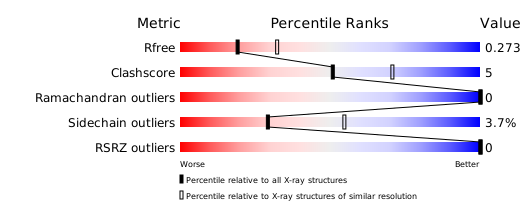
Structure validation
Download full validation report


