






 9FZB
9FZB
Human p53 DNA-binding domain bound to DARPin C10-H82R
Summary for 9FZB
| Entry DOI | 10.2210/pdb9fzb/pdb |
| Descriptor | Cellular tumor antigen p53, DARPin C10-H82R, 1,2-ETHANEDIOL, ... (5 entities in total) |
| Functional Keywords | p53 tumor suppressor, designed ankyrin repeat proteins (darpins), protein engineering, p53 reactivation in hpv-infected cells, dna binding protein |
| Biological source | Homo sapiens (human) More |
| Total number of polymer chains | 2 |
| Total formula weight | 36519.71 |
| Authors | Yuksel, B.,Balourdas, D.I.,Muenick, P.,Knapp, S.,Doetsch, V.,Joerger, A.C.,Structural Genomics Consortium (SGC) (deposition date: 2024-07-05, release date: 2025-04-02, Last modification date: 2025-05-28) |
| Primary citation | Munick, P.,Strubel, A.,Balourdas, D.I.,Funk, J.S.,Mernberger, M.,Osterburg, C.,Dreier, B.,Schaefer, J.V.,Tuppi, M.,Yuksel, B.,Schafer, B.,Knapp, S.,Pluckthun, A.,Stiewe, T.,Joerger, A.C.,Dotsch, V. DARPin-induced reactivation of p53 in HPV-positive cells. Nat.Struct.Mol.Biol., 32:790-801, 2025 Cited by PubMed Abstract: Infection of cells with high-risk strains of the human papillomavirus (HPV) causes cancer in various types of epithelial tissue. HPV infections are responsible for ~4.5% of all cancers worldwide. Tumorigenesis is based on the inactivation of key cellular control mechanisms by the viral proteins E6 and E7. The HPV E6 protein interacts with the cellular E3 ligase E6AP, and this complex binds to the p53 DNA-binding domain, which results in degradation of p53. Inhibition of this interaction has the potential to reactivate p53, thus preventing oncogenic transformation. Here we describe the characterization of a designed ankyrin repeat protein that binds to the same site as the HPV E6 protein, thereby displacing the E3 ligase and stabilizing p53. Interaction with the designed ankyrin repeat protein does not affect p53 DNA binding or the crucial MDM2 negative feedback loop but reactivates a p53-dependent transcriptional program in HeLa (HPV18-positive) and SiHa (HPV16-positive) cells, suggesting a potential therapeutic use. PubMed: 39789211DOI: 10.1038/s41594-024-01456-7 PDB entries with the same primary citation |
| Experimental method | X-RAY DIFFRACTION (1.44 Å) |
Structure validation
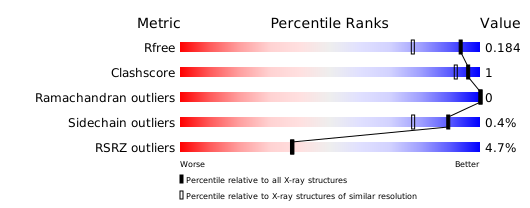
Download full validation report


