






 8ZN9
8ZN9
A vast marine sulfonate-based carbon cycle fueled by novel sulfoquinovosidases
Summary for 8ZN9
| Entry DOI | 10.2210/pdb8zn9/pdb |
| Descriptor | Oxidoreductase, putative, NICOTINAMIDE-ADENINE-DINUCLEOTIDE, DI(HYDROXYETHYL)ETHER, ... (4 entities in total) |
| Functional Keywords | rossman-fold, protein binding |
| Biological source | Roseobacter denitrificans OCh 114 |
| Total number of polymer chains | 6 |
| Total formula weight | 272568.16 |
| Authors | |
| Primary citation | Ma, X.,Wang, H.,Dong, C.,Liu, L.,Qiu, X.,Chen, X.,Chen, Q.,Wang, L.,Zhang, Y.,Jiao, N.,Williams, S.J.,Tang, K. Cosmopolitan marine bacteria facilitate a vast phytoplankton-derived sulfonate-based carbon flow through sulfoquinovosidases. Nat Commun, 17:209-209, 2025 Cited by PubMed Abstract: Sulfoquinovose (SQ) and sulfoquinovosyl glycerol (SQGro) are derived from abundant membrane sulfolipids termed sulfoquinovosyl diacylglycerols (SQDG) and produced by photosynthetic organisms, serving as sources of carbon and sulfur for bacteria. The conversion processes of these sulfoquinovosyl compounds within marine ecosystems, and their quantitative contributions to the marine organic matter pool, are poorly understood. Here, we identify Alteromonas macleodii, a marine bacterium capable of metabolizing SQ and SQGro through a sulfoquinovosidase. This enzyme converts SQGro to SQ and is a member of a clade within glycoside hydrolase family 31, distinct from other sulfoquinovosidases. The ubiquitous presence of sulfoquinovosidases and their transcripts throughout marine environments implicates active metabolism of sulfoquinovose glycosides, particularly in the sunlit surface ocean. We further demonstrate that marine algae produce significant quantities of cellular SQGro, and we estimate the annual turnover of SQGro using field samples from coastal and open ocean environments. Together with SQDG and SQ, these sulfoquinovosyl compounds constitute a substantial portion of the marine organic carbon turnover, estimated at around 1.5 petagrams of carbon per annum. These findings reveal a vast, previously unappreciated pool of organosulfonates within the microbial food web that contributes significantly to the marine carbon and sulfur cycles. PubMed: 41350266DOI: 10.1038/s41467-025-66898-z PDB entries with the same primary citation |
| Experimental method | X-RAY DIFFRACTION (1.8 Å) |
Structure validation
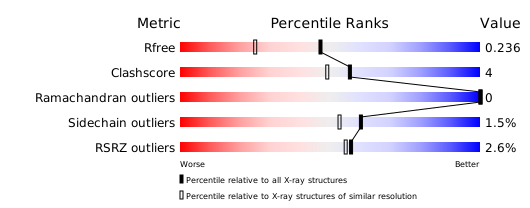
Download full validation report


