




 13DF
Crystal structure of covalent inhibitor 3-(2-chloroacetamido)-N-(3-methoxyphenyl)benzamide bound to Ubiquitin C-terminal Hydrolase-L3
This is a non-PDB format compatible entry.
Summary for 13DF
| Entry DOI | 10.2210/pdb13df/pdb |
| Descriptor | Ubiquitin carboxyl-terminal hydrolase isozyme L3, 3-(2-chloroacetamido)-N-(3-methoxyphenyl)benzamide, SULFATE ION, ... (4 entities in total) |
| Functional Keywords | uchl3, covalent inhibitor, chloroacetamide, hydrolase, hydrolase-hydrolase inhibitor complex, hydrolase/hydrolase inhibitor |
| Biological source | Homo sapiens (human) |
| Total number of polymer chains | 4 |
| Total formula weight | 109556.95 |
| Authors | Pannala, N.,Patel, R.,Flaherty, D.,Das, C. (deposition date: 2026-04-30, release date: 2026-08-26, Last modification date: 2026-11-18) |
| Primary citation | Beeralingappa, N.C.,Lu, M.,Patel, R.,Pannala, N.,Dhiman, A.,Heil, B.N.,Imhoff, R.D.,Smith, E.G.,Bahler, M.B.,Marsden, H.L.,Allen-Petersen, B.L.,Wendt, M.K.,Das, C.,Flaherty, D.P. Identification, optimisation, and structural elucidation of chloroacetamide scaffold as covalent inhibitors for ubiquitin C-terminal Hydrolase L3. J Enzyme Inhib Med Chem, 41:2755714-2755714, 2026 Cited by PubMed Abstract: The deubiquitinating enzyme, ubiquitin C-terminal hydrolase L3 (UCHL3), has been implicated as a potential therapeutic target for cancer with a role in regulating the DNA damage response pathways. While the target has been studied using genetic methods there is a lack of reliable chemical probes to selectivity target UCHL3. In this study we report hit identification and optimisation of a new chemical scaffold that irreversibly inhibits UCHL3. The observed structure-activity relationships are corroborated by ligand-bound crystal structures that confirm covalent adduct formation with the catalytic cysteine of the enzyme. Finally, through gel-shift assays using a ubiquitin activity-based probe we demonstrate on-target engagement with UCHL3 in two cell lines. The work as a whole presents a comprehensive evaluation of the new scaffold that can be utilised to probe UCHL3 in different biological contexts. PubMed: 42979778DOI: 10.1080/14756366.2026.2755714 PDB entries with the same primary citation |
| Experimental method | X-RAY DIFFRACTION (1.84 Å) |
Structure validation
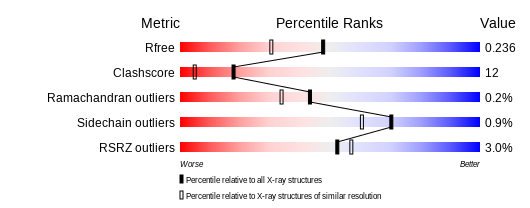
Download full validation report


