 ムービー
ムービー コントローラー


+ データを開く

- 基本情報
基本情報
| 登録情報 | データベース: PDB / ID: 9bhm | |||||||||||||||||||||||||||||||||||||||
|---|---|---|---|---|---|---|---|---|---|---|---|---|---|---|---|---|---|---|---|---|---|---|---|---|---|---|---|---|---|---|---|---|---|---|---|---|---|---|---|---|
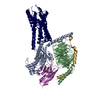
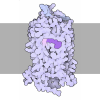
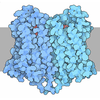
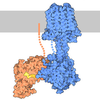
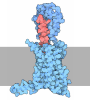
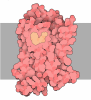
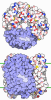
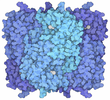
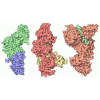
| タイトル | Human proton sensing receptor GPR68 in complex with miniGs | |||||||||||||||||||||||||||||||||||||||
 要素 要素 |
| |||||||||||||||||||||||||||||||||||||||
 キーワード キーワード | SIGNALING PROTEIN / Receptor / Proton-sensor / G protein | |||||||||||||||||||||||||||||||||||||||
| 機能・相同性 |  機能・相同性情報 機能・相同性情報positive regulation of osteoclast development / negative regulation of monocyte differentiation / cellular response to pH / response to fluid shear stress / osteoclast development / Class A/1 (Rhodopsin-like receptors) / insulin secretion / adenylate cyclase-activating G protein-coupled bile acid receptor signaling pathway / adenylate cyclase-activating serotonin receptor signaling pathway / regulation of skeletal muscle contraction ...positive regulation of osteoclast development / negative regulation of monocyte differentiation / cellular response to pH / response to fluid shear stress / osteoclast development / Class A/1 (Rhodopsin-like receptors) / insulin secretion / adenylate cyclase-activating G protein-coupled bile acid receptor signaling pathway / adenylate cyclase-activating serotonin receptor signaling pathway / regulation of skeletal muscle contraction / PKA activation in glucagon signalling / monocyte differentiation / hair follicle placode formation / developmental growth / intracellular transport / D1 dopamine receptor binding / vascular endothelial cell response to laminar fluid shear stress / renal water homeostasis / activation of adenylate cyclase activity / Hedgehog 'off' state / cellular response to acidic pH / adenylate cyclase-activating adrenergic receptor signaling pathway / cellular response to glucagon stimulus / intracellular glucose homeostasis / positive regulation of insulin secretion involved in cellular response to glucose stimulus / adenylate cyclase activator activity / trans-Golgi network membrane / negative regulation of inflammatory response to antigenic stimulus / response to prostaglandin E / bone development / platelet aggregation / G protein-coupled receptor activity / cognition / G-protein beta/gamma-subunit complex binding / Olfactory Signaling Pathway / Activation of the phototransduction cascade / G protein-coupled acetylcholine receptor signaling pathway / positive regulation of insulin secretion / G beta:gamma signalling through PLC beta / Presynaptic function of Kainate receptors / Thromboxane signalling through TP receptor / Activation of G protein gated Potassium channels / Inhibition of voltage gated Ca2+ channels via Gbeta/gamma subunits / G-protein activation / Glucagon signaling in metabolic regulation / G beta:gamma signalling through CDC42 / Prostacyclin signalling through prostacyclin receptor / G beta:gamma signalling through BTK / Synthesis, secretion, and inactivation of Glucagon-like Peptide-1 (GLP-1) / sensory perception of smell / photoreceptor disc membrane / ADP signalling through P2Y purinoceptor 12 / Sensory perception of sweet, bitter, and umami (glutamate) taste / Glucagon-type ligand receptors / Adrenaline,noradrenaline inhibits insulin secretion / Vasopressin regulates renal water homeostasis via Aquaporins / Glucagon-like Peptide-1 (GLP1) regulates insulin secretion / G alpha (z) signalling events / cellular response to catecholamine stimulus / ADP signalling through P2Y purinoceptor 1 / ADORA2B mediated anti-inflammatory cytokines production / G beta:gamma signalling through PI3Kgamma / adenylate cyclase-activating dopamine receptor signaling pathway / Cooperation of PDCL (PhLP1) and TRiC/CCT in G-protein beta folding / GPER1 signaling / cellular response to prostaglandin E stimulus / heterotrimeric G-protein complex / G alpha (12/13) signalling events / positive regulation of cold-induced thermogenesis / Inactivation, recovery and regulation of the phototransduction cascade / extracellular vesicle / sensory perception of taste / adenylate cyclase-activating G protein-coupled receptor signaling pathway / Thrombin signalling through proteinase activated receptors (PARs) / signaling receptor complex adaptor activity / retina development in camera-type eye / GTPase binding / G protein activity / Ca2+ pathway / High laminar flow shear stress activates signaling by PIEZO1 and PECAM1:CDH5:KDR in endothelial cells / G alpha (i) signalling events / G alpha (s) signalling events / phospholipase C-activating G protein-coupled receptor signaling pathway / G alpha (q) signalling events / 加水分解酵素; 酸無水物に作用; GTPに作用・細胞または細胞小器官の運動に関与 / Ras protein signal transduction / cell population proliferation / Extra-nuclear estrogen signaling / G protein-coupled receptor signaling pathway / inflammatory response / lysosomal membrane / GTPase activity / synapse / GTP binding / protein-containing complex binding / signal transduction / extracellular exosome / membrane / metal ion binding / plasma membrane 類似検索 - 分子機能 | |||||||||||||||||||||||||||||||||||||||
| 生物種 |  Homo sapiens (ヒト) Homo sapiens (ヒト)  Lama glama (ラマ) Lama glama (ラマ) | |||||||||||||||||||||||||||||||||||||||
| 手法 | 電子顕微鏡法 / 単粒子再構成法 / クライオ電子顕微鏡法 / 解像度: 2.9 Å | |||||||||||||||||||||||||||||||||||||||
 データ登録者 データ登録者 | Howard, M.K. / Hoppe, N. / Huang, X.P. / Macdonald, C.B. / Mehrotra, E. / Rockefeller Grimes, P. / Zahm, A.M. / Trinidad, D.D. / English, J. / Coyote-Maestas, W. / Manglik, A. | |||||||||||||||||||||||||||||||||||||||
| 資金援助 |  米国, 6件 米国, 6件
| |||||||||||||||||||||||||||||||||||||||
 引用 引用 | ジャーナル: Cell / 年: 2025 タイトル: Molecular basis of proton sensing by G protein-coupled receptors. 著者: Matthew K Howard / Nicholas Hoppe / Xi-Ping Huang / Darko Mitrovic / Christian B Billesbølle / Christian B Macdonald / Eshan Mehrotra / Patrick Rockefeller Grimes / Donovan D Trinidad / ...著者: Matthew K Howard / Nicholas Hoppe / Xi-Ping Huang / Darko Mitrovic / Christian B Billesbølle / Christian B Macdonald / Eshan Mehrotra / Patrick Rockefeller Grimes / Donovan D Trinidad / Lucie Delemotte / Justin G English / Willow Coyote-Maestas / Aashish Manglik /  要旨: Three proton-sensing G protein-coupled receptors (GPCRs)-GPR4, GPR65, and GPR68-respond to extracellular pH to regulate diverse physiology. How protons activate these receptors is poorly understood. ...Three proton-sensing G protein-coupled receptors (GPCRs)-GPR4, GPR65, and GPR68-respond to extracellular pH to regulate diverse physiology. How protons activate these receptors is poorly understood. We determined cryogenic-electron microscopy (cryo-EM) structures of each receptor to understand the spatial arrangement of proton-sensing residues. Using deep mutational scanning (DMS), we determined the functional importance of every residue in GPR68 activation by generating ∼9,500 mutants and measuring their effects on signaling and surface expression. Constant-pH molecular dynamics simulations provided insights into the conformational landscape and protonation patterns of key residues. This unbiased approach revealed that, unlike other proton-sensitive channels and receptors, no single site is critical for proton recognition. Instead, a network of titratable residues extends from the extracellular surface to the transmembrane region, converging on canonical motifs to activate proton-sensing GPCRs. Our approach integrating structure, simulations, and unbiased functional interrogation provides a framework for understanding GPCR signaling complexity. | |||||||||||||||||||||||||||||||||||||||
| 履歴 |
|
- 構造の表示
構造の表示
| 構造ビューア | 分子: MolmilJmol/JSmol |
|---|
- ダウンロードとリンク
-ダウンロード
| PDBx/mmCIF形式 | 9bhm.cif.gz | 204.9 KB | 表示 | PDBx/mmCIF形式 |
|---|---|---|---|---|
| PDB形式 | pdb9bhm.ent.gz | 152.1 KB | 表示 | PDB形式 |
| PDBx/mmJSON形式 | 9bhm.json.gz | ツリー表示 | PDBx/mmJSON形式 | |
| その他 |  その他のダウンロード その他のダウンロード |
-検証レポート
| アーカイブディレクトリ | https://data.pdbj.org/pub/pdb/validation_reports/bh/9bhmftp://data.pdbj.org/pub/pdb/validation_reports/bh/9bhm | HTTPS FTP |
|---|
-関連構造データ




-リンク
 PDBj
PDBj

- 集合体
集合体
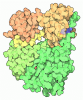
| 登録構造単位 | 
|
|---|---|
| 1 |
|
-要素
| #1: タンパク質 | 分子量: 42372.688 Da / 分子数: 1 / 由来タイプ: 組換発現 / 由来: (組換発現) Homo sapiens (ヒト) / 遺伝子: GPR68, OGR1 / 発現宿主: Homo sapiens (ヒト) / 参照: UniProt: Q15743 |
|---|---|
| #2: タンパク質 | 分子量: 30137.025 Da / 分子数: 1 Mutation: G49D,E50N,residues 65-203 replaced with GGSGGSGG,A249D,S252D,residues 254-263 deleted,I372A,V375I 由来タイプ: 組換発現 / 由来: (組換発現) Homo sapiens (ヒト) / 遺伝子: GNAS, GNAS1, GSP / 発現宿主: Homo sapiens (ヒト) / 参照: UniProt: P63092 |
| #3: タンパク質 | 分子量: 40857.641 Da / 分子数: 1 / 由来タイプ: 組換発現 / 由来: (組換発現) Homo sapiens (ヒト) / 遺伝子: GNB1 / 発現宿主:  Trichoplusia ni (イラクサキンウワバ) / 参照: UniProt: P62873 Trichoplusia ni (イラクサキンウワバ) / 参照: UniProt: P62873 |
| #4: 抗体 | 分子量: 15398.067 Da / 分子数: 1 / 由来タイプ: 組換発現 / 由来: (組換発現) Lama glama (ラマ) / 発現宿主:   Escherichia coli (大腸菌) Escherichia coli (大腸菌) |
| #5: 化合物 | ChemComp-Y01 / 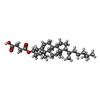 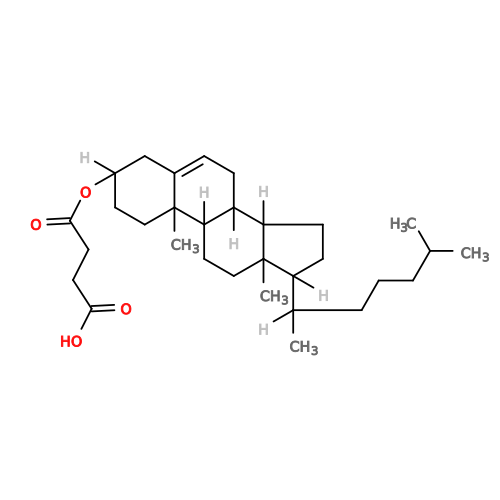 分子量: 486.726 Da / 分子数: 1 / 由来タイプ: 合成 / 式: C31H50O4 / タイプ: SUBJECT OF INVESTIGATION 分子量: 486.726 Da / 分子数: 1 / 由来タイプ: 合成 / 式: C31H50O4 / タイプ: SUBJECT OF INVESTIGATION |
| 研究の焦点であるリガンドがあるか | Y |
| Has protein modification | Y |
-実験情報
-実験
| 実験 | 手法: 電子顕微鏡法 |
|---|---|
| EM実験 | 試料の集合状態: PARTICLE / 3次元再構成法: 単粒子再構成法 |
- 試料調製
試料調製
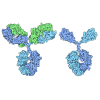
| 構成要素 | 名称: Complex of GPR68 bound to Gs heterotrimer / タイプ: COMPLEX / Entity ID: #1-#4 / 由来: MULTIPLE SOURCES |
|---|---|
| 分子量 | 実験値: NO |
| 緩衝液 | pH: 6 |
| 試料 | 包埋: NO / シャドウイング: NO / 染色: NO / 凍結: YES |
| 急速凍結 | 凍結剤: ETHANE |
- 電子顕微鏡撮影
| 実験機器 |  モデル: Titan Krios / 画像提供: FEI Company |
|---|---|
| 顕微鏡 | モデル: FEI TITAN KRIOS |
| 電子銃 | 電子線源:  FIELD EMISSION GUN / 加速電圧: 300 kV / 照射モード: FLOOD BEAM FIELD EMISSION GUN / 加速電圧: 300 kV / 照射モード: FLOOD BEAM |
| 電子レンズ | モード: BRIGHT FIELD / 最大 デフォーカス(公称値): 2100 nm / 最小 デフォーカス(公称値): 1000 nm |
| 撮影 | 電子線照射量: 49 e/Å2 フィルム・検出器のモデル: GATAN K3 BIOQUANTUM (6k x 4k) |
- 解析
解析
| EMソフトウェア | 名称: PHENIX / カテゴリ: モデル精密化 | ||||||||||||||||||||||||
|---|---|---|---|---|---|---|---|---|---|---|---|---|---|---|---|---|---|---|---|---|---|---|---|---|---|
| CTF補正 | タイプ: PHASE FLIPPING AND AMPLITUDE CORRECTION | ||||||||||||||||||||||||
| 3次元再構成 | 解像度: 2.9 Å / 解像度の算出法: FSC 0.143 CUT-OFF / 粒子像の数: 552937 / 対称性のタイプ: POINT | ||||||||||||||||||||||||
| 拘束条件 |
|
