[English] 日本語
Yorodumi
- PDB-7jxo: Triangular trimer of beta-hairpins derived from Abeta17-36 with a... -

+
Open data


ID or keywords:

Loading...

-
Basic information

Entry
Database: PDB / ID: 7jxo
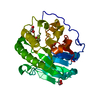
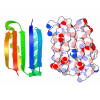
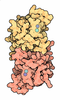
TitleTriangular trimer of beta-hairpins derived from Abeta17-36 with an F20Cha mutation
ComponentsAmyloid-beta 17-36 peptide
KeywordsDE NOVO PROTEIN / amyloid / oligomer / Alzheimer's disease / beta-hairpin
Function / homology
Function and homology information


amyloid-beta complex / growth cone lamellipodium / cellular response to norepinephrine stimulus / collateral sprouting in absence of injury / growth cone filopodium / microglia development / Formyl peptide receptors bind formyl peptides and many other ligands / axo-dendritic transport / regulation of Wnt signaling pathway / axon midline choice point recognition ...amyloid-beta complex / growth cone lamellipodium / cellular response to norepinephrine stimulus / collateral sprouting in absence of injury / growth cone filopodium / microglia development / Formyl peptide receptors bind formyl peptides and many other ligands / axo-dendritic transport / regulation of Wnt signaling pathway / axon midline choice point recognition / regulation of synapse structure or activity / hippocampal neuron apoptotic process / astrocyte activation involved in immune response / NMDA selective glutamate receptor signaling pathway / regulation of spontaneous synaptic transmission / mating behavior / growth factor receptor binding / peptidase activator activity / PTB domain binding / Insertion of tail-anchored proteins into the endoplasmic reticulum membrane / positive regulation of amyloid fibril formation / Golgi-associated vesicle / astrocyte projection / Lysosome Vesicle Biogenesis / neuron remodeling / Deregulated CDK5 triggers multiple neurodegenerative pathways in Alzheimer's disease models / nuclear envelope lumen / dendrite development / TRAF6 mediated NF-kB activation / positive regulation of protein metabolic process / signaling receptor activator activity / negative regulation of long-term synaptic potentiation / Advanced glycosylation endproduct receptor signaling / transition metal ion binding / The NLRP3 inflammasome / main axon / regulation of multicellular organism growth / modulation of excitatory postsynaptic potential / intracellular copper ion homeostasis / ECM proteoglycans / regulation of presynapse assembly / positive regulation of T cell migration / response to insulin-like growth factor stimulus / neuronal dense core vesicle / Purinergic signaling in leishmaniasis infection / cellular response to manganese ion / Notch signaling pathway / positive regulation of chemokine production / swimming behavior / extracellular matrix organization / neuron projection maintenance / clathrin-coated pit / astrocyte activation / axonogenesis / positive regulation of mitotic cell cycle / Mitochondrial protein degradation / ionotropic glutamate receptor signaling pathway / positive regulation of calcium-mediated signaling / platelet alpha granule lumen / response to interleukin-1 / regulation of neuron apoptotic process / cellular response to copper ion / cellular response to cAMP / positive regulation of glycolytic process / endosome lumen / trans-Golgi network membrane / dendritic shaft / positive regulation of long-term synaptic potentiation / central nervous system development / protein serine/threonine kinase binding / positive regulation of interleukin-1 beta production / learning / adult locomotory behavior / Post-translational protein phosphorylation / serine-type endopeptidase inhibitor activity / locomotory behavior / microglial cell activation / cellular response to nerve growth factor stimulus / TAK1-dependent IKK and NF-kappa-B activation / positive regulation of non-canonical NF-kappaB signal transduction / synapse organization / regulation of long-term neuronal synaptic plasticity / visual learning / recycling endosome / response to lead ion / positive regulation of JNK cascade / positive regulation of interleukin-6 production / Golgi lumen / cognition / Regulation of Insulin-like Growth Factor (IGF) transport and uptake by Insulin-like Growth Factor Binding Proteins (IGFBPs) / cellular response to amyloid-beta / endocytosis / positive regulation of tumor necrosis factor production / neuron projection development / positive regulation of inflammatory response / calcium ion transport / Platelet degranulation / regulation of translation / heparin binding / regulation of gene expression
Similarity search - Function
Amyloidogenic glycoprotein, copper-binding / Amyloidogenic glycoprotein, copper-binding domain conserved site / Amyloidogenic glycoprotein, copper-binding domain superfamily / Copper-binding of amyloid precursor, CuBD / Amyloid precursor protein (APP) copper-binding (CuBD) domain signature. / Amyloidogenic glycoprotein, heparin-binding / Amyloid A4 N-terminal heparin-binding / Amyloidogenic glycoprotein, amyloid-beta peptide superfamily / Beta-amyloid peptide (beta-APP) / Amyloidogenic glycoprotein, amyloid-beta peptide ...Amyloidogenic glycoprotein, copper-binding / Amyloidogenic glycoprotein, copper-binding domain conserved site / Amyloidogenic glycoprotein, copper-binding domain superfamily / Copper-binding of amyloid precursor, CuBD / Amyloid precursor protein (APP) copper-binding (CuBD) domain signature. / Amyloidogenic glycoprotein, heparin-binding / Amyloid A4 N-terminal heparin-binding / Amyloidogenic glycoprotein, amyloid-beta peptide superfamily / Beta-amyloid peptide (beta-APP) / Amyloidogenic glycoprotein, amyloid-beta peptide / Beta-amyloid precursor protein C-terminal / Amyloidogenic glycoprotein, intracellular domain, conserved site / Beta-amyloid precursor protein C-terminus / Amyloid precursor protein (APP) intracellular domain signature. / Amyloidogenic glycoprotein, extracellular / Amyloidogenic glycoprotein, E2 domain / E2 domain superfamily / Amyloidogenic glycoprotein, heparin-binding domain superfamily / E2 domain of amyloid precursor protein / Amyloid precursor protein (APP) E1 domain profile. / Amyloid precursor protein (APP) E2 domain profile. / amyloid A4 / Amyloidogenic glycoprotein / Proteinase inhibitor I2, Kunitz, conserved site / Pancreatic trypsin inhibitor (Kunitz) family signature. / BPTI/Kunitz family of serine protease inhibitors. / Pancreatic trypsin inhibitor Kunitz domain / Kunitz/Bovine pancreatic trypsin inhibitor domain / Pancreatic trypsin inhibitor (Kunitz) family profile. / Pancreatic trypsin inhibitor Kunitz domain superfamily / PH-like domain superfamily
Similarity search - Domain/homology
Amyloid-beta precursor protein
Similarity search - Component
Biological speciesHomo sapiens (human)
MethodX-RAY DIFFRACTION / MOLECULAR REPLACEMENT / Resolution: 2.81 Å
AuthorsKreutzer, A.G. / Haerianardakani, S. / Nowick, J.S.
Funding support United States, 1items
OrganizationGrant numberCountry
National Institutes of Health/National Institute of General Medical Sciences (NIH/NIGMS)GM097562 United States
CitationJournal: J.Am.Chem.Soc. / Year: 2020
Title: Phenylalanine Mutation to Cyclohexylalanine Facilitates Triangular Trimer Formation by beta-Hairpins Derived from A beta.
Authors: Haerianardakani, S. / Kreutzer, A.G. / Salveson, P.J. / Samdin, T.D. / Guaglianone, G.E. / Nowick, J.S.
History
DepositionAug 27, 2020Deposition site: RCSB / Processing site: RCSB
Revision 1.0Dec 9, 2020Provider: repository / Type: Initial release
Revision 1.1Dec 23, 2020Group: Database references / Category: citation / citation_author
Item: _citation.journal_volume / _citation.page_first ..._citation.journal_volume / _citation.page_first / _citation.page_last / _citation_author.identifier_ORCID
Revision 1.2Oct 18, 2023Group: Data collection / Database references / Refinement description
Category: chem_comp_atom / chem_comp_bond ...chem_comp_atom / chem_comp_bond / database_2 / pdbx_initial_refinement_model
Item: _database_2.pdbx_DOI / _database_2.pdbx_database_accession

-
Structure visualization

Structure viewerMolecule:
MolmilJmol/JSmol

Downloads & links

-
Assembly

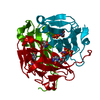
Deposited unit
A: Amyloid-beta 17-36 peptide
B: Amyloid-beta 17-36 peptide
C: Amyloid-beta 17-36 peptide


Theoretical massNumber of molelcules
Total (without water)6,6623
Polymers6,6623
Non-polymers00
Water18010
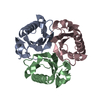
1
A: Amyloid-beta 17-36 peptide
B: Amyloid-beta 17-36 peptide
C: Amyloid-beta 17-36 peptide

A: Amyloid-beta 17-36 peptide
B: Amyloid-beta 17-36 peptide
C: Amyloid-beta 17-36 peptide

A: Amyloid-beta 17-36 peptide
B: Amyloid-beta 17-36 peptide
C: Amyloid-beta 17-36 peptide

A: Amyloid-beta 17-36 peptide
B: Amyloid-beta 17-36 peptide
C: Amyloid-beta 17-36 peptide


Theoretical massNumber of molelcules
Total (without water)26,64812
Polymers26,64812
Non-polymers00
Water21612
TypeNameSymmetry operationNumber
identity operation1_555x,y,z1
crystal symmetry operation4_665-x+1,-y+1,z1
crystal symmetry operation7_555y,x,-z+2/31
crystal symmetry operation10_665-y+1,-x+1,-z+2/31
Buried area10920 Å2
ΔGint-71 kcal/mol
Surface area13910 Å2
MethodPISA
Unit cell
Length a, b, c (Å)65.141, 65.141, 51.956
Angle α, β, γ (deg.)90.000, 90.000, 120.000
Int Tables number180
Space group name H-MP6222
Components on special symmetry positions
IDModelComponents
11C-103-

HOH

-
Components

#1: Protein/peptide Amyloid-beta 17-36 peptide / APP / ABPP / APPI / Alzheimer disease amyloid protein / Amyloid precursor protein / Amyloid-beta A4 ...APP / ABPP / APPI / Alzheimer disease amyloid protein / Amyloid precursor protein / Amyloid-beta A4 protein / Cerebral vascular amyloid peptide / CVAP / PreA4 / Protease nexin-II / PN-II


Mass: 2220.675 Da / Num. of mol.: 3 / Source method: obtained synthetically / Source: (synth.) Homo sapiens (human) / References: UniProt: P05067
#2: Water ChemComp-HOH / water


Mass: 18.015 Da / Num. of mol.: 10 / Source method: isolated from a natural source / Formula: H2O
Has ligand of interestN

-
Experimental details

-
Experiment

ExperimentMethod: X-RAY DIFFRACTION / Number of used crystals: 1

-
Sample preparation

CrystalDensity Matthews: 2.39 Å3/Da / Density % sol: 48.5 %
Crystal growTemperature: 297.15 K / Method: vapor diffusion, hanging drop / Details: Tris buffer, MgCl2, and 1,6-hexanediol

-
Data collection

DiffractionMean temperature: 123.15 K / Serial crystal experiment: N
Diffraction sourceSource: ROTATING ANODE / Type: RIGAKU MICROMAX-007 HF / Wavelength: 1.54 Å
DetectorType: RIGAKU SATURN 944+ / Detector: CCD / Date: Oct 10, 2018
RadiationProtocol: SINGLE WAVELENGTH / Monochromatic (M) / Laue (L): M / Scattering type: x-ray
Radiation wavelengthWavelength: 1.54 Å / Relative weight: 1
ReflectionResolution: 2.81→32.57 Å / Num. obs: 3022 / % possible obs: 99.78 % / Redundancy: 18.2 % / CC1/2: 0.992 / Rmerge(I) obs: 0.06261 / Net I/σ(I): 7.75
Reflection shellResolution: 2.81→2.902 Å / Num. unique obs: 352 / CC1/2: 0.902

-
Processing

Software
NameVersionClassification
PHENIXdev_3908refinement
PDB_EXTRACT3.25data extraction
XDSdata reduction
Aimlessdata scaling
PHENIXphasing
RefinementMethod to determine structure: MOLECULAR REPLACEMENT
Starting model: 5SUR
Resolution: 2.81→32.57 Å / SU ML: 0.28 / Cross valid method: THROUGHOUT / σ(F): 1.34 / Phase error: 31.2 / Stereochemistry target values: ML
RfactorNum. reflection% reflection
Rfree0.3201 313 10.36 %
Rwork0.2698 2709 -
obs0.275 3022 99.74 %
Solvent computationShrinkage radii: 0.9 Å / VDW probe radii: 1.11 Å / Solvent model: FLAT BULK SOLVENT MODEL
Displacement parametersBiso max: 95.98 Å2 / Biso mean: 43.1527 Å2 / Biso min: 19.51 Å2
Refinement stepCycle: final / Resolution: 2.81→32.57 Å
ProteinNucleic acidLigandSolventTotal
Num. atoms459 0 0 10 469
Biso mean---34.03 -
Num. residues----63
LS refinement shell

Refine-ID: X-RAY DIFFRACTION / Rfactor Rfree error: 0 / Total num. of bins used: 2 / % reflection obs: 100 %

Resolution (Å)Rfactor RfreeNum. reflection RfreeRfactor RworkNum. reflection RworkNum. reflection all
2.81-3.540.4311520.317313491501
3.54-32.570.26521610.243913601521

+
About Yorodumi

-
News

-
Feb 9, 2022. New format data for meta-information of EMDB entries

New format data for meta-information of EMDB entries

  • Version 3 of the EMDB header file is now the official format.
  • The previous official version 1.9 will be removed from the archive.

Related info.:EMDB header

External links:wwPDB to switch to version 3 of the EMDB data model

-
Aug 12, 2020. Covid-19 info

Covid-19 info

URL: https://pdbj.org/emnavi/covid19.php

New page: Covid-19 featured information page in EM Navigator.

Related info.:Covid-19 info / Mar 5, 2020. Novel coronavirus structure data

+
Mar 5, 2020. Novel coronavirus structure data

Novel coronavirus structure data

Related info.:Yorodumi Speices / Aug 12, 2020. Covid-19 info

External links:COVID-19 featured content - PDBj / Molecule of the Month (242):Coronavirus Proteases

+
Jan 31, 2019. EMDB accession codes are about to change! (news from PDBe EMDB page)

EMDB accession codes are about to change! (news from PDBe EMDB page)

  • The allocation of 4 digits for EMDB accession codes will soon come to an end. Whilst these codes will remain in use, new EMDB accession codes will include an additional digit and will expand incrementally as the available range of codes is exhausted. The current 4-digit format prefixed with “EMD-” (i.e. EMD-XXXX) will advance to a 5-digit format (i.e. EMD-XXXXX), and so on. It is currently estimated that the 4-digit codes will be depleted around Spring 2019, at which point the 5-digit format will come into force.
  • The EM Navigator/Yorodumi systems omit the EMD- prefix.

Related info.:Q: What is EMD? / ID/Accession-code notation in Yorodumi/EM Navigator

External links:EMDB Accession Codes are Changing Soon! / Contact to PDBj

+
Jul 12, 2017. Major update of PDB

Major update of PDB

  • wwPDB released updated PDB data conforming to the new PDBx/mmCIF dictionary.
  • This is a major update changing the version number from 4 to 5, and with Remediation, in which all the entries are updated.
  • In this update, many items about electron microscopy experimental information are reorganized (e.g. em_software).
  • Now, EM Navigator and Yorodumi are based on the updated data.

External links:wwPDB Remediation / Enriched Model Files Conforming to OneDep Data Standards Now Available in the PDB FTP Archive

-
Yorodumi

Thousand views of thousand structures

  • Yorodumi is a browser for structure data from EMDB, PDB, SASBDB, etc.
  • This page is also the successor to EM Navigator detail page, and also detail information page/front-end page for Omokage search.
  • The word "yorodu" (or yorozu) is an old Japanese word meaning "ten thousand". "mi" (miru) is to see.

Related info.:EMDB / PDB / SASBDB / Comparison of 3 databanks / Yorodumi Search / Aug 31, 2016. New EM Navigator & Yorodumi / Yorodumi Papers / Jmol/JSmol / Function and homology information / Changes in new EM Navigator and Yorodumi

Read more