- PDB-6o0p: crystal structure of BCL-2 G101A mutation with venetoclax -
+
Open data
ID or keywords:
Loading...
-
Basic information
Entry
Database: PDB / ID: 6o0p
Title
crystal structure of BCL-2 G101A mutation with venetoclax
Components
Apoptosis regulator Bcl-2,Bcl-2-like protein 1,Apoptosis regulator Bcl-2
Keywords
APOPTOSIS / BCL-2 / Venetoclax / complex / Protein-protein interface inhibitor / FDA approved drug complex
Function / homology
Function and homology information
BCL-2 complex / BAD-BCL-2 complex / channel inhibitor activity / The NLRP1 inflammasome / SARS-CoV-1-mediated effects on programmed cell death / BH3-only proteins associate with and inactivate anti-apoptotic BCL-2 members / negative regulation of intrinsic apoptotic signaling pathway in response to DNA damage / negative regulation of execution phase of apoptosis / hair follicle morphogenesis / negative regulation of mitochondrial outer membrane permeabilization involved in apoptotic signaling pathway ...BCL-2 complex / BAD-BCL-2 complex / channel inhibitor activity / The NLRP1 inflammasome / SARS-CoV-1-mediated effects on programmed cell death / BH3-only proteins associate with and inactivate anti-apoptotic BCL-2 members / negative regulation of intrinsic apoptotic signaling pathway in response to DNA damage / negative regulation of execution phase of apoptosis / hair follicle morphogenesis / negative regulation of mitochondrial outer membrane permeabilization involved in apoptotic signaling pathway / regulation of viral genome replication / pigmentation / endoplasmic reticulum calcium ion homeostasis / Regulation of MITF-M-dependent genes involved in apoptosis / regulation of mitochondrial membrane permeability / B cell proliferation / apoptotic mitochondrial changes / response to iron ion / Bcl-2 family protein complex / negative regulation of mitochondrial depolarization / NFE2L2 regulating tumorigenic genes / pore complex / extrinsic apoptotic signaling pathway via death domain receptors / negative regulation of intrinsic apoptotic signaling pathway in response to DNA damage by p53 class mediator / STAT5 activation downstream of FLT3 ITD mutants / negative regulation of release of cytochrome c from mitochondria / negative regulation of intrinsic apoptotic signaling pathway / humoral immune response / regulation of calcium ion transport / negative regulation of apoptotic signaling pathway / negative regulation of anoikis / intrinsic apoptotic signaling pathway in response to endoplasmic reticulum stress / extrinsic apoptotic signaling pathway in absence of ligand / BH3 domain binding / negative regulation of extrinsic apoptotic signaling pathway in absence of ligand / negative regulation of extrinsic apoptotic signaling pathway via death domain receptors / positive regulation of B cell proliferation / Estrogen-dependent nuclear events downstream of ESR-membrane signaling / Activation of BAD and translocation to mitochondria / neuron apoptotic process / negative regulation of protein localization to plasma membrane / negative regulation of endoplasmic reticulum stress-induced intrinsic apoptotic signaling pathway / release of cytochrome c from mitochondria / response to cytokine / B cell receptor signaling pathway / regulation of mitochondrial membrane potential / negative regulation of autophagy / protein phosphatase 2A binding / regulation of cytokinesis / response to nicotine / intrinsic apoptotic signaling pathway in response to DNA damage / female pregnancy / response to radiation / endocytosis / response to toxic substance / protein polyubiquitination / RAS processing / synaptic vesicle membrane / myelin sheath / positive regulation of cell growth / negative regulation of neuron apoptotic process / nuclear membrane / defense response to virus / channel activity / protease binding / Interleukin-4 and Interleukin-13 signaling / DNA-binding transcription factor binding / Estrogen-dependent gene expression / sequence-specific DNA binding / molecular adaptor activity / mitochondrial outer membrane / mitochondrial inner membrane / response to xenobiotic stimulus / apoptotic process / positive regulation of apoptotic process / mitochondrial matrix / protein heterodimerization activity / ubiquitin protein ligase binding / centrosome / positive regulation of cell population proliferation / DNA damage response / negative regulation of apoptotic process / protein kinase binding / endoplasmic reticulum membrane / endoplasmic reticulum / protein-containing complex / mitochondrion / membrane / identical protein binding / nucleus / cytosol / cytoplasm Similarity search - Function
Apoptosis regulator, Bcl-2 / Apoptosis regulator, Bcl-X / Apoptosis regulator, Bcl-2/ BclX / Apoptosis regulator, Bcl-2, BH4 motif, conserved site / Apoptosis regulator, Bcl-2 family BH4 motif signature. / Apoptosis regulator, Bcl-2 protein, BH4 / Bcl-2 homology region 4 / Apoptosis regulator, Bcl-2 family BH4 motif profile. / BH4 Bcl-2 homology region 4 / Apoptosis regulator, Bcl-2, BH3 motif, conserved site ...Apoptosis regulator, Bcl-2 / Apoptosis regulator, Bcl-X / Apoptosis regulator, Bcl-2/ BclX / Apoptosis regulator, Bcl-2, BH4 motif, conserved site / Apoptosis regulator, Bcl-2 family BH4 motif signature. / Apoptosis regulator, Bcl-2 protein, BH4 / Bcl-2 homology region 4 / Apoptosis regulator, Bcl-2 family BH4 motif profile. / BH4 Bcl-2 homology region 4 / Apoptosis regulator, Bcl-2, BH3 motif, conserved site / Apoptosis regulator, Bcl-2 family BH3 motif signature. / Apoptosis regulator, Bcl-2, BH1 motif, conserved site / Apoptosis regulator, Bcl-2 family BH1 motif signature. / Apoptosis regulator, Bcl-2, BH2 motif, conserved site / Apoptosis regulator, Bcl-2 family BH2 motif signature. / Bcl-2 family / BCL (B-Cell lymphoma); contains BH1, BH2 regions / Bcl2-like / Bcl-2, Bcl-2 homology region 1-3 / Apoptosis regulator proteins, Bcl-2 family / BCL2-like apoptosis inhibitors family profile. / Bcl-2-like superfamily Similarity search - Domain/homology
In the structure databanks used in Yorodumi, some data are registered as the other names, "COVID-19 virus" and "2019-nCoV". Here are the details of the virus and the list of structure data.
Jan 31, 2019. EMDB accession codes are about to change! (news from PDBe EMDB page)
EMDB accession codes are about to change! (news from PDBe EMDB page)
The allocation of 4 digits for EMDB accession codes will soon come to an end. Whilst these codes will remain in use, new EMDB accession codes will include an additional digit and will expand incrementally as the available range of codes is exhausted. The current 4-digit format prefixed with “EMD-” (i.e. EMD-XXXX) will advance to a 5-digit format (i.e. EMD-XXXXX), and so on. It is currently estimated that the 4-digit codes will be depleted around Spring 2019, at which point the 5-digit format will come into force.
The EM Navigator/Yorodumi systems omit the EMD- prefix.
Related info.:Q: What is EMD? / ID/Accession-code notation in Yorodumi/EM Navigator
Yorodumi is a browser for structure data from EMDB, PDB, SASBDB, etc.
This page is also the successor to EM Navigator detail page, and also detail information page/front-end page for Omokage search.
The word "yorodu" (or yorozu) is an old Japanese word meaning "ten thousand". "mi" (miru) is to see.
Related info.:EMDB / PDB / SASBDB / Comparison of 3 databanks / Yorodumi Search / Aug 31, 2016. New EM Navigator & Yorodumi / Yorodumi Papers / Jmol/JSmol / Function and homology information / Changes in new EM Navigator and Yorodumi
 Movie
Movie Controller


 Open data
 Basic information
 Components
 Keywords
 Function and homology information
 Homo sapiens (human)
 X-RAY DIFFRACTION /
  Authors
 Citation
 Structure visualization
 Downloads & links
 Other downloads


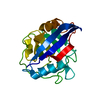


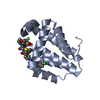
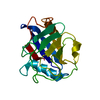
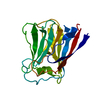


 PDBj
PDBj
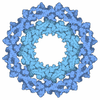
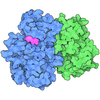
 Assembly

 Escherichia coli BL21 (bacteria) / Variant (production host): BL21 / References: UniProt: P10415, UniProt: Q07817
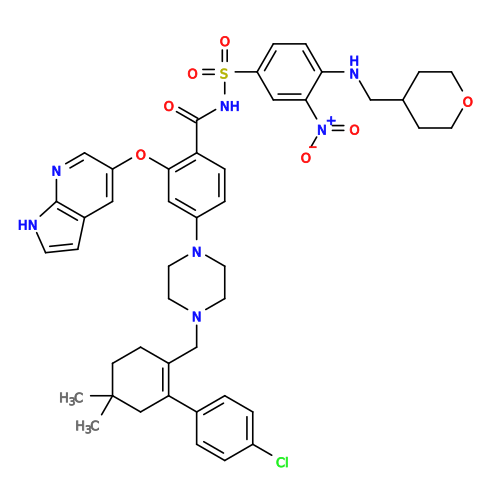 Mass: 868.439 Da / Num. of mol.: 1 / Source method: obtained synthetically / Formula: C45H50ClN7O7S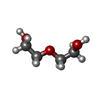
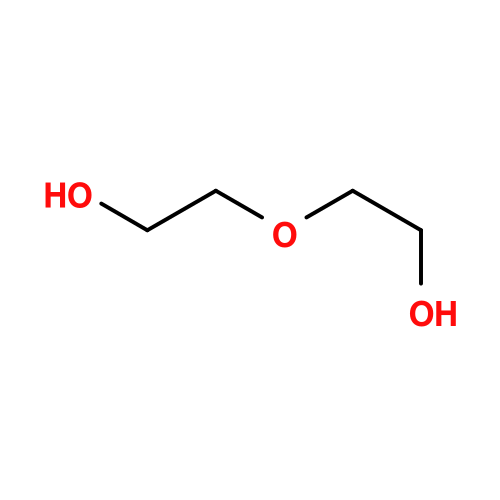 Mass: 106.120 Da / Num. of mol.: 3 / Source method: obtained synthetically / Formula: C4H10O3
 Mass: 18.015 Da / Num. of mol.: 36 / Source method: isolated from a natural source / Formula: H2O
 Sample preparation
 / Beamline: MX2 / Wavelength: 0.9537 Å
 Processing