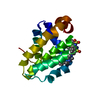
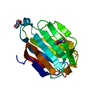
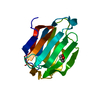
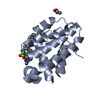
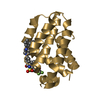
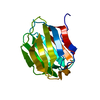
negative regulation of cellular pH reduction / negative regulation of retinal cell programmed cell death / pigment granule organization / CD8-positive, alpha-beta T cell lineage commitment / BAD-BCL-2 complex / positive regulation of skeletal muscle fiber development / regulation of glycoprotein biosynthetic process / positive regulation of melanocyte differentiation / melanin metabolic process / positive regulation of neuron maturation ...negative regulation of cellular pH reduction / negative regulation of retinal cell programmed cell death / pigment granule organization / CD8-positive, alpha-beta T cell lineage commitment / BAD-BCL-2 complex / positive regulation of skeletal muscle fiber development / regulation of glycoprotein biosynthetic process / positive regulation of melanocyte differentiation / melanin metabolic process / positive regulation of neuron maturation / channel inhibitor activity / myeloid cell apoptotic process / osteoblast proliferation / cochlear nucleus development / mesenchymal cell development / retinal cell programmed cell death / negative regulation of osteoblast proliferation / stem cell development / gland morphogenesis / renal system process / regulation of cell-matrix adhesion / dendritic cell apoptotic process / The NLRP1 inflammasome / ear development / negative regulation of calcium ion transport into cytosol / lymphoid progenitor cell differentiation / melanocyte differentiation / T cell apoptotic process / negative regulation of myeloid cell apoptotic process / negative regulation of epithelial cell apoptotic process / BH3-only proteins associate with and inactivate anti-apoptotic BCL-2 members / regulation of nitrogen utilization / glomerulus development / regulation of transmembrane transporter activity / negative regulation of dendritic cell apoptotic process / focal adhesion assembly / negative regulation of T cell apoptotic process / oocyte development / B cell apoptotic process / metanephros development / neuron maturation / negative regulation of motor neuron apoptotic process / positive regulation of multicellular organism growth / regulation of viral genome replication / Regulation of MITF-M-dependent genes involved in apoptosis / endoplasmic reticulum calcium ion homeostasis / regulation of mitochondrial membrane permeability / calcium ion transport into cytosol / negative regulation of ossification / response to iron ion / response to UV-B / epithelial cell apoptotic process / negative regulation of mitochondrial depolarization / axon regeneration / motor neuron apoptotic process / positive regulation of smooth muscle cell migration / smooth muscle cell migration / NFE2L2 regulating tumorigenic genes / intrinsic apoptotic signaling pathway in response to oxidative stress / negative regulation of B cell apoptotic process / organ growth / hair follicle morphogenesis / branching involved in ureteric bud morphogenesis / negative regulation of intrinsic apoptotic signaling pathway in response to DNA damage by p53 class mediator / B cell lineage commitment / digestive tract morphogenesis / negative regulation of G1/S transition of mitotic cell cycle / pore complex / negative regulation of intrinsic apoptotic signaling pathway / T cell homeostasis / B cell homeostasis / humoral immune response / B cell proliferation / regulation of calcium ion transport / negative regulation of anoikis / BH3 domain binding / intrinsic apoptotic signaling pathway in response to endoplasmic reticulum stress / negative regulation of apoptotic signaling pathway / extrinsic apoptotic signaling pathway via death domain receptors / Activation of BAD and translocation to mitochondria / Estrogen-dependent nuclear events downstream of ESR-membrane signaling / negative regulation of extrinsic apoptotic signaling pathway in absence of ligand / hematopoietic stem cell differentiation / behavioral fear response / ovarian follicle development / cellular response to glucose starvation / spleen development / skeletal muscle fiber development / positive regulation of B cell proliferation / extrinsic apoptotic signaling pathway in absence of ligand / response to cytokine / homeostasis of number of cells within a tissue / reactive oxygen species metabolic process / negative regulation of autophagy / axonogenesis / response to glucocorticoid / protein phosphatase 2A binding / ossification / release of cytochrome c from mitochondria / negative regulation of cell migration Similarity search - Function
Apoptosis regulator, Bcl-2 / Apoptosis regulator, Bcl-2/ BclX / Apoptosis regulator, Bcl-2, BH4 motif, conserved site / Apoptosis regulator, Bcl-2 family BH4 motif signature. / Apoptosis regulator, Bcl-2 protein, BH4 / Bcl-2 homology region 4 / Apoptosis regulator, Bcl-2 family BH4 motif profile. / BH4 Bcl-2 homology region 4 / Apoptosis regulator, Bcl-2, BH3 motif, conserved site / Apoptosis regulator, Bcl-2 family BH3 motif signature. ...Apoptosis regulator, Bcl-2 / Apoptosis regulator, Bcl-2/ BclX / Apoptosis regulator, Bcl-2, BH4 motif, conserved site / Apoptosis regulator, Bcl-2 family BH4 motif signature. / Apoptosis regulator, Bcl-2 protein, BH4 / Bcl-2 homology region 4 / Apoptosis regulator, Bcl-2 family BH4 motif profile. / BH4 Bcl-2 homology region 4 / Apoptosis regulator, Bcl-2, BH3 motif, conserved site / Apoptosis regulator, Bcl-2 family BH3 motif signature. / Apoptosis regulator, Bcl-2, BH1 motif, conserved site / Apoptosis regulator, Bcl-2 family BH1 motif signature. / Apoptosis regulator, Bcl-2, BH2 motif, conserved site / Apoptosis regulator, Bcl-2 family BH2 motif signature. / Bcl-2 family / BCL (B-Cell lymphoma); contains BH1, BH2 regions / Bcl2-like / Bcl-2, Bcl-2 homology region 1-3 / Apoptosis regulator proteins, Bcl-2 family / BCL2-like apoptosis inhibitors family profile. / Bcl-2-like superfamily Similarity search - Domain/homology
In the structure databanks used in Yorodumi, some data are registered as the other names, "COVID-19 virus" and "2019-nCoV". Here are the details of the virus and the list of structure data.
Jan 31, 2019. EMDB accession codes are about to change! (news from PDBe EMDB page)
EMDB accession codes are about to change! (news from PDBe EMDB page)
The allocation of 4 digits for EMDB accession codes will soon come to an end. Whilst these codes will remain in use, new EMDB accession codes will include an additional digit and will expand incrementally as the available range of codes is exhausted. The current 4-digit format prefixed with “EMD-” (i.e. EMD-XXXX) will advance to a 5-digit format (i.e. EMD-XXXXX), and so on. It is currently estimated that the 4-digit codes will be depleted around Spring 2019, at which point the 5-digit format will come into force.
The EM Navigator/Yorodumi systems omit the EMD- prefix.
Related info.:Q: What is EMD? / ID/Accession-code notation in Yorodumi/EM Navigator
Yorodumi is a browser for structure data from EMDB, PDB, SASBDB, etc.
This page is also the successor to EM Navigator detail page, and also detail information page/front-end page for Omokage search.
The word "yorodu" (or yorozu) is an old Japanese word meaning "ten thousand". "mi" (miru) is to see.
Related info.:EMDB / PDB / SASBDB / Comparison of 3 databanks / Yorodumi Search / Aug 31, 2016. New EM Navigator & Yorodumi / Yorodumi Papers / Jmol/JSmol / Function and homology information / Changes in new EM Navigator and Yorodumi