TRANSFERASE / engineered decoy receptor / human cancers
Function / homology
Function and homology information
negative regulation of oligodendrocyte apoptotic process / negative regulation of renal albumin absorption / negative regulation of fibroblast apoptotic process / cellular response to vitamin K / hematopoietic stem cell migration to bone marrow / positive regulation of natural killer cell differentiation / positive regulation of glomerular filtration / B cell chemotaxis / positive regulation of cytokine-mediated signaling pathway / cellular response to interferon-alpha ...negative regulation of oligodendrocyte apoptotic process / negative regulation of renal albumin absorption / negative regulation of fibroblast apoptotic process / cellular response to vitamin K / hematopoietic stem cell migration to bone marrow / positive regulation of natural killer cell differentiation / positive regulation of glomerular filtration / B cell chemotaxis / positive regulation of cytokine-mediated signaling pathway / cellular response to interferon-alpha / positive regulation of pinocytosis / natural killer cell differentiation / positive regulation of dendritic cell chemotaxis / extracellular matrix assembly / negative regulation of dendritic cell apoptotic process / negative regulation of interleukin-1 production / dendritic cell differentiation / positive regulation of viral life cycle / negative regulation of biomineral tissue development / cysteine-type endopeptidase inhibitor activity involved in apoptotic process / activation of protein kinase B activity / apoptotic cell clearance / phosphatidylserine binding / negative regulation of interleukin-6 production / cell maturation / negative regulation of type II interferon production / positive regulation of protein kinase activity / negative regulation of endothelial cell apoptotic process / animal organ regeneration / negative regulation of tumor necrosis factor production / vascular endothelial growth factor receptor signaling pathway / positive regulation of TOR signaling / Transport of gamma-carboxylated protein precursors from the endoplasmic reticulum to the Golgi apparatus / Gamma-carboxylation of protein precursors / Dengue Virus Attachment and Entry / negative regulation of tumor necrosis factor-mediated signaling pathway / Removal of aminoterminal propeptides from gamma-carboxylated proteins / phagocytosis / positive regulation of protein export from nucleus / transmembrane receptor protein tyrosine kinase activity / positive regulation of phagocytosis / platelet alpha granule lumen / cell surface receptor protein tyrosine kinase signaling pathway / positive regulation of fibroblast proliferation / viral genome replication / protein localization to plasma membrane / Cell surface interactions at the vascular wall / cellular response to xenobiotic stimulus / cellular response to glucose stimulus / Post-translational protein phosphorylation / platelet activation / receptor protein-tyrosine kinase / receptor tyrosine kinase binding / positive regulation of protein phosphorylation / VEGFA-VEGFR2 Pathway / Golgi lumen / Regulation of Insulin-like Growth Factor (IGF) transport and uptake by Insulin-like Growth Factor Binding Proteins (IGFBPs) / calcium ion transmembrane transport / Platelet degranulation / cell migration / nervous system development / cellular response to lipopolysaccharide / virus receptor activity / protein tyrosine kinase activity / positive regulation of phosphatidylinositol 3-kinase/protein kinase B signal transduction / positive regulation of ERK1 and ERK2 cascade / receptor-mediated virion attachment to host cell / protein-macromolecule adaptor activity / protein phosphorylation / signaling receptor complex / cell surface receptor signaling pathway / endoplasmic reticulum lumen / receptor ligand activity / fusion of virus membrane with host plasma membrane / signaling receptor binding / innate immune response / negative regulation of DNA-templated transcription / positive regulation of gene expression / calcium ion binding / negative regulation of apoptotic process / symbiont entry into host cell / cell surface / signal transduction / : / extracellular exosome / extracellular region / ATP binding / plasma membrane / cytoplasm Similarity search - Function
: / Laminin G domain / Complement Clr-like EGF domain / Complement Clr-like EGF-like / EGF-like, conserved site / Human growth factor-like EGF / Laminin G domain / Laminin G domain profile. / Laminin G domain / Laminin G domain ...: / Laminin G domain / Complement Clr-like EGF domain / Complement Clr-like EGF-like / EGF-like, conserved site / Human growth factor-like EGF / Laminin G domain / Laminin G domain profile. / Laminin G domain / Laminin G domain / : / Calcium-binding EGF domain / Coagulation factor-like, Gla domain superfamily / Immunoglobulin domain / EGF-type aspartate/asparagine hydroxylation site / EGF-like calcium-binding, conserved site / Calcium-binding EGF-like domain signature. / Aspartic acid and asparagine hydroxylation site. / EGF-like calcium-binding domain / Vitamin K-dependent carboxylation/gamma-carboxyglutamic (GLA) domain / Calcium-binding EGF-like domain / Gamma-carboxyglutamic acid-rich (GLA) domain / Gamma-carboxyglutamic acid-rich (GLA) domain superfamily / Vitamin K-dependent carboxylation domain. / Gla domain profile. / Domain containing Gla (gamma-carboxyglutamate) residues. / Epidermal growth factor-like domain. / Jelly Rolls - #200 / Fibronectin type III domain / EGF-like domain profile. / Growth factor receptor cysteine-rich domain superfamily / EGF-like domain signature 1. / EGF-like domain signature 2. / Fibronectin type 3 domain / EGF-like domain / : / Fibronectin type-III domain profile. / Fibronectin type III / Fibronectin type III superfamily / Tyrosine-protein kinase, catalytic domain / Tyrosine kinase, catalytic domain / Tyrosine protein kinases specific active-site signature. / Immunoglobulin subtype / Immunoglobulin / Tyrosine-protein kinase, active site / Concanavalin A-like lectin/glucanase domain superfamily / Protein tyrosine and serine/threonine kinase / Serine-threonine/tyrosine-protein kinase, catalytic domain / Jelly Rolls / Ig-like domain profile. / Immunoglobulin-like domain / Immunoglobulin-like domain superfamily / Protein kinase, ATP binding site / Protein kinases ATP-binding region signature. / Immunoglobulin-like fold / Immunoglobulins / Protein kinase domain profile. / Protein kinase domain / Protein kinase-like domain superfamily / Immunoglobulin-like / Sandwich / Mainly Beta Similarity search - Domain/homology
Resolution: 2.3→38.61 Å / Cor.coef. Fo:Fc: 0.957 / Cor.coef. Fo:Fc free: 0.938 / SU B: 12.025 / SU ML: 0.147 / Cross valid method: THROUGHOUT / σ(F): 0 / ESU R: 0.216 / ESU R Free: 0.197 Details: HYDROGENS HAVE BEEN ADDED IN THE RIDING POSITIONS U VALUES : WITH TLS ADDED
Rfactor
Num. reflection
% reflection
Selection details
Rfree
0.2472
3492
5 %
RANDOM
Rwork
0.1984
-
-
-
obs
0.2008
66331
99.61 %
-
Solvent computation
Ion probe radii: 0.8 Å / Shrinkage radii: 0.8 Å / VDW probe radii: 1.2 Å
In the structure databanks used in Yorodumi, some data are registered as the other names, "COVID-19 virus" and "2019-nCoV". Here are the details of the virus and the list of structure data.
Jan 31, 2019. EMDB accession codes are about to change! (news from PDBe EMDB page)
EMDB accession codes are about to change! (news from PDBe EMDB page)
The allocation of 4 digits for EMDB accession codes will soon come to an end. Whilst these codes will remain in use, new EMDB accession codes will include an additional digit and will expand incrementally as the available range of codes is exhausted. The current 4-digit format prefixed with “EMD-” (i.e. EMD-XXXX) will advance to a 5-digit format (i.e. EMD-XXXXX), and so on. It is currently estimated that the 4-digit codes will be depleted around Spring 2019, at which point the 5-digit format will come into force.
The EM Navigator/Yorodumi systems omit the EMD- prefix.
Related info.:Q: What is EMD? / ID/Accession-code notation in Yorodumi/EM Navigator
Yorodumi is a browser for structure data from EMDB, PDB, SASBDB, etc.
This page is also the successor to EM Navigator detail page, and also detail information page/front-end page for Omokage search.
The word "yorodu" (or yorozu) is an old Japanese word meaning "ten thousand". "mi" (miru) is to see.
Related info.:EMDB / PDB / SASBDB / Comparison of 3 databanks / Yorodumi Search / Aug 31, 2016. New EM Navigator & Yorodumi / Yorodumi Papers / Jmol/JSmol / Function and homology information / Changes in new EM Navigator and Yorodumi
 Movie
Movie Controller


 Open data
 Basic information
 Components
 Keywords
 Function and homology information
 Homo sapiens (human)
 X-RAY DIFFRACTION /
  Authors
 Citation
 Structure visualization
 Downloads & links
 Other downloads

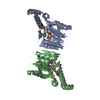
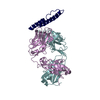
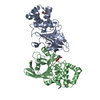
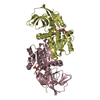
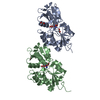
 PDBj
PDBj
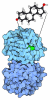
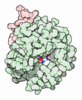
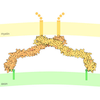
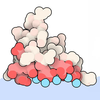
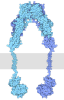
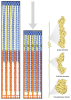
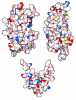
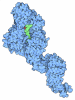
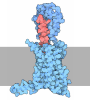
 Assembly
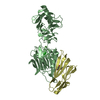

 Escherichia coli BL21(DE3) (bacteria)


 Mass: 40.078 Da / Num. of mol.: 2 / Source method: obtained synthetically / Formula: Ca
 Mass: 35.453 Da / Num. of mol.: 2 / Source method: obtained synthetically / Formula: Cl
 Sample preparation
 / Beamline: BL12-2 / Wavelength: 0.9795 Å
 Processing