positive regulation of retrograde transport, endosome to Golgi / regulation of lipid transport / positive regulation of neurotransmitter uptake / negative regulation of endoplasmic reticulum stress-induced neuron intrinsic apoptotic signaling pathway / regulation protein catabolic process at presynapse / negative regulation of spontaneous neurotransmitter secretion / negative regulation of intralumenal vesicle formation / cellular response to L-glutamine / regulation of protein localization to mitochondrion / negative regulation of exosomal secretion ...positive regulation of retrograde transport, endosome to Golgi / regulation of lipid transport / positive regulation of neurotransmitter uptake / negative regulation of endoplasmic reticulum stress-induced neuron intrinsic apoptotic signaling pathway / regulation protein catabolic process at presynapse / negative regulation of spontaneous neurotransmitter secretion / negative regulation of intralumenal vesicle formation / cellular response to L-glutamine / regulation of protein localization to mitochondrion / negative regulation of exosomal secretion / mitochondrion to lysosome vesicle-mediated transport / type 2 mitophagy / aggresome assembly / negative regulation of glucokinase activity / response to curcumin / protein K29-linked ubiquitination / free ubiquitin chain polymerization / cellular response to hydrogen sulfide / negative regulation of mitochondrial fusion / positive regulation of protein linear polyubiquitination / RBR-type E3 ubiquitin transferase / regulation of dopamine metabolic process / Parkin-FBXW7-Cul1 ubiquitin ligase complex / positive regulation of mitochondrial fusion / negative regulation of actin filament bundle assembly / regulation of synaptic vesicle transport / mitochondrial fragmentation involved in apoptotic process / host-mediated suppression of viral genome replication / positive regulation of mitophagy / F-box domain binding / regulation of necroptotic process / regulation of cellular response to oxidative stress / positive regulation of dendrite extension / positive regulation of type 2 mitophagy / cellular response to L-glutamate / autophagy of mitochondrion / negative regulation of excitatory postsynaptic potential / mitochondrial fission / dopaminergic synapse / aggresome / mitochondrion localization / cellular response to dopamine / cellular response to toxic substance / positive regulation of tumor necrosis factor-mediated signaling pathway / regulation of mitochondrion organization / negative regulation of oxidative stress-induced neuron intrinsic apoptotic signaling pathway / positive regulation of protein localization to membrane / negative regulation of intrinsic apoptotic signaling pathway by p53 class mediator / protein K11-linked ubiquitination / protein K6-linked ubiquitination / positive regulation of proteasomal protein catabolic process / neuron cellular homeostasis / negative regulation of JNK cascade / negative regulation of reactive oxygen species metabolic process / ubiquitin conjugating enzyme binding / negative regulation of synaptic transmission, glutamatergic / mitochondrion transport along microtubule / regulation of reactive oxygen species metabolic process / positive regulation of mitochondrial membrane potential / positive regulation of protein monoubiquitination / regulation of canonical Wnt signaling pathway / protein K27-linked ubiquitination / response to muscle activity / positive regulation of mitochondrial fission / negative regulation of release of cytochrome c from mitochondria / response to corticosterone / dopamine metabolic process / ubiquitin-specific protease binding / Lewy body / regulation of glucose metabolic process / positive regulation of ATP biosynthetic process / protein localization to mitochondrion / cellular response to unfolded protein / regulation of protein ubiquitination / negative regulation of insulin secretion / regulation of dopamine secretion / protein monoubiquitination / cullin family protein binding / regulation of synaptic vesicle endocytosis / protein deubiquitination / positive regulation of intrinsic apoptotic signaling pathway by p53 class mediator / mitophagy / negative regulation of endoplasmic reticulum stress-induced intrinsic apoptotic signaling pathway / regulation of postsynaptic membrane neurotransmitter receptor levels / negative regulation of mitochondrial fission / adult locomotory behavior / protein autoubiquitination / negative regulation of reactive oxygen species biosynthetic process / phospholipase binding / ubiquitin ligase complex / cellular response to manganese ion / ERAD pathway / heat shock protein binding / protein K63-linked ubiquitination / protein K48-linked ubiquitination / neuron projection morphogenesis / Maturation of protein E / Maturation of protein E / response to endoplasmic reticulum stress / ER Quality Control Compartment (ERQC) Similarity search - Function
In the structure databanks used in Yorodumi, some data are registered as the other names, "COVID-19 virus" and "2019-nCoV". Here are the details of the virus and the list of structure data.
Jan 31, 2019. EMDB accession codes are about to change! (news from PDBe EMDB page)
EMDB accession codes are about to change! (news from PDBe EMDB page)
The allocation of 4 digits for EMDB accession codes will soon come to an end. Whilst these codes will remain in use, new EMDB accession codes will include an additional digit and will expand incrementally as the available range of codes is exhausted. The current 4-digit format prefixed with “EMD-” (i.e. EMD-XXXX) will advance to a 5-digit format (i.e. EMD-XXXXX), and so on. It is currently estimated that the 4-digit codes will be depleted around Spring 2019, at which point the 5-digit format will come into force.
The EM Navigator/Yorodumi systems omit the EMD- prefix.
Related info.:Q: What is EMD? / ID/Accession-code notation in Yorodumi/EM Navigator
Yorodumi is a browser for structure data from EMDB, PDB, SASBDB, etc.
This page is also the successor to EM Navigator detail page, and also detail information page/front-end page for Omokage search.
The word "yorodu" (or yorozu) is an old Japanese word meaning "ten thousand". "mi" (miru) is to see.
Related info.:EMDB / PDB / SASBDB / Comparison of 3 databanks / Yorodumi Search / Aug 31, 2016. New EM Navigator & Yorodumi / Yorodumi Papers / Jmol/JSmol / Function and homology information / Changes in new EM Navigator and Yorodumi
 Movie
Movie Controller


 Open data
 Basic information
 Components
 Keywords
 Function and homology information
 Homo sapiens (human)
 X-RAY DIFFRACTION /
  Authors
 United Kingdom, 2items
  Citation
 Structure visualization
 Downloads & links
 Other downloads




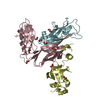
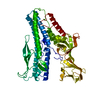


 PDBj
PDBj
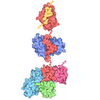
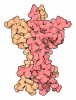
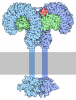
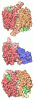
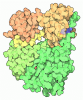
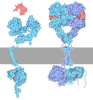
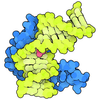
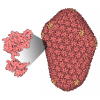
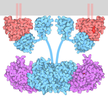
 Assembly

 Escherichia coli (E. coli)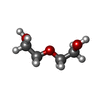



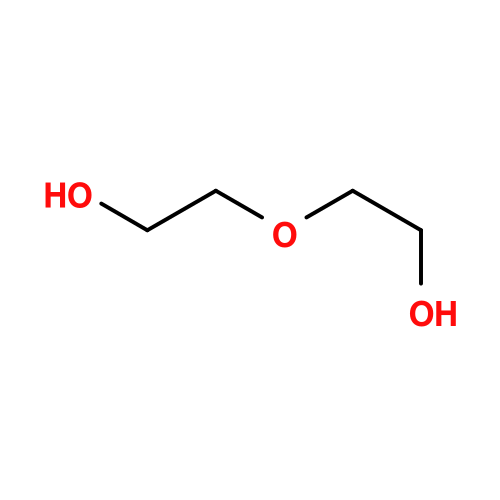 Mass: 106.120 Da / Num. of mol.: 1 / Source method: obtained synthetically / Formula: C4H10O3
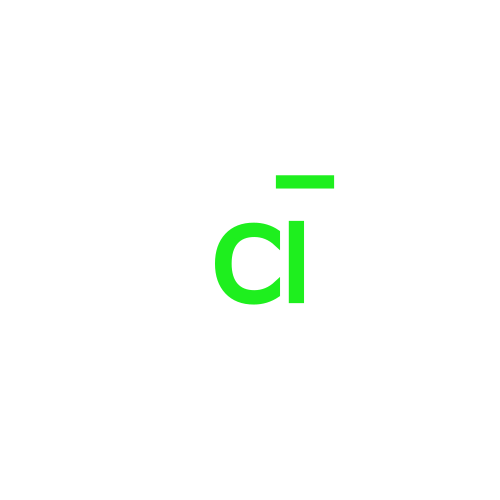 Mass: 35.453 Da / Num. of mol.: 1 / Source method: obtained synthetically / Formula: Cl
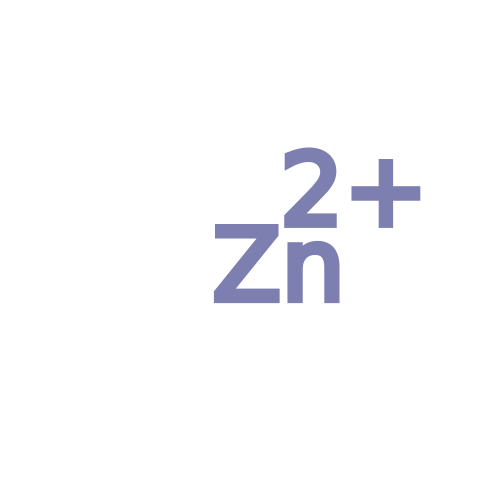 Mass: 65.409 Da / Num. of mol.: 8 / Source method: obtained synthetically / Formula: Zn
 Sample preparation
 Processing