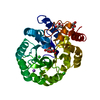
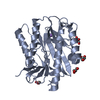
- PDB-2k2f: Solution structure of Ca2+-S100A1-RyRP12 -
+
Open data
ID or keywords:
Loading...
-
Basic information
Entry
Database: PDB / ID: 2k2f
Title
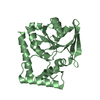
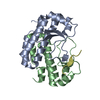
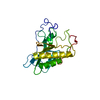
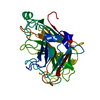
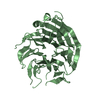
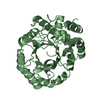
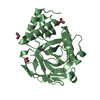
Solution structure of Ca2+-S100A1-RyRP12
Components
Protein S100-A1
Ryanodine receptor 1 peptide
Keywords
METAL BINDING PROTEIN / S100 / EF hand / ryanodine receptor / calcium binding / Alternative splicing / Calcium channel / Calcium transport / Glycoprotein / Ion transport / Ionic channel / Membrane / Polymorphism / Transmembrane / Transport / Cytoplasm / Metal-binding / Zinc
Function / homology
Function and homology information
Stimuli-sensing channels / Regulation of TLR by endogenous ligand / manganese ion transmembrane transport / positive regulation of voltage-gated calcium channel activity / type B pancreatic cell apoptotic process / Purkinje myocyte to ventricular cardiac muscle cell signaling / regulation of atrial cardiac muscle cell action potential / regulation of catalytic activity / left ventricular cardiac muscle tissue morphogenesis / suramin binding ...Stimuli-sensing channels / Regulation of TLR by endogenous ligand / manganese ion transmembrane transport / positive regulation of voltage-gated calcium channel activity / type B pancreatic cell apoptotic process / Purkinje myocyte to ventricular cardiac muscle cell signaling / regulation of atrial cardiac muscle cell action potential / regulation of catalytic activity / left ventricular cardiac muscle tissue morphogenesis / suramin binding / regulation of AV node cell action potential / sarcoplasmic reticulum calcium ion transport / regulation of SA node cell action potential / calcium-induced calcium release activity / calcium ion transport into cytosol / A band / embryonic heart tube morphogenesis / ventricular cardiac muscle cell action potential / cardiac muscle hypertrophy / regulation of ventricular cardiac muscle cell action potential / S100 protein binding / M band / ryanodine-sensitive calcium-release channel activity / response to redox state / regulation of heart contraction / voltage-gated calcium channel complex / release of sequestered calcium ion into cytosol by sarcoplasmic reticulum / Ion homeostasis / response to caffeine / regulation of cardiac muscle contraction by calcium ion signaling / I band / extrinsic component of cytoplasmic side of plasma membrane / response to muscle activity / cellular response to caffeine / calcium ion transmembrane import into cytosol / positive regulation of sprouting angiogenesis / protein kinase A regulatory subunit binding / protein kinase A catalytic subunit binding / negative regulation of cytosolic calcium ion concentration / positive regulation of the force of heart contraction / smooth endoplasmic reticulum / response to muscle stretch / intracellularly gated calcium channel activity / response to magnesium ion / detection of calcium ion / regulation of cardiac muscle contraction / regulation of cytosolic calcium ion concentration / positive regulation of heart rate / ATP metabolic process / cardiac muscle contraction / release of sequestered calcium ion into cytosol / regulation of heart rate / regulation of cardiac muscle contraction by regulation of the release of sequestered calcium ion / response to nutrient / cellular response to epinephrine stimulus / calcium channel complex / sarcoplasmic reticulum membrane / calcium-mediated signaling / sarcomere / sarcoplasmic reticulum / striated muscle contraction / response to calcium ion / vasodilation / sarcolemma / intracellular calcium ion homeostasis / Z disc / calcium ion transmembrane transport / calcium channel activity / calcium ion transport / calcium-dependent protein binding / nuclear envelope / ATPase binding / scaffold protein binding / monoatomic ion transmembrane transport / response to hypoxia / transmembrane transporter binding / calmodulin binding / response to xenobiotic stimulus / calcium ion binding / protein kinase binding / negative regulation of transcription by RNA polymerase II / enzyme binding / protein homodimerization activity / protein-containing complex / mitochondrion / membrane / identical protein binding / nucleus / cytosol / cytoplasm Similarity search - Function
Protein S100-A1 / S-100/ICaBP type calcium binding protein signature. / S100/Calcium binding protein 7/8-like, conserved site / S100/CaBP-9k-type, calcium binding, subdomain / S-100/ICaBP type calcium binding domain / S-100/ICaBP type calcium binding domain / EF hand domain / Ryanodine receptor, SPRY domain 2 / : / Ryanodine receptor junctional solenoid repeat ...Protein S100-A1 / S-100/ICaBP type calcium binding protein signature. / S100/Calcium binding protein 7/8-like, conserved site / S100/CaBP-9k-type, calcium binding, subdomain / S-100/ICaBP type calcium binding domain / S-100/ICaBP type calcium binding domain / EF hand domain / Ryanodine receptor, SPRY domain 2 / : / Ryanodine receptor junctional solenoid repeat / Ryanodine Receptor TM 4-6 / Ryanodine receptor / Ryanodine receptor, SPRY domain 1 / Ryanodine receptor, SPRY domain 3 / Ryanodine Receptor TM 4-6 / Ryanodine receptor Ryr / RyR domain / RyR/IP3 receptor binding core, RIH domain superfamily / RyR/IP3R Homology associated domain / Inositol 1,4,5-trisphosphate/ryanodine receptor / RIH domain / RyR and IP3R Homology associated / Inositol 1,4,5-trisphosphate/ryanodine receptor / RIH domain / : / MIR motif / MIR domain / MIR domain profile. / Domain in ryanodine and inositol trisphosphate receptors and protein O-mannosyltransferases / Mir domain superfamily / SPRY domain / B30.2/SPRY domain / B30.2/SPRY domain profile. / B30.2/SPRY domain superfamily / Domain in SPla and the RYanodine Receptor. / SPRY domain / EF-hand / Recoverin; domain 1 / EF-hand domain pair / EF-hand, calcium binding motif / EF-Hand 1, calcium-binding site / EF-hand calcium-binding domain. / EF-hand calcium-binding domain profile. / EF-hand domain / Ion transport domain / Ion transport protein / EF-hand domain pair / Concanavalin A-like lectin/glucanase domain superfamily / Orthogonal Bundle / Mainly Alpha Similarity search - Domain/homology
In the structure databanks used in Yorodumi, some data are registered as the other names, "COVID-19 virus" and "2019-nCoV". Here are the details of the virus and the list of structure data.
Jan 31, 2019. EMDB accession codes are about to change! (news from PDBe EMDB page)
EMDB accession codes are about to change! (news from PDBe EMDB page)
The allocation of 4 digits for EMDB accession codes will soon come to an end. Whilst these codes will remain in use, new EMDB accession codes will include an additional digit and will expand incrementally as the available range of codes is exhausted. The current 4-digit format prefixed with “EMD-” (i.e. EMD-XXXX) will advance to a 5-digit format (i.e. EMD-XXXXX), and so on. It is currently estimated that the 4-digit codes will be depleted around Spring 2019, at which point the 5-digit format will come into force.
The EM Navigator/Yorodumi systems omit the EMD- prefix.
Related info.:Q: What is EMD? / ID/Accession-code notation in Yorodumi/EM Navigator
Yorodumi is a browser for structure data from EMDB, PDB, SASBDB, etc.
This page is also the successor to EM Navigator detail page, and also detail information page/front-end page for Omokage search.
The word "yorodu" (or yorozu) is an old Japanese word meaning "ten thousand". "mi" (miru) is to see.
Related info.:EMDB / PDB / SASBDB / Comparison of 3 databanks / Yorodumi Search / Aug 31, 2016. New EM Navigator & Yorodumi / Yorodumi Papers / Jmol/JSmol / Function and homology information / Changes in new EM Navigator and Yorodumi
 Movie
Movie Controller


 Open data
 Basic information
 Components
 Keywords
 Function and homology information
 Rattus norvegicus (Norway rat)
 Authors
 Citation
 Structure visualization
 Downloads & links
 Other downloads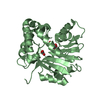
 PDBj
PDBj
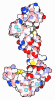
 Assembly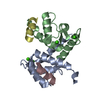

 Escherichia coli (E. coli) / Strain (production host): HMS(DE3) / References: UniProt: B0LPN4*PLUS
 Mass: 40.078 Da / Num. of mol.: 4 / Source method: obtained synthetically / Formula: Ca
 HSQC
HSQC Sample preparation
 Processing