- PDB-1q94: Structures of HLA-A*1101 in complex with immunodominant nonamer a... -
+
Open data
ID or keywords:
Loading...
-
Basic information
Entry
Database: PDB / ID: 1q94
Title
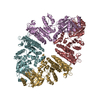
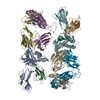
Structures of HLA-A*1101 in complex with immunodominant nonamer and decamer HIV-1 epitopes clearly reveal the presence of a middle anchor residue
Components
Beta-2-microglobulin
HLA class I histocompatibility antigen, A-11 alpha chain
nonamer reverse transcriptase (AIFQSSMTK)
Keywords
IMMUNE SYSTEM
Function / homology
Function and homology information
positive regulation of memory T cell activation / T cell mediated cytotoxicity directed against tumor cell target / positive regulation of CD8-positive, alpha-beta T cell activation / CD8-positive, alpha-beta T cell activation / positive regulation of CD8-positive, alpha-beta T cell proliferation / T cell mediated cytotoxicity / antigen processing and presentation of endogenous peptide antigen via MHC class I via ER pathway, TAP-dependent / TAP complex binding / antigen processing and presentation of exogenous peptide antigen via MHC class I / Golgi medial cisterna ...positive regulation of memory T cell activation / T cell mediated cytotoxicity directed against tumor cell target / positive regulation of CD8-positive, alpha-beta T cell activation / CD8-positive, alpha-beta T cell activation / positive regulation of CD8-positive, alpha-beta T cell proliferation / T cell mediated cytotoxicity / antigen processing and presentation of endogenous peptide antigen via MHC class I via ER pathway, TAP-dependent / TAP complex binding / antigen processing and presentation of exogenous peptide antigen via MHC class I / Golgi medial cisterna / CD8 receptor binding / protection from natural killer cell mediated cytotoxicity / TAP binding / endoplasmic reticulum exit site / detection of bacterium / antigen processing and presentation of endogenous peptide antigen via MHC class Ib / antigen processing and presentation of endogenous peptide antigen via MHC class I via ER pathway, TAP-independent / beta-2-microglobulin binding / T cell receptor binding / regulation of natural killer cell mediated immunity / early endosome lumen / positive regulation of T cell mediated cytotoxicity / Nef mediated downregulation of MHC class I complex cell surface expression / DAP12 interactions / HIV-1 retropepsin / Endosomal/Vacuolar pathway / symbiont-mediated activation of host apoptosis / retroviral ribonuclease H / exoribonuclease H / Antigen Presentation: Folding, assembly and peptide loading of class I MHC / lumenal side of endoplasmic reticulum membrane / regulation of iron ion transport / exoribonuclease H activity / negative regulation of iron ion transport / negative regulation of forebrain neuron differentiation / antigen processing and presentation of exogenous peptide antigen via MHC class Ib / peptide antigen assembly with MHC class I protein complex / ER to Golgi transport vesicle membrane / HFE-transferrin receptor complex / positive regulation of type II interferon production / MHC class I peptide loading complex / DNA integration / transferrin transport / negative regulation of receptor-mediated endocytosis / cellular response to iron ion / positive regulation of T cell cytokine production / antigen processing and presentation of endogenous peptide antigen via MHC class I / viral genome integration into host DNA / peptide antigen assembly with MHC class II protein complex / MHC class I protein complex / establishment of integrated proviral latency / negative regulation of epithelial cell proliferation / cellular response to nicotine / negative regulation of neurogenesis / RNA-directed DNA polymerase / positive regulation of receptor-mediated endocytosis / MHC class II protein complex / RNA stem-loop binding / viral penetration into host nucleus / host multivesicular body / specific granule lumen / positive regulation of immune response / antigen processing and presentation of exogenous peptide antigen via MHC class II / RNA-directed DNA polymerase activity / RNA-DNA hybrid ribonuclease activity / peptide antigen binding / T cell receptor signaling pathway / recycling endosome membrane / phagocytic vesicle membrane / positive regulation of T cell activation / Interferon gamma signaling / Immunoregulatory interactions between a Lymphoid and a non-Lymphoid cell / Transferases; Transferring phosphorus-containing groups; Nucleotidyltransferases / sensory perception of smell / Interferon alpha/beta signaling / Modulation by Mtb of host immune system / tertiary granule lumen / positive regulation of cellular senescence / MHC class II protein complex binding / DAP12 signaling / host cell / late endosome membrane / E3 ubiquitin ligases ubiquitinate target proteins / viral nucleocapsid / ER-Phagosome pathway / DNA recombination / early endosome membrane / antibacterial humoral response / DNA-directed DNA polymerase / aspartic-type endopeptidase activity / amyloid fibril formation / protein homotetramerization / Hydrolases; Acting on ester bonds / DNA-directed DNA polymerase activity / intracellular iron ion homeostasis / learning or memory / defense response to Gram-positive bacterium / immune response / endoplasmic reticulum lumen / symbiont-mediated suppression of host gene expression Similarity search - Function
MHC class I, alpha chain, C-terminal / MHC_I C-terminus / MHC class I-like antigen recognition-like / Murine Class I Major Histocompatibility Complex, H2-DB; Chain A, domain 1 / MHC class I alpha chain, alpha1 alpha2 domains / Class I Histocompatibility antigen, domains alpha 1 and 2 / Reverse transcriptase connection / Reverse transcriptase connection domain / Reverse transcriptase thumb / Reverse transcriptase thumb domain ...MHC class I, alpha chain, C-terminal / MHC_I C-terminus / MHC class I-like antigen recognition-like / Murine Class I Major Histocompatibility Complex, H2-DB; Chain A, domain 1 / MHC class I alpha chain, alpha1 alpha2 domains / Class I Histocompatibility antigen, domains alpha 1 and 2 / Reverse transcriptase connection / Reverse transcriptase connection domain / Reverse transcriptase thumb / Reverse transcriptase thumb domain / Integrase Zinc binding domain / Zinc finger integrase-type profile. / Integrase DNA binding domain / Integrase, C-terminal domain superfamily, retroviral / Integrase, N-terminal zinc-binding domain / Integrase-like, N-terminal / Integrase, C-terminal, retroviral / Integrase DNA binding domain profile. / Beta-2-Microglobulin / : / MHC class I-like antigen recognition-like / MHC class I-like antigen recognition-like superfamily / Immunodeficiency lentiviral matrix, N-terminal / gag gene protein p17 (matrix protein) / RNase H / Integrase core domain / Integrase, catalytic core / Integrase catalytic domain profile. / Retropepsin-like catalytic domain / Matrix protein, lentiviral and alpha-retroviral, N-terminal / RNase H type-1 domain profile. / Ribonuclease H domain / Retroviral nucleocapsid Gag protein p24, C-terminal domain / Gag protein p24 C-terminal domain / Retropepsins / Retroviral aspartyl protease / MHC classes I/II-like antigen recognition protein / Aspartyl protease, retroviral-type family profile. / Peptidase A2A, retrovirus, catalytic / Reverse transcriptase (RNA-dependent DNA polymerase) / : / Retrovirus capsid, C-terminal / Retroviral matrix protein / Reverse transcriptase domain / Reverse transcriptase (RT) catalytic domain profile. / Retrovirus capsid, N-terminal / zinc finger / Zinc knuckle / Zinc finger, CCHC-type superfamily / Zinc finger, CCHC-type / Zinc finger CCHC-type profile. / Immunoglobulin/major histocompatibility complex, conserved site / Immunoglobulins and major histocompatibility complex proteins signature. / Immunoglobulin C-Type / Immunoglobulin C1-set / Immunoglobulin C1-set domain / Aspartic peptidase, active site / Eukaryotic and viral aspartyl proteases active site. / Aspartic peptidase domain superfamily / Ribonuclease H superfamily / Ribonuclease H-like superfamily / Reverse transcriptase/Diguanylate cyclase domain / Ig-like domain profile. / Immunoglobulin-like domain / Immunoglobulin-like domain superfamily / Immunoglobulin-like fold / Immunoglobulins / DNA/RNA polymerase superfamily / Immunoglobulin-like / Sandwich / 2-Layer Sandwich / Mainly Beta / Alpha Beta Similarity search - Domain/homology
HLA class I histocompatibility antigen, A alpha chain / Gag-Pol polyprotein / HLA class I histocompatibility antigen, A alpha chain / Beta-2-microglobulin Similarity search - Component
Biological species
Homo sapiens (human) Human immunodeficiency virus type 1 group M subtype D
Journal: J.Immunol. / Year: 2004 Title: Structures of HLA-A*1101 complexed with immunodominant nonamer and decamer HIV-1 epitopes clearly reveal the presence of a middle, secondary anchor residue. Authors: Li, L. / Bouvier, M.
Mass: 31855.051 Da / Num. of mol.: 2 Source method: isolated from a genetically manipulated source Source: (gene. exp.) Homo sapiens (human) / Description: from 1 major histocompatibility complex / Gene: HLA-A OR HLAA / Plasmid: PLM1 / Production host: Escherichia coli (E. coli) / Strain (production host): BL21(DE3)PLYsS / References: UniProt: P13746, UniProt: P04439*PLUS
#2: Protein
Beta-2-microglobulin / HDCMA22P
Mass: 11879.356 Da / Num. of mol.: 2 Source method: isolated from a genetically manipulated source Source: (gene. exp.) Homo sapiens (human) / Gene: B2M / Plasmid: PHN1 / Production host: Escherichia coli (E. coli) / Strain (production host): XA90 / References: UniProt: P61769
#3: Protein/peptide
nonamerreversetranscriptase (AIFQSSMTK)
Mass: 1013.188 Da / Num. of mol.: 2 / Source method: obtained synthetically Details: PEPTIDE WAS OBTAINED THROUGH STANDARD SOLID-PHASE PEPTIDE SYNTHESIS Source: (synth.) Human immunodeficiency virus type 1 group M subtype D (isolate Z2/CDC-Z34) (HIV-1) References: UniProt: P12499
In the structure databanks used in Yorodumi, some data are registered as the other names, "COVID-19 virus" and "2019-nCoV". Here are the details of the virus and the list of structure data.
Jan 31, 2019. EMDB accession codes are about to change! (news from PDBe EMDB page)
EMDB accession codes are about to change! (news from PDBe EMDB page)
The allocation of 4 digits for EMDB accession codes will soon come to an end. Whilst these codes will remain in use, new EMDB accession codes will include an additional digit and will expand incrementally as the available range of codes is exhausted. The current 4-digit format prefixed with “EMD-” (i.e. EMD-XXXX) will advance to a 5-digit format (i.e. EMD-XXXXX), and so on. It is currently estimated that the 4-digit codes will be depleted around Spring 2019, at which point the 5-digit format will come into force.
The EM Navigator/Yorodumi systems omit the EMD- prefix.
Related info.:Q: What is EMD? / ID/Accession-code notation in Yorodumi/EM Navigator
Yorodumi is a browser for structure data from EMDB, PDB, SASBDB, etc.
This page is also the successor to EM Navigator detail page, and also detail information page/front-end page for Omokage search.
The word "yorodu" (or yorozu) is an old Japanese word meaning "ten thousand". "mi" (miru) is to see.
Related info.:EMDB / PDB / SASBDB / Comparison of 3 databanks / Yorodumi Search / Aug 31, 2016. New EM Navigator & Yorodumi / Yorodumi Papers / Jmol/JSmol / Function and homology information / Changes in new EM Navigator and Yorodumi
 Movie
Movie Controller

 Yorodumi
 Open data
 Basic information
 Components
 Keywords
 Function and homology information
 Homo sapiens (human)
 X-RAY DIFFRACTION /
  Authors
 Citation
 Structure visualization
 Downloads & links
 Other downloads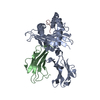



 PDBj
PDBj
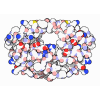
 Assembly

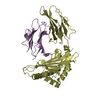

 Escherichia coli (E. coli) / Strain (production host): BL21(DE3)PLYsS / References: UniProt: P13746, UniProt: P04439*PLUS
 Mass: 18.015 Da / Num. of mol.: 152 / Source method: isolated from a natural source / Formula: H2O
 Sample preparation
 Processing