response to oxygen-glucose deprivation / poly-ADP-D-ribose binding / positive regulation of cell growth involved in cardiac muscle cell development / NAD+-protein-serine ADP-ribosyltransferase activity / NAD DNA ADP-ribosyltransferase activity / DNA ADP-ribosylation / poly-ADP-D-ribose modification-dependent protein binding / HDR through MMEJ (alt-NHEJ) / hippocampal neuron apoptotic process / NAD+ ADP-ribosyltransferase ...response to oxygen-glucose deprivation / poly-ADP-D-ribose binding / positive regulation of cell growth involved in cardiac muscle cell development / NAD+-protein-serine ADP-ribosyltransferase activity / NAD DNA ADP-ribosyltransferase activity / DNA ADP-ribosylation / poly-ADP-D-ribose modification-dependent protein binding / HDR through MMEJ (alt-NHEJ) / hippocampal neuron apoptotic process / NAD+ ADP-ribosyltransferase / protein auto-ADP-ribosylation / NAD+-protein-aspartate ADP-ribosyltransferase activity / protein poly-ADP-ribosylation / NAD+-protein-glutamate ADP-ribosyltransferase activity / NAD+-protein mono-ADP-ribosyltransferase activity / DNA repair-dependent chromatin remodeling / decidualization / 転移酵素; グリコシル基を移すもの; 五炭糖残基を移すもの / POLB-Dependent Long Patch Base Excision Repair / NAD+ poly-ADP-ribosyltransferase activity / negative regulation of tumor necrosis factor-mediated signaling pathway / nucleosome binding / site of DNA damage / negative regulation of megakaryocyte differentiation / protein localization to CENP-A containing chromatin / extrinsic apoptotic signaling pathway / Chromatin modifying enzymes / Replacement of protamines by nucleosomes in the male pronucleus / CENP-A containing nucleosome / nucleotidyltransferase activity / Packaging Of Telomere Ends / Recognition and association of DNA glycosylase with site containing an affected purine / Cleavage of the damaged purine / Deposition of new CENPA-containing nucleosomes at the centromere / epigenetic regulation of gene expression / telomere organization / Interleukin-7 signaling / Recognition and association of DNA glycosylase with site containing an affected pyrimidine / Cleavage of the damaged pyrimidine / RNA Polymerase I Promoter Opening / Inhibition of DNA recombination at telomere / Assembly of the ORC complex at the origin of replication / Meiotic synapsis / SUMOylation of chromatin organization proteins / Regulation of endogenous retroelements by the Human Silencing Hub (HUSH) complex / DNA methylation / Condensation of Prophase Chromosomes / Chromatin modifications during the maternal to zygotic transition (MZT) / SIRT1 negatively regulates rRNA expression / HCMV Late Events / ERCC6 (CSB) and EHMT2 (G9a) positively regulate rRNA expression / PRC2 methylates histones and DNA / innate immune response in mucosa / Regulation of endogenous retroelements by KRAB-ZFP proteins / Defective pyroptosis / HDACs deacetylate histones / Regulation of endogenous retroelements by Piwi-interacting RNAs (piRNAs) / Nonhomologous End-Joining (NHEJ) / RNA Polymerase I Promoter Escape / lipopolysaccharide binding / Transcriptional regulation by small RNAs / Formation of the beta-catenin:TCF transactivating complex / Activated PKN1 stimulates transcription of AR (androgen receptor) regulated genes KLK2 and KLK3 / HDMs demethylate histones / RUNX1 regulates genes involved in megakaryocyte differentiation and platelet function / G2/M DNA damage checkpoint / Negative Regulation of CDH1 Gene Transcription / base-excision repair / NoRC negatively regulates rRNA expression / PKMTs methylate histone lysines / B-WICH complex positively regulates rRNA expression / DNA Damage/Telomere Stress Induced Senescence / Pre-NOTCH Transcription and Translation / DNA Damage Recognition in GG-NER / Meiotic recombination / Activation of anterior HOX genes in hindbrain development during early embryogenesis / Dual Incision in GG-NER / Transcriptional regulation of granulopoiesis / Metalloprotease DUBs / RMTs methylate histone arginines / Formation of Incision Complex in GG-NER / HCMV Early Events / structural constituent of chromatin / UCH proteinases / nucleosome / antimicrobial humoral immune response mediated by antimicrobial peptide / double-strand break repair / heterochromatin formation / nucleosome assembly / antibacterial humoral response / E3 ubiquitin ligases ubiquitinate target proteins / HATs acetylate histones / Recruitment and ATM-mediated phosphorylation of repair and signaling proteins at DNA double strand breaks / Factors involved in megakaryocyte development and platelet production / MLL4 and MLL3 complexes regulate expression of PPARG target genes in adipogenesis and hepatic steatosis / chromatin organization / RUNX1 regulates transcription of genes involved in differentiation of HSCs / Processing of DNA double-strand break ends / Senescence-Associated Secretory Phenotype (SASP) / Oxidative Stress Induced Senescence 類似検索 - 分子機能
National Institutes of Health/National Cancer Institute (NIH/NCI)
R01 CA218255
米国
引用
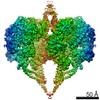
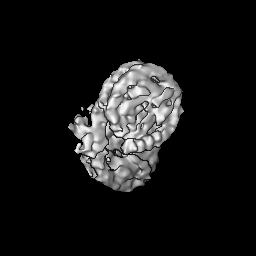
ジャーナル: PLoS One / 年: 2020 タイトル: Bridging of nucleosome-proximal DNA double-strand breaks by PARP2 enhances its interaction with HPF1. 著者: Guillaume Gaullier / Genevieve Roberts / Uma M Muthurajan / Samuel Bowerman / Johannes Rudolph / Jyothi Mahadevan / Asmita Jha / Purushka S Rae / Karolin Luger / 要旨: Poly(ADP-ribose) Polymerase 2 (PARP2) is one of three DNA-dependent PARPs involved in the detection of DNA damage. Upon binding to DNA double-strand breaks, PARP2 uses nicotinamide adenine ...Poly(ADP-ribose) Polymerase 2 (PARP2) is one of three DNA-dependent PARPs involved in the detection of DNA damage. Upon binding to DNA double-strand breaks, PARP2 uses nicotinamide adenine dinucleotide to synthesize poly(ADP-ribose) (PAR) onto itself and other proteins, including histones. PAR chains in turn promote the DNA damage response by recruiting downstream repair factors. These early steps of DNA damage signaling are relevant for understanding how genome integrity is maintained and how their failure leads to genome instability or cancer. There is no structural information on DNA double-strand break detection in the context of chromatin. Here we present a cryo-EM structure of two nucleosomes bridged by human PARP2 and confirm that PARP2 bridges DNA ends in the context of nucleosomes bearing short linker DNA. We demonstrate that the conformation of PARP2 bound to damaged chromatin provides a binding platform for the regulatory protein Histone PARylation Factor 1 (HPF1), and that the resulting HPF1•PARP2•nucleosome complex is enzymatically active. Our results contribute to a structural view of the early steps of the DNA damage response in chromatin.
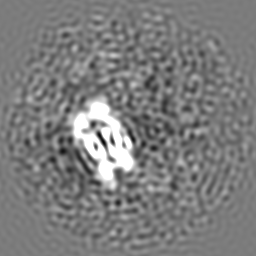
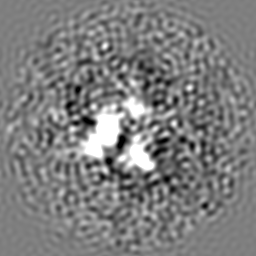
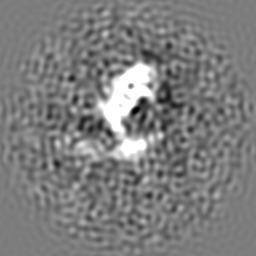
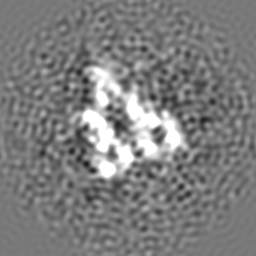
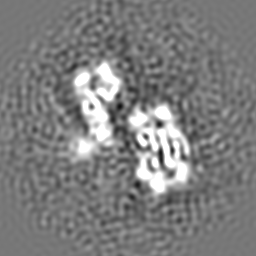
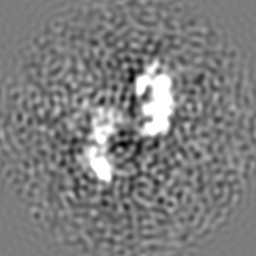
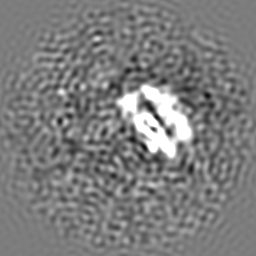
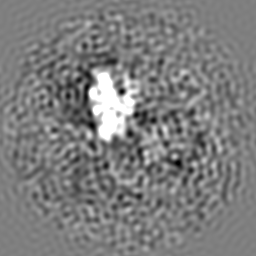
EMPIAR-10336 (タイトル: Structure of two nucleosomes bridged by human PARP2 Data size: 677.3 Data #1: Single-particle images of the PARP2-nucleosome complex [picked particles - single frame - unprocessed] Data #2: Unaligned multi-frame micrographs of the PARP2-nucleosome complex [micrographs - multiframe])
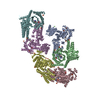
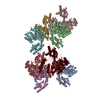
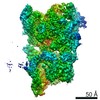
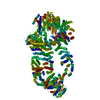
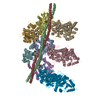
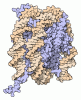
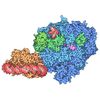
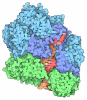
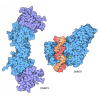
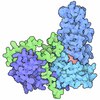
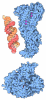
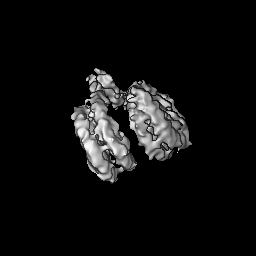
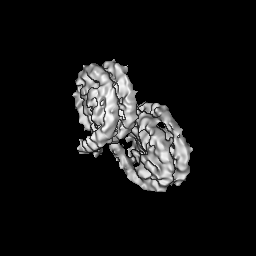
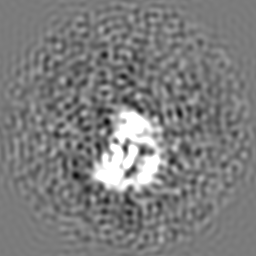
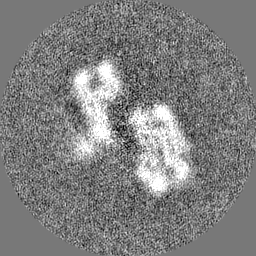
名称: Two nucleosomes bridged by PARP2 / タイプ: complex / ID: 1 / 親要素: 0 / 含まれる分子: all 詳細: Two nucleosomes bridged by human PARP2. Full-length PARP2 was used to prepare the complex, but only the WGR domain showed density in the map.
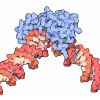
名称: Widom 601 DNA (160-MER) / タイプ: dna / ID: 1 詳細: Widom 601 nucleosome positioning sequence with 7 and 11 additional terminal base pairs コピー数: 2 / 分類: DNA
試料ホルダーモデル: GATAN 626 SINGLE TILT LIQUID NITROGEN CRYO TRANSFER HOLDER ホルダー冷却材: NITROGEN
実験機器
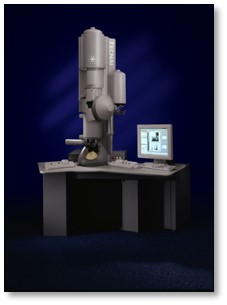
モデル: Tecnai F30 / 画像提供: FEI Company
+
画像解析
粒子像選択
選択した数: 226250 詳細: Picked using crYOLO version 1.3.1 with a model trained on the same dataset (with the generic model provided with crYOLO used as pre-trained weights).
初期モデル
モデルのタイプ: INSILICO MODEL In silico モデル: Model generated with the InitialModel procedure in RELION
 ムービー
ムービー コントローラー


 データを開く
 基本情報
基本情報 マップデータ
 試料
試料 キーワード
キーワード 機能・相同性情報
 Homo sapiens (ヒト) / synthetic construct (人工物)
 データ登録者
 米国, 1件
  引用
引用 構造の表示
構造の表示
 ダウンロードとリンク
 emd_20864.png
 http://ftp.pdbj.org/pub/emdb/structures/EMD-20864



 Z (Sec.)
 Y (Row.)
 X (Col.)


















 試料の構成要素
 Escherichia coli (大腸菌)
 解析
解析 電子顕微鏡法
 FIELD EMISSION GUN