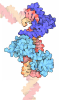
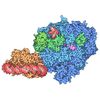
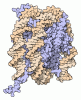
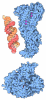
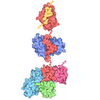
- EMDB-17183: OCT4 and MYC-MAX co-bound to a nucleosome -
+
データを開く
IDまたはキーワード:
読み込み中...
-
基本情報
登録情報
データベース: EMDB / ID: EMD-17183
タイトル
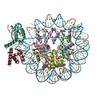
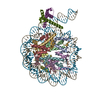
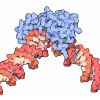
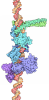
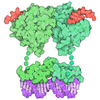
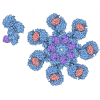
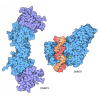
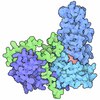
OCT4 and MYC-MAX co-bound to a nucleosome
マップデータ
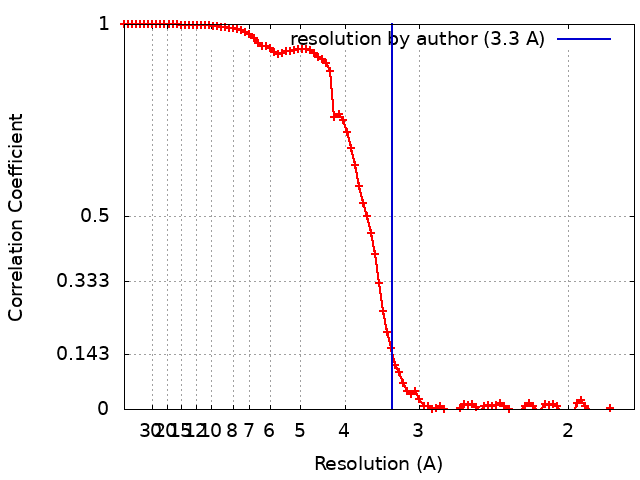
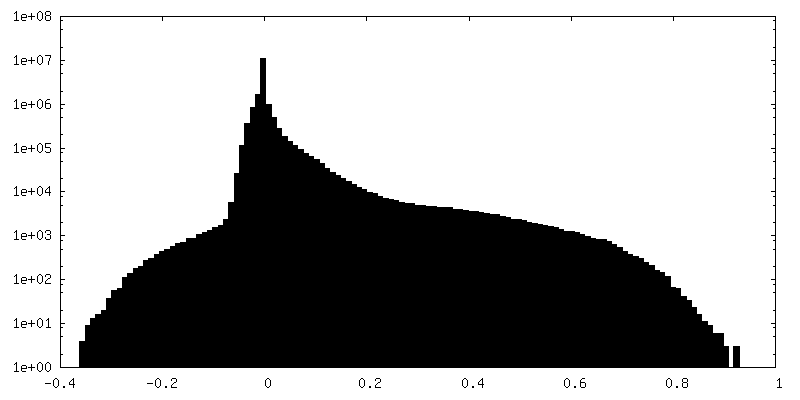
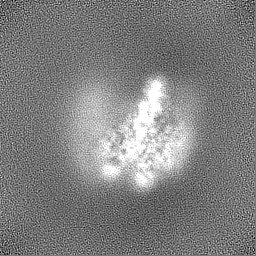
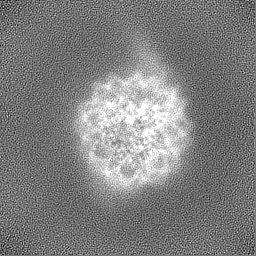
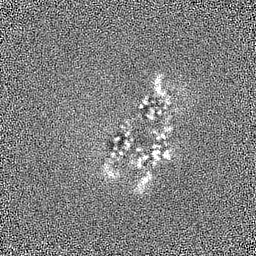
Sharpened map (LocScale)
試料
複合体: MYC-MAX and OCT4-bound nucleosome
複合体: Nucleosomal core particle
複合体: Histone octamer
タンパク質・ペプチド: Histone H3.1
タンパク質・ペプチド: Histone H4
タンパク質・ペプチド: Histone H2A type 1-B/E
タンパク質・ペプチド: Histone H2B type 1-J
複合体: Nucleosomal DNA
DNA: DNA (127-MER)
DNA: DNA (127-MER)
複合体: Nucleosome-bound factors
複合体: OCT4
タンパク質・ペプチド: Green fluorescent protein,POU domain, class 5, transcription factor 1
複合体: cMYC-MAX heterodimer
タンパク質・ペプチド: Myc proto-oncogene protein
タンパク質・ペプチド: Protein max
リガンド: PENTANEDIAL
キーワード
TRANSCRIPTION
機能・相同性
機能・相同性情報
Mad-Max complex / positive regulation of metanephric cap mesenchymal cell proliferation / positive regulation of acinar cell proliferation / acinar cell proliferation / SCF ubiquitin ligase complex binding / NK T cell proliferation / Myc-Max complex / cell fate commitment involved in formation of primary germ layer / cardiac cell fate determination / POU5F1 (OCT4), SOX2, NANOG repress genes related to differentiation ...Mad-Max complex / positive regulation of metanephric cap mesenchymal cell proliferation / positive regulation of acinar cell proliferation / acinar cell proliferation / SCF ubiquitin ligase complex binding / NK T cell proliferation / Myc-Max complex / cell fate commitment involved in formation of primary germ layer / cardiac cell fate determination / POU5F1 (OCT4), SOX2, NANOG repress genes related to differentiation / Formation of the anterior neural plate / endodermal-mesodermal cell signaling / regulation of asymmetric cell division / regulation of somatic stem cell population maintenance / endodermal cell fate specification / regulation of cell cycle process / RNA polymerase II transcription repressor complex / cellular response to interferon-alpha / Binding of TCF/LEF:CTNNB1 to target gene promoters / positive regulation of B cell apoptotic process / heart induction / RUNX3 regulates WNT signaling / TFAP2 (AP-2) family regulates transcription of cell cycle factors / POU5F1 (OCT4), SOX2, NANOG activate genes related to proliferation / myotube differentiation / Specification of the neural plate border / negative regulation of transcription initiation by RNA polymerase II / Specification of primordial germ cells / Regulation of CDH1 mRNA translation by microRNAs / negative regulation of cell division / Transcriptional regulation of pluripotent stem cells / negative regulation of monocyte differentiation / Germ layer formation at gastrulation / detection of mechanical stimulus involved in sensory perception of sound / response to growth factor / B cell apoptotic process / response to alkaloid / transcription regulator activator activity / Transcription of E2F targets under negative control by DREAM complex / fibroblast apoptotic process / negative regulation of stress-activated MAPK cascade / Regulation of NFE2L2 gene expression / protein-DNA complex disassembly / positive regulation of mesenchymal cell proliferation / miRNA binding / skeletal system morphogenesis / regulation of telomere maintenance / Signaling by ALK / branching involved in ureteric bud morphogenesis / middle ear morphogenesis / rRNA metabolic process / negative regulation of gene expression via chromosomal CpG island methylation / Transcriptional Regulation by E2F6 / E-box binding / pigmentation / positive regulation of telomere maintenance / MLL1 complex / somatic stem cell population maintenance / skeletal muscle cell differentiation / positive regulation of intrinsic apoptotic signaling pathway by p53 class mediator / chromosome organization / anatomical structure morphogenesis / blastocyst development / BMP signaling pathway / positive regulation of transcription initiation by RNA polymerase II / negative regulation of tumor necrosis factor-mediated signaling pathway / Cyclin E associated events during G1/S transition / core promoter sequence-specific DNA binding / Cyclin A:Cdk2-associated events at S phase entry / negative regulation of fibroblast proliferation / negative regulation of megakaryocyte differentiation / protein localization to CENP-A containing chromatin / Chromatin modifying enzymes / ERK1 and ERK2 cascade / Replacement of protamines by nucleosomes in the male pronucleus / CENP-A containing nucleosome / Packaging Of Telomere Ends / Recognition and association of DNA glycosylase with site containing an affected purine / Cleavage of the damaged purine / Deposition of new CENPA-containing nucleosomes at the centromere / epigenetic regulation of gene expression / telomere organization / negative regulation of miRNA transcription / Interleukin-7 signaling / Recognition and association of DNA glycosylase with site containing an affected pyrimidine / Cleavage of the damaged pyrimidine / RNA Polymerase I Promoter Opening / Inhibition of DNA recombination at telomere / Assembly of the ORC complex at the origin of replication / Meiotic synapsis / SUMOylation of chromatin organization proteins / Regulation of endogenous retroelements by the Human Silencing Hub (HUSH) complex / positive regulation of epithelial cell proliferation / bioluminescence / DNA methylation / Condensation of Prophase Chromosomes / Chromatin modifications during the maternal to zygotic transition (MZT) / SIRT1 negatively regulates rRNA expression / HCMV Late Events / transcription coregulator binding 類似検索 - 分子機能
Myc proto-oncogene protein / Histone H2A type 1-B/E / Histone H2B type 1-J / Green fluorescent protein / Protein max / Histone H4 / Histone H3.1 / POU domain, class 5, transcription factor 1 類似検索 - 構成要素
ジャーナル: Nature / 年: 2023 タイトル: Cooperation between bHLH transcription factors and histones for DNA access. 著者: Alicia K Michael / Lisa Stoos / Priya Crosby / Nikolas Eggers / Xinyu Y Nie / Kristina Makasheva / Martina Minnich / Kelly L Healy / Joscha Weiss / Georg Kempf / Simone Cavadini / Lukas Kater ...著者: Alicia K Michael / Lisa Stoos / Priya Crosby / Nikolas Eggers / Xinyu Y Nie / Kristina Makasheva / Martina Minnich / Kelly L Healy / Joscha Weiss / Georg Kempf / Simone Cavadini / Lukas Kater / Jan Seebacher / Luca Vecchia / Deyasini Chakraborty / Luke Isbel / Ralph S Grand / Florian Andersch / Jennifer L Fribourgh / Dirk Schübeler / Johannes Zuber / Andrew C Liu / Peter B Becker / Beat Fierz / Carrie L Partch / Jerome S Menet / Nicolas H Thomä / 要旨: The basic helix-loop-helix (bHLH) family of transcription factors recognizes DNA motifs known as E-boxes (CANNTG) and includes 108 members. Here we investigate how chromatinized E-boxes are engaged ...The basic helix-loop-helix (bHLH) family of transcription factors recognizes DNA motifs known as E-boxes (CANNTG) and includes 108 members. Here we investigate how chromatinized E-boxes are engaged by two structurally diverse bHLH proteins: the proto-oncogene MYC-MAX and the circadian transcription factor CLOCK-BMAL1 (refs. ). Both transcription factors bind to E-boxes preferentially near the nucleosomal entry-exit sites. Structural studies with engineered or native nucleosome sequences show that MYC-MAX or CLOCK-BMAL1 triggers the release of DNA from histones to gain access. Atop the H2A-H2B acidic patch, the CLOCK-BMAL1 Per-Arnt-Sim (PAS) dimerization domains engage the histone octamer disc. Binding of tandem E-boxes at endogenous DNA sequences occurs through direct interactions between two CLOCK-BMAL1 protomers and histones and is important for circadian cycling. At internal E-boxes, the MYC-MAX leucine zipper can also interact with histones H2B and H3, and its binding is indirectly enhanced by OCT4 elsewhere on the nucleosome. The nucleosomal E-box position and the type of bHLH dimerization domain jointly determine the histone contact, the affinity and the degree of competition and cooperativity with other nucleosome-bound factors.
 ムービー
ムービー コントローラー


 データを開く
 基本情報
基本情報
 マップデータ
 試料
試料 キーワード
キーワード 機能・相同性情報
 Homo sapiens (ヒト) / synthetic construct (人工物)
 データ登録者
 フランス, 2件
  引用
引用


 構造の表示
構造の表示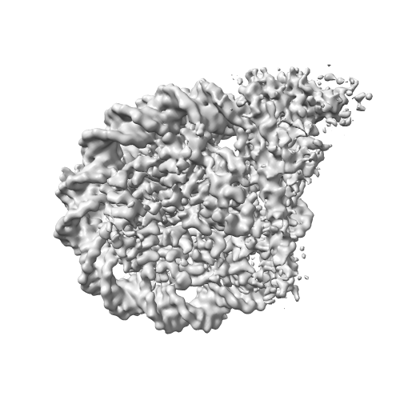
 ダウンロードとリンク
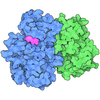
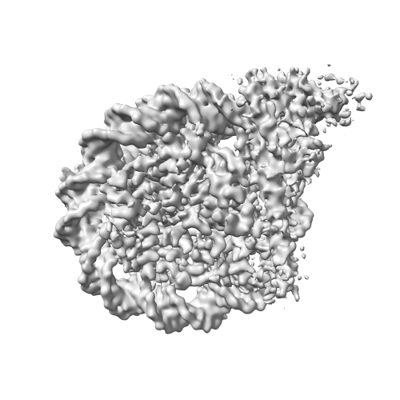 emd_17183.png
 http://ftp.pdbj.org/pub/emdb/structures/EMD-17183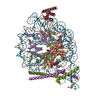





 Z (Sec.)
 Y (Row.)
 X (Col.)



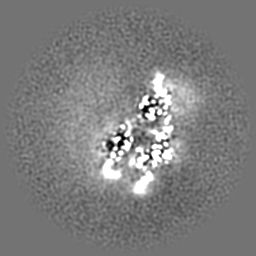
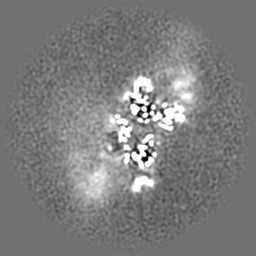
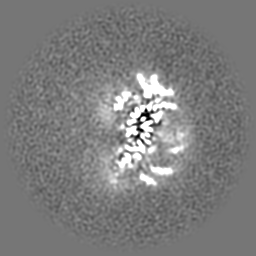
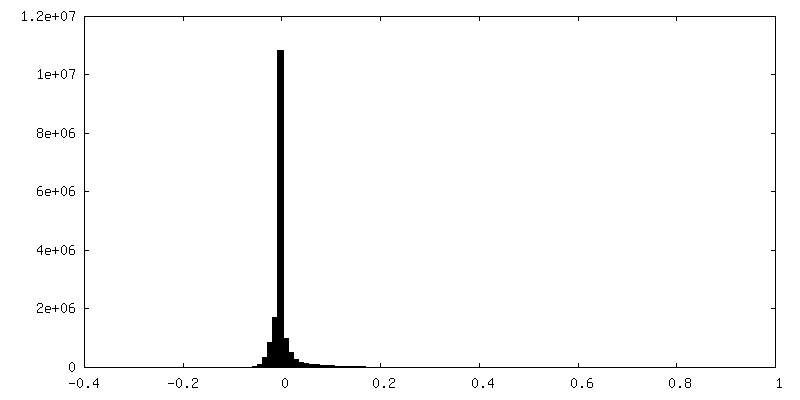

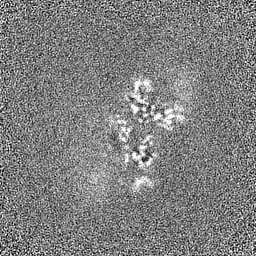
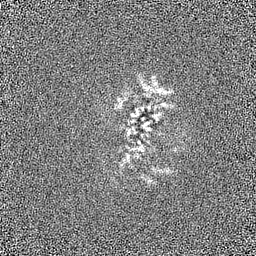
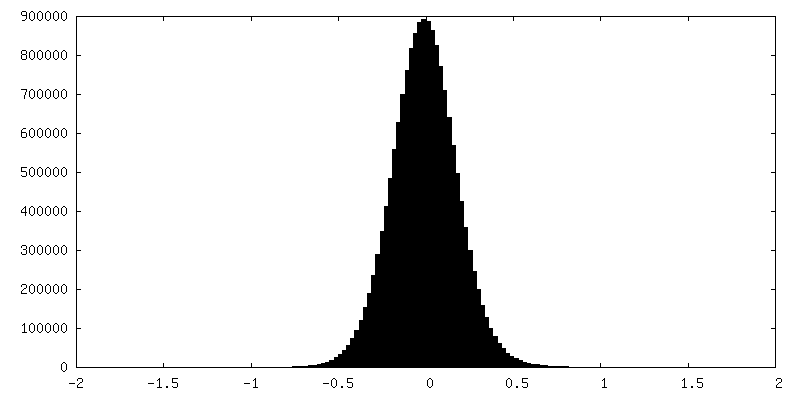
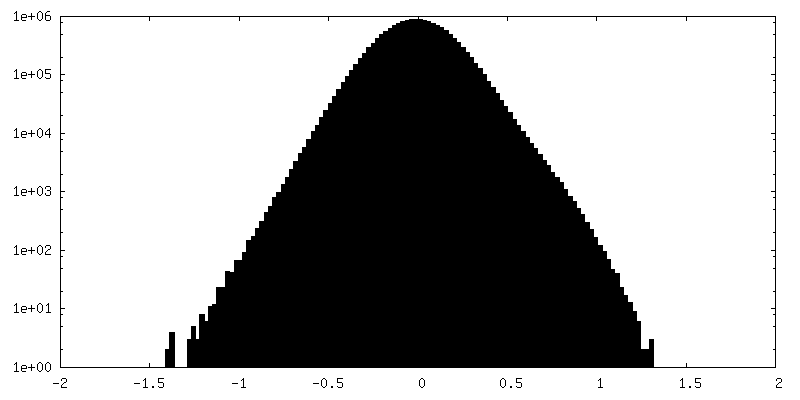
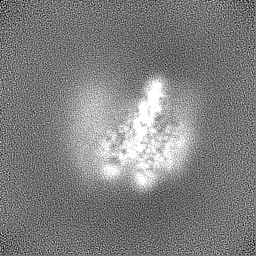
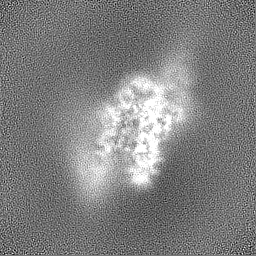
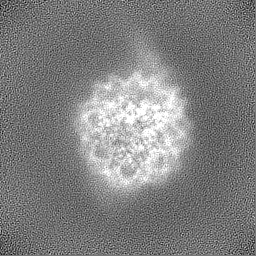
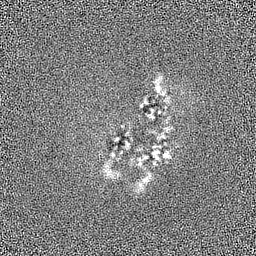
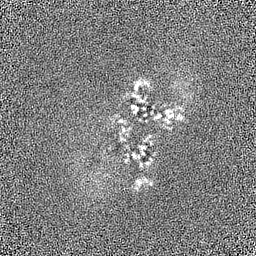
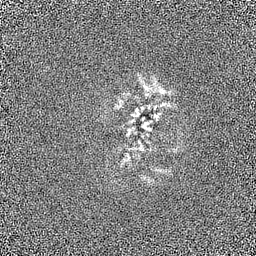
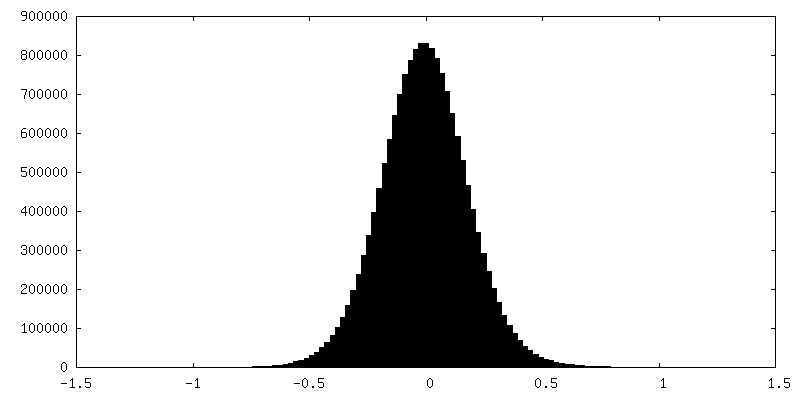
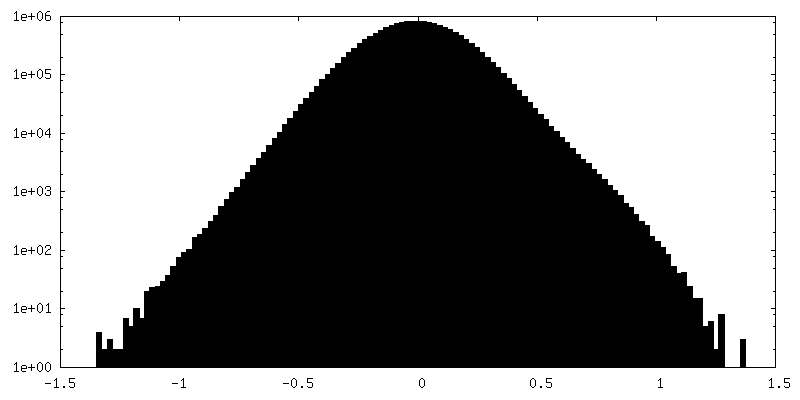
 試料の構成要素
 Escherichia coli (大腸菌)
 Trichoplusia ni (イラクサキンウワバ)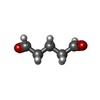
 解析
解析 電子顕微鏡法
 FIELD EMISSION GUN