negative regulation of transcription elongation by RNA polymerase I / regulation of transcriptional start site selection at RNA polymerase II promoter / nucleolar chromatin / positive regulation of transcription elongation by RNA polymerase I / regulation of transcription-coupled nucleotide-excision repair / regulation of chromatin organization / RNA polymerase I core binding / DSIF complex / SLIK (SAGA-like) complex / regulation of rRNA processing ...negative regulation of transcription elongation by RNA polymerase I / regulation of transcriptional start site selection at RNA polymerase II promoter / nucleolar chromatin / positive regulation of transcription elongation by RNA polymerase I / regulation of transcription-coupled nucleotide-excision repair / regulation of chromatin organization / RNA polymerase I core binding / DSIF complex / SLIK (SAGA-like) complex / regulation of rRNA processing / intracellular mRNA localization / RNA polymerase I general transcription initiation factor binding / DNA double-strand break processing / rDNA binding / rDNA heterochromatin / nucleosome organization / regulation of transcription elongation by RNA polymerase II / nucleosome array spacer activity / SAGA complex / transcription elongation-coupled chromatin remodeling / snRNP binding / histone H3K4me3 reader activity / U4 snRNA binding / ATP-dependent chromatin remodeler activity / sister chromatid cohesion / nuclear-transcribed mRNA catabolic process, deadenylation-dependent decay / RNA Polymerase I Transcription Initiation / Processing of Capped Intron-Containing Pre-mRNA / RNA Polymerase III Transcription Initiation From Type 1 Promoter / RNA Polymerase III Transcription Initiation From Type 2 Promoter / negative regulation of DNA-templated DNA replication / RNA Pol II CTD phosphorylation and interaction with CE / Formation of the Early Elongation Complex / mRNA Capping / Formation of TC-NER Pre-Incision Complex / Estrogen-dependent gene expression / RNA polymerase II transcribes snRNA genes / RNA Polymerase I Promoter Escape / TP53 Regulates Transcription of DNA Repair Genes / RNA Polymerase II Promoter Escape / RNA Polymerase II Transcription Pre-Initiation And Promoter Opening / RNA Polymerase II Transcription Initiation / RNA Polymerase II Transcription Initiation And Promoter Clearance / RNA Polymerase II Pre-transcription Events / RNA-templated transcription / positive regulation of nuclear-transcribed mRNA poly(A) tail shortening / spliceosomal complex assembly / RNA polymerase II complex binding / Gap-filling DNA repair synthesis and ligation in TC-NER / termination of RNA polymerase II transcription / U5 snRNA binding / Dual incision in TC-NER / termination of RNA polymerase I transcription / transcription by RNA polymerase III / maintenance of transcriptional fidelity during transcription elongation by RNA polymerase II / chromosome, centromeric region / nucleolar large rRNA transcription by RNA polymerase I / transcription initiation at RNA polymerase I promoter / positive regulation of translational initiation / U2 snRNA binding / nuclear-transcribed mRNA catabolic process / U6 snRNA binding / ATP-dependent activity, acting on DNA / U1 snRNA binding / termination of RNA polymerase III transcription / transcription initiation at RNA polymerase III promoter / RNA polymerase I complex / RNA polymerase III complex / RNA polymerase II, core complex / transcription elongation by RNA polymerase I / tRNA transcription by RNA polymerase III / transcription by RNA polymerase I / transcription-coupled nucleotide-excision repair / translation initiation factor binding / positive regulation of autophagy / translesion synthesis / DNA-templated transcription elongation / positive regulation of transcription elongation by RNA polymerase II / DNA-templated transcription initiation / transcription initiation at RNA polymerase II promoter / P-body / chromatin DNA binding / transcription elongation by RNA polymerase II / double-strand break repair via homologous recombination / mRNA transcription by RNA polymerase II / transcription by RNA polymerase II / Hydrolases; Acting on acid anhydrides; Acting on acid anhydrides to facilitate cellular and subcellular movement / ribonucleoside binding / nucleosomal DNA binding / mRNA processing / cytoplasmic stress granule / innate immune response in mucosa / DNA-directed RNA polymerase / structural constituent of chromatin / DNA-directed RNA polymerase activity / nucleosome / peroxisome / site of double-strand break / nucleosome assembly / single-stranded DNA binding Similarity search - Function
Transcription elongation factor SPT4 / Histone H2B 1.1 / DNA-directed RNA polymerase II subunit RPB1 / Histone H2A type 1 / DNA-directed RNA polymerase II subunit RPB2 / DNA-directed RNA polymerase II subunit RPB3 / DNA-directed RNA polymerase II subunit RPB4 / DNA-directed RNA polymerases I, II, and III subunit RPABC1 / DNA-directed RNA polymerases I, II, and III subunit RPABC2 / DNA-directed RNA polymerases I, II, and III subunit RPABC3 ...Transcription elongation factor SPT4 / Histone H2B 1.1 / DNA-directed RNA polymerase II subunit RPB1 / Histone H2A type 1 / DNA-directed RNA polymerase II subunit RPB2 / DNA-directed RNA polymerase II subunit RPB3 / DNA-directed RNA polymerase II subunit RPB4 / DNA-directed RNA polymerases I, II, and III subunit RPABC1 / DNA-directed RNA polymerases I, II, and III subunit RPABC2 / DNA-directed RNA polymerases I, II, and III subunit RPABC3 / DNA-directed RNA polymerases I, II, and III subunit RPABC5 / Transcription elongation factor SPT5 / DNA-directed RNA polymerase II subunit RPB9 / ATP-dependent chromatin remodeler CHD1 / DNA-directed RNA polymerase II subunit RPB7 / DNA-directed RNA polymerase II subunit RPB11 / DNA-directed RNA polymerases I, II, and III subunit RPABC4 / Histone H4 / Histone H3.2 Similarity search - Component
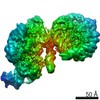
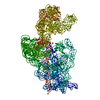
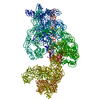
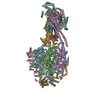
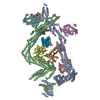
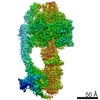
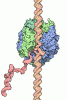
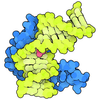
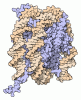
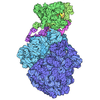
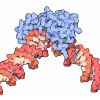
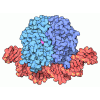
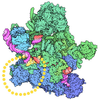
Journal: Nat Struct Mol Biol / Year: 2021 Title: Structural basis of nucleosome transcription mediated by Chd1 and FACT. Authors: Lucas Farnung / Moritz Ochmann / Maik Engeholm / Patrick Cramer / Abstract: Efficient transcription of RNA polymerase II (Pol II) through nucleosomes requires the help of various factors. Here we show biochemically that Pol II transcription through a nucleosome is ...Efficient transcription of RNA polymerase II (Pol II) through nucleosomes requires the help of various factors. Here we show biochemically that Pol II transcription through a nucleosome is facilitated by the chromatin remodeler Chd1 and the histone chaperone FACT when the elongation factors Spt4/5 and TFIIS are present. We report cryo-EM structures of transcribing Saccharomyces cerevisiae Pol II-Spt4/5-nucleosome complexes with bound Chd1 or FACT. In the first structure, Pol II transcription exposes the proximal histone H2A-H2B dimer that is bound by Spt5. Pol II has also released the inhibitory DNA-binding region of Chd1 that is poised to pump DNA toward Pol II. In the second structure, Pol II has generated a partially unraveled nucleosome that binds FACT, which excludes Chd1 and Spt5. These results suggest that Pol II progression through a nucleosome activates Chd1, enables FACT binding and eventually triggers transfer of FACT together with histones to upstream DNA.
History
Deposition
Feb 19, 2021
-
Header (metadata) release
Aug 25, 2021
-
Map release
Aug 25, 2021
-
Update
Jul 10, 2024
-
Current status
Jul 10, 2024
Processing site: PDBe / Status: Released
-
Structure visualization
Movie
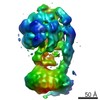
Surface view with section colored by density value
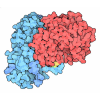
Macromolecule #17: Chromo domain-containing protein 1
Macromolecule
Name: Chromo domain-containing protein 1 / type: protein_or_peptide / ID: 17 / Number of copies: 1 / Enantiomer: LEVO EC number: Hydrolases; Acting on acid anhydrides; Acting on acid anhydrides to facilitate cellular and subcellular movement
In the structure databanks used in Yorodumi, some data are registered as the other names, "COVID-19 virus" and "2019-nCoV". Here are the details of the virus and the list of structure data.
Jan 31, 2019. EMDB accession codes are about to change! (news from PDBe EMDB page)
EMDB accession codes are about to change! (news from PDBe EMDB page)
The allocation of 4 digits for EMDB accession codes will soon come to an end. Whilst these codes will remain in use, new EMDB accession codes will include an additional digit and will expand incrementally as the available range of codes is exhausted. The current 4-digit format prefixed with “EMD-” (i.e. EMD-XXXX) will advance to a 5-digit format (i.e. EMD-XXXXX), and so on. It is currently estimated that the 4-digit codes will be depleted around Spring 2019, at which point the 5-digit format will come into force.
The EM Navigator/Yorodumi systems omit the EMD- prefix.
Related info.:Q: What is EMD? / ID/Accession-code notation in Yorodumi/EM Navigator
Yorodumi is a browser for structure data from EMDB, PDB, SASBDB, etc.
This page is also the successor to EM Navigator detail page, and also detail information page/front-end page for Omokage search.
The word "yorodu" (or yorozu) is an old Japanese word meaning "ten thousand". "mi" (miru) is to see.
Related info.:EMDB / PDB / SASBDB / Comparison of 3 databanks / Yorodumi Search / Aug 31, 2016. New EM Navigator & Yorodumi / Yorodumi Papers / Jmol/JSmol / Function and homology information / Changes in new EM Navigator and Yorodumi
 Movie
Movie Controller


 Open data
 Basic information
 Map data
 Sample
 Keywords
 Function and homology information
 Saccharomyces cerevisiae (brewer's yeast) /
  Xenopus laevis (African clawed frog) /
  Authors
 Germany, 4 items
  Citation
 Structure visualization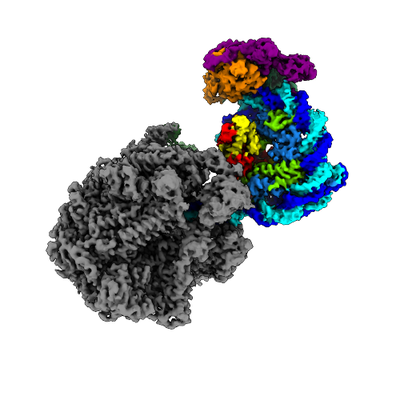
 Downloads & links
 emd_12449.png
 http://ftp.pdbj.org/pub/emdb/structures/EMD-12449





 Z (Sec.)
 Y (Row.)
 X (Col.)


 Sample components
 Escherichia coli (E. coli)
 Trichoplusia ni (cabbage looper)
 Processing
 Electron microscopy
 FIELD EMISSION GUN
