regulation of cellular response to hypoxia / negative regulation of receptor signaling pathway via JAK-STAT / RHOBTB3 ATPase cycle / target-directed miRNA degradation / elongin complex / Replication of the SARS-CoV-1 genome / transcription elongation factor activity / VCB complex / Cul5-RING ubiquitin ligase complex / ubiquitin-dependent protein catabolic process via the C-end degron rule pathway ...regulation of cellular response to hypoxia / negative regulation of receptor signaling pathway via JAK-STAT / RHOBTB3 ATPase cycle / target-directed miRNA degradation / elongin complex / Replication of the SARS-CoV-1 genome / transcription elongation factor activity / VCB complex / Cul5-RING ubiquitin ligase complex / ubiquitin-dependent protein catabolic process via the C-end degron rule pathway / Cul2-RING ubiquitin ligase complex / SUMOylation of ubiquitinylation proteins / negative regulation of transcription elongation by RNA polymerase II / Pausing and recovery of Tat-mediated HIV elongation / Tat-mediated HIV elongation arrest and recovery / HIV elongation arrest and recovery / Pausing and recovery of HIV elongation / negative regulation of signal transduction / Tat-mediated elongation of the HIV-1 transcript / Formation of HIV-1 elongation complex containing HIV-1 Tat / Formation of HIV elongation complex in the absence of HIV Tat / ubiquitin-like ligase-substrate adaptor activity / RNA Polymerase II Transcription Elongation / Formation of RNA Pol II elongation complex / negative regulation of TORC1 signaling / RNA Polymerase II Pre-transcription Events / ciliary tip / transcription corepressor binding / negative regulation of autophagy / protein serine/threonine kinase binding / TP53 Regulates Transcription of DNA Repair Genes / positive regulation of cell differentiation / transcription initiation at RNA polymerase II promoter / transcription elongation by RNA polymerase II / Inactivation of CSF3 (G-CSF) signaling / Vif-mediated degradation of APOBEC3G / Evasion by RSV of host interferon responses / Oxygen-dependent proline hydroxylation of Hypoxia-inducible Factor Alpha / cell morphogenesis / Regulation of expression of SLITs and ROBOs / ubiquitin-protein transferase activity / transcription corepressor activity / positive regulation of proteasomal ubiquitin-dependent protein catabolic process / Antigen processing: Ubiquitination & Proteasome degradation / microtubule cytoskeleton / regulation of gene expression / Neddylation / protein-containing complex assembly / Replication of the SARS-CoV-2 genome / cellular response to hypoxia / DNA-binding transcription factor binding / amyloid fibril formation / molecular adaptor activity / ubiquitin-dependent protein catabolic process / proteasome-mediated ubiquitin-dependent protein catabolic process / protein-macromolecule adaptor activity / protein stabilization / cilium / protein ubiquitination / negative regulation of cell population proliferation / negative regulation of gene expression / ubiquitin protein ligase binding / regulation of transcription by RNA polymerase II / regulation of DNA-templated transcription / negative regulation of apoptotic process / positive regulation of DNA-templated transcription / enzyme binding / negative regulation of transcription by RNA polymerase II / endoplasmic reticulum / mitochondrion / proteolysis / nucleoplasm / nucleus / plasma membrane / cytosol 類似検索 - 分子機能
プロトコル: SINGLE WAVELENGTH / 単色(M)・ラウエ(L): M / 散乱光タイプ: x-ray
放射波長
波長: 0.97903 Å / 相対比: 1
反射
解像度: 2.8→45 Å / Num. obs: 38647 / % possible obs: 95.5 % / Observed criterion σ(I): 3 / 冗長度: 6.8 % / Biso Wilson estimate: 65.3 Å2 / Rmerge(I) obs: 0.1 / Net I/σ(I): 14.71
反射 シェル
解像度: 2.8→2.97 Å / 冗長度: 4 % / Rmerge(I) obs: 0.43 / Mean I/σ(I) obs: 2.97 / % possible all: 96.1
-
解析
ソフトウェア
名称
バージョン
分類
BUSTER
2.10.0
精密化
XDS
データ削減
XDS
データスケーリング
BUSTER
TNT
位相決定
精密化
構造決定の手法: 分子置換 開始モデル: PVHL54-213-ELOB-ELOC APO STRUCTURE 解像度: 2.8→27.59 Å / Cor.coef. Fo:Fc: 0.935 / Cor.coef. Fo:Fc free: 0.9076 / 交差検証法: THROUGHOUT / σ(F): 0 / SU Rfree Blow DPI: 0.342 詳細: IDEAL-DIST CONTACT TERM CONTACT SETUP. ALL ATOMS HAVE CCP4 ATOM TYPE FROM LIBRARY
 ムービー
ムービー コントローラー


 データを開く
 基本情報
基本情報 要素
要素 キーワード
キーワード 機能・相同性情報
 HOMO SAPIENS (ヒト)
 X線回折 /
  データ登録者
 引用
引用 構造の表示
構造の表示 ダウンロードとリンク
 その他のダウンロード


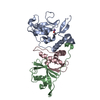
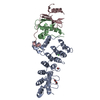


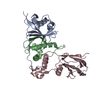


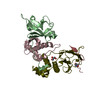
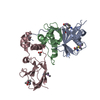
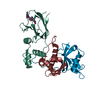
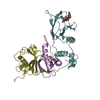
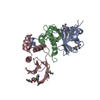

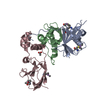
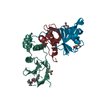
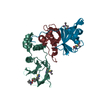
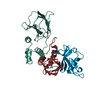
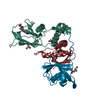

 PDBj
PDBj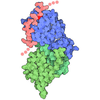
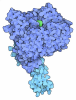

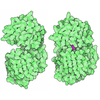
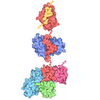
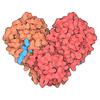
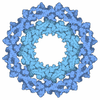
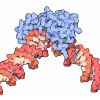
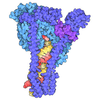
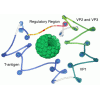
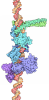
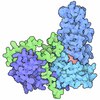
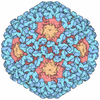
 集合体
集合体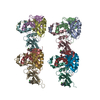
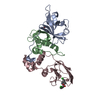
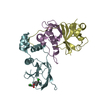
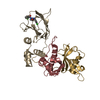
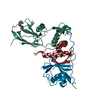

 ESCHERICHIA COLI (大腸菌) / 株 (発現宿主): BL21(DE3) / 参照: UniProt: Q15370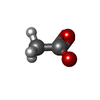
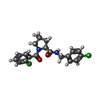
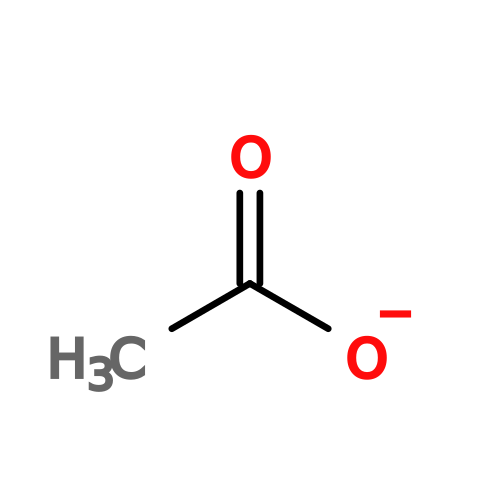 分子量: 59.044 Da / 分子数: 1 / 由来タイプ: 合成 / 式: C2H3O2
 分子量: 393.264 Da / 分子数: 4 / 由来タイプ: 合成 / 式: C19H18Cl2N2O3
 試料調製
試料調製 / ビームライン: PROXIMA 1 / 波長: 0.97903
  解析
解析