regulation of cellular response to hypoxia / negative regulation of receptor signaling pathway via JAK-STAT / RHOBTB3 ATPase cycle / target-directed miRNA degradation / elongin complex / Replication of the SARS-CoV-1 genome / transcription elongation factor activity / VCB complex / Cul5-RING ubiquitin ligase complex / ubiquitin-dependent protein catabolic process via the C-end degron rule pathway ...regulation of cellular response to hypoxia / negative regulation of receptor signaling pathway via JAK-STAT / RHOBTB3 ATPase cycle / target-directed miRNA degradation / elongin complex / Replication of the SARS-CoV-1 genome / transcription elongation factor activity / VCB complex / Cul5-RING ubiquitin ligase complex / ubiquitin-dependent protein catabolic process via the C-end degron rule pathway / SUMOylation of ubiquitinylation proteins / Cul2-RING ubiquitin ligase complex / negative regulation of DNA-templated DNA replication / negative regulation of transcription elongation by RNA polymerase II / Pausing and recovery of Tat-mediated HIV elongation / Tat-mediated HIV elongation arrest and recovery / HIV elongation arrest and recovery / Pausing and recovery of HIV elongation / negative regulation of signal transduction / Tat-mediated elongation of the HIV-1 transcript / Formation of HIV-1 elongation complex containing HIV-1 Tat / cell morphogenesis / Formation of HIV elongation complex in the absence of HIV Tat / ubiquitin-like ligase-substrate adaptor activity / RNA Polymerase II Transcription Elongation / Formation of RNA Pol II elongation complex / ribosome-associated ubiquitin-dependent protein catabolic process / negative regulation of TORC1 signaling / RNA Polymerase II Pre-transcription Events / negative regulation of autophagy / transcription corepressor binding / protein serine/threonine kinase binding / positive regulation of cell differentiation / TP53 Regulates Transcription of DNA Repair Genes / transcription initiation at RNA polymerase II promoter / transcription elongation by RNA polymerase II / Inactivation of CSF3 (G-CSF) signaling / Vif-mediated degradation of APOBEC3G / Evasion by RSV of host interferon responses / Oxygen-dependent proline hydroxylation of Hypoxia-inducible Factor Alpha / Regulation of expression of SLITs and ROBOs / Ribosome Quality Control (RQC) complex extracts and degrades nascent peptide / ubiquitin-protein transferase activity / regulation of gene expression / transcription corepressor activity / positive regulation of proteasomal ubiquitin-dependent protein catabolic process / Antigen processing: Ubiquitination & Proteasome degradation / Neddylation / protein-containing complex assembly / Replication of the SARS-CoV-2 genome / cellular response to hypoxia / ubiquitin-dependent protein catabolic process / DNA-binding transcription factor binding / amyloid fibril formation / molecular adaptor activity / proteasome-mediated ubiquitin-dependent protein catabolic process / protein-macromolecule adaptor activity / protein stabilization / protein ubiquitination / negative regulation of cell population proliferation / negative regulation of gene expression / ubiquitin protein ligase binding / regulation of transcription by RNA polymerase II / negative regulation of apoptotic process / regulation of DNA-templated transcription / positive regulation of DNA-templated transcription / negative regulation of transcription by RNA polymerase II / enzyme binding / endoplasmic reticulum / mitochondrion / proteolysis / nucleoplasm / nucleus / plasma membrane / cytosol Similarity search - Function
Mass: 10974.616 Da / Num. of mol.: 4 / Fragment: RESIDUES 17-112 Source method: isolated from a genetically manipulated source Details: EXTRA M AT N-TERMINUS AS RESULT OF CLONING / Source: (gene. exp.) HOMO SAPIENS (human) / Production host: ESCHERICHIA COLI (E. coli) / Strain (production host): BL21(DE3) / References: UniProt: Q15369
-
Protein , 1 types, 4 molecules CFIL
#3: Protein
VONHIPPEL-LINDAUDISEASETUMORSUPPRESSOR / PROTEIN G7 / PVHL
Mass: 18944.420 Da / Num. of mol.: 4 / Fragment: RESIDUES 54-213 Source method: isolated from a genetically manipulated source Source: (gene. exp.) HOMO SAPIENS (human) / Production host: ESCHERICHIA COLI (E. coli) / Strain (production host): BL21(DE3) / References: UniProt: P40337
In the structure databanks used in Yorodumi, some data are registered as the other names, "COVID-19 virus" and "2019-nCoV". Here are the details of the virus and the list of structure data.
Jan 31, 2019. EMDB accession codes are about to change! (news from PDBe EMDB page)
EMDB accession codes are about to change! (news from PDBe EMDB page)
The allocation of 4 digits for EMDB accession codes will soon come to an end. Whilst these codes will remain in use, new EMDB accession codes will include an additional digit and will expand incrementally as the available range of codes is exhausted. The current 4-digit format prefixed with “EMD-” (i.e. EMD-XXXX) will advance to a 5-digit format (i.e. EMD-XXXXX), and so on. It is currently estimated that the 4-digit codes will be depleted around Spring 2019, at which point the 5-digit format will come into force.
The EM Navigator/Yorodumi systems omit the EMD- prefix.
Related info.:Q: What is EMD? / ID/Accession-code notation in Yorodumi/EM Navigator
Yorodumi is a browser for structure data from EMDB, PDB, SASBDB, etc.
This page is also the successor to EM Navigator detail page, and also detail information page/front-end page for Omokage search.
The word "yorodu" (or yorozu) is an old Japanese word meaning "ten thousand". "mi" (miru) is to see.
Related info.:EMDB / PDB / SASBDB / Comparison of 3 databanks / Yorodumi Search / Aug 31, 2016. New EM Navigator & Yorodumi / Yorodumi Papers / Jmol/JSmol / Function and homology information / Changes in new EM Navigator and Yorodumi
 Movie
Movie Controller


 Open data
 Basic information
 Components
 Keywords
 Function and homology information
 HOMO SAPIENS (human)
 X-RAY DIFFRACTION /
  Authors
 Citation
 Structure visualization
 Downloads & links
 Other downloads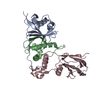

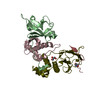


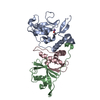
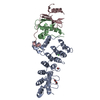


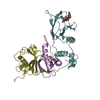
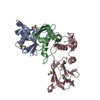
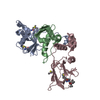
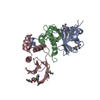

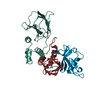

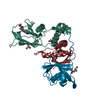
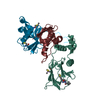
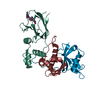

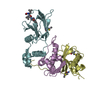
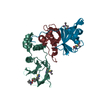
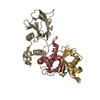
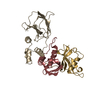
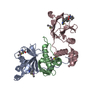

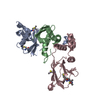
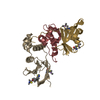
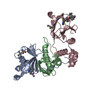
 PDBj
PDBj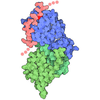
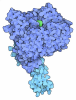

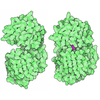
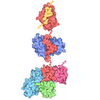
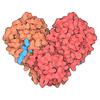
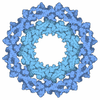
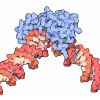
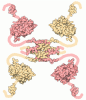
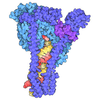
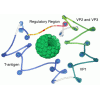
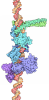
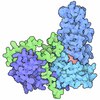
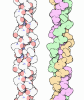
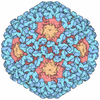
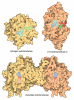
 Assembly
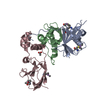

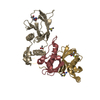
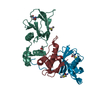

 ESCHERICHIA COLI (E. coli) / Strain (production host): BL21(DE3) / References: UniProt: Q15370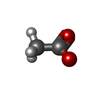
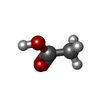
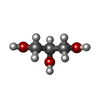

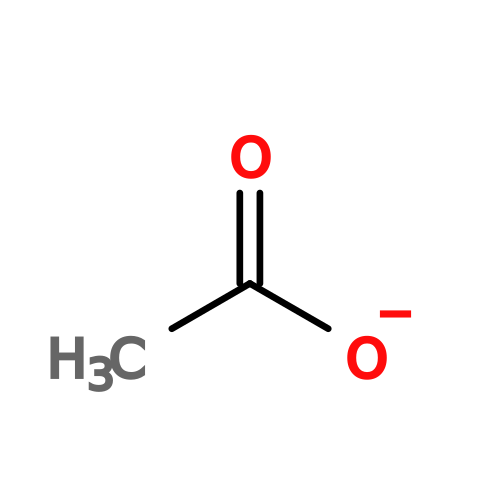 Mass: 59.044 Da / Num. of mol.: 6 / Source method: obtained synthetically / Formula: C2H3O2
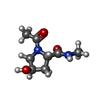
 Mass: 186.208 Da / Num. of mol.: 4 / Source method: obtained synthetically / Formula: C8H14N2O3
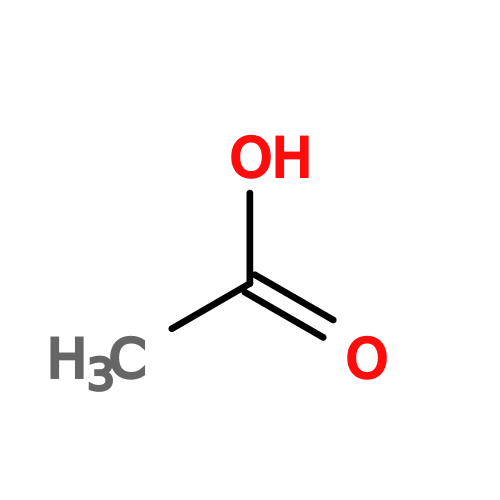 Mass: 60.052 Da / Num. of mol.: 1 / Source method: obtained synthetically / Formula: C2H4O2
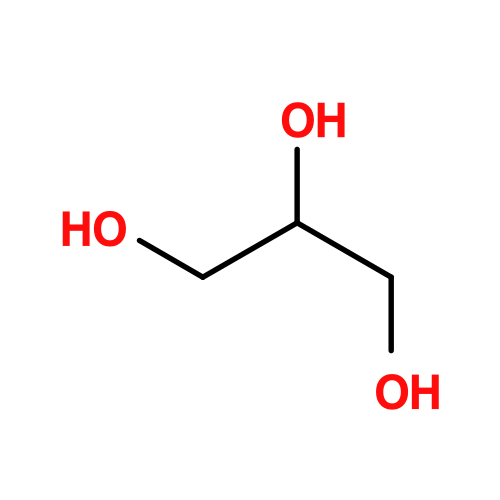 Mass: 92.094 Da / Num. of mol.: 1 / Source method: obtained synthetically / Formula: C3H8O3
 Sample preparation
 / Beamline: I24 / Wavelength: 0.9686
  Processing