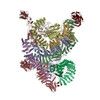
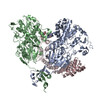
U2 snRNA 3'-end processing / NELF complex / NTRK3 as a dependence receptor / snRNA 3'-end processing / PP2A-mediated dephosphorylation of key metabolic factors / RNA polymerase II CTD heptapeptide repeat S2 phosphatase activity / RNA polymerase II CTD heptapeptide repeat S7 phosphatase activity / regulation of hippo signaling / MASTL Facilitates Mitotic Progression / negative regulation of DNA-templated transcription, elongation ...U2 snRNA 3'-end processing / NELF complex / NTRK3 as a dependence receptor / snRNA 3'-end processing / PP2A-mediated dephosphorylation of key metabolic factors / RNA polymerase II CTD heptapeptide repeat S2 phosphatase activity / RNA polymerase II CTD heptapeptide repeat S7 phosphatase activity / regulation of hippo signaling / MASTL Facilitates Mitotic Progression / negative regulation of DNA-templated transcription, elongation / : / transcription pausing by RNA polymerase II / protein phosphatase type 2A complex / meiotic sister chromatid cohesion, centromeric / INTAC complex / negative regulation of stem cell differentiation / RNA polymerase II CTD heptapeptide repeat S5 phosphatase activity / FAR/SIN/STRIPAK complex / Regulation of glycolysis by fructose 2,6-bisphosphate metabolism / Inhibition of replication initiation of damaged DNA by RB1/E2F1 / snRNA processing / DSIF complex / regulation of growth / protein phosphatase regulator activity / protein antigen binding / GABA receptor binding / APC truncation mutants have impaired AXIN binding / AXIN missense mutants destabilize the destruction complex / Truncations of AMER1 destabilize the destruction complex / regulation of transcription elongation by RNA polymerase II / B-WICH complex positively regulates rRNA expression / RNA Polymerase I Transcription Initiation / RNA Polymerase I Promoter Escape / RNA Polymerase I Transcription Termination / RNA Polymerase III Transcription Initiation From Type 1 Promoter / RNA Polymerase III Transcription Initiation From Type 2 Promoter / RNA Polymerase III Transcription Initiation From Type 3 Promoter / Hydrolases; Acting on ester bonds; Endoribonucleases producing 3'-phosphomonoesters / Formation of RNA Pol II elongation complex / Formation of the Early Elongation Complex / Transcriptional regulation by small RNAs / RNA Polymerase II Pre-transcription Events / TP53 Regulates Transcription of DNA Repair Genes / FGFR2 alternative splicing / RNA polymerase II transcribes snRNA genes / mRNA Capping / mRNA Splicing - Minor Pathway / Processing of Capped Intron-Containing Pre-mRNA / RNA Polymerase II Promoter Escape / RNA Polymerase II Transcription Pre-Initiation And Promoter Opening / RNA Polymerase II Transcription Initiation / RNA Polymerase II Transcription Elongation / RNA Polymerase II Transcription Initiation And Promoter Clearance / RNA Pol II CTD phosphorylation and interaction with CE / Estrogen-dependent gene expression / mRNA Splicing - Major Pathway / ERKs are inactivated / mRNA Polyadenylation / Formation of TC-NER Pre-Incision Complex / Dual incision in TC-NER / Gap-filling DNA repair synthesis and ligation in TC-NER / T cell homeostasis / Initiation of Nuclear Envelope (NE) Reformation / Beta-catenin phosphorylation cascade / Signaling by GSK3beta mutants / CTNNB1 S33 mutants aren't phosphorylated / CTNNB1 S37 mutants aren't phosphorylated / CTNNB1 S45 mutants aren't phosphorylated / CTNNB1 T41 mutants aren't phosphorylated / Co-stimulation by CD28 / integrator complex / positive regulation of DNA-templated transcription, elongation / RNA polymerase II transcription initiation surveillance / Disassembly of the destruction complex and recruitment of AXIN to the membrane / Abortive elongation of HIV-1 transcript in the absence of Tat / protein dephosphorylation / negative regulation of glycolytic process through fructose-6-phosphate / negative regulation of epithelial to mesenchymal transition / Co-inhibition by CTLA4 / Platelet sensitization by LDL / protein-serine/threonine phosphatase / negative regulation of transcription elongation by RNA polymerase II / RNA Pol II CTD phosphorylation and interaction with CE during HIV infection / RNA Pol II CTD phosphorylation and interaction with CE / ERK/MAPK targets / Formation of the Early Elongation Complex / Formation of the HIV-1 Early Elongation Complex / mRNA Capping / vascular endothelial cell response to oscillatory fluid shear stress / organelle membrane / positive regulation of nuclear-transcribed mRNA poly(A) tail shortening / protein serine/threonine phosphatase activity / regulation of cell differentiation / positive regulation of macroautophagy / positive regulation of NLRP3 inflammasome complex assembly / termination of RNA polymerase II transcription / regulation of microtubule polymerization / RNA polymerase II transcribes snRNA genes / Pausing and recovery of Tat-mediated HIV elongation / Tat-mediated HIV elongation arrest and recovery Similarity search - Function
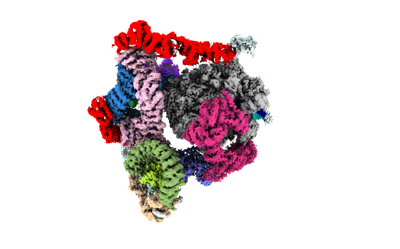
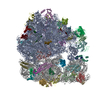
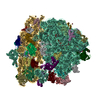
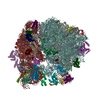
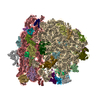
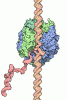
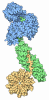
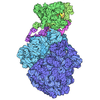
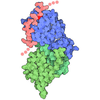
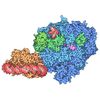
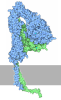
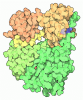
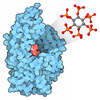
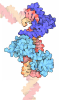
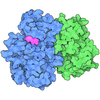
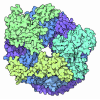
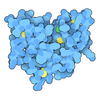
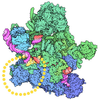
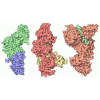
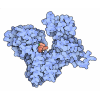
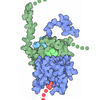
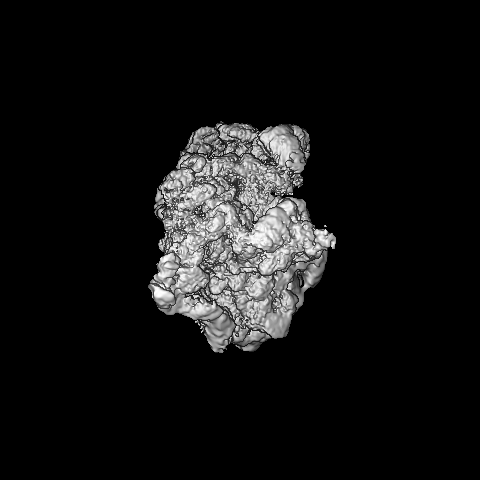
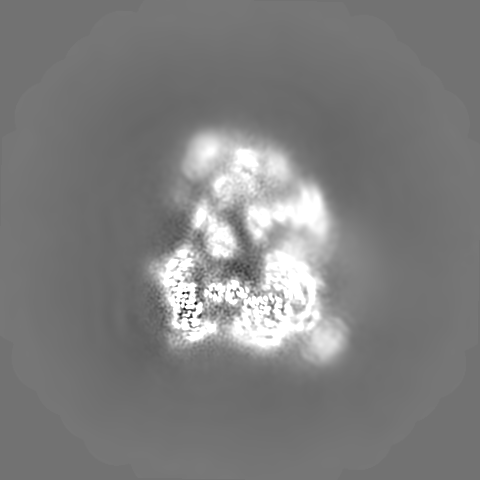
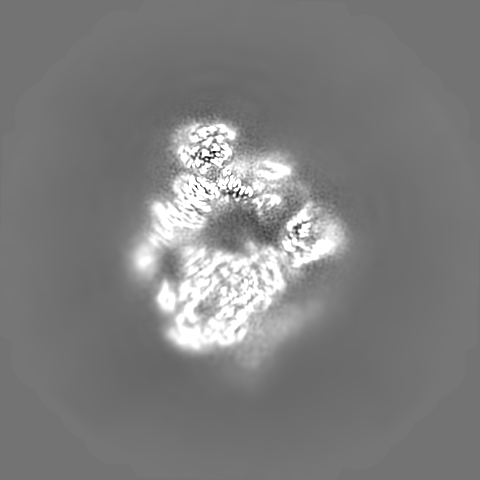
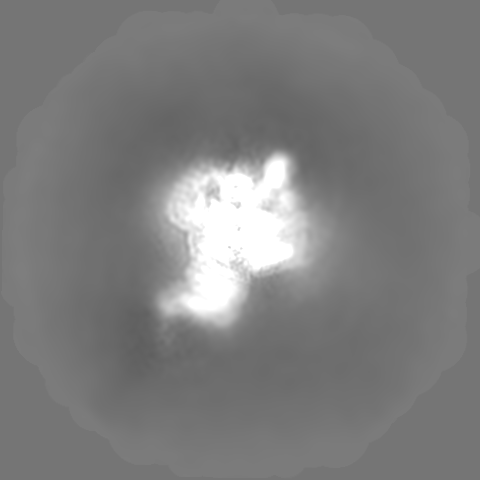
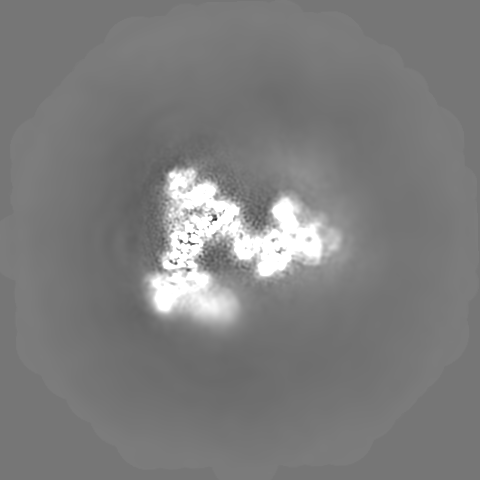
Journal: Science / Year: 2021 Title: Structural basis of Integrator-mediated transcription regulation. Authors: Isaac Fianu / Ying Chen / Christian Dienemann / Olexandr Dybkov / Andreas Linden / Henning Urlaub / Patrick Cramer / Abstract: Integrator and protein phosphatase 2A (PP2A) form a complex that dephosphorylates paused RNA polymerase II (Pol II), cleaves the nascent RNA, and terminates transcription. We report the structure of ...Integrator and protein phosphatase 2A (PP2A) form a complex that dephosphorylates paused RNA polymerase II (Pol II), cleaves the nascent RNA, and terminates transcription. We report the structure of the pretermination complex containing the human Integrator-PP2A complex bound to paused Pol II. Integrator binds Pol II and the pausing factors DSIF and NELF to exclude binding of the elongation factors SPT6 and PAF1 complex. Integrator also binds the C-terminal domain of Pol II and positions PP2A to counteract Pol II phosphorylation and elongation. The Integrator endonuclease docks to the RNA exit site and opens to cleave nascent RNA about 20 nucleotides from the Pol II active site. Integrator does not bind the DNA clamps formed by Pol II and DSIF, enabling release of DNA and transcription termination.
History
Deposition
Aug 26, 2021
-
Header (metadata) release
Dec 8, 2021
-
Map release
Dec 8, 2021
-
Update
Oct 9, 2024
-
Current status
Oct 9, 2024
Processing site: PDBe / Status: Released
-
Structure visualization
Movie
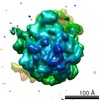
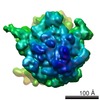
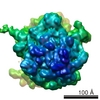
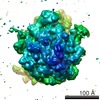
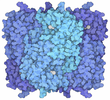
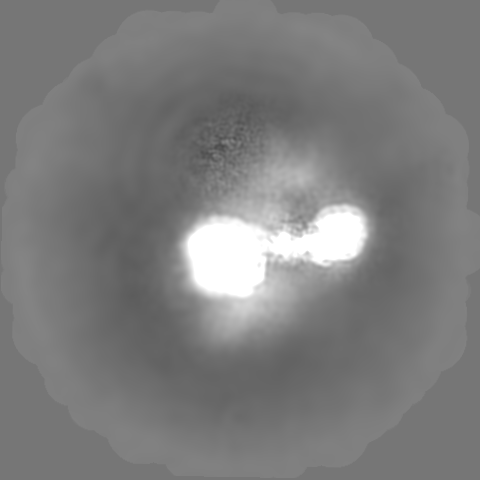
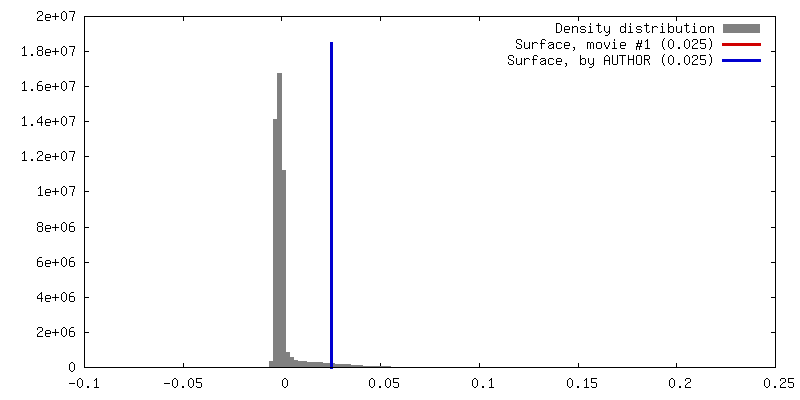
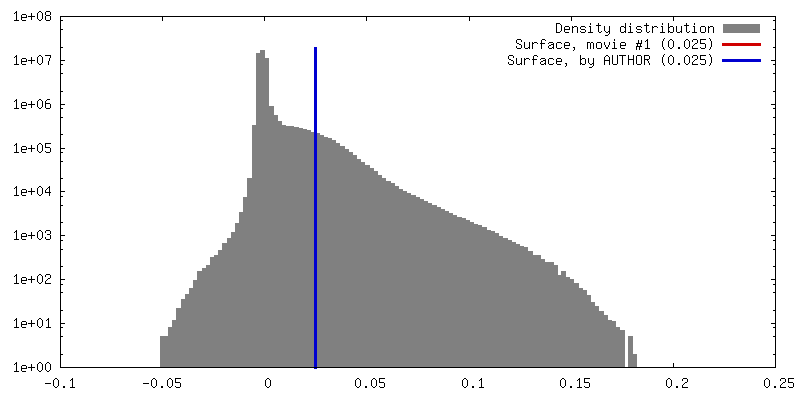
Surface view with section colored by density value
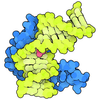
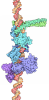
Name: TAR RNA / type: rna / ID: 15 / Number of copies: 1
Source (natural)
Organism: Human immunodeficiency virus 1
Molecular weight
Theoretical: 5.4103 KDa
Sequence
String:
UAACUAGGGA ACCCACU
+
Macromolecule #34: MAGNESIUM ION
Macromolecule
Name: MAGNESIUM ION / type: ligand / ID: 34 / Number of copies: 1 / Formula: MG
Molecular weight
Theoretical: 24.305 Da
+
Macromolecule #35: ZINC ION
Macromolecule
Name: ZINC ION / type: ligand / ID: 35 / Number of copies: 10 / Formula: ZN
Molecular weight
Theoretical: 65.409 Da
+
Macromolecule #36: MANGANESE (II) ION
Macromolecule
Name: MANGANESE (II) ION / type: ligand / ID: 36 / Number of copies: 2 / Formula: MN
Molecular weight
Theoretical: 54.938 Da
-
Experimental details
-
Structure determination
Method
cryo EM
Processing
single particle reconstruction
Aggregation state
particle
-
Sample preparation
Buffer
pH: 7.4
Grid
Model: Quantifoil R3.5/1 / Support film - Material: CARBON / Support film - topology: CONTINUOUS / Support film - Film thickness: 2.7 / Pretreatment - Type: GLOW DISCHARGE
Vitrification
Cryogen name: ETHANE / Chamber humidity: 100 %
-
Electron microscopy
Microscope
FEI TITAN
Image recording
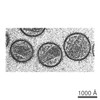
Film or detector model: GATAN K3 (6k x 4k) / Number grids imaged: 1 / Number real images: 45000 / Average exposure time: 2.21 sec. / Average electron dose: 46.18 e/Å2
Electron beam
Acceleration voltage: 300 kV / Electron source: FIELD EMISSION GUN
Electron optics
Illumination mode: OTHER / Imaging mode: OTHER
+
Image processing
Particle selection
Number selected: 4437434
Startup model
Type of model: INSILICO MODEL
Final reconstruction
Resolution.type: BY AUTHOR / Resolution: 3.6 Å / Resolution method: FSC 0.143 CUT-OFF / Software - Name: RELION (ver. 3.1) / Number images used: 614283
Initial angle assignment
Type: MAXIMUM LIKELIHOOD
Final angle assignment
Type: MAXIMUM LIKELIHOOD / Software - Name: RELION (ver. 3.1)
In the structure databanks used in Yorodumi, some data are registered as the other names, "COVID-19 virus" and "2019-nCoV". Here are the details of the virus and the list of structure data.
Jan 31, 2019. EMDB accession codes are about to change! (news from PDBe EMDB page)
EMDB accession codes are about to change! (news from PDBe EMDB page)
The allocation of 4 digits for EMDB accession codes will soon come to an end. Whilst these codes will remain in use, new EMDB accession codes will include an additional digit and will expand incrementally as the available range of codes is exhausted. The current 4-digit format prefixed with “EMD-” (i.e. EMD-XXXX) will advance to a 5-digit format (i.e. EMD-XXXXX), and so on. It is currently estimated that the 4-digit codes will be depleted around Spring 2019, at which point the 5-digit format will come into force.
The EM Navigator/Yorodumi systems omit the EMD- prefix.
Related info.:Q: What is EMD? / ID/Accession-code notation in Yorodumi/EM Navigator
Yorodumi is a browser for structure data from EMDB, PDB, SASBDB, etc.
This page is also the successor to EM Navigator detail page, and also detail information page/front-end page for Omokage search.
The word "yorodu" (or yorozu) is an old Japanese word meaning "ten thousand". "mi" (miru) is to see.
Related info.:EMDB / PDB / SASBDB / Comparison of 3 databanks / Yorodumi Search / Aug 31, 2016. New EM Navigator & Yorodumi / Yorodumi Papers / Jmol/JSmol / Function and homology information / Changes in new EM Navigator and Yorodumi
 Movie
Movie Controller

 Yorodumi
 Open data
 Basic information
 Map data
 Sample
 Keywords
 Function and homology information
 Sus scrofa domesticus (domestic pig) /
  Homo sapiens (human) /
 Human immunodeficiency virus 1
 Authors
 Citation
 Structure visualization
 Downloads & links
 emd_13479.png
 http://ftp.pdbj.org/pub/emdb/structures/EMD-13479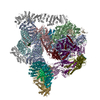

 Z (Sec.)
 Y (Row.)
 X (Col.)











 Sample components
 Trichoplusia ni (cabbage looper)
 Processing
 Electron microscopy
 FIELD EMISSION GUN