 Movie
Movie Controller


+ Open data

- Basic information
| Entry | Database: PDB / ID: 9s47 | ||||||||||||||||||||||||
|---|---|---|---|---|---|---|---|---|---|---|---|---|---|---|---|---|---|---|---|---|---|---|---|---|---|
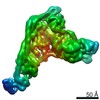
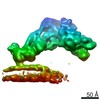
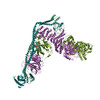
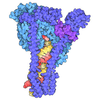
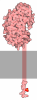
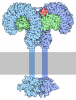
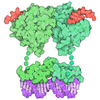
| Title | Human complex II-BATS bound to membrane-attached Rab5a-GTP | ||||||||||||||||||||||||
 Components Components |
| ||||||||||||||||||||||||
 Keywords Keywords | ENDOCYTOSIS / Lipid kinase / kinase | ||||||||||||||||||||||||
| Function / homology |  Function and homology information Function and homology informationprotein-containing complex organization / regulation of endosome size / cytoplasmic side of early endosome membrane / nucleus-vacuole junction / cellular response to aluminum ion / protein localization to early endosome / positive regulation of protein lipidation / positive regulation of stress granule assembly / postsynaptic endosome / Toll Like Receptor 9 (TLR9) Cascade ...protein-containing complex organization / regulation of endosome size / cytoplasmic side of early endosome membrane / nucleus-vacuole junction / cellular response to aluminum ion / protein localization to early endosome / positive regulation of protein lipidation / positive regulation of stress granule assembly / postsynaptic endosome / Toll Like Receptor 9 (TLR9) Cascade / Synthesis of PIPs at the late endosome membrane / phosphatidylinositol 3-kinase complex, class III / cellular response to oxygen-glucose deprivation / Synthesis of PIPs at the early endosome membrane / phosphatidylinositol 3-kinase complex, class III, type II / phosphatidylinositol 3-kinase complex, class III, type I / amyloid-beta clearance by transcytosis / response to mitochondrial depolarisation / presynaptic endosome / synaptic vesicle recycling / positive regulation of attachment of mitotic spindle microtubules to kinetochore / plasma membrane to endosome transport / host-mediated activation of viral genome replication / engulfment of apoptotic cell / negative regulation of lysosome organization / host-mediated perturbation of viral process / regulation of filopodium assembly / phosphatidylinositol kinase activity / SMAD protein signal transduction / Synthesis of PIPs at the Golgi membrane / early endosome to late endosome transport / receptor catabolic process / RAB geranylgeranylation / response to L-leucine / cytoplasmic side of mitochondrial outer membrane / regulation of autophagosome assembly / positive regulation of autophagosome assembly / protein targeting to lysosome / protein targeting to vacuole / late endosome to vacuole transport / endosome organization / RAB GEFs exchange GTP for GDP on RABs / early phagosome / pexophagy / Dengue virus modulates apoptosis / positive regulation of natural killer cell mediated cytotoxicity / Translation of Replicase and Assembly of the Replication Transcription Complex / phagophore assembly site / TBC/RABGAPs / cellular response to nitrogen starvation / centrosome cycle / negative regulation of programmed cell death / phosphatidylinositol 3-kinase / phosphatidylinositol-3-phosphate biosynthetic process / endosomal transport / 1-phosphatidylinositol-3-kinase activity / response to vitamin E / Macroautophagy / p38MAPK cascade / response to iron(II) ion / RSV-host interactions / regulation of synaptic vesicle exocytosis / cytoplasmic pattern recognition receptor signaling pathway / phosphatidylinositol phosphate biosynthetic process / Synthesis of PIPs at the plasma membrane / canonical Wnt signaling pathway / phosphatidylinositol-mediated signaling / positive regulation of exocytosis / Respiratory syncytial virus (RSV) attachment and entry / autolysosome / PI3K Cascade / autophagosome maturation / RHO GTPases Activate NADPH Oxidases / chromosome, centromeric region / JNK cascade / mitotic metaphase chromosome alignment / endocytic vesicle / autophagosome assembly / axoneme / mitophagy / cellular response to glucose starvation / synaptic vesicle endocytosis / cellular defense response / regulation of long-term neuronal synaptic plasticity / phagocytosis / phosphatidylinositol 3-kinase binding / regulation of macroautophagy / ruffle / positive regulation of intrinsic apoptotic signaling pathway / vesicle-mediated transport / phagocytic vesicle / somatodendritic compartment / endomembrane system / positive regulation of autophagy / Prevention of phagosomal-lysosomal fusion / cellular response to epidermal growth factor stimulus / autophagosome / cellular response to copper ion / axon terminus / cellular response to amino acid starvation Similarity search - Function | ||||||||||||||||||||||||
| Biological species |  Homo sapiens (human) Homo sapiens (human) | ||||||||||||||||||||||||
| Method | ELECTRON MICROSCOPY / subtomogram averaging / cryo EM / Resolution: 9.88 Å | ||||||||||||||||||||||||
 Authors Authors | Dessus, A.N. / Tremel, S. / Williams, R.L. | ||||||||||||||||||||||||
| Funding support |  United Kingdom, 2items United Kingdom, 2items
| ||||||||||||||||||||||||
 Citation Citation | Journal: Elife / Year: 2026 Title: A novel RAB5 binding site in human VPS34-CII that is likely the primordial site in eukaryotic evolution. Authors: Saule Spokaite / Yohei Ohashi / Maxime Bourguet / Antoine Nicolas Dessus / Roger L Williams / Abstract: RAB5-GTP activation of the multiprotein VPS34 complex II (VPS34-CII) is critical for endosomal sorting and maturation, phagocytosis, and receptor downregulation. RAB5-GTP activates VPS34-CII by ...RAB5-GTP activation of the multiprotein VPS34 complex II (VPS34-CII) is critical for endosomal sorting and maturation, phagocytosis, and receptor downregulation. RAB5-GTP activates VPS34-CII by binding to a helical insertion in the C2 domain of VPS34 on the BECLIN1/UVRAG-containing adaptor arm of the complex. The autophagy complex, VPS34 complex I (VPS34-CI), features a unique ATG14L subunit in place of the VPS34-CII UVRAG subunit, and we found that this distorts the adaptor arm to alter the VPS34 RAB-GTPase binding pocket so that it preferentially binds RAB1-GTP. Surprisingly, our higher-resolution single-particle cryo-EM structure of VPS34-CII showed a second RAB5-GTP binding site on the VPS15 solenoid region. This site (VPS15-RAB5-site) appears to be the primordial RAB5-binding region. A mutant in the helical insertion of the C2 domain of human VPS34 that mimics the sequence abolishes RAB5 binding to VPS34. Mutation of the VPS15-RAB5-site ortholog in VPS15 resulted in defective CPY sorting, loss of colocalisation with the RAB5 ortholog Vps21, and loss of binding to Vps21 in vitro. Evolutionary expansion from one to two RAB5-orthologue binding sites may have increased membrane binding and VPS34-CII activity to adapt to more complex endocytic systems. #1: Journal: Elife / Year: 2026Title: A novel RAB5 binding site in human VPS34-CII that is likely the primordial site in eukaryotic evolution Authors: Spokaite, S. / Ohashi, Y. / Bourguet, M. / Dessus, A.N. / Williams, R.L. | ||||||||||||||||||||||||
| History |
|
- Structure visualization
| Structure viewer | Molecule: MolmilJmol/JSmol |
|---|
- Downloads & links
-Download
| PDBx/mmCIF format | 9s47.cif.gz | 560.5 KB | Display | PDBx/mmCIF format |
|---|---|---|---|---|
| PDB format | pdb9s47.ent.gz | Display | PDB format | |
| PDBx/mmJSON format | 9s47.json.gz | Tree view | PDBx/mmJSON format | |
| Others |  Other downloads Other downloads |
-Validation report
| Arichive directory | https://data.pdbj.org/pub/pdb/validation_reports/s4/9s47ftp://data.pdbj.org/pub/pdb/validation_reports/s4/9s47 | HTTPS FTP |
|---|
-Related structure data
| Related structure data |  54560MC  9rx5C  9rx6C  9rx8C  9rx9C  9rxaC  9rxbC M: map data used to model this data C: citing same article ( |
|---|---|
| Similar structure data |


-Links
 PDBj
PDBj

- Assembly
| Deposited unit | 
|
|---|---|
| 1 |
|
-Components
-Protein , 5 types, 5 molecules ABCDE
| #1: Protein | Mass: 101680.328 Da / Num. of mol.: 1 Source method: isolated from a genetically manipulated source Source: (gene. exp.) Homo sapiens (human) / Gene: PIK3C3, VPS34 / Cell line (production host): Expi293F / Production host: Homo sapiens (human) / References: UniProt: Q8NEB9, phosphatidylinositol 3-kinase |
|---|---|
| #2: Protein | Mass: 154659.188 Da / Num. of mol.: 1 Source method: isolated from a genetically manipulated source Details: Full length VPS15 with 13 extra residues at the C-terminus left after TEV cleavage (VPS35-SRPTTASENLYFQ) Source: (gene. exp.) Homo sapiens (human) / Gene: PIK3R4, VPS15 / Cell line (production host): Expi293F / Production host: Homo sapiens (human)References: UniProt: Q99570, non-specific serine/threonine protein kinase |
| #3: Protein | Mass: 51953.102 Da / Num. of mol.: 1 Source method: isolated from a genetically manipulated source Details: Full length BECLIN1 / Source: (gene. exp.) Homo sapiens (human) / Gene: BECN1, GT197 / Cell line (production host): Expi293F / Production host: Homo sapiens (human) / References: UniProt: Q14457 |
| #4: Protein | Mass: 78289.852 Da / Num. of mol.: 1 / Mutation: P10Q in UVRAG Source method: isolated from a genetically manipulated source Details: UV radiation resistance associated protein (UVRAG; 1-464, with a P10Q mutation) fused to ATG14L BATS domain (413-492)UVRAG(1-464, P10Q) fused to ATG14L BATS domain (413-492) Source: (gene. exp.) Homo sapiens (human) / Gene: UVRAG / Cell line (production host): Expi293F / Production host: Homo sapiens (human) / References: UniProt: Q6P1X0 |
| #5: Protein | Mass: 23333.225 Da / Num. of mol.: 1 / Mutation: C19S, C63S, Q79L Source method: isolated from a genetically manipulated source Details: RAB5A-GTP 1-212 construct, with C19S, C63S, Q79L mutations Source: (gene. exp.) Homo sapiens (human) / Gene: RAB5A, RAB5 / Production host:   Escherichia coli (E. coli) / Strain (production host): OverExpress(TM) C41(DE3) / References: UniProt: P20339, small monomeric GTPase Escherichia coli (E. coli) / Strain (production host): OverExpress(TM) C41(DE3) / References: UniProt: P20339, small monomeric GTPase |
-Non-polymers , 5 types, 6 molecules 


| #6: Chemical | ChemComp-MYR / 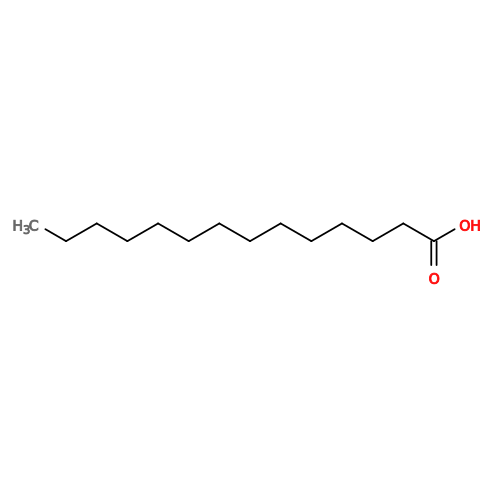 Mass: 228.371 Da / Num. of mol.: 1 / Source method: obtained synthetically / Formula: C14H28O2 / Feature type: SUBJECT OF INVESTIGATION Mass: 228.371 Da / Num. of mol.: 1 / Source method: obtained synthetically / Formula: C14H28O2 / Feature type: SUBJECT OF INVESTIGATION | ||||
|---|---|---|---|---|---|
| #7: Chemical | ChemComp-GDP / 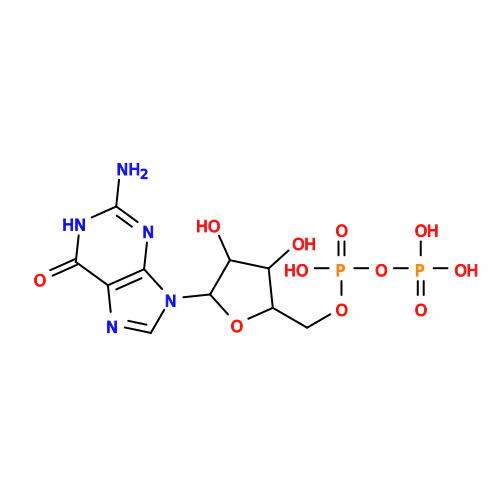 Type: RNA linking / Mass: 443.201 Da / Num. of mol.: 1 / Source method: obtained synthetically / Formula: C10H15N5O11P2 / Feature type: SUBJECT OF INVESTIGATION / Comment: GDP, energy-carrying molecule*YM Type: RNA linking / Mass: 443.201 Da / Num. of mol.: 1 / Source method: obtained synthetically / Formula: C10H15N5O11P2 / Feature type: SUBJECT OF INVESTIGATION / Comment: GDP, energy-carrying molecule*YM | ||||
| #8: Chemical |  Mass: 24.305 Da / Num. of mol.: 2 / Source method: obtained synthetically / Formula: Mg / Feature type: SUBJECT OF INVESTIGATION Mass: 24.305 Da / Num. of mol.: 2 / Source method: obtained synthetically / Formula: Mg / Feature type: SUBJECT OF INVESTIGATION#9: Chemical | ChemComp-ZN / |  Mass: 65.409 Da / Num. of mol.: 1 / Source method: obtained synthetically / Formula: Zn / Feature type: SUBJECT OF INVESTIGATION Mass: 65.409 Da / Num. of mol.: 1 / Source method: obtained synthetically / Formula: Zn / Feature type: SUBJECT OF INVESTIGATION#10: Chemical | ChemComp-GTP / | 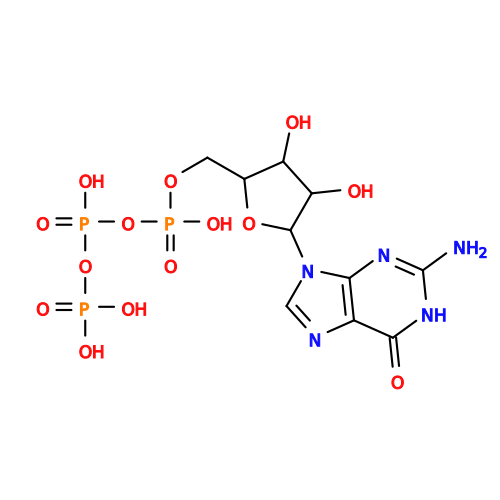 Mass: 523.180 Da / Num. of mol.: 1 / Source method: obtained synthetically / Formula: C10H16N5O14P3 / Feature type: SUBJECT OF INVESTIGATION / Comment: GTP, energy-carrying molecule*YM Mass: 523.180 Da / Num. of mol.: 1 / Source method: obtained synthetically / Formula: C10H16N5O14P3 / Feature type: SUBJECT OF INVESTIGATION / Comment: GTP, energy-carrying molecule*YM |
-Details
| Has ligand of interest | Y |
|---|---|
| Has protein modification | N |
-Experimental details
-Experiment
| Experiment | Method: ELECTRON MICROSCOPY |
|---|---|
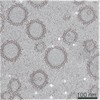
| EM experiment | Aggregation state: PARTICLE / 3D reconstruction method: subtomogram averaging |
- Sample preparation
| Component | Name: VPS34-CII-BATS bound to membrane-attached RAB5A-GTP (C19S, C63S, Q79L) on a LUV membrane Type: COMPLEX Details: RAB5A-GTP is attached to the LUV membrane via a maleimide linkage Entity ID: #1-#5 / Source: RECOMBINANT | ||||||||||||||||||||
|---|---|---|---|---|---|---|---|---|---|---|---|---|---|---|---|---|---|---|---|---|---|
| Molecular weight | Experimental value: NO | ||||||||||||||||||||
| Source (natural) | Organism: Homo sapiens (human) | ||||||||||||||||||||
| Source (recombinant) | Organism: Homo sapiens (human) | ||||||||||||||||||||
| Buffer solution | pH: 8 | ||||||||||||||||||||
| Buffer component |
| ||||||||||||||||||||
| Specimen | Embedding applied: NO / Shadowing applied: NO / Staining applied: NO / Vitrification applied: YES | ||||||||||||||||||||
| Specimen support | Grid material: GOLD / Grid mesh size: 300 divisions/in. / Grid type: Quantifoil | ||||||||||||||||||||
| Vitrification | Instrument: FEI VITROBOT MARK I / Cryogen name: ETHANE / Humidity: 100 % / Chamber temperature: 316 K |
- Electron microscopy imaging
| Experimental equipment |  Model: Titan Krios / Image courtesy: FEI Company |
|---|---|
| Microscopy | Model: TFS KRIOS |
| Electron gun | Electron source:  FIELD EMISSION GUN / Accelerating voltage: 300 kV / Illumination mode: FLOOD BEAM FIELD EMISSION GUN / Accelerating voltage: 300 kV / Illumination mode: FLOOD BEAM |
| Electron lens | Mode: BRIGHT FIELD / Nominal magnification: 81000 X / Nominal defocus max: 5000 nm / Nominal defocus min: 2000 nm / Cs: 2.7 mm |
| Specimen holder | Cryogen: NITROGEN / Specimen holder model: FEI TITAN KRIOS AUTOGRID HOLDER |
| Image recording | Average exposure time: 0.55 sec. / Electron dose: 2.99 e/Å2 / Avg electron dose per subtomogram: 123 e/Å2 / Film or detector model: GATAN K3 BIOQUANTUM (6k x 4k) |
- Processing
| EM software |
| ||||||||||||||||||||||||||||||||||||
|---|---|---|---|---|---|---|---|---|---|---|---|---|---|---|---|---|---|---|---|---|---|---|---|---|---|---|---|---|---|---|---|---|---|---|---|---|---|
| CTF correction | Details: CTF estimated with CTFFIND-4.1 (wrapper in Relion5), then corrected during 3D refinement and CTF tomo refine in Relion5. Type: PHASE FLIPPING AND AMPLITUDE CORRECTION | ||||||||||||||||||||||||||||||||||||
| Symmetry | Point symmetry: C1 (asymmetric) | ||||||||||||||||||||||||||||||||||||
| 3D reconstruction | Resolution: 9.88 Å / Resolution method: FSC 0.143 CUT-OFF / Num. of particles: 8441 / Algorithm: FOURIER SPACE / Num. of class averages: 2 / Symmetry type: POINT | ||||||||||||||||||||||||||||||||||||
| EM volume selection | Details: Particles picked in crYOLO, using the crYOLO model trained for SPA data that was re-trained on 3 manually picked tomograms. Then, did a 3D classification on all particles with EMD-12237 as a ...Details: Particles picked in crYOLO, using the crYOLO model trained for SPA data that was re-trained on 3 manually picked tomograms. Then, did a 3D classification on all particles with EMD-12237 as a reference (low-passed to 60A). Num. of tomograms: 103 / Num. of volumes extracted: 146464 / Reference model: EMD-12237 | ||||||||||||||||||||||||||||||||||||
| Atomic model building | Protocol: FLEXIBLE FIT / Space: REAL / Target criteria: cross-correlation coefficient | ||||||||||||||||||||||||||||||||||||
| Atomic model building | PDB-ID: 9RX9 Accession code: 9RX9 / Source name: PDB / Type: experimental model | ||||||||||||||||||||||||||||||||||||
| Refine LS restraints |
|
