 Movie
Movie Controller

[English] 日本語
 Yorodumi
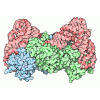
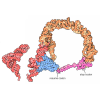
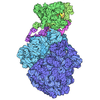
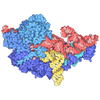
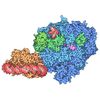
- PDB-8pj2: Structure of human 48S translation initiation complex in AUG reco... -
+ Open data

- Basic information
| Entry | Database: PDB / ID: 8pj2 | ||||||||||||||||||||||||||||||||||||||||||||||||||||||||||||||||||||||||
|---|---|---|---|---|---|---|---|---|---|---|---|---|---|---|---|---|---|---|---|---|---|---|---|---|---|---|---|---|---|---|---|---|---|---|---|---|---|---|---|---|---|---|---|---|---|---|---|---|---|---|---|---|---|---|---|---|---|---|---|---|---|---|---|---|---|---|---|---|---|---|---|---|---|
| Title | Structure of human 48S translation initiation complex in AUG recognition state after eIF5-induced GTP hydrolysis by eIF2 (48S-2) | ||||||||||||||||||||||||||||||||||||||||||||||||||||||||||||||||||||||||
 Components Components |
| ||||||||||||||||||||||||||||||||||||||||||||||||||||||||||||||||||||||||
 Keywords Keywords | RIBOSOME / TRANSLATION / initiation / 48S / eIF / human / eukaryotic / factor / codon / scanning / closed | ||||||||||||||||||||||||||||||||||||||||||||||||||||||||||||||||||||||||
| Function / homology |  Function and homology information Function and homology informationeukaryotic initiation factor eIF2 binding / translation initiation ternary complex / IRES-mediated translation initiation factor activity / regulation of translation in response to endoplasmic reticulum stress / glial limiting end-foot / cap-dependent translation initiation factor activity / viral translational termination-reinitiation / response to manganese-induced endoplasmic reticulum stress / Cellular response to mitochondrial stress / positive regulation of type B pancreatic cell apoptotic process ...eukaryotic initiation factor eIF2 binding / translation initiation ternary complex / IRES-mediated translation initiation factor activity / regulation of translation in response to endoplasmic reticulum stress / glial limiting end-foot / cap-dependent translation initiation factor activity / viral translational termination-reinitiation / response to manganese-induced endoplasmic reticulum stress / Cellular response to mitochondrial stress / positive regulation of type B pancreatic cell apoptotic process / eukaryotic translation initiation factor 3 complex, eIF3e / methionyl-initiator methionine tRNA binding / Response of EIF2AK1 (HRI) to heme deficiency / HRI-mediated signaling / cap-dependent translational initiation / negative regulation of translational initiation in response to stress / eukaryotic translation initiation factor 3 complex, eIF3m / PERK-mediated unfolded protein response / Recycling of eIF2:GDP / PERK regulates gene expression / IRES-dependent viral translational initiation / response to kainic acid / translation reinitiation / eukaryotic translation initiation factor 2 complex / formation of cytoplasmic translation initiation complex / multi-eIF complex / eukaryotic translation initiation factor 3 complex / eukaryotic 43S preinitiation complex / translation factor activity, RNA binding / formation of translation preinitiation complex / mRNA cap binding / eukaryotic 48S preinitiation complex / nuclear-transcribed mRNA catabolic process, nonsense-mediated decay / negative regulation of endoplasmic reticulum unfolded protein response / protein-synthesizing GTPase / oxidized pyrimidine DNA binding / response to TNF agonist / positive regulation of base-excision repair / positive regulation of intrinsic apoptotic signaling pathway in response to DNA damage / regulation of translational initiation / positive regulation of respiratory burst involved in inflammatory response / positive regulation of gastrulation / regulation of adenylate cyclase-activating G protein-coupled receptor signaling pathway / protein tyrosine kinase inhibitor activity / GDP-dissociation inhibitor activity / IRE1-RACK1-PP2A complex / TNFR1-mediated ceramide production / positive regulation of Golgi to plasma membrane protein transport / nucleolus organization / positive regulation of ubiquitin-protein transferase activity / positive regulation of DNA-templated transcription initiation / negative regulation of RNA splicing / negative regulation of DNA repair / metal-dependent deubiquitinase activity / erythrocyte homeostasis / supercoiled DNA binding / regulation of establishment of cell polarity / rRNA modification in the nucleus and cytosol / oxidized purine DNA binding / NF-kappaB complex / negative regulation of intrinsic apoptotic signaling pathway in response to hydrogen peroxide / negative regulation of phagocytosis / ubiquitin-like protein conjugating enzyme binding / cytoplasmic translational initiation / cytoplasmic side of rough endoplasmic reticulum membrane / Formation of the ternary complex, and subsequently, the 43S complex / laminin receptor activity / ion channel inhibitor activity / negative regulation of myoblast fusion / Ribosomal scanning and start codon recognition / protein kinase A binding / Translation initiation complex formation / negative regulation of Wnt signaling pathway / fibroblast growth factor binding / BH3 domain binding / Protein hydroxylation / TOR signaling / mTORC1-mediated signalling / negative regulation of translational frameshifting / monocyte chemotaxis / PELO:HBS1L and ABCE1 dissociate a ribosome on a non-stop mRNA / SARS-CoV-1 modulates host translation machinery / regulation of cell division / positive regulation of GTPase activity / Peptide chain elongation / Selenocysteine synthesis / negative regulation of protein binding / Formation of a pool of free 40S subunits / negative regulation of respiratory burst involved in inflammatory response / positive regulation of intrinsic apoptotic signaling pathway by p53 class mediator / protein serine/threonine kinase inhibitor activity / Eukaryotic Translation Termination / Dengue Virus Attachment and Entry / mitophagy / SRP-dependent cotranslational protein targeting to membrane / Response of EIF2AK4 (GCN2) to amino acid deficiency / ubiquitin ligase inhibitor activity / Viral mRNA Translation / endonucleolytic cleavage to generate mature 3'-end of SSU-rRNA from (SSU-rRNA, 5.8S rRNA, LSU-rRNA) / Nonsense Mediated Decay (NMD) independent of the Exon Junction Complex (EJC) Similarity search - Function | ||||||||||||||||||||||||||||||||||||||||||||||||||||||||||||||||||||||||
| Biological species |  Homo sapiens (human) Homo sapiens (human) | ||||||||||||||||||||||||||||||||||||||||||||||||||||||||||||||||||||||||
| Method | ELECTRON MICROSCOPY / single particle reconstruction / cryo EM / Resolution: 3.4 Å | ||||||||||||||||||||||||||||||||||||||||||||||||||||||||||||||||||||||||
 Authors Authors | Petrychenko, V. / Yi, S.-H. / Liedtke, D. / Peng, B.Z. / Rodnina, M.V. / Fischer, N. | ||||||||||||||||||||||||||||||||||||||||||||||||||||||||||||||||||||||||
| Funding support |  Germany, 2items Germany, 2items
| ||||||||||||||||||||||||||||||||||||||||||||||||||||||||||||||||||||||||
 Citation Citation | Journal: Nat Struct Mol Biol / Year: 2025 Title: Structural basis for translational control by the human 48S initiation complex. Authors: Valentyn Petrychenko / Sung-Hui Yi / David Liedtke / Bee-Zen Peng / Marina V Rodnina / Niels Fischer / Abstract: The selection of an open reading frame (ORF) for translation of eukaryotic mRNA relies on remodeling of the scanning 48S initiation complex into an elongation-ready 80S ribosome. Using cryo-electron ...The selection of an open reading frame (ORF) for translation of eukaryotic mRNA relies on remodeling of the scanning 48S initiation complex into an elongation-ready 80S ribosome. Using cryo-electron microscopy, we visualize the key commitment steps orchestrating 48S remodeling in humans. The mRNA Kozak sequence facilitates mRNA scanning in the 48S open state and stabilizes the 48S closed state by organizing the contacts of eukaryotic initiation factors (eIFs) and ribosomal proteins and by reconfiguring mRNA structure. GTPase-triggered large-scale fluctuations of 48S-bound eIF2 facilitate eIF5B recruitment, transfer of initiator tRNA from eIF2 to eIF5B and the release of eIF5 and eIF2. The 48S-bound multisubunit eIF3 complex controls ribosomal subunit joining by coupling eIF exchange to gradual displacement of the eIF3c N-terminal domain from the intersubunit interface. These findings reveal the structural mechanism of ORF selection in human cells and explain how eIF3 could function in the context of the 80S ribosome. | ||||||||||||||||||||||||||||||||||||||||||||||||||||||||||||||||||||||||
| History |
|
- Structure visualization
| Structure viewer | Molecule: MolmilJmol/JSmol |
|---|
- Downloads & links
-Download
| PDBx/mmCIF format | 8pj2.cif.gz | 2.7 MB | Display | PDBx/mmCIF format |
|---|---|---|---|---|
| PDB format | pdb8pj2.ent.gz | Display | PDB format | |
| PDBx/mmJSON format | 8pj2.json.gz | Tree view | PDBx/mmJSON format | |
| Others |  Other downloads Other downloads |
-Validation report
| Arichive directory | https://data.pdbj.org/pub/pdb/validation_reports/pj/8pj2ftp://data.pdbj.org/pub/pdb/validation_reports/pj/8pj2 | HTTPS FTP |
|---|
-Related structure data
| Related structure data |  17697MC  8pj1C  8pj3C  8pj4C  8pj5C  8pj6C  8rg0C M: map data used to model this data C: citing same article ( |
|---|---|
| Similar structure data |


-Links
 PDBj
PDBj

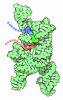
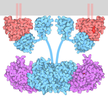
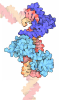
- Assembly
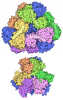
| Deposited unit | 
|
|---|---|
| 1 | 
|
-Components
-Eukaryotic translation initiation factor ... , 16 types, 16 molecules 1234568oqrtuvxyz
| #1: Protein | Mass: 92593.414 Da / Num. of mol.: 1 / Source method: isolated from a natural source / Source: (natural) Homo sapiens (human) / References: UniProt: P55884 |
|---|---|
| #2: Protein | Mass: 36543.773 Da / Num. of mol.: 1 / Source method: isolated from a natural source / Source: (natural) Homo sapiens (human) / References: UniProt: Q13347 |
| #3: Protein | Mass: 25083.619 Da / Num. of mol.: 1 / Source method: isolated from a natural source / Source: (natural) Homo sapiens (human) / References: UniProt: Q9UBQ5 |
| #4: Protein | Mass: 37593.645 Da / Num. of mol.: 1 / Source method: isolated from a natural source / Source: (natural) Homo sapiens (human) / References: UniProt: O00303, ubiquitinyl hydrolase 1 |
| #5: Protein | Mass: 66803.734 Da / Num. of mol.: 1 / Source method: isolated from a natural source / Source: (natural) Homo sapiens (human) / References: UniProt: Q9Y262 |
| #6: Protein | Mass: 42555.832 Da / Num. of mol.: 1 / Source method: isolated from a natural source / Source: (natural) Homo sapiens (human) / References: UniProt: Q7L2H7 |
| #8: Protein | Mass: 39979.277 Da / Num. of mol.: 1 / Source method: isolated from a natural source / Source: (natural) Homo sapiens (human) / References: UniProt: O15372 |
| #44: Protein | Mass: 35662.016 Da / Num. of mol.: 1 / Source method: isolated from a natural source / Source: (natural) Homo sapiens (human) / References: UniProt: O75821 |
| #45: Protein | Mass: 16488.449 Da / Num. of mol.: 1 Source method: isolated from a genetically manipulated source Source: (gene. exp.) Homo sapiens (human) / Gene: EIF1AX, EIF1A, EIF4C / Production host:   Escherichia coli (E. coli) / References: UniProt: P47813 Escherichia coli (E. coli) / References: UniProt: P47813 |
| #46: Protein | Mass: 36161.180 Da / Num. of mol.: 1 / Source method: isolated from a natural source / Source: (natural) Homo sapiens (human) / References: UniProt: P05198 |
| #47: Protein | Mass: 51178.406 Da / Num. of mol.: 1 / Source method: isolated from a natural source / Source: (natural) Homo sapiens (human) / References: UniProt: P41091, protein-synthesizing GTPase |
| #48: Protein | Mass: 166903.781 Da / Num. of mol.: 1 / Source method: isolated from a natural source / Source: (natural) Homo sapiens (human) / References: UniProt: Q14152 |
| #49: Protein | Mass: 52281.633 Da / Num. of mol.: 1 / Source method: isolated from a natural source / Source: (natural) Homo sapiens (human) / References: UniProt: P60228 |
| #51: Protein | Mass: 64060.758 Da / Num. of mol.: 1 / Source method: isolated from a natural source / Source: (natural) Homo sapiens (human) / References: UniProt: O15371 |
| #52: Protein | Mass: 105503.945 Da / Num. of mol.: 1 / Source method: isolated from a natural source / Source: (natural) Homo sapiens (human) / References: UniProt: Q99613 |
| #53: Protein | Mass: 49188.594 Da / Num. of mol.: 1 Source method: isolated from a genetically manipulated source Source: (gene. exp.) Homo sapiens (human) / Gene: EIF5 / Production host: Escherichia coli (E. coli) / References: UniProt: P55010 |
-RNA chain , 3 types, 3 molecules 7Aw
| #7: RNA chain | Mass: 82412.445 Da / Num. of mol.: 1 Source method: isolated from a genetically manipulated source Source: (gene. exp.) Homo sapiens (human) / Production host: Escherichia coli (E. coli) |
|---|---|
| #10: RNA chain | Mass: 603245.500 Da / Num. of mol.: 1 Source method: isolated from a genetically manipulated source Source: (gene. exp.) Homo sapiens (human) / Production host: Escherichia coli (E. coli) / References: GenBank: NR_046235.3 |
| #50: RNA chain | Mass: 24231.510 Da / Num. of mol.: 1 Source method: isolated from a genetically manipulated source Source: (gene. exp.) Homo sapiens (human) / Production host: Escherichia coli (E. coli) / References: GenBank: 174924 |
-Protein/peptide , 1 types, 1 molecules 9
| #9: Protein/peptide | Mass: 3473.451 Da / Num. of mol.: 1 / Source method: isolated from a natural source / Source: (natural) Homo sapiens (human) / References: UniProt: P62945 |
|---|
+40S ribosomal protein ... , 31 types, 31 molecules BCDEFGHIJKLMNOPQRSTVYZabdefhimn
-Protein , 2 types, 2 molecules ck
| #35: Protein | Mass: 35115.652 Da / Num. of mol.: 1 / Source method: isolated from a natural source / Source: (natural) Homo sapiens (human) / References: UniProt: P63244 |
|---|---|
| #41: Protein | Mass: 18004.041 Da / Num. of mol.: 1 / Source method: isolated from a natural source / Source: (natural) Homo sapiens (human) / References: UniProt: P62979 |
-Non-polymers , 2 types, 89 molecules 

| #54: Chemical | ChemComp-MG /  Mass: 24.305 Da / Num. of mol.: 87 / Source method: obtained synthetically / Formula: Mg Mass: 24.305 Da / Num. of mol.: 87 / Source method: obtained synthetically / Formula: Mg#55: Chemical |  Mass: 65.409 Da / Num. of mol.: 2 / Source method: obtained synthetically / Formula: Zn Mass: 65.409 Da / Num. of mol.: 2 / Source method: obtained synthetically / Formula: Zn |
|---|
-Details
| Has ligand of interest | N |
|---|---|
| Has protein modification | Y |
-Experimental details
-Experiment
| Experiment | Method: ELECTRON MICROSCOPY |
|---|---|
| EM experiment | Aggregation state: PARTICLE / 3D reconstruction method: single particle reconstruction |
- Sample preparation
| Component |
| ||||||||||||||||||||||||||||||||||||||||
|---|---|---|---|---|---|---|---|---|---|---|---|---|---|---|---|---|---|---|---|---|---|---|---|---|---|---|---|---|---|---|---|---|---|---|---|---|---|---|---|---|---|
| Source (natural) |
| ||||||||||||||||||||||||||||||||||||||||
| Source (recombinant) | Organism: Escherichia coli (E. coli) | ||||||||||||||||||||||||||||||||||||||||
| Buffer solution | pH: 7.5 | ||||||||||||||||||||||||||||||||||||||||
| Buffer component |
| ||||||||||||||||||||||||||||||||||||||||
| Specimen | Embedding applied: NO / Shadowing applied: NO / Staining applied: NO / Vitrification applied: YES | ||||||||||||||||||||||||||||||||||||||||
| Vitrification | Instrument: HOMEMADE PLUNGER / Cryogen name: ETHANE / Details: Manual blotting & plunge-freezing |
- Electron microscopy imaging
| Experimental equipment |  Model: Titan Krios / Image courtesy: FEI Company |
|---|---|
| Microscopy | Model: FEI TITAN KRIOS Details: Electron-optical aberrations were corrected using a CETCOR Cs-corrector (CEOS, Heidelberg) aligned with the CETCORPLUS 4.6.9 software package (CEOS, Heidelberg). |
| Electron gun | Electron source:  FIELD EMISSION GUN / Accelerating voltage: 300 kV / Illumination mode: SPOT SCAN FIELD EMISSION GUN / Accelerating voltage: 300 kV / Illumination mode: SPOT SCAN |
| Electron lens | Mode: BRIGHT FIELD / Nominal magnification: 59000 X / Nominal defocus max: 2500 nm / Nominal defocus min: 200 nm / Cs: 0.01 mm |
| Specimen holder | Cryogen: NITROGEN / Specimen holder model: FEI TITAN KRIOS AUTOGRID HOLDER |
| Image recording | Average exposure time: 1.5 sec. / Electron dose: 45 e/Å2 / Film or detector model: FEI FALCON III (4k x 4k) |
- Processing
| EM software |
| ||||||||||||||||||||||||||||||||||||
|---|---|---|---|---|---|---|---|---|---|---|---|---|---|---|---|---|---|---|---|---|---|---|---|---|---|---|---|---|---|---|---|---|---|---|---|---|---|
| CTF correction | Type: PHASE FLIPPING AND AMPLITUDE CORRECTION | ||||||||||||||||||||||||||||||||||||
| 3D reconstruction | Resolution: 3.4 Å / Resolution method: FSC 0.143 CUT-OFF / Num. of particles: 61742 / Symmetry type: POINT |
