protein localization to astral microtubule / cell cortex region / protein localization to mitotic spindle / cortical microtubule cytoskeleton / mitotic spindle astral microtubule end / centriolar subdistal appendage / ventral spinal cord development / neuron to neuron synapse / centriole-centriole cohesion / positive regulation of neuromuscular junction development ...protein localization to astral microtubule / cell cortex region / protein localization to mitotic spindle / cortical microtubule cytoskeleton / mitotic spindle astral microtubule end / centriolar subdistal appendage / ventral spinal cord development / neuron to neuron synapse / centriole-centriole cohesion / positive regulation of neuromuscular junction development / microtubule anchoring at centrosome / maintenance of synapse structure / lysosome to ER cholesterol transport / protein localization to microtubule / cell projection membrane / mitotic spindle microtubule / mitotic nuclear membrane disassembly / XBP1(S) activates chaperone genes / positive regulation of microtubule nucleation / positive regulation of dendritic spine morphogenesis / attachment of mitotic spindle microtubules to kinetochore / microtubule plus-end binding / microtubule plus-end / microtubule bundle formation / non-motile cilium assembly / motor behavior / neuron cellular homeostasis / retrograde transport, endosome to Golgi / COPI-independent Golgi-to-ER retrograde traffic / microtubule associated complex / nuclear migration / neuromuscular process / mitotic spindle pole / intercellular bridge / spindle midzone / negative regulation of microtubule polymerization / cell leading edge / microtubule polymerization / neuromuscular junction development / regulation of microtubule polymerization / regulation of microtubule polymerization or depolymerization / Dengue Virus Attachment and Entry / COPI-mediated anterograde transport / spindle assembly / positive regulation of microtubule polymerization / behavioral response to cocaine / cholesterol homeostasis / neuron projection maintenance / positive regulation of protein localization / Loss of Nlp from mitotic centrosomes / Loss of proteins required for interphase microtubule organization from the centrosome / Amplification of signal from unattached kinetochores via a MAD2 inhibitory signal / Recruitment of mitotic centrosome proteins and complexes / centriole / MHC class II antigen presentation / Recruitment of NuMA to mitotic centrosomes / Anchoring of the basal body to the plasma membrane / HSP90 chaperone cycle for steroid hormone receptors (SHR) in the presence of ligand / Mitotic Prometaphase / EML4 and NUDC in mitotic spindle formation / protein serine/threonine kinase activator activity / AURKA Activation by TPX2 / Resolution of Sister Chromatid Cohesion / regulation of mitotic spindle organization / protein serine/threonine kinase binding / establishment of mitotic spindle orientation / RHO GTPases Activate Formins / tubulin binding / tau protein binding / kinetochore / spindle / intracellular protein localization / microtubule cytoskeleton / The role of GTSE1 in G2/M progression after G2 checkpoint / Signaling by ALK fusions and activated point mutants / Separation of Sister Chromatids / nervous system development / mitotic cell cycle / Regulation of PLK1 Activity at G2/M Transition / nuclear envelope / cell migration / spindle pole / ciliary basal body / midbody / microtubule / cell cortex / microtubule binding / neuron projection / endosome membrane / cadherin binding / axon / focal adhesion / centrosome / neuronal cell body / positive regulation of DNA-templated transcription / protein kinase binding / perinuclear region of cytoplasm / Golgi apparatus / protein-containing complex / RNA binding Similarity search - Function
Single alpha-helices involved in coiled-coils or other helix-helix interfaces - #1430 / CAP Gly-rich-like domain / : / Domain of unknown function (DUF8221) / Dynein associated protein / Dynein associated protein / EB1, C-terminal / Microtubule-associated protein RP/EB / EB1, C-terminal domain superfamily / EB1-C terminal (EB1-C) domain profile. ...Single alpha-helices involved in coiled-coils or other helix-helix interfaces - #1430 / CAP Gly-rich-like domain / : / Domain of unknown function (DUF8221) / Dynein associated protein / Dynein associated protein / EB1, C-terminal / Microtubule-associated protein RP/EB / EB1, C-terminal domain superfamily / EB1-C terminal (EB1-C) domain profile. / EB1-like C-terminal motif / CAP-Gly domain signature. / CAP Gly-rich domain / CAP Gly-rich domain superfamily / CAP-Gly domain / CAP-Gly domain profile. / CAP_GLY / Calponin homology (CH) domain / Calponin homology domain / CH domain superfamily / Calponin homology (CH) domain profile. / Single alpha-helices involved in coiled-coils or other helix-helix interfaces / SH3 type barrels. / Roll / Up-down Bundle / Mainly Beta / Mainly Alpha Similarity search - Domain/homology
Dynactin subunit 1 / Microtubule-associated protein RP/EB family member 1 / Microtubule-associated protein RP/EB family member 3 Similarity search - Component
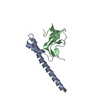
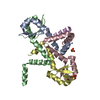
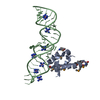
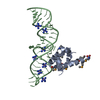
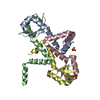
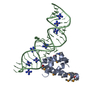
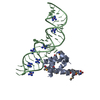
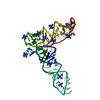
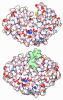
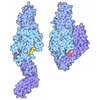
A: Microtubule-associated protein RP/EB family member 1 B: Microtubule-associated protein RP/EB family member 3 P: Dynactin subunit 1 Q: Dynactin subunit 1
In the structure databanks used in Yorodumi, some data are registered as the other names, "COVID-19 virus" and "2019-nCoV". Here are the details of the virus and the list of structure data.
Jan 31, 2019. EMDB accession codes are about to change! (news from PDBe EMDB page)
EMDB accession codes are about to change! (news from PDBe EMDB page)
The allocation of 4 digits for EMDB accession codes will soon come to an end. Whilst these codes will remain in use, new EMDB accession codes will include an additional digit and will expand incrementally as the available range of codes is exhausted. The current 4-digit format prefixed with “EMD-” (i.e. EMD-XXXX) will advance to a 5-digit format (i.e. EMD-XXXXX), and so on. It is currently estimated that the 4-digit codes will be depleted around Spring 2019, at which point the 5-digit format will come into force.
The EM Navigator/Yorodumi systems omit the EMD- prefix.
Related info.:Q: What is EMD? / ID/Accession-code notation in Yorodumi/EM Navigator
Yorodumi is a browser for structure data from EMDB, PDB, SASBDB, etc.
This page is also the successor to EM Navigator detail page, and also detail information page/front-end page for Omokage search.
The word "yorodu" (or yorozu) is an old Japanese word meaning "ten thousand". "mi" (miru) is to see.
Related info.:EMDB / PDB / SASBDB / Comparison of 3 databanks / Yorodumi Search / Aug 31, 2016. New EM Navigator & Yorodumi / Yorodumi Papers / Jmol/JSmol / Function and homology information / Changes in new EM Navigator and Yorodumi
 Movie
Movie Controller

 Yorodumi
 Open data
 Basic information
 Components
 Keywords
 Function and homology information
 Homo sapiens (human)
 X-RAY DIFFRACTION /
  Authors
 Citation
 Structure visualization
 Downloads & links
 Other downloads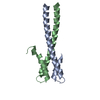

 PDBj
PDBj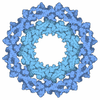
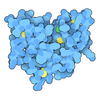
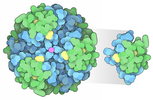
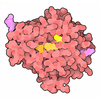
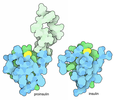
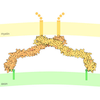
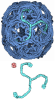
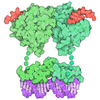
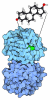

 Assembly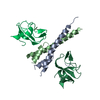

 Escherichia coli (E. coli) / Strain (production host): BL21 (DE3) / References: UniProt: Q15691
 Mass: 18.015 Da / Num. of mol.: 36 / Source method: isolated from a natural source / Formula: H2O
 Sample preparation
 / Beamline: X06SA / Wavelength: 1 Å
 Processing