phospholipid transfer activity / protein retention in Golgi apparatus / intermembrane lipid transfer / protein targeting to vacuole / late endosome to vacuole transport / CaM pathway / Cam-PDE 1 activation / Sodium/Calcium exchangers / Calmodulin induced events / Reduction of cytosolic Ca++ levels ...phospholipid transfer activity / protein retention in Golgi apparatus / intermembrane lipid transfer / protein targeting to vacuole / late endosome to vacuole transport / CaM pathway / Cam-PDE 1 activation / Sodium/Calcium exchangers / Calmodulin induced events / Reduction of cytosolic Ca++ levels / Activation of Ca-permeable Kainate Receptor / CREB1 phosphorylation through the activation of CaMKII/CaMKK/CaMKIV cascasde / Loss of phosphorylation of MECP2 at T308 / CREB1 phosphorylation through the activation of Adenylate Cyclase / PKA activation / CaMK IV-mediated phosphorylation of CREB / CASP4 inflammasome assembly / Glycogen breakdown (glycogenolysis) / negative regulation of ryanodine-sensitive calcium-release channel activity / Activation of RAC1 downstream of NMDARs / organelle localization by membrane tethering / CLEC7A (Dectin-1) induces NFAT activation / : / negative regulation of high voltage-gated calcium channel activity / autophagosome membrane docking / negative regulation of calcium ion export across plasma membrane / regulation of cardiac muscle cell action potential / presynaptic endocytosis / Synthesis of IP3 and IP4 in the cytosol / Phase 0 - rapid depolarisation / Negative regulation of NMDA receptor-mediated neuronal transmission / Unblocking of NMDA receptors, glutamate binding and activation / calcineurin-mediated signaling / RHO GTPases activate PAKs / regulation of cell communication by electrical coupling involved in cardiac conduction / Uptake and function of anthrax toxins / Ion transport by P-type ATPases / protein phosphatase activator activity / Long-term potentiation / Calcineurin activates NFAT / regulation of ryanodine-sensitive calcium-release channel activity / DARPP-32 events / Regulation of MECP2 expression and activity / Smooth Muscle Contraction / detection of calcium ion / regulation of cardiac muscle contraction / cellular response to interferon-beta / RHO GTPases activate IQGAPs / presynaptic cytosol / calcium channel inhibitor activity / catalytic complex / eNOS activation / regulation of release of sequestered calcium ion into cytosol by sarcoplasmic reticulum / Tetrahydrobiopterin (BH4) synthesis, recycling, salvage and regulation / Activation of AMPK downstream of NMDARs / Ion homeostasis / regulation of heart rate / Protein methylation / regulation of cardiac muscle contraction by regulation of the release of sequestered calcium ion / titin binding / calcium channel complex / voltage-gated potassium channel complex / FCERI mediated Ca+2 mobilization / substantia nigra development / FCGR3A-mediated IL10 synthesis / protein serine/threonine kinase activator activity / sperm midpiece / Antigen activates B Cell Receptor (BCR) leading to generation of second messengers / positive regulation of receptor signaling pathway via JAK-STAT / calyx of Held / Ras activation upon Ca2+ influx through NMDA receptor / adenylate cyclase activator activity / regulation of cytokinesis / VEGFR2 mediated cell proliferation / mitochondrion organization / spindle microtubule / VEGFR2 mediated vascular permeability / calcium channel regulator activity / sarcomere / Translocation of SLC2A4 (GLUT4) to the plasma membrane / myelin sheath / Transcriptional activation of mitochondrial biogenesis / long-term synaptic potentiation / cellular response to type II interferon / Enterobacterial factors antagonize host defense / RAF activation / response to calcium ion / phospholipid binding / Stimuli-sensing channels / calcium-dependent protein binding / Signaling by RAF1 mutants / Signaling by moderate kinase activity BRAF mutants / Paradoxical activation of RAF signaling by kinase inactive BRAF / Signaling downstream of RAS mutants / RAS processing / Signaling by BRAF and RAF1 fusions / Platelet degranulation / Inactivation, recovery and regulation of the phototransduction cascade / RAF/MAP kinase cascade / spindle pole Similarity search - Function
Vacuolar protein sorting-associated protein 13, fungi / Vacuolar protein sorting-associated protein 13, VPS13 adaptor binding domain / Vacuolar protein sorting-associated protein 13 / Vacuolar protein sorting-associated protein 13-like, N-terminal domain / : / : / VPS13-like family middle region / Vacuolar-sorting associated protein 13, adaptor binding domain / Intermembrane lipid transfer protein VPS13, C-terminal / VPS13-like family N-terminal region ...Vacuolar protein sorting-associated protein 13, fungi / Vacuolar protein sorting-associated protein 13, VPS13 adaptor binding domain / Vacuolar protein sorting-associated protein 13 / Vacuolar protein sorting-associated protein 13-like, N-terminal domain / : / : / VPS13-like family middle region / Vacuolar-sorting associated protein 13, adaptor binding domain / Intermembrane lipid transfer protein VPS13, C-terminal / VPS13-like family N-terminal region / Cytosolic fatty-acid binding proteins signature. / : / EF-hand domain pair / EF-hand, calcium binding motif / EF-Hand 1, calcium-binding site / EF-hand calcium-binding domain. / EF-hand calcium-binding domain profile. / EF-hand domain / EF-hand domain pair Similarity search - Domain/homology
National Institutes of Health/National Institute of General Medical Sciences (NIH/NIGMS)
GM131715
United States
Citation
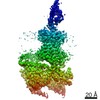
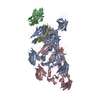
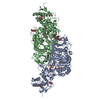
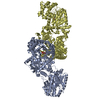
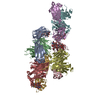
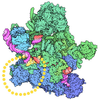
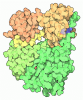
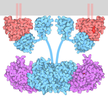
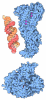
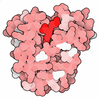
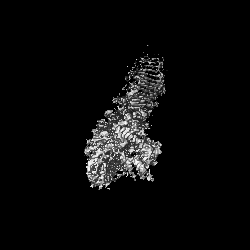
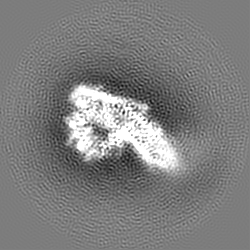
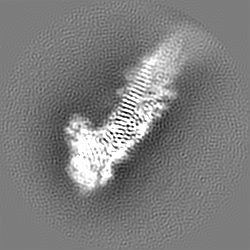
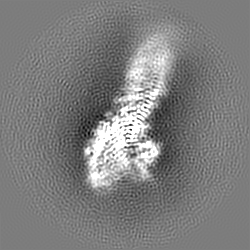
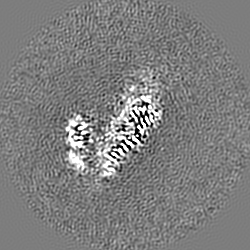
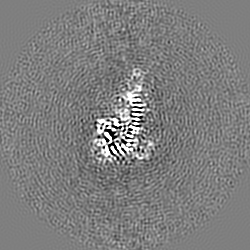
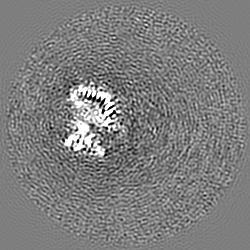
Journal: J Cell Biol / Year: 2020 Title: Cryo-EM reconstruction of a VPS13 fragment reveals a long groove to channel lipids between membranes. Authors: PeiQi Li / Joshua Aaron Lees / C Patrick Lusk / Karin M Reinisch / Abstract: A single particle cryo-EM reconstruction of an ∼160-kD N-terminal fragment of the lipid transport protein VPS13 reveals an ∼160-Å long channel lined with hydrophobic residues suitable for ...A single particle cryo-EM reconstruction of an ∼160-kD N-terminal fragment of the lipid transport protein VPS13 reveals an ∼160-Å long channel lined with hydrophobic residues suitable for solubilizing multiple lipid fatty acid moieties. The structure suggests that VPS13 and related proteins, like the autophagy protein ATG2, can act as bridges between organelle membranes to allow bulk lipid flow between organelles.
History
Deposition
Dec 12, 2019
-
Header (metadata) release
Mar 11, 2020
-
Map release
Mar 11, 2020
-
Update
Jun 10, 2026
-
Current status
Jun 10, 2026
Processing site: RCSB / Status: Released
-
Structure visualization
Movie
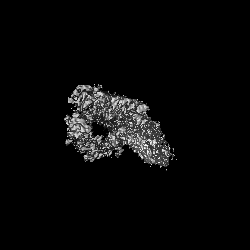
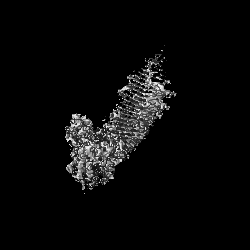
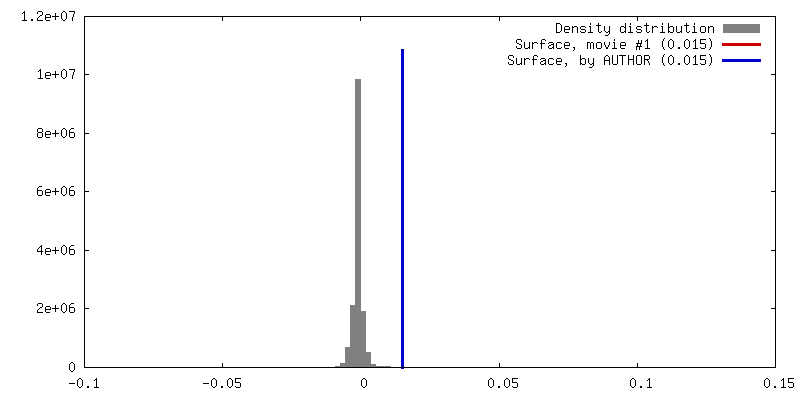
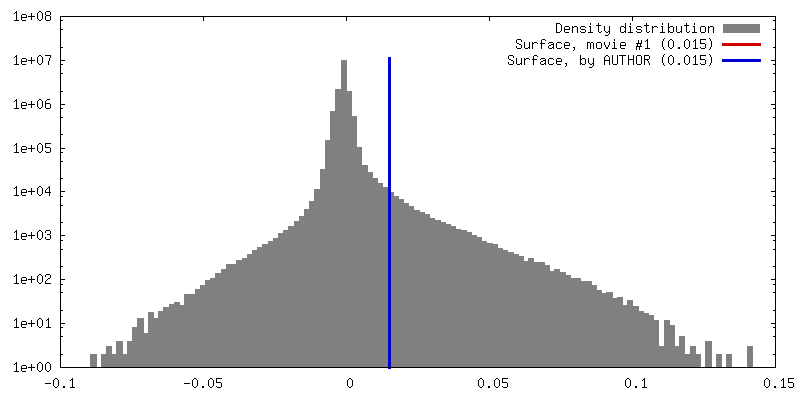
Surface view with section colored by density value
In the structure databanks used in Yorodumi, some data are registered as the other names, "COVID-19 virus" and "2019-nCoV". Here are the details of the virus and the list of structure data.
Jan 31, 2019. EMDB accession codes are about to change! (news from PDBe EMDB page)
EMDB accession codes are about to change! (news from PDBe EMDB page)
The allocation of 4 digits for EMDB accession codes will soon come to an end. Whilst these codes will remain in use, new EMDB accession codes will include an additional digit and will expand incrementally as the available range of codes is exhausted. The current 4-digit format prefixed with “EMD-” (i.e. EMD-XXXX) will advance to a 5-digit format (i.e. EMD-XXXXX), and so on. It is currently estimated that the 4-digit codes will be depleted around Spring 2019, at which point the 5-digit format will come into force.
The EM Navigator/Yorodumi systems omit the EMD- prefix.
Related info.:Q: What is EMD? / ID/Accession-code notation in Yorodumi/EM Navigator
Yorodumi is a browser for structure data from EMDB, PDB, SASBDB, etc.
This page is also the successor to EM Navigator detail page, and also detail information page/front-end page for Omokage search.
The word "yorodu" (or yorozu) is an old Japanese word meaning "ten thousand". "mi" (miru) is to see.
Related info.:EMDB / PDB / SASBDB / Comparison of 3 databanks / Yorodumi Search / Aug 31, 2016. New EM Navigator & Yorodumi / Yorodumi Papers / Jmol/JSmol / Function and homology information / Changes in new EM Navigator and Yorodumi
 Movie
Movie Controller

 Yorodumi
 Open data
 Basic information
 Map data
 Sample
 Keywords
 Function and homology information
 Chaetomium thermophilum (fungus) /
  Homo sapiens (human)
 Authors
 United States, 1 items
  Citation
 Structure visualization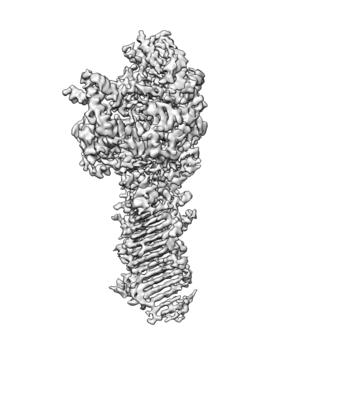
 Downloads & links
 emd_21113.png
 https://data.pdbj.org/pub/emdb/structures/EMD-21113

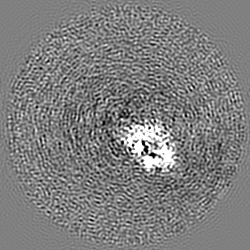
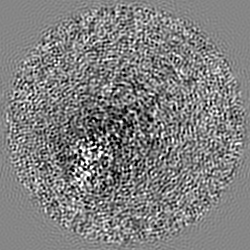
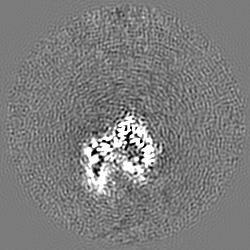
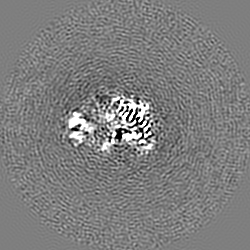
 Z (Sec.)
 Y (Row.)
 X (Col.)




 Sample components
 Processing
 Electron microscopy
 FIELD EMISSION GUN