Movie
Movie Controller

[English] 日本語
 Yorodumi
- EMDB-17397: Homomeric GluA1 in tandem with TARP gamma-3, desensitized conform... -
+ Open data

- Basic information
| Entry |  | ||||||||||||
|---|---|---|---|---|---|---|---|---|---|---|---|---|---|
| Title | Homomeric GluA1 in tandem with TARP gamma-3, desensitized conformation 4 | ||||||||||||
 Map data Map data | |||||||||||||
 Sample Sample |
| ||||||||||||
 Keywords Keywords | AMPAR / ion channels / neurotransmission / MEMBRANE PROTEIN | ||||||||||||
| Function / homology |  Function and homology information Function and homology informationCargo concentration in the ER / cellular response to ammonium ion / axonal spine / COPII-mediated vesicle transport / positive regulation of locomotion involved in locomotory behavior / positive regulation of membrane potential / response to sucrose / regulation of monoatomic ion transmembrane transport / cellular response to L-glutamate / myosin V binding ...Cargo concentration in the ER / cellular response to ammonium ion / axonal spine / COPII-mediated vesicle transport / positive regulation of locomotion involved in locomotory behavior / positive regulation of membrane potential / response to sucrose / regulation of monoatomic ion transmembrane transport / cellular response to L-glutamate / myosin V binding / LGI-ADAM interactions / neuron spine / positive regulation of AMPA receptor activity / Trafficking of AMPA receptors / proximal dendrite / response to arsenic-containing substance / postsynaptic neurotransmitter receptor diffusion trapping / cellular response to dsRNA / regulation of AMPA receptor activity / channel regulator activity / long-term synaptic depression / ligand-gated calcium channel activity / dendritic spine membrane / beta-2 adrenergic receptor binding / Synaptic adhesion-like molecules / cellular response to peptide hormone stimulus / spinal cord development / cellular response to amine stimulus / response to psychosocial stress / peptide hormone receptor binding / response to morphine / neurotransmitter receptor localization to postsynaptic specialization membrane / Activation of AMPA receptors / behavioral response to pain / perisynaptic space / neuronal cell body membrane / response to lithium ion / Trafficking of GluR2-containing AMPA receptors / protein kinase A binding / AMPA glutamate receptor activity / regulation of receptor recycling / neuronal action potential / response to electrical stimulus / adenylate cyclase binding / transmission of nerve impulse / AMPA glutamate receptor complex / ionotropic glutamate receptor complex / cellular response to glycine / immunoglobulin binding / asymmetric synapse / Unblocking of NMDA receptors, glutamate binding and activation / G-protein alpha-subunit binding / protein targeting / glutamate receptor binding / positive regulation of synaptic transmission / conditioned place preference / long-term memory / response to fungicide / postsynaptic density, intracellular component / voltage-gated calcium channel activity / glutamate-gated receptor activity / positive regulation of synaptic transmission, glutamatergic / cellular response to brain-derived neurotrophic factor stimulus / synapse assembly / glutamate-gated calcium ion channel activity / somatodendritic compartment / presynaptic active zone membrane / ionotropic glutamate receptor binding / ionotropic glutamate receptor signaling pathway / excitatory synapse / ligand-gated monoatomic ion channel activity involved in regulation of presynaptic membrane potential / dendrite membrane / cellular response to amino acid stimulus / positive regulation of excitatory postsynaptic potential / response to cocaine / dendritic shaft / synaptic membrane / neuromuscular junction / synaptic transmission, glutamatergic / PDZ domain binding / long-term synaptic potentiation / receptor internalization / transmitter-gated monoatomic ion channel activity involved in regulation of postsynaptic membrane potential / cerebral cortex development / regulation of synaptic plasticity / response to nutrient levels / response to toxic substance / recycling endosome / cellular response to growth factor stimulus / postsynaptic density membrane / modulation of chemical synaptic transmission / Schaffer collateral - CA1 synapse / response to peptide hormone / small GTPase binding / intracellular protein localization / recycling endosome membrane / cell-cell junction / response to estradiol / synaptic vesicle membrane / synaptic vesicle Similarity search - Function | ||||||||||||
| Biological species |   Rattus norvegicus (Norway rat) Rattus norvegicus (Norway rat) | ||||||||||||
| Method | single particle reconstruction / cryo EM / Resolution: 3.53 Å | ||||||||||||
 Authors Authors | Zhang D / Krieger JM / Yamashita K / Greger I | ||||||||||||
| Funding support |  United Kingdom, European Union, 3 items United Kingdom, European Union, 3 items
| ||||||||||||
 Citation Citation | Journal: Nature / Year: 2023 Title: Structural mobility tunes signalling of the GluA1 AMPA glutamate receptor. Authors: Danyang Zhang / Josip Ivica / James M Krieger / Hinze Ho / Keitaro Yamashita / Imogen Stockwell / Rozbeh Baradaran / Ondrej Cais / Ingo H Greger /  Abstract: AMPA glutamate receptors (AMPARs), the primary mediators of excitatory neurotransmission in the brain, are either GluA2 subunit-containing and thus Ca-impermeable, or GluA2-lacking and Ca-permeable. ...AMPA glutamate receptors (AMPARs), the primary mediators of excitatory neurotransmission in the brain, are either GluA2 subunit-containing and thus Ca-impermeable, or GluA2-lacking and Ca-permeable. Despite their prominent expression throughout interneurons and glia, their role in long-term potentiation and their involvement in a range of neuropathologies, structural information for GluA2-lacking receptors is currently absent. Here we determine and characterize cryo-electron microscopy structures of the GluA1 homotetramer, fully occupied with TARPγ3 auxiliary subunits (GluA1/γ3). The gating core of both resting and open-state GluA1/γ3 closely resembles GluA2-containing receptors. However, the sequence-diverse N-terminal domains (NTDs) give rise to a highly mobile assembly, enabling domain swapping and subunit re-alignments in the ligand-binding domain tier that are pronounced in desensitized states. These transitions underlie the unique kinetic properties of GluA1. A GluA2 mutant (F231A) increasing NTD dynamics phenocopies this behaviour, and exhibits reduced synaptic responses, reflecting the anchoring function of the AMPAR NTD at the synapse. Together, this work underscores how the subunit-diverse NTDs determine subunit arrangement, gating properties and ultimately synaptic signalling efficiency among AMPAR subtypes. | ||||||||||||
| History |
|
- Structure visualization
| Supplemental images |
|---|
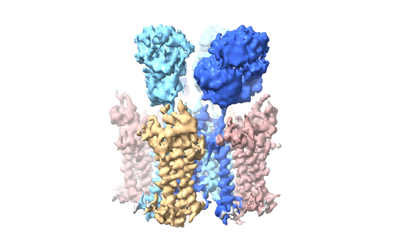
- Downloads & links
-EMDB archive
| Map data | emd_17397.map.gz | 32.4 MB | EMDB map data format | |
|---|---|---|---|---|
| Header (meta data) | emd-17397-v30.xmlemd-17397.xml | 17.3 KB 17.3 KB | Display Display | EMDB header |
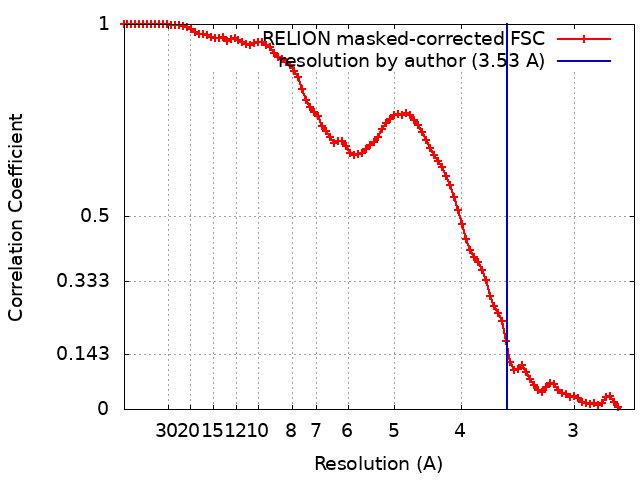
| FSC (resolution estimation) | emd_17397_fsc.xml | 9.1 KB | Display | FSC data file |
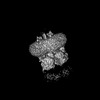
| Images |  emd_17397.png emd_17397.png | 64.3 KB | ||
| Filedesc metadata | emd-17397.cif.gz | 6.4 KB | ||
| Others | emd_17397_half_map_1.map.gzemd_17397_half_map_2.map.gz | 59.4 MB 59.5 MB | ||
| Archive directory |  https://data.pdbj.org/pub/emdb/structures/EMD-17397ftp://data.pdbj.org/pub/emdb/structures/EMD-17397 https://data.pdbj.org/pub/emdb/structures/EMD-17397ftp://data.pdbj.org/pub/emdb/structures/EMD-17397 | HTTPS FTP |
-Related structure data
| Related structure data | 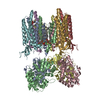 8p3wMC 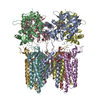 8c1pC 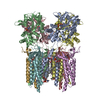 8c1qC 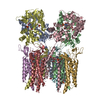 8c1rC  8c1sC 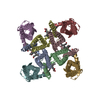 8c2hC 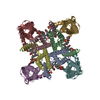 8c2iC  8p3qC  8p3sC 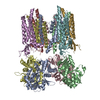 8p3tC 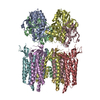 8p3uC 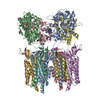 8p3vC  8p3xC  8p3yC  8p3zC  8pivC M: atomic model generated by this map C: citing same article ( |
|---|---|
| Similar structure data |






-Links
| EMDB pages | EMDB (EBI/PDBe) / EMDataResource |
|---|---|
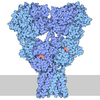
| Related items in Molecule of the Month |
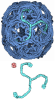
-Map
| File | Download / File: emd_17397.map.gz / Format: CCP4 / Size: 64 MB / Type: IMAGE STORED AS FLOATING POINT NUMBER (4 BYTES) | ||||||||||||||||||||||||||||||||||||
|---|---|---|---|---|---|---|---|---|---|---|---|---|---|---|---|---|---|---|---|---|---|---|---|---|---|---|---|---|---|---|---|---|---|---|---|---|---|
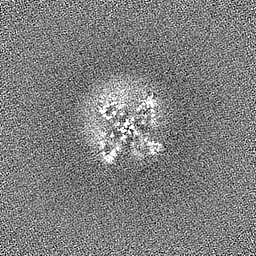
| Projections & slices | Image control
Images are generated by Spider. | ||||||||||||||||||||||||||||||||||||
| Voxel size | X=Y=Z: 1.325 Å | ||||||||||||||||||||||||||||||||||||
| Density |
| ||||||||||||||||||||||||||||||||||||
| Symmetry | Space group: 1 | ||||||||||||||||||||||||||||||||||||
| Details | EMDB XML:
|
 Z (Sec.)
 Y (Row.)
 X (Col.)


-Supplemental data
-Half map: #1
| File | emd_17397_half_map_1.map | ||||||||||||
|---|---|---|---|---|---|---|---|---|---|---|---|---|---|
| Projections & Slices |
| ||||||||||||
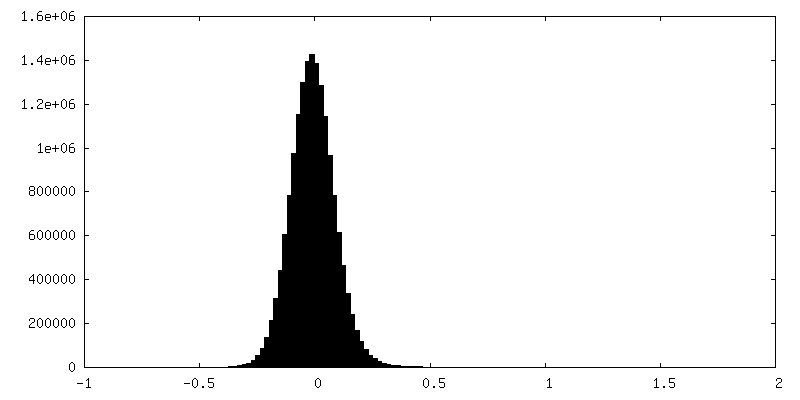
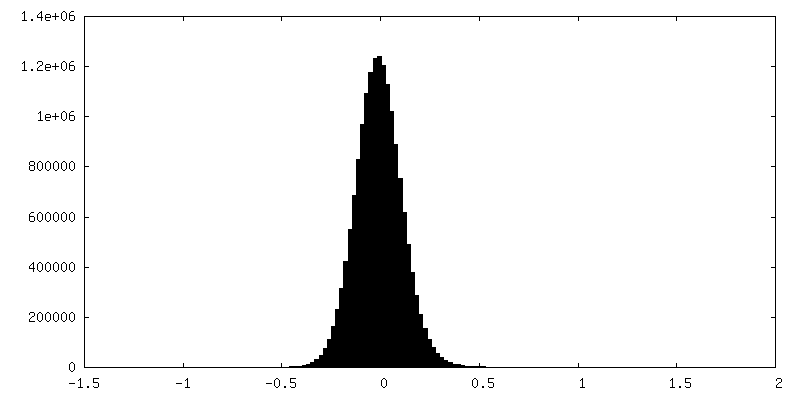
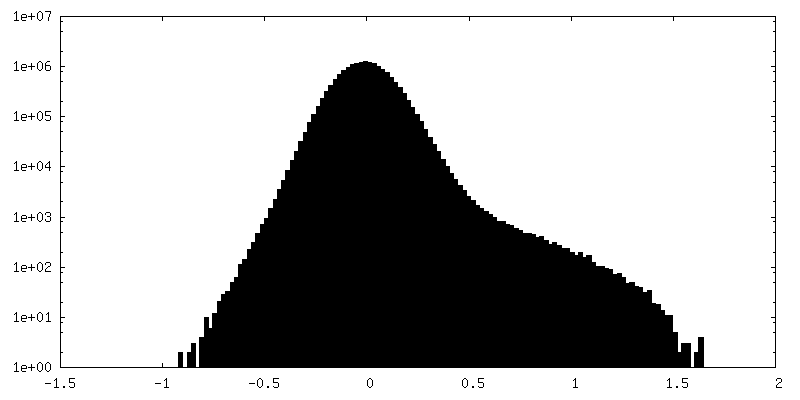
| Density Histograms |
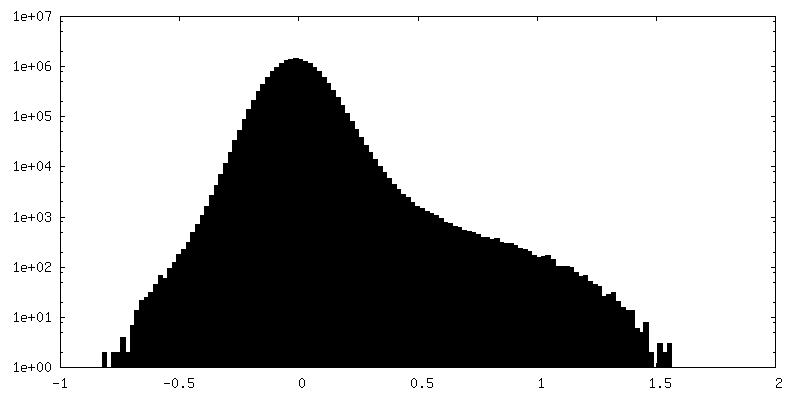
-Half map: #2
| File | emd_17397_half_map_2.map | ||||||||||||
|---|---|---|---|---|---|---|---|---|---|---|---|---|---|
| Projections & Slices |
| ||||||||||||
| Density Histograms |
- Sample components
-Entire : Homomeric GluA1 AMPA receptor in tandem with TARP gamma 3, plus 1...
| Entire | Name: Homomeric GluA1 AMPA receptor in tandem with TARP gamma 3, plus 1mM quisqualate |
|---|---|
| Components |
|
-Supramolecule #1: Homomeric GluA1 AMPA receptor in tandem with TARP gamma 3, plus 1...
| Supramolecule | Name: Homomeric GluA1 AMPA receptor in tandem with TARP gamma 3, plus 1mM quisqualate type: complex / ID: 1 / Parent: 0 / Macromolecule list: #1-#2 |
|---|---|
| Source (natural) | Organism: Rattus norvegicus (Norway rat) |
-Macromolecule #1: Glutamate receptor 1 flip isoform
| Macromolecule | Name: Glutamate receptor 1 flip isoform / type: protein_or_peptide / ID: 1 / Number of copies: 4 / Enantiomer: LEVO |
|---|---|
| Source (natural) | Organism: Rattus norvegicus (Norway rat) |
| Molecular weight | Theoretical: 102.66193 KDa |
| Recombinant expression | Organism:  Homo sapiens (human) Homo sapiens (human) |
| Sequence | String: MPYIFAFFCT GFLGAVVGAD YKDDDDKNFP NNIQIGGLFP NQQSQEHAAF RFALSQLTEP PKLLPQIDIV NISDSFEMTY RFCSQFSKG VYAIFGFYER RTVNMLTSFC GALHVCFITP SFPVDTSNQF VLQLRPELQE ALISIIDHYK WQTFVYIYDA D RGLSVLQR ...String: MPYIFAFFCT GFLGAVVGAD YKDDDDKNFP NNIQIGGLFP NQQSQEHAAF RFALSQLTEP PKLLPQIDIV NISDSFEMTY RFCSQFSKG VYAIFGFYER RTVNMLTSFC GALHVCFITP SFPVDTSNQF VLQLRPELQE ALISIIDHYK WQTFVYIYDA D RGLSVLQR VLDTAAEKNW QVTAVNILTT TEEGYRMLFQ DLEKKKERLV VVDCESERLN AILGQIVKLE KNGIGYHYIL AN LGFMDID LNKFKESGAN VTGFQLVNYT DTIPARIMQQ WRTSDSRDHT RVDWKRPKYT SALTYDGVKV MAEAFQSLRR QRI DISRRG NAGDCLANPA VPWGQGIDIQ RALQQVRFEG LTGNVQFNEK GRRTNYTLHV IEMKHDGIRK IGYWNEDDKF VPAA TDAQA GGDNSSVQNR TYIVTTILED PYVMLKKNAN QFEGNDRYEG YCVELAAEIA KHVGYSYRLE IVSDGKYGAR DPDTK AWNG MVGELVYGRA DVAVAPLTIT LVREEVIDFS KPFMSLGISI MIKKPQKSKP GVFSFLDPLA YEIWMCIVFA YIGVSV VLF LVSRFSPYEW HSEEFEEGRD QTTSDQSNEF GIFNSLWFSL GAFMQQGCDI SPRSLSGRIV GGVWWFFTLI IISSYTA NL AAFLTVERMV SPIESAEDLA KQTEIAYGTL EAGSTKEFFR RSKIAVFEKM WTYMKSAEPS VFVRTTEEGM IRVRKSKG K YAYLLESTMN EYIEQRKPCD TMKVGGNLDS KGYGIATPKG SALRGPVNLA VLKLSEQGVL DKLKSKWWYD KGECGSKDS GSKDKTSALS LSNVAGVFYI LIGGLGLAML VALIEFCYKS RSESKRMKGF CLIPQQSINE AIRTSTLPRN SGAGASGGGG SGENGRVVS QDFPKSMQSI PCMSHSSGMP LGATGL UniProtKB: Glutamate receptor 1 |
-Macromolecule #2: Voltage-dependent calcium channel gamma-3 subunit
| Macromolecule | Name: Voltage-dependent calcium channel gamma-3 subunit / type: protein_or_peptide / ID: 2 / Number of copies: 4 / Enantiomer: LEVO |
|---|---|
| Source (natural) | Organism: Rattus norvegicus (Norway rat) |
| Molecular weight | Theoretical: 35.435332 KDa |
| Recombinant expression | Organism: Homo sapiens (human) |
| Sequence | String: RMCDRGIQML ITTVGAFAAF SLMTIAVGTD YWLYSRGVCR TKSTSDNETS RKNEEVMTHS GLWRTCCLEG AFRGVCKKID HFPEDADYE QDTAEYLLRA VRASSVFPIL SVTLLFFGGL CVAASEFHRS RHSVILSAGI FFVSAGLSNI IGIIVYISAN A GDPGQRDS ...String: RMCDRGIQML ITTVGAFAAF SLMTIAVGTD YWLYSRGVCR TKSTSDNETS RKNEEVMTHS GLWRTCCLEG AFRGVCKKID HFPEDADYE QDTAEYLLRA VRASSVFPIL SVTLLFFGGL CVAASEFHRS RHSVILSAGI FFVSAGLSNI IGIIVYISAN A GDPGQRDS KKSYSYGWSF YFGAFSFIIA EIVGVVAVHI YIEKHQQLRA RSHSELLKKS TFARLPPYRY RFRRRSSSRS TE PRSRDLS PISKGFHTIP STDISMFTLS RDPSKLTMGT LLNSDRDHAF LQFHNSTPKE FKESLHNNPA NRRTTPV UniProtKB: Voltage-dependent calcium channel gamma-3 subunit |
-Macromolecule #3: PALMITIC ACID
| Macromolecule | Name: PALMITIC ACID / type: ligand / ID: 3 / Number of copies: 4 / Formula: PLM |
|---|---|
| Molecular weight | Theoretical: 256.424 Da |
| Chemical component information | 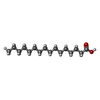 ChemComp-PLM: |
-Macromolecule #4: (2R)-2,3-dihydroxypropyl (9Z)-octadec-9-enoate
| Macromolecule | Name: (2R)-2,3-dihydroxypropyl (9Z)-octadec-9-enoate / type: ligand / ID: 4 / Number of copies: 4 / Formula: OLC |
|---|---|
| Molecular weight | Theoretical: 356.54 Da |
| Chemical component information | 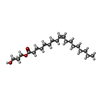 ChemComp-OLC: |
-Macromolecule #5: (2S)-3-(hexadecanoyloxy)-2-[(9Z)-octadec-9-enoyloxy]propyl 2-(tri...
| Macromolecule | Name: (2S)-3-(hexadecanoyloxy)-2-[(9Z)-octadec-9-enoyloxy]propyl 2-(trimethylammonio)ethyl phosphate type: ligand / ID: 5 / Number of copies: 6 / Formula: POV |
|---|---|
| Molecular weight | Theoretical: 760.076 Da |
| Chemical component information | 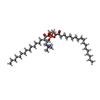 ChemComp-POV: |
-Macromolecule #6: water
| Macromolecule | Name: water / type: ligand / ID: 6 / Number of copies: 33 / Formula: HOH |
|---|---|
| Molecular weight | Theoretical: 18.015 Da |
| Chemical component information |  ChemComp-HOH: |
-Experimental details
-Structure determination
| Method | cryo EM |
|---|---|
 Processing Processing | single particle reconstruction |
| Aggregation state | particle |
-Sample preparation
| Buffer | pH: 8 |
|---|---|
| Vitrification | Cryogen name: ETHANE |
- Electron microscopy
| Microscope | TFS KRIOS |
|---|---|
| Image recording | Film or detector model: GATAN K3 BIOQUANTUM (6k x 4k) / Average electron dose: 50.0 e/Å2 |
| Electron beam | Acceleration voltage: 300 kV / Electron source:  FIELD EMISSION GUN FIELD EMISSION GUN |
| Electron optics | Illumination mode: FLOOD BEAM / Imaging mode: BRIGHT FIELD / Nominal defocus max: 2.4 µm / Nominal defocus min: 1.2 µm |
| Experimental equipment |  Model: Titan Krios / Image courtesy: FEI Company |