Movie
Movie Controller

[English] 日本語
 Yorodumi
- PDB-9xzl: Cryo-EM structure of F-box helicase 1 (FBH1) bound to an SCF ubiq... -
+ Open data

- Basic information
| Entry | Database: PDB / ID: 9xzl | ||||||||||||||||||||||||||||||
|---|---|---|---|---|---|---|---|---|---|---|---|---|---|---|---|---|---|---|---|---|---|---|---|---|---|---|---|---|---|---|---|
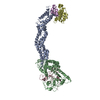
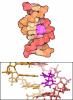
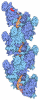
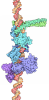
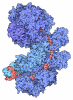
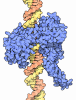
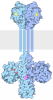
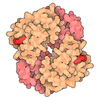
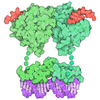
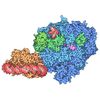
| Title | Cryo-EM structure of F-box helicase 1 (FBH1) bound to an SCF ubiquitin ligase complex and a 3-way DNA fork (body structure) | ||||||||||||||||||||||||||||||
 Components Components |
| ||||||||||||||||||||||||||||||
 Keywords Keywords | ISOMERASE/DNA / Helicase / Translocase / Fork remodeler / Fork reversal / Replication fork / DNA binding / ISOMERASE-DNA complex | ||||||||||||||||||||||||||||||
| Function / homology |  Function and homology information Function and homology informationresponse to intra-S DNA damage checkpoint signaling / regulation of xenophagy / Parkin-FBXW7-Cul1 ubiquitin ligase complex / F-box domain binding / synaptic assembly at neuromuscular junction / regulation of cell cycle process / neural crest cell differentiation / DNA translocase activity / regulation of BMP signaling pathway / PcG protein complex ...response to intra-S DNA damage checkpoint signaling / regulation of xenophagy / Parkin-FBXW7-Cul1 ubiquitin ligase complex / F-box domain binding / synaptic assembly at neuromuscular junction / regulation of cell cycle process / neural crest cell differentiation / DNA translocase activity / regulation of BMP signaling pathway / PcG protein complex / regulation of mitophagy / regulation of centrosome duplication / cullin-RING ubiquitin ligase complex / maintenance of protein location in nucleus / Cul7-RING ubiquitin ligase complex / Loss of Function of FBXW7 in Cancer and NOTCH1 Signaling / regulation of TOR signaling / DNA catabolic process / ubiquitin ligase activator activity / regulation of DNA damage checkpoint / positive regulation of intrinsic apoptotic signaling pathway in response to DNA damage / SCF ubiquitin ligase complex / SCF-dependent proteasomal ubiquitin-dependent protein catabolic process / Prolactin receptor signaling / limb development / ubiquitin ligase complex scaffold activity / DNA 3'-5' helicase / centrosome duplication / replication fork processing / cilium assembly / protein monoubiquitination / 3'-5' DNA helicase activity / cullin family protein binding / negative regulation of double-strand break repair via homologous recombination / GSK3B-mediated proteasomal degradation of PD-L1(CD274) / ubiquitin-like ligase-substrate adaptor activity / Nuclear events stimulated by ALK signaling in cancer / protein K48-linked ubiquitination / animal organ morphogenesis / intrinsic apoptotic signaling pathway / regulation of mitotic cell cycle / DNA helicase activity / molecular function activator activity / Regulation of BACH1 activity / MAP3K8 (TPL2)-dependent MAPK1/3 activation / G1/S transition of mitotic cell cycle / SCF-beta-TrCP mediated degradation of Emi1 / NIK-->noncanonical NF-kB signaling / Vpu mediated degradation of CD4 / Dectin-1 mediated noncanonical NF-kB signaling / cell population proliferation / Degradation of CRY and PER proteins / Activation of NF-kappaB in B cells / Iron uptake and transport / Degradation of GLI1 by the proteasome / double-strand break repair via homologous recombination / GSK3B and BTRC:CUL1-mediated-degradation of NFE2L2 / Negative regulation of NOTCH4 signaling / positive regulation of protein phosphorylation / regulation of circadian rhythm / beta-catenin binding / FBXL7 down-regulates AURKA during mitotic entry and in early mitosis / Degradation of GLI2 by the proteasome / GLI3 is processed to GLI3R by the proteasome / Ubiquitin-Mediated Degradation of Phosphorylated Cdc25A / NOTCH1 Intracellular Domain Regulates Transcription / Degradation of beta-catenin by the destruction complex / Constitutive Signaling by NOTCH1 PEST Domain Mutants / Constitutive Signaling by NOTCH1 HD+PEST Domain Mutants / CLEC7A (Dectin-1) signaling / SCF(Skp2)-mediated degradation of p27/p21 / FCERI mediated NF-kB activation / protein polyubiquitination / Interleukin-1 signaling / Orc1 removal from chromatin / Cyclin D associated events in G1 / Regulation of RUNX2 expression and activity / Regulation of PLK1 Activity at G2/M Transition / Downstream TCR signaling / Antigen processing: Ubiquitination & Proteasome degradation / regulation of inflammatory response / single-stranded DNA binding / cellular response to oxidative stress / Neddylation / heterochromatin formation / double-stranded DNA binding / regulation of apoptotic process / intracellular iron ion homeostasis / proteasome-mediated ubiquitin-dependent protein catabolic process / regulation of cell cycle / positive regulation of canonical NF-kappaB signal transduction / protein-macromolecule adaptor activity / protein ubiquitination / chromatin remodeling / protein domain specific binding / negative regulation of DNA-templated transcription / DNA repair / centrosome / ubiquitin protein ligase binding / DNA damage response Similarity search - Function | ||||||||||||||||||||||||||||||
| Biological species |  Homo sapiens (human) Homo sapiens (human)synthetic construct (others) | ||||||||||||||||||||||||||||||
| Method | ELECTRON MICROSCOPY / single particle reconstruction / cryo EM / Resolution: 3 Å | ||||||||||||||||||||||||||||||
 Authors Authors | Mullins, E.A. / Schiltz, C.J. / Eichman, B.F. | ||||||||||||||||||||||||||||||
| Funding support |  United States, 2items United States, 2items
| ||||||||||||||||||||||||||||||
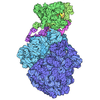
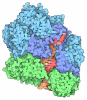
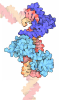
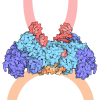
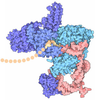
 Citation Citation | Journal: Nat Commun / Year: 2026 Title: Structural basis for fork reversal and RAD51 regulation by the SCF ubiquitin ligase complex of F-box helicase 1. Authors: Briana H Greer / Javier Mendia-Garcia / Elwood A Mullins / Emma M Peacock / Sander K Haigh / Carl J Schiltz / Clara Aicart-Ramos / Miaw-Sheue Tsai / David Cortez / Fernando Moreno-Herrero / Brandt F Eichman /  Abstract: Replication fork reversal helps maintain genomic stability during replication stress. F-box helicase 1 (FBH1) catalyzes fork reversal and is an SCF (SKP-CUL1-F-box) E3 ubiquitin ligase that limits ...Replication fork reversal helps maintain genomic stability during replication stress. F-box helicase 1 (FBH1) catalyzes fork reversal and is an SCF (SKP-CUL1-F-box) E3 ubiquitin ligase that limits RAD51 association with chromatin. Here, we show that preferential binding of SCF to the lagging strand template at DNA fork structures stimulates helicase activity and is required for fork reversal. A cryo-EM structure of SCF bound to DNA representing a stalled fork reveals an intimate interaction between FBH1 and the fork junction. Disruption of this interface severely curtails fork reversal in vitro and replication progression in cells, providing a model for how ssDNA translocation by FBH1 facilitates annealing of parental DNA by a fundamentally different mechanism than the fork remodelers SMARCAL, HLTF, and ZRANB3. The structure provides a model for SCF disassembly of RAD51 filaments through translocation and ubiquitination, and implies that RAD51 is associated with the lagging strand at stalled forks. | ||||||||||||||||||||||||||||||
| History |
|
- Structure visualization
| Structure viewer | Molecule: MolmilJmol/JSmol |
|---|
- Downloads & links
-Download
| PDBx/mmCIF format | 9xzl.cif.gz | 503 KB | Display | PDBx/mmCIF format |
|---|---|---|---|---|
| PDB format | pdb9xzl.ent.gz | 402 KB | Display | PDB format |
| PDBx/mmJSON format | 9xzl.json.gz | Tree view | PDBx/mmJSON format | |
| Others |  Other downloads Other downloads |
-Validation report
| Arichive directory | https://data.pdbj.org/pub/pdb/validation_reports/xz/9xzlftp://data.pdbj.org/pub/pdb/validation_reports/xz/9xzl | HTTPS FTP |
|---|
-Related structure data
| Related structure data |  72361MC  9xzjC  9xzkC  9xzmC C: citing same article ( M: map data used to model this data |
|---|---|
| Similar structure data |


-Links
 PDBj
PDBj

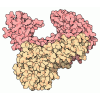
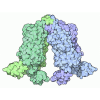
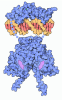
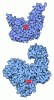
- Assembly
| Deposited unit | 
|
|---|---|
| 1 |
|
-Components
-Protein , 3 types, 3 molecules CFS
| #1: Protein | Mass: 89800.305 Da / Num. of mol.: 1 Source method: isolated from a genetically manipulated source Source: (gene. exp.) Homo sapiens (human) / Gene: CUL1 / Production host:  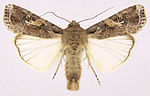 Spodoptera frugiperda (fall armyworm) / References: UniProt: Q13616 Spodoptera frugiperda (fall armyworm) / References: UniProt: Q13616 |
|---|---|
| #2: Protein | Mass: 109518.734 Da / Num. of mol.: 1 Source method: isolated from a genetically manipulated source Source: (gene. exp.) Homo sapiens (human) / Gene: FBH1, FBX18, FBXO18 / Production host: Spodoptera frugiperda (fall armyworm) / References: UniProt: Q8NFZ0, DNA 3'-5' helicase |
| #3: Protein | Mass: 18679.965 Da / Num. of mol.: 1 Source method: isolated from a genetically manipulated source Source: (gene. exp.) Homo sapiens (human) / Gene: SKP1, EMC19, OCP2, SKP1A, TCEB1L / Production host: Spodoptera frugiperda (fall armyworm) / References: UniProt: P63208 |
-DNA chain , 1 types, 1 molecules X
| #4: DNA chain | Mass: 13921.935 Da / Num. of mol.: 1 / Source method: obtained synthetically / Source: (synth.) synthetic construct (others) |
|---|
-Non-polymers , 3 types, 3 molecules 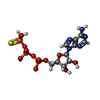


| #5: Chemical | ChemComp-AGS / 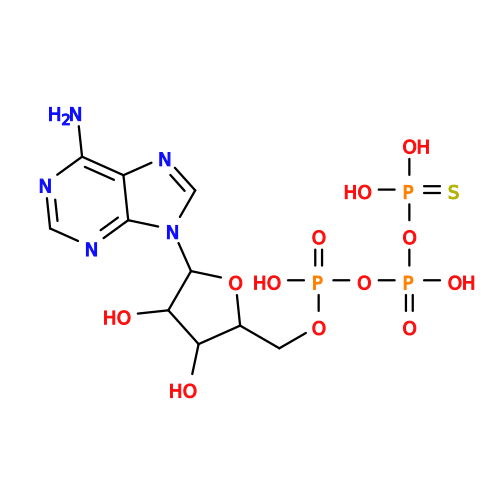 Mass: 523.247 Da / Num. of mol.: 1 / Source method: obtained synthetically / Formula: C10H16N5O12P3S / Feature type: SUBJECT OF INVESTIGATION / Comment: ATP-gamma-S, energy-carrying molecule analogue*YM Mass: 523.247 Da / Num. of mol.: 1 / Source method: obtained synthetically / Formula: C10H16N5O12P3S / Feature type: SUBJECT OF INVESTIGATION / Comment: ATP-gamma-S, energy-carrying molecule analogue*YM |
|---|---|
| #6: Chemical | ChemComp-MG /  Mass: 24.305 Da / Num. of mol.: 1 / Source method: obtained synthetically / Formula: Mg / Feature type: SUBJECT OF INVESTIGATION Mass: 24.305 Da / Num. of mol.: 1 / Source method: obtained synthetically / Formula: Mg / Feature type: SUBJECT OF INVESTIGATION |
| #7: Chemical | ChemComp-ZN / 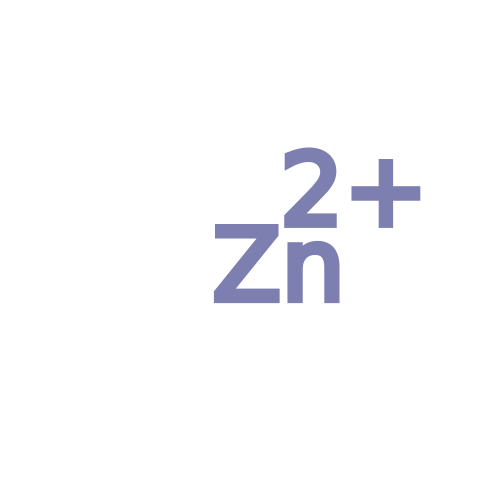 Mass: 65.409 Da / Num. of mol.: 1 / Source method: obtained synthetically / Formula: Zn / Feature type: SUBJECT OF INVESTIGATION Mass: 65.409 Da / Num. of mol.: 1 / Source method: obtained synthetically / Formula: Zn / Feature type: SUBJECT OF INVESTIGATION |
-Details
| Has ligand of interest | Y |
|---|---|
| Has protein modification | N |
-Experimental details
-Experiment
| Experiment | Method: ELECTRON MICROSCOPY |
|---|---|
| EM experiment | Aggregation state: PARTICLE / 3D reconstruction method: single particle reconstruction |
- Sample preparation
| Component |
| ||||||||||||||||||||||||
|---|---|---|---|---|---|---|---|---|---|---|---|---|---|---|---|---|---|---|---|---|---|---|---|---|---|
| Source (natural) |
| ||||||||||||||||||||||||
| Source (recombinant) | Organism: Spodoptera frugiperda (fall armyworm) | ||||||||||||||||||||||||
| Buffer solution | pH: 7.5 | ||||||||||||||||||||||||
| Specimen | Embedding applied: NO / Shadowing applied: NO / Staining applied: NO / Vitrification applied: YES | ||||||||||||||||||||||||
| Vitrification | Cryogen name: ETHANE |
- Electron microscopy imaging
| Experimental equipment |  Model: Titan Krios / Image courtesy: FEI Company | ||||||||||||
|---|---|---|---|---|---|---|---|---|---|---|---|---|---|
| Microscopy | Model: TFS KRIOS | ||||||||||||
| Electron gun | Electron source:  FIELD EMISSION GUN / Accelerating voltage: 300 kV / Illumination mode: FLOOD BEAM FIELD EMISSION GUN / Accelerating voltage: 300 kV / Illumination mode: FLOOD BEAM | ||||||||||||
| Electron lens | Mode: BRIGHT FIELD / Nominal magnification: 105000 X / Nominal defocus max: 2000 nm / Nominal defocus min: 1000 nm | ||||||||||||
| Image recording |
|
- Processing
| EM software |
| ||||||||||||||||||||||||||||||||||||
|---|---|---|---|---|---|---|---|---|---|---|---|---|---|---|---|---|---|---|---|---|---|---|---|---|---|---|---|---|---|---|---|---|---|---|---|---|---|
| CTF correction | Type: PHASE FLIPPING AND AMPLITUDE CORRECTION | ||||||||||||||||||||||||||||||||||||
| Symmetry | Point symmetry: C1 (asymmetric) | ||||||||||||||||||||||||||||||||||||
| 3D reconstruction | Resolution: 3 Å / Resolution method: FSC 0.143 CUT-OFF / Num. of particles: 181442 / Symmetry type: POINT | ||||||||||||||||||||||||||||||||||||
| Atomic model building | Protocol: FLEXIBLE FIT | ||||||||||||||||||||||||||||||||||||
| Atomic model building | PDB-ID: 1LDK Accession code: 1LDK / Source name: PDB / Type: experimental model | ||||||||||||||||||||||||||||||||||||
| Refine LS restraints |
|