 ムービー
ムービー コントローラー


+ データを開く

- 基本情報
基本情報
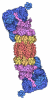
| 登録情報 | データベース: PDB / ID: 8ott | |||||||||
|---|---|---|---|---|---|---|---|---|---|---|
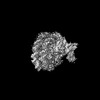
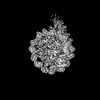
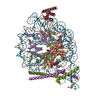
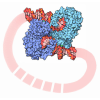
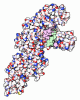
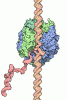
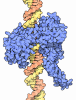
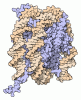
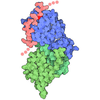
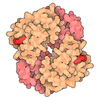
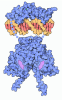
| タイトル | MYC-MAX bound to a nucleosome at SHL+5.8 | |||||||||
 要素 要素 |
| |||||||||
 キーワード キーワード | TRANSCRIPTION / E-box | |||||||||
| 機能・相同性 |  機能・相同性情報 機能・相同性情報Mad-Max complex / Deposition of new CENPA-containing nucleosomes at the centromere / Inhibition of DNA recombination at telomere / positive regulation of metanephric cap mesenchymal cell proliferation / positive regulation of acinar cell proliferation / acinar cell proliferation / negative regulation of transcription initiation by RNA polymerase II / SCF ubiquitin ligase complex binding / NK T cell proliferation / Myc-Max complex ...Mad-Max complex / Deposition of new CENPA-containing nucleosomes at the centromere / Inhibition of DNA recombination at telomere / positive regulation of metanephric cap mesenchymal cell proliferation / positive regulation of acinar cell proliferation / acinar cell proliferation / negative regulation of transcription initiation by RNA polymerase II / SCF ubiquitin ligase complex binding / NK T cell proliferation / Myc-Max complex / DNA Damage/Telomere Stress Induced Senescence / Regulation of endogenous retroelements by KRAB-ZFP proteins / Condensation of Prophase Chromosomes / Recognition and association of DNA glycosylase with site containing an affected purine / Metalloprotease DUBs / Cleavage of the damaged purine / regulation of somatic stem cell population maintenance / HDACs deacetylate histones / regulation of cell cycle process / PRC2 methylates histones and DNA / UCH proteinases / Binding of TCF/LEF:CTNNB1 to target gene promoters / cellular response to interferon-alpha / RNA polymerase II transcription repressor complex / MLL4 and MLL3 complexes regulate expression of PPARG target genes in adipogenesis and hepatic steatosis / positive regulation of B cell apoptotic process / RUNX3 regulates WNT signaling / TFAP2 (AP-2) family regulates transcription of cell cycle factors / myotube differentiation / RUNX1 regulates genes involved in megakaryocyte differentiation and platelet function / RMTs methylate histone arginines / negative regulation of cell division / negative regulation of monocyte differentiation / detection of mechanical stimulus involved in sensory perception of sound / response to growth factor / Ub-specific processing proteases / response to alkaloid / B cell apoptotic process / transcription regulator activator activity / Transcription of E2F targets under negative control by DREAM complex / protein-DNA complex disassembly / negative regulation of stress-activated MAPK cascade / fibroblast apoptotic process / Regulation of NFE2L2 gene expression / positive regulation of mesenchymal cell proliferation / regulation of telomere maintenance / skeletal system morphogenesis / Signaling by ALK / branching involved in ureteric bud morphogenesis / middle ear morphogenesis / negative regulation of gene expression via chromosomal CpG island methylation / rRNA metabolic process / Transcriptional Regulation by E2F6 / pigmentation / E-box binding / positive regulation of telomere maintenance / MLL1 complex / skeletal muscle cell differentiation / positive regulation of intrinsic apoptotic signaling pathway by p53 class mediator / positive regulation of transcription initiation by RNA polymerase II / chromosome organization / negative regulation of tumor necrosis factor-mediated signaling pathway / core promoter sequence-specific DNA binding / negative regulation of fibroblast proliferation / Cyclin E associated events during G1/S transition / Cyclin A:Cdk2-associated events at S phase entry / negative regulation of megakaryocyte differentiation / protein localization to CENP-A containing chromatin / Chromatin modifying enzymes / Replacement of protamines by nucleosomes in the male pronucleus / CENP-A containing nucleosome / ERK1 and ERK2 cascade / Packaging Of Telomere Ends / Negative Regulation of CDH1 Gene Transcription / Recognition and association of DNA glycosylase with site containing an affected purine / Cleavage of the damaged purine / Deposition of new CENPA-containing nucleosomes at the centromere / telomere organization / Interleukin-7 signaling / Recognition and association of DNA glycosylase with site containing an affected pyrimidine / Cleavage of the damaged pyrimidine / RNA Polymerase I Promoter Opening / epigenetic regulation of gene expression / Inhibition of DNA recombination at telomere / Assembly of the ORC complex at the origin of replication / Meiotic synapsis / SUMOylation of chromatin organization proteins / Regulation of endogenous retroelements by the Human Silencing Hub (HUSH) complex / DNA methylation / Condensation of Prophase Chromosomes / Chromatin modifications during the maternal to zygotic transition (MZT) / positive regulation of epithelial cell proliferation / SIRT1 negatively regulates rRNA expression / HCMV Late Events / transcription coregulator binding / ERCC6 (CSB) and EHMT2 (G9a) positively regulate rRNA expression / PRC2 methylates histones and DNA / Regulation of endogenous retroelements by KRAB-ZFP proteins / innate immune response in mucosa / Defective pyroptosis 類似検索 - 分子機能 | |||||||||
| 生物種 |  Homo sapiens (ヒト) Homo sapiens (ヒト)synthetic construct (人工物) | |||||||||
| 手法 | 電子顕微鏡法 / 単粒子再構成法 / クライオ電子顕微鏡法 / 解像度: 3.3 Å | |||||||||
 データ登録者 データ登録者 | Stoos, L. / Michael, A.K. / Kempf, G. / Kater, L. / Cavadini, S. / Thoma, N. | |||||||||
| 資金援助 | European Union,  フランス, 2件 フランス, 2件
| |||||||||
 引用 引用 | ジャーナル: Nature / 年: 2023 タイトル: Cooperation between bHLH transcription factors and histones for DNA access. 著者: Alicia K Michael / Lisa Stoos / Priya Crosby / Nikolas Eggers / Xinyu Y Nie / Kristina Makasheva / Martina Minnich / Kelly L Healy / Joscha Weiss / Georg Kempf / Simone Cavadini / Lukas Kater ...著者: Alicia K Michael / Lisa Stoos / Priya Crosby / Nikolas Eggers / Xinyu Y Nie / Kristina Makasheva / Martina Minnich / Kelly L Healy / Joscha Weiss / Georg Kempf / Simone Cavadini / Lukas Kater / Jan Seebacher / Luca Vecchia / Deyasini Chakraborty / Luke Isbel / Ralph S Grand / Florian Andersch / Jennifer L Fribourgh / Dirk Schübeler / Johannes Zuber / Andrew C Liu / Peter B Becker / Beat Fierz / Carrie L Partch / Jerome S Menet / Nicolas H Thomä /     要旨: The basic helix-loop-helix (bHLH) family of transcription factors recognizes DNA motifs known as E-boxes (CANNTG) and includes 108 members. Here we investigate how chromatinized E-boxes are engaged ...The basic helix-loop-helix (bHLH) family of transcription factors recognizes DNA motifs known as E-boxes (CANNTG) and includes 108 members. Here we investigate how chromatinized E-boxes are engaged by two structurally diverse bHLH proteins: the proto-oncogene MYC-MAX and the circadian transcription factor CLOCK-BMAL1 (refs. ). Both transcription factors bind to E-boxes preferentially near the nucleosomal entry-exit sites. Structural studies with engineered or native nucleosome sequences show that MYC-MAX or CLOCK-BMAL1 triggers the release of DNA from histones to gain access. Atop the H2A-H2B acidic patch, the CLOCK-BMAL1 Per-Arnt-Sim (PAS) dimerization domains engage the histone octamer disc. Binding of tandem E-boxes at endogenous DNA sequences occurs through direct interactions between two CLOCK-BMAL1 protomers and histones and is important for circadian cycling. At internal E-boxes, the MYC-MAX leucine zipper can also interact with histones H2B and H3, and its binding is indirectly enhanced by OCT4 elsewhere on the nucleosome. The nucleosomal E-box position and the type of bHLH dimerization domain jointly determine the histone contact, the affinity and the degree of competition and cooperativity with other nucleosome-bound factors. | |||||||||
| 履歴 |
|
- 構造の表示
構造の表示
| 構造ビューア | 分子: MolmilJmol/JSmol |
|---|
- ダウンロードとリンク
-ダウンロード
| PDBx/mmCIF形式 | 8ott.cif.gz | 342 KB | 表示 | PDBx/mmCIF形式 |
|---|---|---|---|---|
| PDB形式 | pdb8ott.ent.gz | 257.5 KB | 表示 | PDB形式 |
| PDBx/mmJSON形式 | 8ott.json.gz | ツリー表示 | PDBx/mmJSON形式 | |
| その他 |  その他のダウンロード その他のダウンロード |
-検証レポート
| アーカイブディレクトリ | https://data.pdbj.org/pub/pdb/validation_reports/ot/8ottftp://data.pdbj.org/pub/pdb/validation_reports/ot/8ott | HTTPS FTP |
|---|
-関連構造データ




-リンク
 PDBj
PDBj
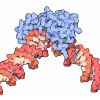
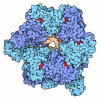
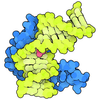
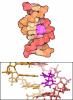

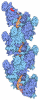
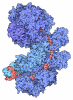
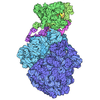
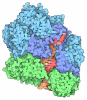
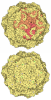
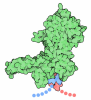
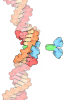
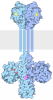



- 集合体
集合体
| 登録構造単位 | 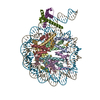
|
|---|---|
| 1 |
|
-要素
-タンパク質 , 5種, 8分子 AEBFDHMN
| #1: タンパク質 | 分子量: 11179.090 Da / 分子数: 2 / 由来タイプ: 組換発現 / 由来: (組換発現) Homo sapiens (ヒト)遺伝子: H3C1, H3FA, HIST1H3A, H3C2, H3FL, HIST1H3B, H3C3, H3FC HIST1H3C, H3C4, H3FB, HIST1H3D, H3C6, H3FD, HIST1H3E, H3C7, H3FI, HIST1H3F, H3C8, H3FH, HIST1H3G, H3C10, H3FK, HIST1H3H, H3C11, H3FF, ...遺伝子: H3C1, H3FA, HIST1H3A, H3C2, H3FL, HIST1H3B, H3C3, H3FC HIST1H3C, H3C4, H3FB, HIST1H3D, H3C6, H3FD, HIST1H3E, H3C7, H3FI, HIST1H3F, H3C8, H3FH, HIST1H3G, H3C10, H3FK, HIST1H3H, H3C11, H3FF, HIST1H3I, H3C12, H3FJ, HIST1H3J 発現宿主:   Escherichia coli (大腸菌) / 参照: UniProt: P68431 Escherichia coli (大腸菌) / 参照: UniProt: P68431#2: タンパク質 | 分子量: 9279.875 Da / 分子数: 2 / 由来タイプ: 組換発現 / 由来: (組換発現) Homo sapiens (ヒト)遺伝子: H4C1, H4/A, H4FA, HIST1H4A, H4C2, H4/I, H4FI, HIST1H4B, H4C3, H4/G, H4FG, HIST1H4C, H4C4, H4/B, H4FB, HIST1H4D, H4C5, H4/J, H4FJ, HIST1H4E, H4C6, H4/C, H4FC, HIST1H4F, H4C8, H4/H, H4FH, ...遺伝子: H4C1, H4/A, H4FA, HIST1H4A, H4C2, H4/I, H4FI, HIST1H4B, H4C3, H4/G, H4FG, HIST1H4C, H4C4, H4/B, H4FB, HIST1H4D, H4C5, H4/J, H4FJ, HIST1H4E, H4C6, H4/C, H4FC, HIST1H4F, H4C8, H4/H, H4FH, HIST1H4H, H4C9, H4/M, H4FM, HIST1H4I, H4C11, H4/E, H4FE, HIST1H4J, H4C12, H4/D, H4FD, HIST1H4K, H4C13, H4/K, H4FK, HIST1H4L, H4C14, H4/N, H4F2, H4FN, HIST2H4, HIST2H4A, H4C15, H4/O, H4FO, HIST2H4B, H4C16, H4-16, HIST4H4 発現宿主: Escherichia coli (大腸菌) / 参照: UniProt: P62805#4: タンパク質 | 分子量: 10334.827 Da / 分子数: 2 / 由来タイプ: 組換発現 / 由来: (組換発現) Homo sapiens (ヒト) / 遺伝子: H2BC11, H2BFR, HIST1H2BJ / 発現宿主: Escherichia coli (大腸菌) / 参照: UniProt: P06899#8: タンパク質 | | 分子量: 6346.392 Da / 分子数: 1 / 由来タイプ: 組換発現 / 由来: (組換発現) Homo sapiens (ヒト) / 遺伝子: MYC, BHLHE39 / 発現宿主: Escherichia coli (大腸菌) / 参照: UniProt: P01106#9: タンパク質 | | 分子量: 6031.737 Da / 分子数: 1 / 由来タイプ: 組換発現 / 由来: (組換発現) Homo sapiens (ヒト) / 遺伝子: MAX, BHLHD4 / 発現宿主: Escherichia coli (大腸菌) / 参照: UniProt: P61244 |
|---|
-Histone H2A type 1- ... , 2種, 2分子 CG
| #3: タンパク質 | 分子量: 11896.886 Da / 分子数: 1 / 由来タイプ: 組換発現 / 由来: (組換発現) Homo sapiens (ヒト) / 遺伝子: H2AC4, H2AFM, HIST1H2AB, H2AC8, H2AFA, HIST1H2AE / 発現宿主: Escherichia coli (大腸菌) / 参照: UniProt: P04908 |
|---|---|
| #5: タンパク質 | 分子量: 11807.769 Da / 分子数: 1 / 由来タイプ: 組換発現 / 由来: (組換発現) Homo sapiens (ヒト) / 遺伝子: H2ac15, Hist1h2ak / 発現宿主: Escherichia coli (大腸菌) / 参照: UniProt: Q8CGP7 |
-DNA鎖 , 2種, 2分子 IJ
| #6: DNA鎖 | 分子量: 44225.145 Da / 分子数: 1 / 由来タイプ: 合成 / 由来: (合成) synthetic construct (人工物) |
|---|---|
| #7: DNA鎖 | 分子量: 44674.430 Da / 分子数: 1 / 由来タイプ: 合成 / 由来: (合成) synthetic construct (人工物) |
-非ポリマー , 1種, 8分子 
| #10: 化合物 | ChemComp-PTD / 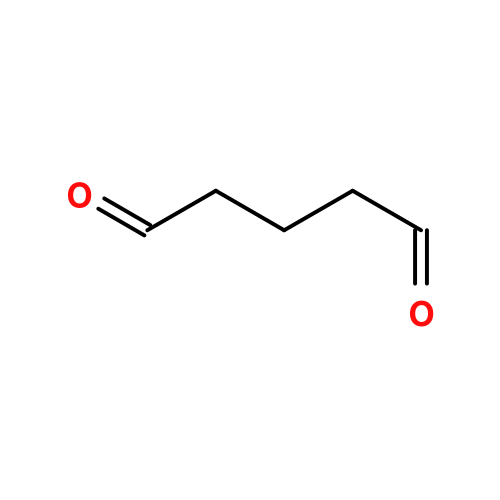 分子量: 100.116 Da / 分子数: 8 / 由来タイプ: 合成 / 式: C5H8O2 分子量: 100.116 Da / 分子数: 8 / 由来タイプ: 合成 / 式: C5H8O2 |
|---|
-詳細
| 研究の焦点であるリガンドがあるか | N |
|---|---|
| Has protein modification | Y |
-実験情報
-実験
| 実験 | 手法: 電子顕微鏡法 |
|---|---|
| EM実験 | 試料の集合状態: PARTICLE / 3次元再構成法: 単粒子再構成法 |
- 試料調製
試料調製
| 構成要素 |
| ||||||||||||||||||||||||||||||||||||
|---|---|---|---|---|---|---|---|---|---|---|---|---|---|---|---|---|---|---|---|---|---|---|---|---|---|---|---|---|---|---|---|---|---|---|---|---|---|
| 分子量 |
| ||||||||||||||||||||||||||||||||||||
| 由来(天然) |
| ||||||||||||||||||||||||||||||||||||
| 由来(組換発現) |
| ||||||||||||||||||||||||||||||||||||
| 緩衝液 | pH: 7.2 | ||||||||||||||||||||||||||||||||||||
| 試料 | 包埋: NO / シャドウイング: NO / 染色: NO / 凍結: YES | ||||||||||||||||||||||||||||||||||||
| 急速凍結 | 凍結剤: ETHANE |
- 電子顕微鏡撮影
| 実験機器 |  モデル: Titan Krios / 画像提供: FEI Company |
|---|---|
| 顕微鏡 | モデル: FEI TITAN KRIOS |
| 電子銃 | 電子線源:  FIELD EMISSION GUN / 加速電圧: 300 kV / 照射モード: FLOOD BEAM FIELD EMISSION GUN / 加速電圧: 300 kV / 照射モード: FLOOD BEAM |
| 電子レンズ | モード: BRIGHT FIELD / 最大 デフォーカス(公称値): 1800 nm / 最小 デフォーカス(公称値): 800 nm |
| 撮影 | 電子線照射量: 50 e/Å2 フィルム・検出器のモデル: FEI FALCON IV (4k x 4k) |
- 解析
解析
| CTF補正 | タイプ: NONE |
|---|---|
| 3次元再構成 | 解像度: 3.3 Å / 解像度の算出法: FSC 0.143 CUT-OFF / 粒子像の数: 152914 / 対称性のタイプ: POINT |
