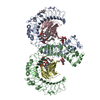
Innate immune system / Toll-like receptors / TLR4 agonist / Vaccine adjuvants / Disaccharide-based lipid A mimetics / IMMUNE SYSTEM
機能・相同性
機能・相同性情報
MyD88-independent TLR4 cascade / Caspase activation via Death Receptors in the presence of ligand / Toll Like Receptor 4 (TLR4) Cascade / Heme signaling / nitric oxide production involved in inflammatory response / Regulation of TLR by endogenous ligand / growth plate cartilage morphogenesis / TRIF-mediated programmed cell death / positive regulation of cellular response to macrophage colony-stimulating factor stimulus / NK T cell activation ...MyD88-independent TLR4 cascade / Caspase activation via Death Receptors in the presence of ligand / Toll Like Receptor 4 (TLR4) Cascade / Heme signaling / nitric oxide production involved in inflammatory response / Regulation of TLR by endogenous ligand / growth plate cartilage morphogenesis / TRIF-mediated programmed cell death / positive regulation of cellular response to macrophage colony-stimulating factor stimulus / NK T cell activation / TRAF6-mediated induction of TAK1 complex within TLR4 complex / IRAK2 mediated activation of TAK1 complex upon TLR7/8 or 9 stimulation / Regulation of TBK1, IKKε (IKBKE)-mediated activation of IRF3, IRF7 / lipopolysaccharide immune receptor activity / positive regulation of nucleotide-binding oligomerization domain containing 1 signaling pathway / Activation of IRF3, IRF7 mediated by TBK1, IKKε (IKBKE) / Toll-like receptor 4 binding / positive regulation of matrix metallopeptidase secretion / mast cell activation / detection of lipopolysaccharide / IKK complex recruitment mediated by RIP1 / regulation of dendritic cell cytokine production / innate immune response-activating signaling pathway / lipopolysaccharide receptor complex / positive regulation of lymphocyte proliferation / negative regulation of interleukin-23 production / cellular response to oxidised low-density lipoprotein particle stimulus / wound healing involved in inflammatory response / regulation of toll-like receptor 4 signaling pathway / B cell proliferation involved in immune response / positive regulation of nucleotide-binding oligomerization domain containing 2 signaling pathway / positive regulation of stress-activated MAPK cascade / leukotriene metabolic process / activation of NF-kappaB-inducing kinase activity / positive regulation of interleukin-1 production / TRIF-dependent toll-like receptor signaling pathway / positive regulation of interleukin-13 production / response to fatty acid / intestinal epithelial structure maintenance / macrophage activation / astrocyte development / microglia differentiation / regulation of tumor necrosis factor production / positive regulation of MHC class II biosynthetic process / positive regulation of platelet activation / signal transduction involved in regulation of gene expression / negative regulation of interleukin-17 production / positive regulation of macrophage activation / positive regulation of lipopolysaccharide-mediated signaling pathway / bone morphogenesis / positive regulation of chemokine (C-X-C motif) ligand 2 production / positive regulation of cytokine production involved in inflammatory response / negative regulation of cold-induced thermogenesis / positive regulation of extrinsic apoptotic signaling pathway / positive regulation of macrophage cytokine production / MyD88-dependent toll-like receptor signaling pathway / toll-like receptor 4 signaling pathway / positive regulation of smooth muscle cell migration / toll-like receptor signaling pathway / cellular response to lipoteichoic acid / positive regulation of NLRP3 inflammasome complex assembly / positive regulation of reactive oxygen species biosynthetic process / detection of temperature stimulus involved in sensory perception of pain / negative regulation of type II interferon production / negative regulation of interleukin-6 production / positive regulation of interferon-alpha production / positive regulation of interleukin-10 production / negative regulation of tumor necrosis factor production / phagocytosis / detection of mechanical stimulus involved in sensory perception of pain / phosphatidylinositol 3-kinase binding / phagocytic cup / positive regulation of B cell proliferation / ERK1 and ERK2 cascade / cellular response to platelet-derived growth factor stimulus / positive regulation of chemokine production / ruffle / positive regulation of interleukin-12 production / canonical NF-kappaB signal transduction / negative regulation of cytokine production involved in inflammatory response / activation of innate immune response / neurogenesis / positive regulation of interferon-beta production / positive regulation of smooth muscle cell proliferation / lipopolysaccharide-mediated signaling pathway / : / positive regulation of interleukin-1 beta production / positive regulation of interleukin-8 production / response to bacterium / lipopolysaccharide binding / cellular response to mechanical stimulus / microglial cell activation / negative regulation of ERK1 and ERK2 cascade / positive regulation of interleukin-6 production / positive regulation of JNK cascade / cellular response to type II interferon / positive regulation of type II interferon production / cellular response to amyloid-beta / positive regulation of nitric oxide biosynthetic process / positive regulation of tumor necrosis factor production 類似検索 - 分子機能
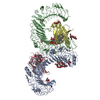
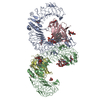
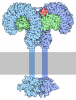
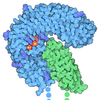
ジャーナル: Nat Commun / 年: 2025 タイトル: Structural insight into TLR4/MD-2 activation by synthetic LPS mimetics with distinct binding modes. 著者: Yaoyao Fu / Hyojin Kim / Dong Sun Lee / Ah-Reum Han / Holger Heine / Alla Zamyatina / Ho Min Kim / 要旨: The mammalian pattern-recognition receptor TLR4/MD-2 (Toll-like receptor 4/myeloid differentiation factor-2) can be activated by a wide variety of pathogen-associated and endogenous molecules, with ...The mammalian pattern-recognition receptor TLR4/MD-2 (Toll-like receptor 4/myeloid differentiation factor-2) can be activated by a wide variety of pathogen-associated and endogenous molecules, with Gram-negative bacterial lipopolysaccharide (LPS) being the primary natural TLR4 agonist. Activation of TLR4 triggers cellular signaling that enables the beneficial innate immune responses and enhances adaptive immunity, thereby emphasizing the potential of TLR4 agonists for the management of diseases with an immunopathological background and for use as vaccine adjuvants. Given the challenges associated with LPS-derived products, including structural complexity, heterogeneity, toxicity, and species specificity, synthetic molecules targeting TLR4/MD-2 offer a promising alternative. Here, we elucidate the structural basis for the recognition of synthetic LPS-mimicking glycolipids, Disaccharide Lipid A Mimetics (DLAMs), by human and mouse TLR4/MD-2 through cryo-EM structures of six dimeric [TLR4/MD-2/ligand] complexes resolved at 2.2-3.1 Å. We reveal that the specific binding modes of DLAMs, distinct from those of LPS, are essential for the species-independent TLR4 agonistic activity. DLAMs function as a molecular bridge, effectively induce the dimerization of TLR4/MD-2 complexes through specific carbohydrate structure-relevant ligand-protein interactions. Our findings reveal the distinct molecular modes of TLR4 activation, and provide a structural basis for the rationale design and development of innovative, highly potent TLR4-targeting immunotherapeutics and adjuvants.
 ムービー
ムービー コントローラー


 データを開く
 基本情報
基本情報
 マップデータ
 試料
試料 キーワード
キーワード 機能・相同性情報
 Mus musculus (ハツカネズミ)
 データ登録者
 韓国, 1件
  引用
引用

 構造の表示
構造の表示
 ダウンロードとリンク
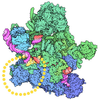
 emd_37803.png
 http://ftp.pdbj.org/pub/emdb/structures/EMD-37803



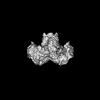




 Z (Sec.)
 Y (Row.)
 X (Col.)


 試料の構成要素
 Trichoplusia ni (イラクサキンウワバ)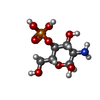
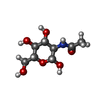

 解析
解析 電子顕微鏡法
 FIELD EMISSION GUN