Movie
Movie Controller


+ Open data

- Basic information
| Entry | Database: EMDB / ID: EMD-24522 | |||||||||
|---|---|---|---|---|---|---|---|---|---|---|
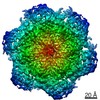
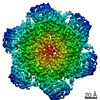
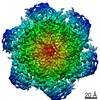
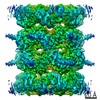
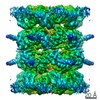
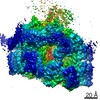
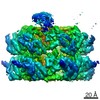
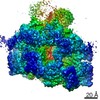
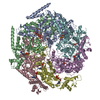
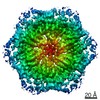
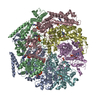
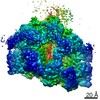
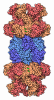
| Title | Cryo-EM structure of human p97-R191Q mutant bound to ADP. | |||||||||
 Map data Map data | Cryo-EM structure of human p97-R191Q bound to ADP. | |||||||||
 Sample Sample |
| |||||||||
 Keywords Keywords | p97 / VCP / TERA / Inhibitor / CB-5083 / HYDROLASE | |||||||||
| Function / homology |  Function and homology information Function and homology informationflavin adenine dinucleotide catabolic process / VCP-NSFL1C complex / endoplasmic reticulum stress-induced pre-emptive quality control / endosome to lysosome transport via multivesicular body sorting pathway / BAT3 complex binding / cellular response to arsenite ion / cytoplasmic ubiquitin ligase complex / Derlin-1 retrotranslocation complex / positive regulation of protein K63-linked deubiquitination / protein-DNA covalent cross-linking repair ...flavin adenine dinucleotide catabolic process / VCP-NSFL1C complex / endoplasmic reticulum stress-induced pre-emptive quality control / endosome to lysosome transport via multivesicular body sorting pathway / BAT3 complex binding / cellular response to arsenite ion / cytoplasmic ubiquitin ligase complex / Derlin-1 retrotranslocation complex / positive regulation of protein K63-linked deubiquitination / protein-DNA covalent cross-linking repair / deubiquitinase activator activity / positive regulation of oxidative phosphorylation / cytoplasm protein quality control / regulation of protein localization to chromatin / ubiquitin-modified protein reader activity / cellular response to misfolded protein / mitotic spindle disassembly / VCP-NPL4-UFD1 AAA ATPase complex / positive regulation of mitochondrial membrane potential / vesicle-fusing ATPase / K48-linked polyubiquitin modification-dependent protein binding / NAD+ metabolic process / regulation of aerobic respiration / retrograde protein transport, ER to cytosol / stress granule disassembly / ATPase complex / ubiquitin-specific protease binding / regulation of synapse organization / polyubiquitin modification-dependent protein binding / positive regulation of ATP biosynthetic process / ubiquitin-like protein ligase binding / RHOH GTPase cycle / intracellular membrane-bounded organelle / autophagosome maturation / MHC class I protein binding / HSF1 activation / endoplasmic reticulum to Golgi vesicle-mediated transport / negative regulation of hippo signaling / mitophagy / interstrand cross-link repair / ATP metabolic process / proteasome complex / protein unfolding / endoplasmic reticulum unfolded protein response / ribosome-associated ubiquitin-dependent protein catabolic process / Attachment and Entry / ERAD pathway / Protein methylation / translesion synthesis / negative regulation of smoothened signaling pathway / viral genome replication / negative regulation of protein localization to chromatin / macroautophagy / rescue of stalled cytosolic ribosome / lipid droplet / Josephin domain DUBs / autophagy / establishment of protein localization / proteasomal protein catabolic process / N-glycan trimming in the ER and Calnexin/Calreticulin cycle / positive regulation of protein-containing complex assembly / ADP binding / positive regulation of non-canonical NF-kappaB signal transduction / Hh mutants are degraded by ERAD / Dengue Virus Genome Translation and Replication / Translesion Synthesis by POLH / Hedgehog ligand biogenesis / Defective CFTR causes cystic fibrosis / AMPK-induced ERAD and lysosome mediated degradation of PD-L1(CD274) / ABC-family protein mediated transport / cytoplasmic stress granule / Ribosome Quality Control (RQC) complex extracts and degrades nascent peptide / double-strand break repair / Aggrephagy / positive regulation of canonical Wnt signaling pathway / positive regulation of protein catabolic process / azurophil granule lumen / Ovarian tumor domain proteases / positive regulation of proteasomal ubiquitin-dependent protein catabolic process / KEAP1-NFE2L2 pathway / site of double-strand break / cellular response to heat / E3 ubiquitin ligases ubiquitinate target proteins / Neddylation / secretory granule lumen / protein phosphatase binding / ubiquitin-dependent protein catabolic process / ficolin-1-rich granule lumen / proteasome-mediated ubiquitin-dependent protein catabolic process / Attachment and Entry / regulation of apoptotic process / protein ubiquitination / protein domain specific binding / DNA repair / ubiquitin protein ligase binding / lipid binding / DNA damage response / Neutrophil degranulation / endoplasmic reticulum membrane / perinuclear region of cytoplasm Similarity search - Function | |||||||||
| Biological species |  Homo sapiens (human) Homo sapiens (human) | |||||||||
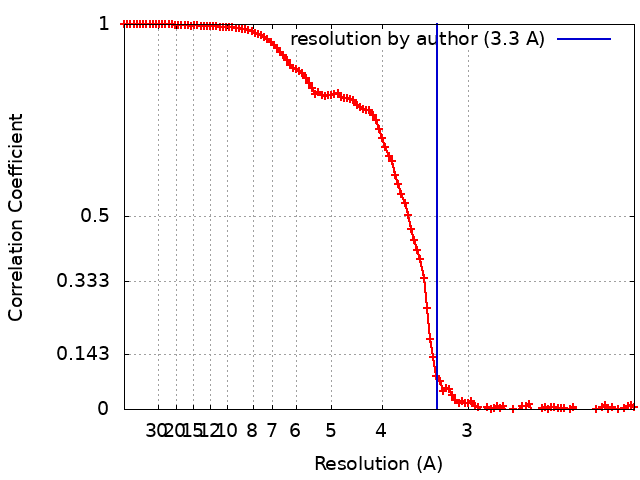
| Method | single particle reconstruction / cryo EM / Resolution: 3.3 Å | |||||||||
 Authors Authors | Caffrey B / Zhu X / Berezuk A / Tuttle K / Chittori S / Subramaniam S | |||||||||
 Citation Citation | Journal: J Biol Chem / Year: 2021 Title: AAA+ ATPase p97/VCP mutants and inhibitor binding disrupt inter-domain coupling and subsequent allosteric activation. Authors: Brian Caffrey / Xing Zhu / Alison Berezuk / Katharine Tuttle / Sagar Chittori / Sriram Subramaniam /  Abstract: The human AAA+ ATPase p97, also known as valosin-containing protein, a potential target for cancer therapeutics, plays a vital role in the clearing of misfolded proteins. p97 dysfunction is also ...The human AAA+ ATPase p97, also known as valosin-containing protein, a potential target for cancer therapeutics, plays a vital role in the clearing of misfolded proteins. p97 dysfunction is also known to play a crucial role in several neurodegenerative disorders, such as MultiSystem Proteinopathy 1 (MSP-1) and Familial Amyotrophic Lateral Sclerosis (ALS). However, the structural basis of its role in such diseases remains elusive. Here, we present cryo-EM structural analyses of four disease mutants p97, p97, p97, p97, as well as p97, implicated in resistance to the drug CB-5083, a potent p97 inhibitor. Our cryo-EM structures demonstrate that these mutations affect nucleotide-driven allosteric activation across the three principal p97 domains (N, D1, and D2) by predominantly interfering with either (1) the coupling between the D1 and N-terminal domains (p97 and p97), (2) the interprotomer interactions (p97), or (3) the coupling between D1 and D2 nucleotide domains (p97, p97). We also show that binding of the competitive inhibitor, CB-5083, to the D2 domain prevents conformational changes similar to those seen for mutations that affect coupling between the D1 and D2 domains. Our studies enable tracing of the path of allosteric activation across p97 and establish a common mechanistic link between active site inhibition and defects in allosteric activation by disease-causing mutations and have potential implications for the design of novel allosteric compounds that can modulate p97 function. | |||||||||
| History |
|
- Structure visualization
| Movie |
Movie viewer |
|---|---|
| Structure viewer | EM map: SurfViewMolmilJmol/JSmol |
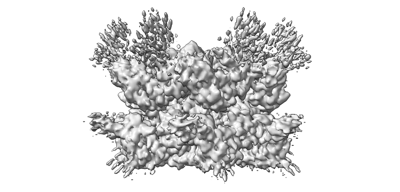
| Supplemental images |
- Downloads & links
-EMDB archive
| Map data | emd_24522.map.gz | 62.7 MB | EMDB map data format | |
|---|---|---|---|---|
| Header (meta data) | emd-24522-v30.xmlemd-24522.xml | 11.6 KB 11.6 KB | Display Display | EMDB header |
| FSC (resolution estimation) | emd_24522_fsc.xml | 14.6 KB | Display | FSC data file |
| Images |  emd_24522.png emd_24522.png | 57.8 KB | ||
| Filedesc metadata | emd-24522.cif.gz | 5.6 KB | ||
| Archive directory |  https://data.pdbj.org/pub/emdb/structures/EMD-24522ftp://data.pdbj.org/pub/emdb/structures/EMD-24522 https://data.pdbj.org/pub/emdb/structures/EMD-24522ftp://data.pdbj.org/pub/emdb/structures/EMD-24522 | HTTPS FTP |
-Related structure data
| Related structure data | 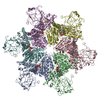 7rl9MC 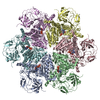 7rl6C 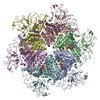 7rl7C 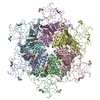 7rlaC 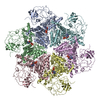 7rlbC 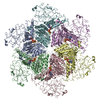 7rlcC 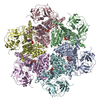 7rldC 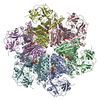 7rlfC 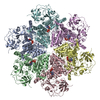 7rlgC 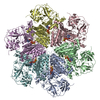 7rlhC 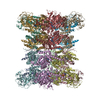 7rliC 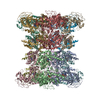 7rljC M: atomic model generated by this map C: citing same article ( |
|---|---|
| Similar structure data |
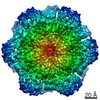
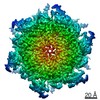
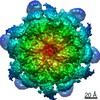
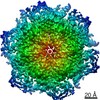
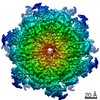
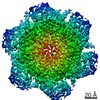
-Links
| EMDB pages | EMDB (EBI/PDBe) / EMDataResource |
|---|---|
| Related items in Molecule of the Month |

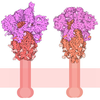

-Map
| File | Download / File: emd_24522.map.gz / Format: CCP4 / Size: 125 MB / Type: IMAGE STORED AS FLOATING POINT NUMBER (4 BYTES) | ||||||||||||||||||||||||||||||||||||||||||||||||||||||||||||||||||||
|---|---|---|---|---|---|---|---|---|---|---|---|---|---|---|---|---|---|---|---|---|---|---|---|---|---|---|---|---|---|---|---|---|---|---|---|---|---|---|---|---|---|---|---|---|---|---|---|---|---|---|---|---|---|---|---|---|---|---|---|---|---|---|---|---|---|---|---|---|---|
| Annotation | Cryo-EM structure of human p97-R191Q bound to ADP. | ||||||||||||||||||||||||||||||||||||||||||||||||||||||||||||||||||||
| Projections & slices | Image control
Images are generated by Spider. | ||||||||||||||||||||||||||||||||||||||||||||||||||||||||||||||||||||
| Voxel size | X=Y=Z: 1.102 Å | ||||||||||||||||||||||||||||||||||||||||||||||||||||||||||||||||||||
| Density |
| ||||||||||||||||||||||||||||||||||||||||||||||||||||||||||||||||||||
| Symmetry | Space group: 1 | ||||||||||||||||||||||||||||||||||||||||||||||||||||||||||||||||||||
| Details | EMDB XML:
CCP4 map header:
| ||||||||||||||||||||||||||||||||||||||||||||||||||||||||||||||||||||
 Z (Sec.)
 Y (Row.)
 X (Col.)


-Supplemental data
- Sample components
-Entire : Full-length Hexameric p97-R191Q mutant.
| Entire | Name: Full-length Hexameric p97-R191Q mutant. |
|---|---|
| Components |
|
-Supramolecule #1: Full-length Hexameric p97-R191Q mutant.
| Supramolecule | Name: Full-length Hexameric p97-R191Q mutant. / type: complex / ID: 1 / Parent: 0 / Macromolecule list: #1 |
|---|---|
| Source (natural) | Organism: Homo sapiens (human) |
| Molecular weight | Theoretical: 540 KDa |
-Macromolecule #1: Transitional endoplasmic reticulum ATPase
| Macromolecule | Name: Transitional endoplasmic reticulum ATPase / type: protein_or_peptide / ID: 1 / Number of copies: 6 / Enantiomer: LEVO / EC number: vesicle-fusing ATPase |
|---|---|
| Source (natural) | Organism: Homo sapiens (human) |
| Molecular weight | Theoretical: 91.202586 KDa |
| Recombinant expression | Organism:   Escherichia coli BL21(DE3) (bacteria) Escherichia coli BL21(DE3) (bacteria) |
| Sequence | String: HHHHHHGTSE NLYFQGASGA DSKGDDLSTA ILKQKNRPNR LIVDEAINED NSVVSLSQPK MDELQLFRGD TVLLKGKKRR EAVCIVLSD DTCSDEKIRM NRVVRNNLRV RLGDVISIQP CPDVKYGKRI HVLPIDDTVE GITGNLFEVY LKPYFLEAYR P IRKGDIFL ...String: HHHHHHGTSE NLYFQGASGA DSKGDDLSTA ILKQKNRPNR LIVDEAINED NSVVSLSQPK MDELQLFRGD TVLLKGKKRR EAVCIVLSD DTCSDEKIRM NRVVRNNLRV RLGDVISIQP CPDVKYGKRI HVLPIDDTVE GITGNLFEVY LKPYFLEAYR P IRKGDIFL VRGGMRAVEF KVVETDPSPY CIVAPDTVIH CEGEPIKQED EEESLNEVGY DDIGGCRKQL AQIKEMVELP LR HPALFKA IGVKPPRGIL LYGPPGTGKT LIARAVANET GAFFFLINGP EIMSKLAGES ESNLRKAFEE AEKNAPAIIF IDE LDAIAP KREKTHGEVE RRIVSQLLTL MDGLKQRAHV IVMAATNRPN SIDPALRRFG RFDREVDIGI PDATGRLEIL QIHT KNMKL ADDVDLEQVA NETHGHVGAD LAALCSEAAL QAIRKKMDLI DLEDETIDAE VMNSLAVTMD DFRWALSQSN PSALR ETVV EVPQVTWEDI GGLEDVKREL QELVQYPVEH PDKFLKFGMT PSKGVLFYGP PGCGKTLLAK AIANECQANF ISIKGP ELL TMWFGESEAN VREIFDKARQ AAPCVLFFDE LDSIAKARGG NIGDGGGAAD RVINQILTEM DGMSTKKNVF IIGATNR PD IIDPAILRPG RLDQLIYIPL PDEKSRVAIL KANLRKSPVA KDVDLEFLAK MTNGFSGADL TEICQRACKL AIRESIES E IRRERERQTN PSAMEVEEDD PVPEIRRDHF EEAMRFARRS VSDNDIRKYE MFAQTLQQSR GFGSFRFPSG NQGGAGPSQ GSGGGTGGSV YTEDNDDDLY G UniProtKB: Transitional endoplasmic reticulum ATPase |
-Macromolecule #2: ADENOSINE-5'-DIPHOSPHATE
| Macromolecule | Name: ADENOSINE-5'-DIPHOSPHATE / type: ligand / ID: 2 / Number of copies: 12 / Formula: ADP |
|---|---|
| Molecular weight | Theoretical: 427.201 Da |
| Chemical component information | 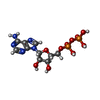 ChemComp-ADP: |
-Experimental details
-Structure determination
| Method | cryo EM |
|---|---|
 Processing Processing | single particle reconstruction |
| Aggregation state | 2D array |
-Sample preparation
| Concentration | 2 mg/mL | ||||||||||||||||||
|---|---|---|---|---|---|---|---|---|---|---|---|---|---|---|---|---|---|---|---|
| Buffer | pH: 8 Component:
Details: Protein Storage Buffer with ADP. | ||||||||||||||||||
| Vitrification | Cryogen name: ETHANE |
- Electron microscopy
| Microscope | FEI TITAN KRIOS |
|---|---|
| Image recording | Film or detector model: GATAN K3 (6k x 4k) / Number real images: 2000 / Average electron dose: 50.0 e/Å2 |
| Electron beam | Acceleration voltage: 300 kV / Electron source:  FIELD EMISSION GUN FIELD EMISSION GUN |
| Electron optics | Illumination mode: FLOOD BEAM / Imaging mode: BRIGHT FIELD |
| Experimental equipment |  Model: Titan Krios / Image courtesy: FEI Company |