negative regulation of mRNA 3'-end processing / histone H2AK127 ubiquitin ligase activity / histone H2AK129 ubiquitin ligase activity / Defective DNA double strand break response due to BRCA1 loss of function / Defective DNA double strand break response due to BARD1 loss of function / BRCA1-BARD1 complex / BRCA1-B complex / BRCA1-A complex / BRCA1-C complex / negative regulation of centriole replication ...negative regulation of mRNA 3'-end processing / histone H2AK127 ubiquitin ligase activity / histone H2AK129 ubiquitin ligase activity / Defective DNA double strand break response due to BRCA1 loss of function / Defective DNA double strand break response due to BARD1 loss of function / BRCA1-BARD1 complex / BRCA1-B complex / BRCA1-A complex / BRCA1-C complex / negative regulation of centriole replication / random inactivation of X chromosome / ubiquitin-modified histone reader activity / chordate embryonic development / gamma-tubulin ring complex / negative regulation of intracellular estrogen receptor signaling pathway / regulation of phosphorylation / cellular response to indole-3-methanol / DNA strand resection involved in replication fork processing / nuclear ubiquitin ligase complex / homologous recombination / Regulation of MITF-M-dependent genes involved in DNA replication, damage repair and senescence / negative regulation of fatty acid biosynthetic process / Signaling by BMP / tissue homeostasis / (E3-independent) E2 ubiquitin-conjugating enzyme / lateral element / mitotic G2/M transition checkpoint / negative regulation of protein export from nucleus / regulation of DNA damage checkpoint / Impaired BRCA2 binding to PALB2 / XY body / protein K11-linked ubiquitination / RNA polymerase binding / DNA repair complex / DNA damage tolerance / protein K6-linked ubiquitination / centrosome cycle / : / E2 ubiquitin-conjugating enzyme / Homologous DNA Pairing and Strand Exchange / Defective homologous recombination repair (HRR) due to BRCA1 loss of function / Defective HDR through Homologous Recombination Repair (HRR) due to PALB2 loss of BRCA1 binding function / Defective HDR through Homologous Recombination Repair (HRR) due to PALB2 loss of BRCA2/RAD51/RAD51C binding function / Resolution of D-loop Structures through Synthesis-Dependent Strand Annealing (SDSA) / HDR through Single Strand Annealing (SSA) / Resolution of D-loop Structures through Holliday Junction Intermediates / response to ionizing radiation / negative regulation of gene expression via chromosomal CpG island methylation / Impaired BRCA2 binding to RAD51 / mitotic G2 DNA damage checkpoint signaling / Transcriptional Regulation by E2F6 / ubiquitin conjugating enzyme activity / negative regulation of cell cycle / negative regulation of reactive oxygen species metabolic process / Presynaptic phase of homologous DNA pairing and strand exchange / positive regulation of vascular endothelial growth factor production / negative regulation of BMP signaling pathway / protein monoubiquitination / ubiquitin ligase complex / negative regulation of tumor necrosis factor-mediated signaling pathway / regulation of DNA repair / SUMOylation of DNA damage response and repair proteins / negative regulation of extrinsic apoptotic signaling pathway via death domain receptors / protein autoubiquitination / negative regulation of megakaryocyte differentiation / protein localization to CENP-A containing chromatin / Chromatin modifying enzymes / Replacement of protamines by nucleosomes in the male pronucleus / CENP-A containing nucleosome / protein K48-linked ubiquitination / Packaging Of Telomere Ends / Recognition and association of DNA glycosylase with site containing an affected purine / Cleavage of the damaged purine / Deposition of new CENPA-containing nucleosomes at the centromere / epigenetic regulation of gene expression / telomere organization / Interleukin-7 signaling / Recognition and association of DNA glycosylase with site containing an affected pyrimidine / Cleavage of the damaged pyrimidine / RNA Polymerase I Promoter Opening / Inhibition of DNA recombination at telomere / Assembly of the ORC complex at the origin of replication / Meiotic synapsis / SUMOylation of chromatin organization proteins / Regulation of endogenous retroelements by the Human Silencing Hub (HUSH) complex / TICAM1, RIP1-mediated IKK complex recruitment / positive regulation of DNA repair / protein modification process / DNA methylation / Condensation of Prophase Chromosomes / Chromatin modifications during the maternal to zygotic transition (MZT) / SIRT1 negatively regulates rRNA expression / HCMV Late Events / IKK complex recruitment mediated by RIP1 / PINK1-PRKN Mediated Mitophagy / ERCC6 (CSB) and EHMT2 (G9a) positively regulate rRNA expression / cellular response to ionizing radiation / male germ cell nucleus / PRC2 methylates histones and DNA / innate immune response in mucosa 類似検索 - 分子機能
BARD1, Zinc finger, RING-type / zf-RING of BARD1-type protein / Breast cancer type 1 susceptibility protein (BRCA1) / BRCA1, serine-rich domain / BRCA1-associated / Serine-rich domain associated with BRCT / Zinc finger, C3HC4 RING-type / Zinc finger, C3HC4 type (RING finger) / BRCA1 C Terminus (BRCT) domain / Ubiquitin-conjugating enzyme, active site ...BARD1, Zinc finger, RING-type / zf-RING of BARD1-type protein / Breast cancer type 1 susceptibility protein (BRCA1) / BRCA1, serine-rich domain / BRCA1-associated / Serine-rich domain associated with BRCT / Zinc finger, C3HC4 RING-type / Zinc finger, C3HC4 type (RING finger) / BRCA1 C Terminus (BRCT) domain / Ubiquitin-conjugating enzyme, active site / Ubiquitin-conjugating (UBC) active site signature. / Ubiquitin-conjugating enzyme E2 / Ubiquitin-conjugating enzyme / Ubiquitin-conjugating (UBC) core domain profile. / Ubiquitin-conjugating enzyme E2, catalytic domain homologues / breast cancer carboxy-terminal domain / Ubiquitin-conjugating enzyme/RWD-like / BRCT domain profile. / BRCT domain / BRCT domain superfamily / Zinc finger, RING-type, conserved site / Zinc finger RING-type signature. / Ring finger / : / Histone H2A conserved site / Histone H2A signature. / Histone H2B signature. / Histone H2B / Histone H2B / Histone H2A, C-terminal domain / C-terminus of histone H2A / Ankyrin repeats (3 copies) / Histone 2A / Histone H2A / Ankyrin repeat profile. / Ankyrin repeat region circular profile. / TATA box binding protein associated factor / TATA box binding protein associated factor (TAF), histone-like fold domain / Histone H4, conserved site / Histone H4 signature. / Histone H4 / Histone H4 / ankyrin repeats / CENP-T/Histone H4, histone fold / Centromere kinetochore component CENP-T histone fold / Ankyrin repeat / Ankyrin repeat-containing domain superfamily / Zinc finger RING-type profile. / Zinc finger, RING-type / Histone H3 signature 1. / Histone H3 signature 2. / Histone H3 / Histone H3/CENP-A / Histone H2A/H2B/H3 / Core histone H2A/H2B/H3/H4 domain / Histone-fold / Zinc finger, RING/FYVE/PHD-type 類似検索 - ドメイン・相同性
Histone H2A type 1-B/E / Histone H2B type 1-J / Breast cancer type 1 susceptibility protein / Ubiquitin-conjugating enzyme E2 D3 / Histone H4 / Histone H3.1 / BRCA1-associated RING domain protein 1 類似検索 - 構成要素
National Institutes of Health/National Cancer Institute (NIH/NCI)
R01 CA132878
米国
National Institutes of Health/National Institute of General Medical Sciences (NIH/NIGMS)
R35 GM136262
米国
National Institutes of Health/National Institute of General Medical Sciences (NIH/NIGMS)
R01 GM116829
米国
引用
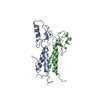
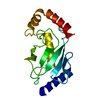
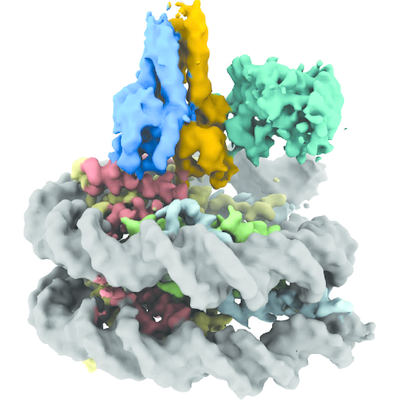
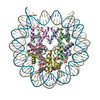
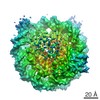
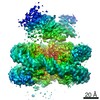
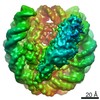
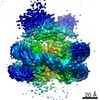
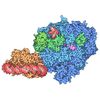
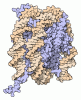
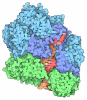
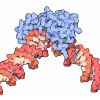
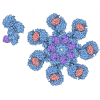
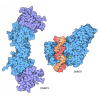
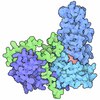
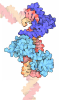
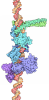
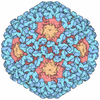
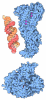
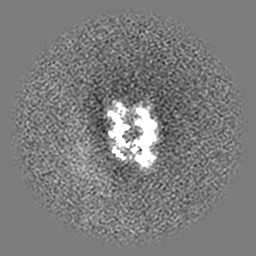
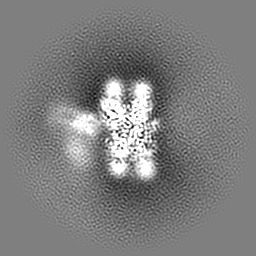
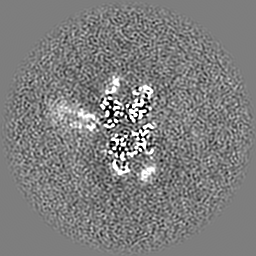
ジャーナル: Nature / 年: 2021 タイトル: Mechanisms of BRCA1-BARD1 nucleosome recognition and ubiquitylation. 著者: Qi Hu / Maria Victoria Botuyan / Debiao Zhao / Gaofeng Cui / Elie Mer / Georges Mer / 要旨: The BRCA1-BARD1 tumour suppressor is an E3 ubiquitin ligase necessary for the repair of DNA double-strand breaks by homologous recombination. The BRCA1-BARD1 complex localizes to damaged chromatin ...The BRCA1-BARD1 tumour suppressor is an E3 ubiquitin ligase necessary for the repair of DNA double-strand breaks by homologous recombination. The BRCA1-BARD1 complex localizes to damaged chromatin after DNA replication and catalyses the ubiquitylation of histone H2A and other cellular targets. The molecular bases for the recruitment to double-strand breaks and target recognition of BRCA1-BARD1 remain unknown. Here we use cryo-electron microscopy to show that the ankyrin repeat and tandem BRCT domains in BARD1 adopt a compact fold and bind to nucleosomal histones, DNA and monoubiquitin attached to H2A amino-terminal K13 or K15, two signals known to be specific for double-strand breaks. We further show that RING domains in BRCA1-BARD1 orient an E2 ubiquitin-conjugating enzyme atop the nucleosome in a dynamic conformation, primed for ubiquitin transfer to the flexible carboxy-terminal tails of H2A and variant H2AX. Our work reveals a regulatory crosstalk in which recognition of monoubiquitin by BRCA1-BARD1 at the N terminus of H2A blocks the formation of polyubiquitin chains and cooperatively promotes ubiquitylation at the C terminus of H2A. These findings elucidate the mechanisms of BRCA1-BARD1 chromatin recruitment and ubiquitylation specificity, highlight key functions of BARD1 in both processes and explain how BRCA1-BARD1 promotes homologous recombination by opposing the DNA repair protein 53BP1 in post-replicative chromatin. These data provide a structural framework to evaluate BARD1 variants and help to identify mutations that drive the development of cancer.
 ムービー
ムービー コントローラー


 データを開く
 基本情報
基本情報 マップデータ
 試料
試料 キーワード
キーワード 機能・相同性情報
 Homo sapiens (ヒト)
 データ登録者
 米国, 3件
  引用
引用 構造の表示
構造の表示
 ダウンロードとリンク
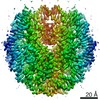
 emd_23591.png
 http://ftp.pdbj.org/pub/emdb/structures/EMD-23591






 Z (Sec.)
 Y (Row.)
 X (Col.)

















 試料の構成要素
 Escherichia coli (大腸菌)
 解析
解析 電子顕微鏡法
 FIELD EMISSION GUN