- EMDB-28693: Cryo-EM structure of two IGF1 bound full-length mouse IGF1R mutan... -
+
データを開く
IDまたはキーワード:
読み込み中...
-
基本情報
登録情報
データベース: EMDB / ID: EMD-28693
タイトル
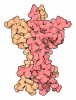
Cryo-EM structure of two IGF1 bound full-length mouse IGF1R mutant (four glycine residues inserted in the alpha-CT; IGF1R-P674G4): symmetric conformation
マップデータ
Cryo-EM structure of two IGF1 bound full-length mouse IGF1R mutant (four glycine residues inserted in the alpha-CT; IGF1R-P674G4): symmetric conformation
試料
複合体: Two IGF1 bound full-length mouse IGF1R mutant (four glycine residues inserted in the alpha-CT; IGF1R-P674G4): symmetric conformation
タンパク質・ペプチド: Insulin-like growth factor 1 receptor
タンパク質・ペプチド: Insulin-like growth factor I
キーワード
IGF1R / IGF1 / SIGNALING PROTEIN
機能・相同性
機能・相同性情報
negative regulation of cholangiocyte apoptotic process / Signaling by Type 1 Insulin-like Growth Factor 1 Receptor (IGF1R) / IRS-related events triggered by IGF1R / SHC-related events triggered by IGF1R / positive regulation of steroid hormone biosynthetic process / glycolate metabolic process / muscle hypertrophy / negative regulation of oocyte development / insulin-like growth factor binding protein complex / insulin-like growth factor ternary complex ...negative regulation of cholangiocyte apoptotic process / Signaling by Type 1 Insulin-like Growth Factor 1 Receptor (IGF1R) / IRS-related events triggered by IGF1R / SHC-related events triggered by IGF1R / positive regulation of steroid hormone biosynthetic process / glycolate metabolic process / muscle hypertrophy / negative regulation of oocyte development / insulin-like growth factor binding protein complex / insulin-like growth factor ternary complex / positive regulation of trophectodermal cell proliferation / prostate gland stromal morphogenesis / positive regulation of type B pancreatic cell proliferation / negative regulation of muscle cell apoptotic process / type II pneumocyte differentiation / neuronal dense core vesicle lumen / proteoglycan biosynthetic process / regulation of establishment or maintenance of cell polarity / chondroitin sulfate proteoglycan biosynthetic process / positive regulation of transcription regulatory region DNA binding / insulin-like growth factor receptor activity / positive regulation of DNA metabolic process / protein kinase complex / myotube cell development / Extra-nuclear estrogen signaling / negative regulation of neuroinflammatory response / insulin-like growth factor binding / Signaling by Type 1 Insulin-like Growth Factor 1 Receptor (IGF1R) / skeletal muscle satellite cell maintenance involved in skeletal muscle regeneration / bone mineralization involved in bone maturation / IRS-related events triggered by IGF1R / positive regulation of cerebellar granule cell precursor proliferation / positive regulation of cell growth involved in cardiac muscle cell development / lung vasculature development / negative regulation of vascular associated smooth muscle cell apoptotic process / protein transporter activity / exocytic vesicle / positive regulation of myoblast proliferation / cerebellar granule cell precursor proliferation / positive regulation of glycoprotein biosynthetic process / positive regulation of meiotic cell cycle / positive regulation of axon regeneration / transcytosis / lung lobe morphogenesis / cell activation / negative regulation of hepatocyte apoptotic process / positive regulation of myelination / positive regulation of developmental growth / prostate gland epithelium morphogenesis / negative regulation of androgen receptor signaling pathway / positive regulation of calcineurin-NFAT signaling cascade / transmembrane receptor protein tyrosine kinase activator activity / glial cell differentiation / prostate gland growth / male sex determination / insulin receptor complex / insulin-like growth factor I binding / insulin receptor activity / mammary gland development / positive regulation of protein-containing complex disassembly / exocrine pancreas development / alphav-beta3 integrin-IGF-1-IGF1R complex / myoblast differentiation / type B pancreatic cell proliferation / cell surface receptor signaling pathway via STAT / positive regulation of insulin-like growth factor receptor signaling pathway / regulation of nitric oxide biosynthetic process / positive regulation of Ras protein signal transduction / activation of protein kinase B activity / response to L-glutamate / positive regulation of activated T cell proliferation / dendritic spine maintenance / positive regulation of DNA binding / growth hormone receptor signaling pathway / insulin binding / regulation of JNK cascade / adrenal gland development / androgen receptor signaling pathway / positive regulation of smooth muscle cell migration / negative regulation of interleukin-1 beta production / lung alveolus development / muscle organ development / branching morphogenesis of an epithelial tube / cellular response to insulin-like growth factor stimulus / prostate epithelial cord arborization involved in prostate glandular acinus morphogenesis / positive regulation of osteoblast proliferation / negative regulation of release of cytochrome c from mitochondria / positive regulation of cardiac muscle hypertrophy / positive regulation of cytokinesis / establishment of cell polarity / type I pneumocyte differentiation / inner ear development / negative regulation of amyloid-beta formation / negative regulation of smooth muscle cell apoptotic process / amyloid-beta clearance / myoblast proliferation / insulin receptor substrate binding / Synthesis, secretion, and deacylation of Ghrelin / epithelial to mesenchymal transition / epidermis development 類似検索 - 分子機能
Insulin-like growth factor I / Insulin-like growth factor / Tyrosine-protein kinase, insulin-like receptor / Tyrosine-protein kinase, receptor class II, conserved site / Receptor tyrosine kinase class II signature. / Insulin family / Insulin-like / Insulin/IGF/Relaxin family / Insulin / insulin-like growth factor / relaxin family. / Insulin, conserved site ...Insulin-like growth factor I / Insulin-like growth factor / Tyrosine-protein kinase, insulin-like receptor / Tyrosine-protein kinase, receptor class II, conserved site / Receptor tyrosine kinase class II signature. / Insulin family / Insulin-like / Insulin/IGF/Relaxin family / Insulin / insulin-like growth factor / relaxin family. / Insulin, conserved site / Insulin family signature. / Insulin-like superfamily / Receptor L-domain / Furin-like cysteine-rich domain / Receptor L-domain superfamily / Furin-like cysteine rich region / Receptor L domain / Furin-like repeat / Furin-like repeats / Growth factor receptor cysteine-rich domain superfamily / : / Fibronectin type 3 domain / Fibronectin type-III domain profile. / Fibronectin type III / Fibronectin type III superfamily / Tyrosine-protein kinase, catalytic domain / Tyrosine kinase, catalytic domain / Tyrosine protein kinases specific active-site signature. / Tyrosine-protein kinase, active site / Protein tyrosine and serine/threonine kinase / Serine-threonine/tyrosine-protein kinase, catalytic domain / Protein kinase, ATP binding site / Protein kinases ATP-binding region signature. / Immunoglobulin-like fold / Protein kinase domain profile. / Protein kinase domain / Protein kinase-like domain superfamily 類似検索 - ドメイン・相同性
National Institutes of Health/National Institute of General Medical Sciences (NIH/NIGMS)
R01GM136976
米国
National Institutes of Health/National Institute of General Medical Sciences (NIH/NIGMS)
R35GM142937
米国
引用
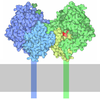
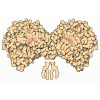
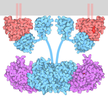
ジャーナル: Elife / 年: 2022 タイトル: Molecular basis for the role of disulfide-linked αCTs in the activation of insulin-like growth factor 1 receptor and insulin receptor. 著者: Jie Li / Jiayi Wu / Catherine Hall / Xiao-Chen Bai / Eunhee Choi / 要旨: The insulin receptor (IR) and insulin-like growth factor 1 receptor (IGF1R) control metabolic homeostasis and cell growth and proliferation. The IR and IGF1R form similar disulfide bonds linked ...The insulin receptor (IR) and insulin-like growth factor 1 receptor (IGF1R) control metabolic homeostasis and cell growth and proliferation. The IR and IGF1R form similar disulfide bonds linked homodimers in the apo-state; however, their ligand binding properties and the structures in the active state differ substantially. It has been proposed that the disulfide-linked C-terminal segment of α-chain (αCTs) of the IR and IGF1R control the cooperativity of ligand binding and regulate the receptor activation. Nevertheless, the molecular basis for the roles of disulfide-linked αCTs in IR and IGF1R activation are still unclear. Here, we report the cryo-EM structures of full-length mouse IGF1R/IGF1 and IR/insulin complexes with modified αCTs that have increased flexibility. Unlike the -shaped asymmetric IGF1R dimer with a single IGF1 bound, the IGF1R with the enhanced flexibility of αCTs can form a -shaped symmetric dimer with two IGF1s bound. Meanwhile, the IR with non-covalently linked αCTs predominantly adopts an asymmetric conformation with four insulins bound, which is distinct from the -shaped symmetric IR. Using cell-based experiments, we further showed that both IGF1R and IR with the modified αCTs cannot activate the downstream signaling potently. Collectively, our studies demonstrate that the certain structural rigidity of disulfide-linked αCTs is critical for optimal IR and IGF1R signaling activation.
#195 - 2016年3月 RAFタンパク質キナーゼ (RAF Protein Kinases) 類似性 (1)
-
マップ
ファイル
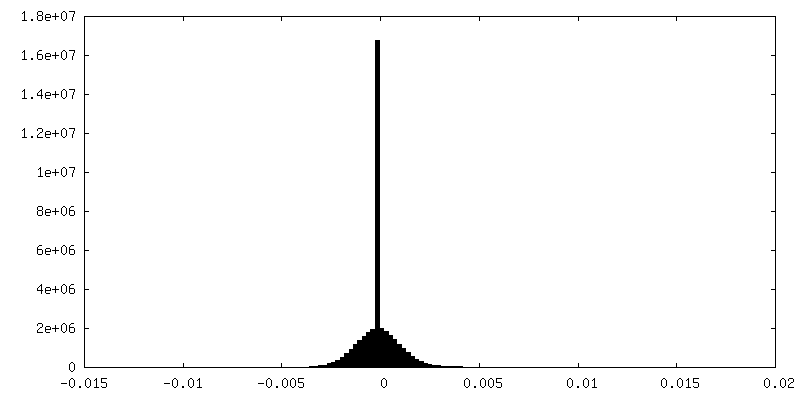
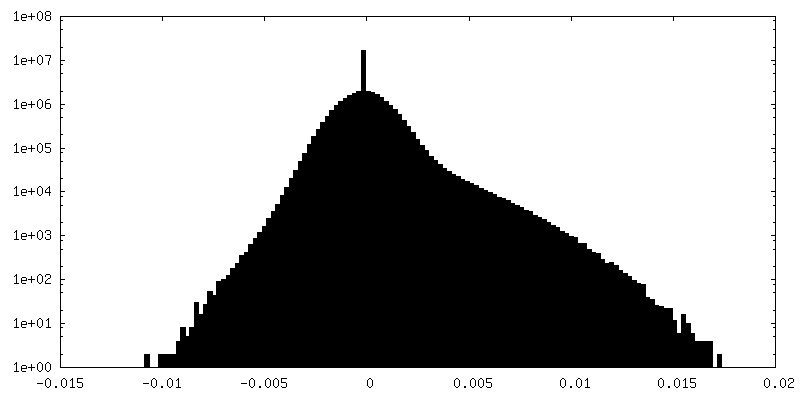
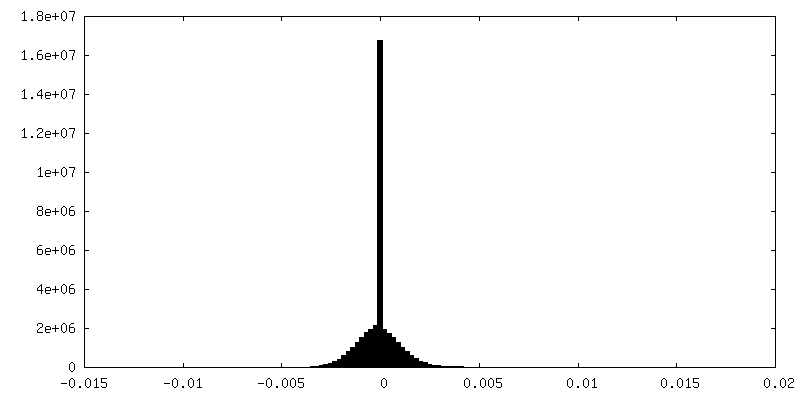
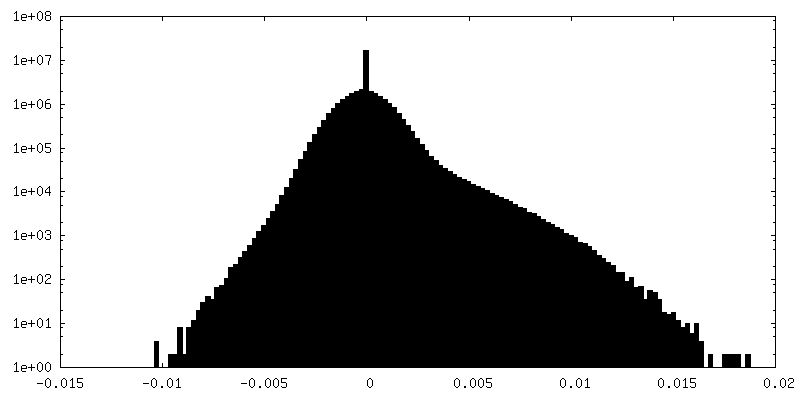
ダウンロード / ファイル: emd_28693.map.gz / 形式: CCP4 / 大きさ: 178 MB / タイプ: IMAGE STORED AS FLOATING POINT NUMBER (4 BYTES)
注釈
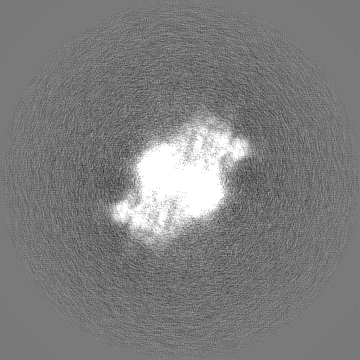
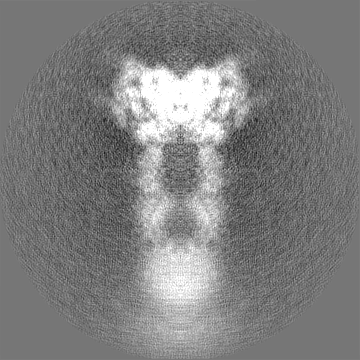
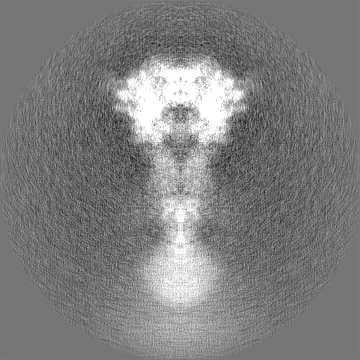
Cryo-EM structure of two IGF1 bound full-length mouse IGF1R mutant (four glycine residues inserted in the alpha-CT; IGF1R-P674G4): symmetric conformation
 ムービー
ムービー コントローラー


 データを開く
 基本情報
基本情報
 マップデータ
 試料
試料 キーワード
キーワード 機能・相同性情報
 Mus musculus (ハツカネズミ) /
  Homo sapiens (ヒト)
 データ登録者
 米国, 2件
  引用
引用 構造の表示
構造の表示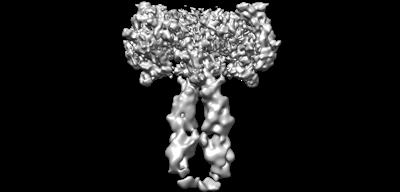
 ダウンロードとリンク
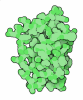
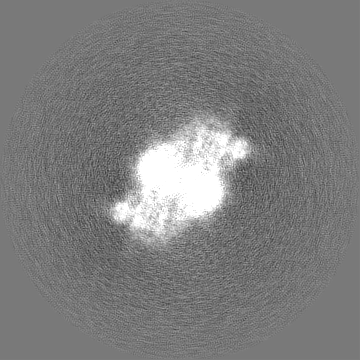
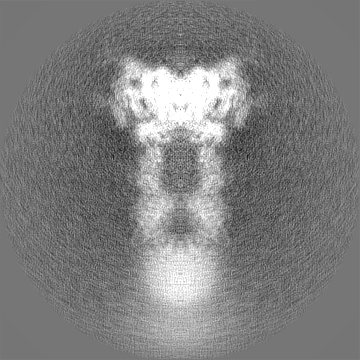
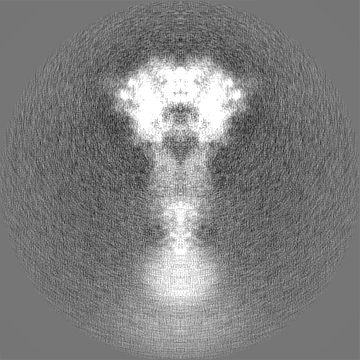
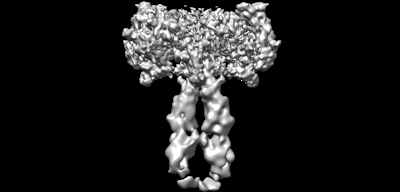 emd_28693.png
 http://ftp.pdbj.org/pub/emdb/structures/EMD-28693


 Z (Sec.)
 Y (Row.)
 X (Col.)


 試料の構成要素
 Escherichia coli (大腸菌)
 解析
解析 電子顕微鏡法
 FIELD EMISSION GUN
