Movie
Movie Controller


+ Open data

- Basic information
| Entry | Database: EMDB / ID: EMD-22294 | |||||||||
|---|---|---|---|---|---|---|---|---|---|---|
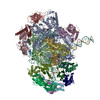
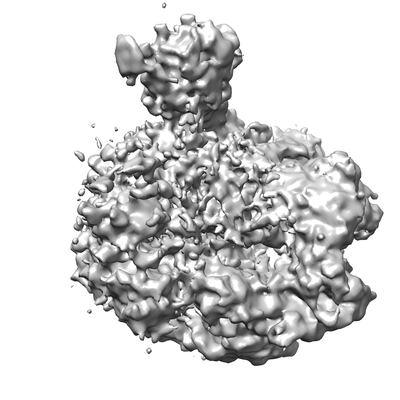
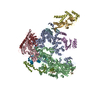
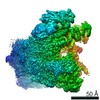
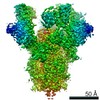
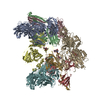
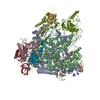
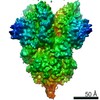
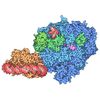
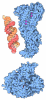
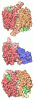
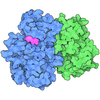
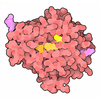
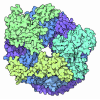
| Title | Structure of the p53/RNA polymerase II assembly | |||||||||
 Map data Map data | ||||||||||
 Sample Sample |
| |||||||||
 Keywords Keywords | Activator / tumor suppressor / transcription / transferase | |||||||||
| Function / homology |  Function and homology information Function and homology informationmicrofibril binding / RNA Polymerase III Chain Elongation / RNA Polymerase III Transcription Termination / regulation of transcription by RNA polymerase I / RPAP3/R2TP/prefoldin-like complex / RNA Polymerase III Transcription Initiation From Type 1 Promoter / RNA Polymerase III Transcription Initiation From Type 2 Promoter / RNA Polymerase III Transcription Initiation From Type 3 Promoter / RNA Polymerase III Abortive And Retractive Initiation / Cytosolic sensors of pathogen-associated DNA ...microfibril binding / RNA Polymerase III Chain Elongation / RNA Polymerase III Transcription Termination / regulation of transcription by RNA polymerase I / RPAP3/R2TP/prefoldin-like complex / RNA Polymerase III Transcription Initiation From Type 1 Promoter / RNA Polymerase III Transcription Initiation From Type 2 Promoter / RNA Polymerase III Transcription Initiation From Type 3 Promoter / RNA Polymerase III Abortive And Retractive Initiation / Cytosolic sensors of pathogen-associated DNA / negative regulation of helicase activity / Loss of function of TP53 in cancer due to loss of tetramerization ability / Regulation of TP53 Expression / signal transduction by p53 class mediator / negative regulation of G1 to G0 transition / negative regulation of glucose catabolic process to lactate via pyruvate / Transcriptional activation of cell cycle inhibitor p21 / regulation of intrinsic apoptotic signaling pathway by p53 class mediator / negative regulation of pentose-phosphate shunt / Activation of NOXA and translocation to mitochondria / ATP-dependent DNA/DNA annealing activity / regulation of cell cycle G2/M phase transition / oligodendrocyte apoptotic process / negative regulation of miRNA processing / intrinsic apoptotic signaling pathway in response to hypoxia / positive regulation of thymocyte apoptotic process / oxidative stress-induced premature senescence / regulation of tissue remodeling / positive regulation of mitochondrial membrane permeability / germ cell nucleus / regulation of fibroblast apoptotic process / bone marrow development / cellular response to actinomycin D / circadian behavior / regulation of mitochondrial membrane permeability involved in apoptotic process / histone deacetylase regulator activity / positive regulation of programmed necrotic cell death / T cell proliferation involved in immune response / : / RUNX3 regulates CDKN1A transcription / TP53 Regulates Transcription of Death Receptors and Ligands / Activation of PUMA and translocation to mitochondria / Abortive elongation of HIV-1 transcript in the absence of Tat / TP53 regulates transcription of additional cell cycle genes whose exact role in the p53 pathway remain uncertain / mRNA transcription / FGFR2 alternative splicing / RNA Polymerase I Transcription Termination / negative regulation of glial cell proliferation / Viral Messenger RNA Synthesis / regulation of DNA damage response, signal transduction by p53 class mediator / Regulation of TP53 Activity through Association with Co-factors / negative regulation of neuroblast proliferation / MicroRNA (miRNA) biogenesis / Signaling by FGFR2 IIIa TM / Formation of Senescence-Associated Heterochromatin Foci (SAHF) / mitochondrial DNA repair / T cell lineage commitment / thymocyte apoptotic process / LRR domain binding / ER overload response / TP53 Regulates Transcription of Caspase Activators and Caspases / cardiac septum morphogenesis / B cell lineage commitment / entrainment of circadian clock by photoperiod / positive regulation of nuclear-transcribed mRNA poly(A) tail shortening / RNA Pol II CTD phosphorylation and interaction with CE during HIV infection / RNA Pol II CTD phosphorylation and interaction with CE / Formation of the Early Elongation Complex / Formation of the HIV-1 Early Elongation Complex / mRNA Capping / negative regulation of DNA replication / negative regulation of mitophagy / HIV Transcription Initiation / RNA Polymerase II HIV Promoter Escape / Transcription of the HIV genome / RNA Polymerase II Promoter Escape / RNA Polymerase II Transcription Pre-Initiation And Promoter Opening / RNA Polymerase II Transcription Initiation / RNA Polymerase II Transcription Initiation And Promoter Clearance / Zygotic genome activation (ZGA) / TP53 Regulates Transcription of Genes Involved in Cytochrome C Release / PIWI-interacting RNA (piRNA) biogenesis / PI5P Regulates TP53 Acetylation / mRNA Splicing - Minor Pathway / necroptotic process / negative regulation of telomere maintenance via telomerase / Association of TriC/CCT with target proteins during biosynthesis / positive regulation of release of cytochrome c from mitochondria / SUMOylation of transcription factors / TP53 regulates transcription of several additional cell death genes whose specific roles in p53-dependent apoptosis remain uncertain / RNA Polymerase I Transcription Initiation / intrinsic apoptotic signaling pathway by p53 class mediator / negative regulation of reactive oxygen species metabolic process / rRNA transcription / Processing of Capped Intron-Containing Pre-mRNA / Transcriptional Regulation by VENTX / TFIID-class transcription factor complex binding / transcription by RNA polymerase III / maintenance of transcriptional fidelity during transcription elongation by RNA polymerase II / cellular response to UV-C Similarity search - Function | |||||||||
| Biological species |  Homo sapiens (human) / Homo sapien (human) Homo sapiens (human) / Homo sapien (human) | |||||||||
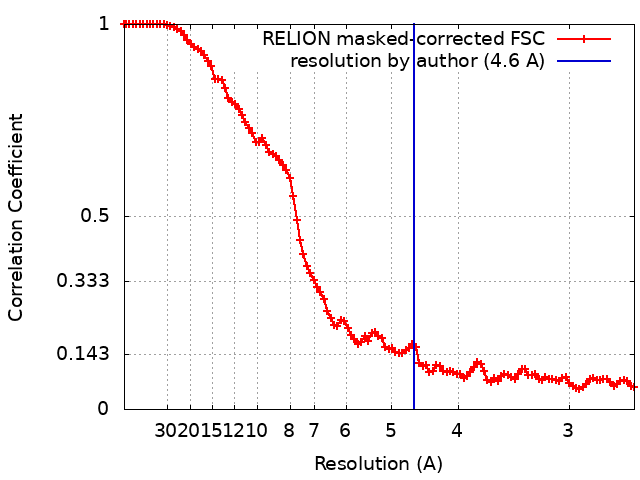
| Method | single particle reconstruction / cryo EM / Resolution: 4.6 Å | |||||||||
 Authors Authors | Liou S-H / Singh S | |||||||||
| Funding support |  United States, 1 items United States, 1 items
| |||||||||
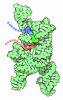
 Citation Citation | Journal: Commun Biol / Year: 2021 Title: Structure of the p53/RNA polymerase II assembly. Authors: Shu-Hao Liou / Sameer K Singh / Robert H Singer / Robert A Coleman / Wei-Li Liu / Abstract: The tumor suppressor p53 protein activates expression of a vast gene network in response to stress stimuli for cellular integrity. The molecular mechanism underlying how p53 targets RNA polymerase II ...The tumor suppressor p53 protein activates expression of a vast gene network in response to stress stimuli for cellular integrity. The molecular mechanism underlying how p53 targets RNA polymerase II (Pol II) to regulate transcription remains unclear. To elucidate the p53/Pol II interaction, we have determined a 4.6 Å resolution structure of the human p53/Pol II assembly via single particle cryo-electron microscopy. Our structure reveals that p53's DNA binding domain targets the upstream DNA binding site within Pol II. This association introduces conformational changes of the Pol II clamp into a further-closed state. A cavity was identified between p53 and Pol II that could possibly host DNA. The transactivation domain of p53 binds the surface of Pol II's jaw that contacts downstream DNA. These findings suggest that p53's functional domains directly regulate DNA binding activity of Pol II to mediate transcription, thereby providing insights into p53-regulated gene expression. | |||||||||
| History |
|
- Structure visualization
| Movie |
Movie viewer |
|---|---|
| Structure viewer | EM map: SurfViewMolmilJmol/JSmol |
| Supplemental images |
- Downloads & links
-EMDB archive
| Map data | emd_22294.map.gz | 6.4 MB | EMDB map data format | |
|---|---|---|---|---|
| Header (meta data) | emd-22294-v30.xmlemd-22294.xml | 28.2 KB 28.2 KB | Display Display | EMDB header |
| FSC (resolution estimation) | emd_22294_fsc.xml | 10.7 KB | Display | FSC data file |
| Images | 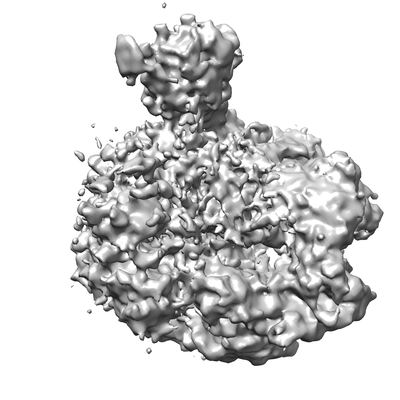 emd_22294.png emd_22294.png | 111.6 KB | ||
| Filedesc metadata | emd-22294.cif.gz | 9.3 KB | ||
| Archive directory |  http://ftp.pdbj.org/pub/emdb/structures/EMD-22294ftp://ftp.pdbj.org/pub/emdb/structures/EMD-22294 http://ftp.pdbj.org/pub/emdb/structures/EMD-22294ftp://ftp.pdbj.org/pub/emdb/structures/EMD-22294 | HTTPS FTP |
-Related structure data
| Related structure data |  6xreMC M: atomic model generated by this map C: citing same article ( |
|---|---|
| Similar structure data |
-Links
| EMDB pages | EMDB (EBI/PDBe) / EMDataResource |
|---|---|
| Related items in Molecule of the Month |
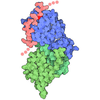
-Map
| File | Download / File: emd_22294.map.gz / Format: CCP4 / Size: 103 MB / Type: IMAGE STORED AS FLOATING POINT NUMBER (4 BYTES) | ||||||||||||||||||||||||||||||||||||||||||||||||||||||||||||||||||||
|---|---|---|---|---|---|---|---|---|---|---|---|---|---|---|---|---|---|---|---|---|---|---|---|---|---|---|---|---|---|---|---|---|---|---|---|---|---|---|---|---|---|---|---|---|---|---|---|---|---|---|---|---|---|---|---|---|---|---|---|---|---|---|---|---|---|---|---|---|---|
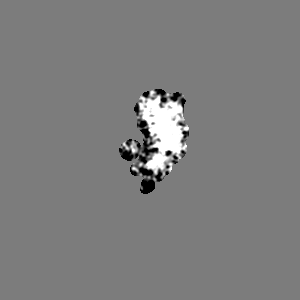
| Projections & slices | Image control
Images are generated by Spider. | ||||||||||||||||||||||||||||||||||||||||||||||||||||||||||||||||||||
| Voxel size | X=Y=Z: 1.31 Å | ||||||||||||||||||||||||||||||||||||||||||||||||||||||||||||||||||||
| Density |
| ||||||||||||||||||||||||||||||||||||||||||||||||||||||||||||||||||||
| Symmetry | Space group: 1 | ||||||||||||||||||||||||||||||||||||||||||||||||||||||||||||||||||||
| Details | EMDB XML:
CCP4 map header:
| ||||||||||||||||||||||||||||||||||||||||||||||||||||||||||||||||||||
 Z (Sec.)
 Y (Row.)
 X (Col.)




-Supplemental data
- Sample components
+Entire : p53/RNA polymerase II assembly
+Supramolecule #1: p53/RNA polymerase II assembly
+Supramolecule #2: DNA-directed RNA polymerase II
+Supramolecule #3: Cellular tumor antigen p53
+Macromolecule #1: DNA-directed RNA polymerase II subunit RPB1
+Macromolecule #2: DNA-directed RNA polymerase II subunit RPB2
+Macromolecule #3: DNA-directed RNA polymerase II subunit RPB3
+Macromolecule #4: DNA-directed RNA polymerase II subunit RPB4
+Macromolecule #5: DNA-directed RNA polymerase II subunit RPB5
+Macromolecule #6: DNA-directed RNA polymerases I, II, and III subunit RPABC2
+Macromolecule #7: DNA-directed RNA polymerase II subunit RPB7
+Macromolecule #8: DNA-directed RNA polymerases I, II, and III subunit RPABC3
+Macromolecule #9: DNA-directed RNA polymerase II subunit RPB9
+Macromolecule #10: DNA-directed RNA polymerases I, II, and III subunit RPABC5
+Macromolecule #11: DNA-directed RNA polymerase II subunit RPB11-a
+Macromolecule #12: DNA-directed RNA polymerases I, II, and III subunit RPABC4
+Macromolecule #13: Cellular tumor antigen p53
 unidentified baculovirus
+Macromolecule #14: MAGNESIUM ION
+Macromolecule #15: ZINC ION
-Experimental details
-Structure determination
| Method | cryo EM |
|---|---|
 Processing Processing | single particle reconstruction |
| Aggregation state | particle |
-Sample preparation
| Buffer | pH: 7.9 |
|---|---|
| Grid | Pretreatment - Type: GLOW DISCHARGE / Details: unspecified |
| Vitrification | Cryogen name: ETHANE / Chamber humidity: 100 % / Chamber temperature: 277 K / Instrument: FEI VITROBOT MARK I Details: The assembled p53/Pol II co-complex was applied directly on the grid for 10 sec followed by 5.5 sec of blotting. The sample grid was then washed with 3.5% trehalose in 0.1 M KCl/HEM buffer ...Details: The assembled p53/Pol II co-complex was applied directly on the grid for 10 sec followed by 5.5 sec of blotting. The sample grid was then washed with 3.5% trehalose in 0.1 M KCl/HEM buffer (20 mM HEPES, 0.2 mM EDTA, 2 mM MgCl2 at pH 7.9) for 10 sec, blotted for 5.5 sec, and finally frozen in liquid ethane.. |
- Electron microscopy
| Microscope | FEI TITAN KRIOS |
|---|---|
| Image recording | Film or detector model: GATAN K2 SUMMIT (4k x 4k) / Detector mode: SUPER-RESOLUTION / Average exposure time: 0.2 sec. / Average electron dose: 1.16 e/Å2 |
| Electron beam | Acceleration voltage: 300 kV / Electron source:  FIELD EMISSION GUN FIELD EMISSION GUN |
| Electron optics | Illumination mode: FLOOD BEAM / Imaging mode: BRIGHT FIELD |
| Experimental equipment |  Model: Titan Krios / Image courtesy: FEI Company |