






Summary for 9PQ9
| Entry DOI | 10.2210/pdb9pq9/pdb |
| Descriptor | Protein fem-1 homolog B, 6-(propylsulfanyl)-1,5-dihydro-4H-pyrazolo[3,4-d]pyrimidin-4-one, SULFATE ION (3 entities in total) |
| Functional Keywords | fem1b, e3 ligase, ligase |
| Biological source | Homo sapiens (human) |
| Total number of polymer chains | 2 |
| Total formula weight | 79492.45 |
| Authors | |
| Primary citation | Katinas, J.M.,Amporndanai, K.,Taylor, A.J.,Rose, K.L.,Gareiss, P.C.,Crespo, R.A.,Phan, J.,Waterson, A.G.,Fesik, S.W. Nuclear Magnetic Resonance-based fragment screen of the E3 ligase Fem-1 homolog B. Protein Sci., 34:e70365-e70365, 2025 Cited by PubMed Abstract: Targeted protein degradation using PROTACs (PROteolysis TArgeting Chimeras) has emerged as a transformative therapeutic strategy, largely relying on a small number of E3 ubiquitin ligases such as CRBN and VHL. However, resistance, toxicity, and poor oral bioavailability limit the utility of PROTACs and highlight the need to expand the E3 ligase toolbox. Fem-1 homolog B (FEM1B) is a lesser-known E3 ligase that offers a promising alternative due to its broad expression and ability to recognize diverse degron motifs. Here, we describe the development of a stable construct of FEM1B, the results of a protein-observed NMR-based fragment screen using this construct, and the X-ray structures of some of the fragment hits when bound to the protein. From these results, new PROTACs utilizing FEM1B as the E3 ligase may be discovered, providing an alternative E3 ligase for targeted protein degradation. PubMed: 41229306DOI: 10.1002/pro.70365 PDB entries with the same primary citation |
| Experimental method | X-RAY DIFFRACTION (2.93 Å) |
Structure validation
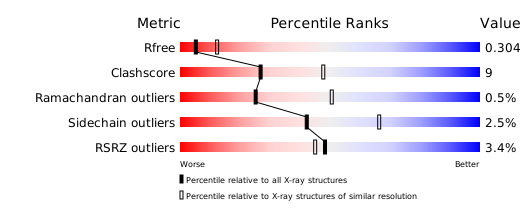
Download full validation report


