






 9PF9
9PF9
X-ray crystal structure of ATX-350-2 Fab bound to Epstein-Barr virus glycoprotein 350
9PF9 の概要
| エントリーDOI | 10.2210/pdb9pf9/pdb |
| 分子名称 | Fab ATX-350-2 light chain, Fab ATX-350-2 heavy chain, BLLF1, ... (6 entities in total) |
| 機能のキーワード | viral protein, complex, antibody, ebv, immune system |
| 由来する生物種 | Mus musculus 詳細 |
| タンパク質・核酸の鎖数 | 3 |
| 化学式量合計 | 98471.63 |
| 構造登録者 | |
| 主引用文献 | Chhan, C.B.,Lang, K.,Davis, A.R.,Wan, Y.H.,Aldridge, N.T.,Kher, G.,Scharffenberger, S.C.,Hardy, S.R.,Iureniev, R.,Giltiay, N.V.,Edwards, K.R.,Radtke, S.,Kiem, H.P.,Pancera, M.,McGuire, A.T. Transgenic mouse-derived human monoclonal antibodies targeting EBV gp350 and gp42 provide basis for therapeutic development. Cell Rep Med, 7:102618-102618, 2026 Cited by PubMed Abstract: Epstein-Barr virus (EBV) causes infectious mononucleosis and contributes to neurodegenerative disorders and malignancies, particularly in immune-compromised hosts. Transplant patients face high risk of post-transplant lymphoproliferative disease, a life-threatening EBV-driven lymphoma. There are no EBV-specific vaccines or treatments; however, neutralizing antibodies against EBV glycoproteins may offer utility as therapeutic agents. EBV entry into B cells involves gp350, which binds complement receptors, and gp42, which engages HLA class II to trigger fusion. Most existing monoclonal antibodies (mAbs) against these antigens are non-human, limiting clinical use. Using a transgenic mouse model, we generate two gp350 and eight gp42 genetically human neutralizing mAbs that block receptor binding. Structural analyses reveal extended sites of vulnerability relevant to vaccine development. Delivery of a gp42 mAb protects humanized mice from EBV challenge, while a gp350 mAb provides partial protection. These mAbs highlight the utility of transgenic mice to produce therapeutic mAbs for preventing EBV-driven disease. PubMed: 41707657DOI: 10.1016/j.xcrm.2026.102618 主引用文献が同じPDBエントリー |
| 実験手法 | X-RAY DIFFRACTION (3.93 Å) |
構造検証レポート
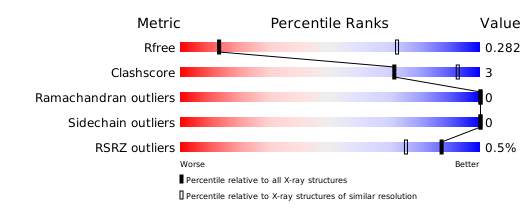
検証レポート(詳細版) をダウンロード
をダウンロード


