






 9MDL
9MDL
Clostridioides difficile Transferase B Component Trimer
9MDL の概要
| エントリーDOI | 10.2210/pdb9mdl/pdb |
| EMDBエントリー | 48173 |
| 分子名称 | Adp-ribosyltransferase binding component, CALCIUM ION (2 entities in total) |
| 機能のキーワード | toxin, clostridioides, iota, adp-ribosyltransferase |
| 由来する生物種 | Clostridioides difficile R20291 |
| タンパク質・核酸の鎖数 | 3 |
| 化学式量合計 | 297111.19 |
| 構造登録者 | |
| 主引用文献 | Mullard, R.M.,Sheedlo, M.J. Oligomerization of the Clostridioides difficile transferase B component proceeds through a stepwise mechanism. Plos Pathog., 21:e1013186-e1013186, 2025 Cited by PubMed Abstract: Clostridioides difficile is a gram-positive, pathogenic bacterium and is currently the leading cause of hospital-acquired, infectious diarrhea in the United States. During infection, C. difficile produces and secretes up to three toxins called Toxin A, Toxin B, and the C. difficile transferase (CDT). While Toxin A and Toxin B are thought to drive the pathology associated with the disease, strains that produce CDT have been linked to increased disease severity, higher rates of infection recurrence, and increased incidence of mortality. A basic understanding of how CDT intoxicates host cells has emerged over the past two decades and includes a framework that relies on the oligomerization of the components that comprise CDT to promote cellular intoxication. Although several key steps of this process have been biochemically described, a clear, molecular description of toxin assembly has not been resolved. We have collected cryogenic electron microscopy (Cryo-EM) data of purified, recombinant CDT. From these data, we have generated several structural snapshots of the toxin, including a series of structures that correspond to intermediates that form during oligomerization. These structures provide insight into the mechanism underlying toxin assembly and highlight a role for structural plasticity during this process. We have also shown that these partially assembled toxins are equally potent in cytotoxicity assays supporting this model in a cellular context. Finally, we show that CDTb oligomers are stabilized by CDTa and assembly is triggered by hydrophobic molecules. PubMed: 40690518DOI: 10.1371/journal.ppat.1013186 主引用文献が同じPDBエントリー |
| 実験手法 | ELECTRON MICROSCOPY (4.19 Å) |
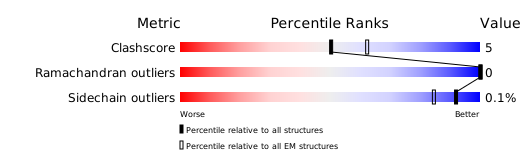
構造検証レポート
検証レポート(詳細版) をダウンロード
をダウンロード


