






 9K24
9K24
Cryo-EM structure of alpha-synuclein Mini P fibril
9K24 の概要
| エントリーDOI | 10.2210/pdb9k24/pdb |
| EMDBエントリー | 61989 |
| 分子名称 | Alpha-synuclein (1 entity in total) |
| 機能のキーワード | protein fibril, amyloid |
| 由来する生物種 | Mus musculus (house mouse) |
| タンパク質・核酸の鎖数 | 6 |
| 化学式量合計 | 87007.11 |
| 構造登録者 | |
| 主引用文献 | Han, Y.,Li, J.,Xia, W.,Li, Q.,Sun, Z.,Zeng, W.,Hu, Y.,Luk, K.C.,Liu, C.,Xiang, S.,He, Z. Fibril fuzzy coat is important for alpha-synuclein pathological transmission activity. Neuron, 113:1723-, 2025 Cited by PubMed Abstract: α-synuclein transmission and propagation are hallmarks of synucleinopathies, yet the molecular mechanisms remain elusive. Using α-synuclein preformed fibrils as pathological seeds, we observed a gradual decline in neuronal transmission activity during serial propagation. Fibril polymorphisms were identified from the initial generation: mini-P, with higher neuronal seeding activity, and mini-S, which accelerated recombinant α-synuclein aggregation. Changes in their proportions during propagation explained the overall decline in transmission activity. Cryoelectron microscopy and solid-state nuclear magnetic resonance revealed that both fibrils shared similar core regions but differed in their fuzzy coat flexibilities. The interaction between the fuzzy coat and fibril core substantially influenced neuronal transmission, a model further supported by hydrogen/deuterium exchange mass spectrometry. A mini-P-selective antibody identified active fibril types in newly propagated brain regions in human synucleinopathies. This study highlights the fuzzy coat's pivotal role in pathological protein transmission and suggests it as a potential therapeutic target for synucleinopathies. PubMed: 40215967DOI: 10.1016/j.neuron.2025.03.019 主引用文献が同じPDBエントリー |
| 実験手法 | ELECTRON MICROSCOPY (3.6 Å) |
構造検証レポート
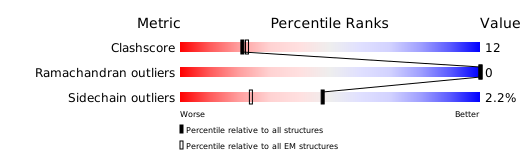
検証レポート(詳細版) をダウンロード
をダウンロード


