






 9DVM
9DVM
Structure of the phosphate exporter XPR1/SLC53A1, InsP8-bound, intracellular gate open/intracellular gate closed state
9DVM の概要
| エントリーDOI | 10.2210/pdb9dvm/pdb |
| EMDBエントリー | 47211 |
| 分子名称 | Solute carrier family 53 member 1, PHOSPHATE ION, (1R,3S,4R,5S,6R)-2,4,5,6-tetrakis(phosphonooxy)cyclohexane-1,3-diyl bis[trihydrogen (diphosphate)], ... (6 entities in total) |
| 機能のキーワード | inorganic phosphate exporter, transport protein |
| 由来する生物種 | Homo sapiens (human) |
| タンパク質・核酸の鎖数 | 2 |
| 化学式量合計 | 170868.70 |
| 構造登録者 | |
| 主引用文献 | Zhu, Q.,Yaggi, M.F.,Jork, N.,Jessen, H.J.,Diver, M.M. Transport and InsP 8 gating mechanisms of the human inorganic phosphate exporter XPR1. Nat Commun, 16:2770-2770, 2025 Cited by PubMed Abstract: Inorganic phosphate (Pi) has essential metabolic and structural roles in living organisms. The Pi exporter, XPR1/SLC53A1, is critical for cellular Pi homeostasis. When intercellular Pi is high, cells accumulate inositol pyrophosphate (1,5-InsP), a signaling molecule required for XPR1 function. Inactivating XPR1 mutations lead to brain calcifications, causing neurological symptoms including movement disorders, psychosis, and dementia. Here, cryo-electron microscopy structures of dimeric XPR1 and functional characterization delineate the substrate translocation pathway and how InsP initiates Pi transport. Binding of InsP to XPR1, but not the related inositol polyphosphate InsP, rigidifies the intracellular SPX domains, with InsP bridging the dimers and SPX and transmembrane domains. Locked in this state, the C-terminal tail is sequestered, revealing the entrance to the transport pathway, thus explaining the obligate roles of the SPX domain and InsP. Together, these findings advance our understanding of XPR1 transport activity and expand opportunities for rationalizing disease mechanisms and therapeutic intervention. PubMed: 40113814DOI: 10.1038/s41467-025-58076-y 主引用文献が同じPDBエントリー |
| 実験手法 | ELECTRON MICROSCOPY (2.92 Å) |
構造検証レポート
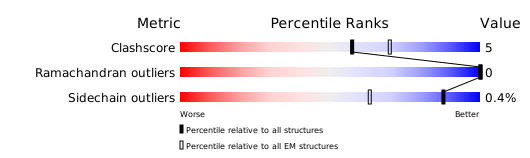
検証レポート(詳細版) をダウンロード
をダウンロード


